The "Memory Top Dog" trading at 846 yuan a month ago has now dropped to around 350 yuan.
In just 22 trading days, its market value evaporated by over 330 billion yuan.
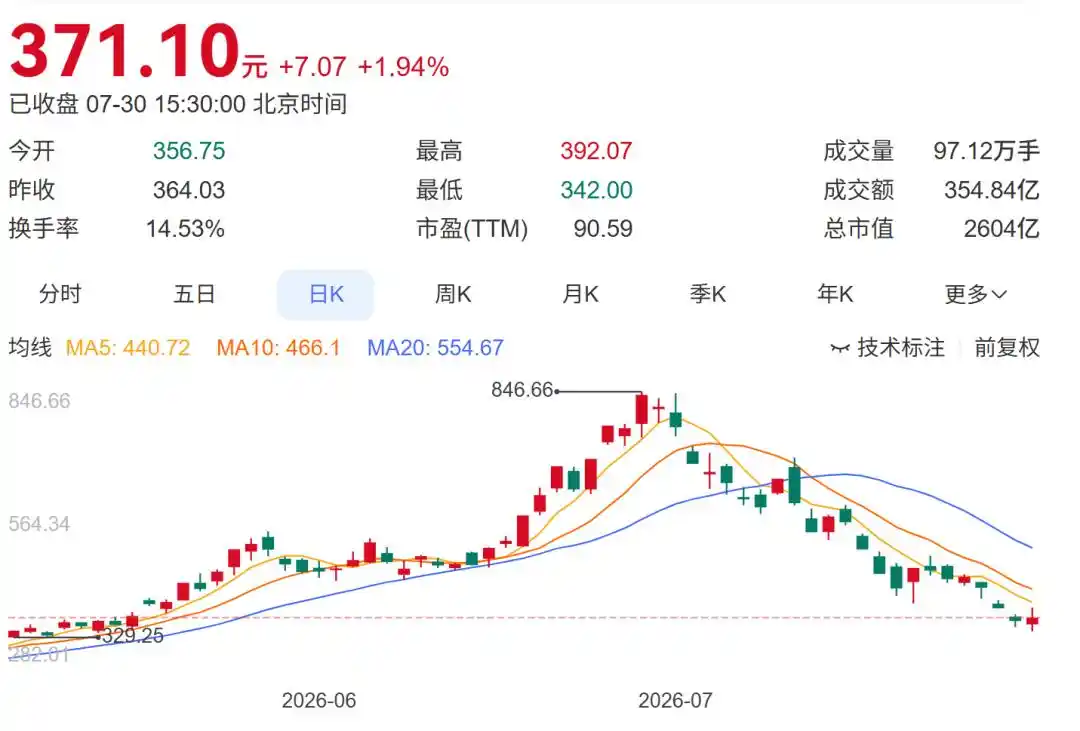
This isn't a tragedy for some st-stock; it's the story of Gigadevice, the top player in A-share memory chips.
What's even more shocking is that the company's actual controller, Zhu Yiming, cashed out 4.4 billion yuan first, and then immediately rolled out a market-rescue plan of "no less than 1 billion yuan in personal share purchase + a maximum 2 billion yuan company buyback."
Selling with the left hand, buying with the right. After this combination of moves, 240,000 shareholders were completely bewildered.
A "Buy Low, Sell High" Strategy Timed to the Day
Let's clarify the timeline first.
On April 8, 2026, Gigadevice disclosed a reduction plan, with Zhu Yiming planning to sell up to 11.21 million shares.
From May 6 to June 12, Zhu Yiming sold a total of 11.1106 million shares through block trades and centralized bidding, accounting for 1.58% of the company's total shares. The selling price ranged from 339.44 yuan to 538.90 yuan per share, with total proceeds of approximately 4.4 billion yuan.
After the reduction, Zhu Yiming's direct shareholding dropped from 6.53% to 4.94%, ceasing to be a major shareholder with over 5%. However, together with persons acting in concert, including Hong Kong Win Fortune Limited, he still holds a combined 6.8% stake.
On June 29, Gigadevice's stock price hit an all-time high of 846.66 yuan intraday.
On July 1, it fell 5.27%, marking the beginning of a sharp decline.
On July 27, CXMT (Changxin Memory Technologies Inc.) debuted on the STAR Market, soaring 465% on its first day. On the same day, Gigadevice's stock price hit a daily limit down.
On July 29, the stock closed at 364.03 yuan. That night, Zhu Yiming released four announcements in a row: informing of the reduction completion, a plan for a personal purchase of no less than 1 billion yuan, a proposal for a company buyback of 1-2 billion yuan, and a pledge not to sell shares within the next 12 months.
The reduction was completed on June 12, and the stock price peaked on June 29. The timing is more precise than an alarm clock.
Why the drop? Three reasons, each more painful than the last.
First, the listing of CXMT destroyed the "shadow stock" logic. Gigadevice had been labeled by the market as a "CXMT shadow stock." Both companies were founded by Zhu Yiming, and Gigadevice holds 1.62% of CXMT's shares post-listing.
Before CXMT's listing, funds could only bet on the domestic memory chip sector through Gigadevice. On July 27, when CXMT officially listed, the main player arrived, and the shadow lost its value. On that day, CXMT saw a turnover of 141.1 billion yuan with a turnover rate of 66.4%, the fund rotation effect was plain to see.
Second, a report from Morgan Stanley triggered market concerns. The latest Morgan Stanley report warned that the AI-driven semiconductor memory boom is approaching an inflection point, with memory contract prices expected to peak in Q4.
The momentum for upward revisions in memory profits has weakened significantly, with the net profit upgrade rate falling from a peak of 92% to 77%. Gigadevice's products are concentrated in highly cyclical segments like NOR Flash and niche DRAM; when the cycle turns, it will be the first to get hit.
Third, the 4.4 billion yuan share sale shattered market confidence. Net profit soared 1099%, so the fundamentals are fine. The problem is, even the boss offloaded his holdings near the peak to the market. What are retail investors supposed to think?
Was the Share Sale Compliant?
From a regulatory standpoint, this round of share sales is flawless. The plan was disclosed on April 8, executed from May 6 to June 12, with prices ranging from 339 yuan to 538 yuan, all within the planned range. Post-sale disclosures were made as required; all procedures were legal and compliant.
But compliance does not equate to reasonableness.
A chairman cashes out 4.4 billion yuan at a sensitive moment just before the stock price peaks, then proposes a "buyback + personal purchase" plan after the price halves. The market isn't stupid. Right after the announcement, on July 30, Gigadevice's stock fell another 5%, hitting a new low since May 15 intraday.
The "rescue" plan not only failed to rescue the market but made it even more nervous.
Blockbuster Earnings, But How Solid Are They?
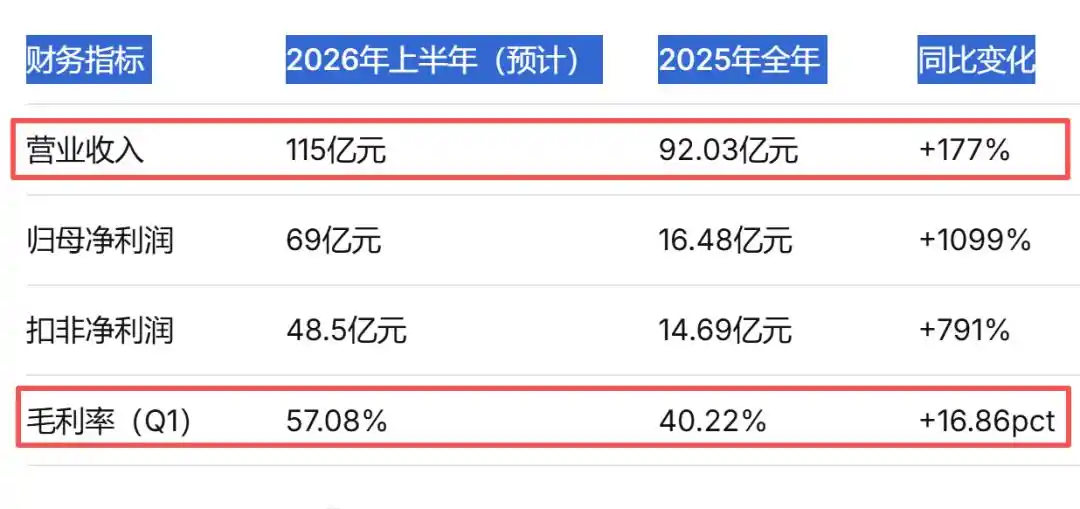
Objectively speaking, Gigadevice's performance is indeed dazzling. For the first half of 2026, revenue is estimated at 11.5 billion yuan, up 177% year-on-year; net profit attributable to shareholders is 6.9 billion yuan, up 1099% year-on-year. For the full year 2025, revenue was only 9.2 billion yuan, with net profit of 1.648 billion yuan. In half a year, it made over seven times the profit of the previous full year.
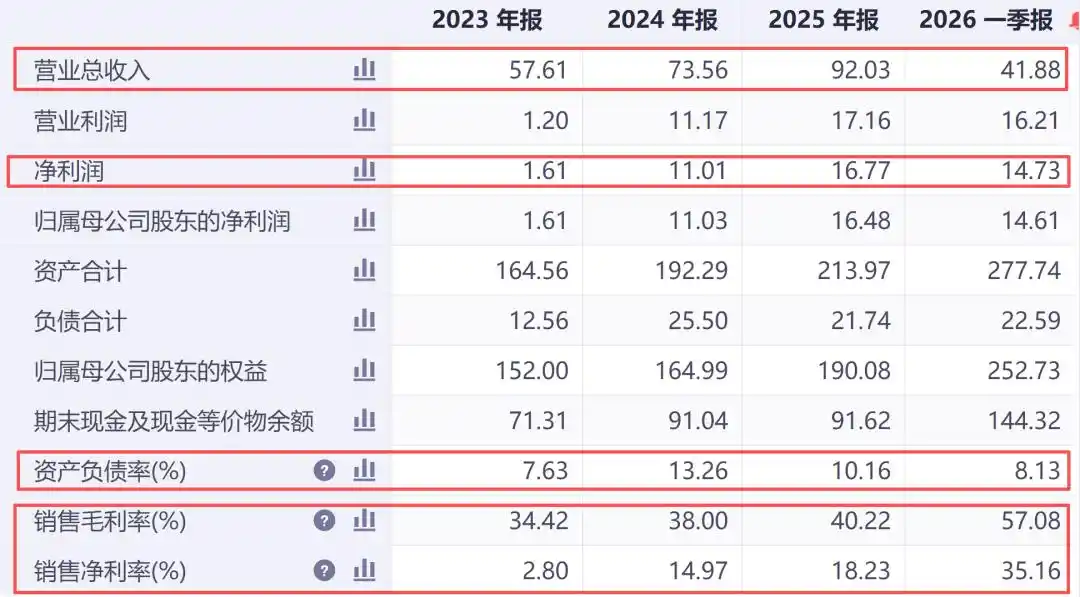
But upon closer look, of the 6.9 billion yuan net profit, 2.05 billion yuan was non-recurring gains and losses, mainly from the fair value increase of securities investments. Excluding this, the net profit was 4.85 billion yuan, up 791% year-on-year.
Source: Company Announcement
First-quarter gross margin was 57.08%, up 12 percentage points quarter-on-quarter. Memory chips saw both volume and price increases, MCU demand was strong—the main business is indeed booming.
But the question is, how long can this boom last? Memory is a typical, strongly cyclical industry. The company itself warned of risks in its earnings forecast: The industry is extremely cyclical, and future performance faces the risk of decline.
Vast industry space, but not everyone can get a piece of the pie
Bocom International estimates the global specialized memory market will grow from $13.6 billion in 2024 to $40.3 billion in 2026. Overseas giants like Samsung and SK Hynix continue to withdraw capacity from niche DRAM and SLC NAND, opening a substitution window for Gigadevice.
Deep cooperation with CXMT is the core support for its DRAM business. Related party procurement quotas for 2026 were significantly raised from 1.182 billion yuan to 5.711 billion yuan. Bocom International initiated coverage with a "Buy" rating, with an A-share target price of 798 yuan; HSBC Global Research gave a target price of 936 HKD.
But the flip side is: The fabless model ties its production capacity lifeblood to foundries, making it vulnerable to being "designed out" during chip shortage cycles. The sibling relationship with CXMT also brings ongoing controversy over related-party transactions and potential competition.
A Few Hard Truths
First, this is not the first time, nor will it be the last. The playbook of "sell high, shout buy low" has been acted out too many times in the A-share market. Every time, they claim it's "based on confidence in the company's long-term value," but actions speak louder—they secure profits first.
Second, 4.4 billion vs. 2 billion (plus 1 billion) — math doesn't lie. He cashed out 4.4 billion and is now promising a 1 billion personal purchase and a 2 billion company buyback. That's a net cash-out of 1.4 billion. What's more, the personal purchase can only start after December 13 because Chinese law prohibits directors from buying company shares within six months of selling. This six-month window happens to be when the stock price is most vulnerable.
Third, the 240,000 shareholders became the counterparty. The boss offloaded shares to the market at a high point. Now, with the price halved, he wants the market to believe "I'm genuinely optimistic." Trust is easily broken but hard to rebuild.
That said, Gigadevice's fundamentals aren't bad. The domestic substitution trend for memory chips is strong, and the company indeed has competitiveness in NOR Flash and niche DRAM. If the memory cycle still has some runway left, Gigadevice below 400 yuan might not be without value.
But the prerequisite is that you must be clear: Are you investing in a chip company, or are you footing the bill for someone else's share sale?
This article is from the WeChat public account "Investment Banking Circle," author: Investment Banking Jun