Heavy selling hits FET, yet buyers refuse to back down

ambcryptoОпубліковано о 2026-01-20Востаннє оновлено о 2026-01-20

Анотація

Fetch.ai (FET) has entered a bearish phase, declining 11% amid a weakening broader market. However, trading activity surged by 145%, indicating intense market participation. This divergence suggests the sell-off may be a market readjustment, with bulls accumulating at lower levels. Key indicators support this view. The Accumulation/Distribution line remains skewed toward buying, showing investors are accumulating FET despite the price drop. The Chaikin Money Flow (CMF) sits at a positive 0.09, signaling that buyers still control market momentum. A dragonfly doji candlestick pattern has formed on the charts, hinting at a potential bullish reversal after the downtrend. For a confirmed recovery, FET must overcome key resistance levels, first at $0.27 and then near $0.31. The broader AI token market has also seen short-term weakness, though its long-term structure remains strong with a 16.59% gain in market cap. FET's current correction appears to be part of a broader adjustment, with strengthening accumulation metrics suggesting downside pressure could soon give way to a bullish rebound.

Fetch.ai [FET] has slipped into one of the more bearish positions in the market as broader market sentiment continues to weaken.

Although FET has declined by 11%, trading activity has intensified sharply. Volume surged by 145% to approximately $145 million, signaling heightened market participation.

This divergence between price and volume suggests that the decline may be part of a broader market readjustment, with bulls positioning at lower levels ahead of a rebound.

Accumulation and buying remain active

The ongoing market pullback has not been fully reflected in key technical indicators, which continue to point toward sustained buying interest.

The Accumulation/Distribution (A/D) indicator, which gauges whether investors are broadly accumulating or distributing FET, remained skewed toward accumulation.

This suggested that buyers continued to dominate despite the price weakness.

Data from the 4-hour chart further supported this view, showing that total traded volume climbed steadily, with accumulated FET reaching approximately 697 million tokens at press time.

Similarly, the Chaikin Money Flow (CMF), which tracks capital inflows and outflows, indicated that buyers still control market momentum.

Measured on a scale from -1 to 1, with 0 representing neutrality, the CMF sat at 0.09 at press time.

This positive reading reinforces a bullish undertone and suggests that continued buying pressure could position FET for a rebound, even as sellers remain active in the short term.

Doji formation hints at upside potential

The price chart shows that FET has formed a dragonfly doji—a T-shaped candlestick pattern that often signals a potential reversal during a downtrend.

This formation emerged after FET endured a pronounced market decline, printing multiple lower lows over several consecutive sessions.

The doji aligns with broader technical indicators that point toward a possible recovery. However, meaningful upside will depend on FET’s ability to clear several critical resistance levels.

The first major hurdle sits at $0.27, a level that previously acted as price support. A successful reclaim of this zone, followed by consolidation above it, would provide the initial signal that trader confidence is returning.

Beyond that, the next key resistance lies near $0.31, the level that marked the previous market peak before the decline accelerated. A decisive move above this zone, accompanied by higher highs, would suggest that traders are fully re-entering positions with a longer-term outlook.

Between the $0.27 resistance and the $0.34 peak, two intermediate resistance zones remain significant and could slow upward momentum. A clean break through this entire range remains the primary objective for a sustained rally.

AI market overview

More broadly, the artificial intelligence segment of the crypto market—where FET is categorized—has underperformed in the short term.

Total market capitalization for AI-related tokens has declined by 1.79% to $19.64 billion, extending a downturn that began around January 15. This short-term weakness reflects broader market caution rather than isolated asset-specific pressure.

From a longer-term perspective, however, the AI token market remains structurally strong. Market capitalization is still up 16.59%, with trading volume holding at $3.34 billion.

FET’s current price action may reflect a similar pattern—a short-term correction within a broader long-term re-adjustment. With accumulation metrics strengthening and reversal signals forming on the chart, the setup suggests that downside pressure could eventually give way to renewed bullish momentum.


Final Thoughts

  • FET accumulation and buying volume continue to rise amid the downturn.
  • Chart patterns suggest rebound potential, though key resistance levels lie ahead.

Пов'язані питання

QWhat is the current market sentiment for Fetch.ai (FET) according to the article?

AThe broader market sentiment continues to weaken, and FET has slipped into one of the more bearish positions.

QDespite the price decline, what does the surge in trading volume and the A/D indicator suggest?

AThe surge in volume (145%) and the Accumulation/Distribution (A/D) indicator remaining skewed toward accumulation suggest that buyers are actively accumulating FET despite the price weakness, signaling heightened market participation and potential positioning for a rebound.

QWhich specific candlestick pattern formed on FET's chart, and what does it typically signal?

AA dragonfly doji, which is a T-shaped candlestick pattern that often signals a potential reversal during a downtrend.

QWhat are the two key resistance levels that FET needs to clear for a sustained rally?

AThe first major resistance is at $0.27, and the next key resistance lies near $0.31. A break above the entire range up to $0.34 is the primary objective for a sustained rally.

QHow has the broader AI token market performed in the short term versus the long term?

AIn the short term, the AI token market capitalization has declined by 1.79%. However, from a longer-term perspective, it remains structurally strong with a market cap still up 16.59%.

Пов'язані матеріали

TechFlow Intelligence Bureau: Anthropic Mythos Triggers Financial Regulatory Alarms, WLFI Unlocks 27 Billion Tokens with 0 Dividends

TechFlow Intelligence Report: Anthropic's Mythos AI model has triggered urgent meetings between the U.S. Treasury Secretary, Fed Chair, and major bank CEOs due to its ability to autonomously find software vulnerabilities and launch attacks, elevating AI safety to a systemic financial risk. In crypto, Bitcoin surpassed $70k amid significant ETF inflows, while the World Liberty Fi (WLFI) project unlocked 27 billion tokens with a controversial profit model directing 100% of protocol profits to the Trump family, offering stakers only 2% inflationary rewards. Other key developments include Microsoft facing criticism over Copilot's reliability, Google's AI search summaries being caught providing false information, and a major AI supply chain attack affecting projects like Apifox and LiteLLM. A solo Bitcoin miner with minimal computing power defied odds to mine a full block. Regulatory shifts are accelerating with Japan classifying crypto as financial instruments and the SEC frameworks taking shape. In macro, a whale shorted $74M in oil, betting against geopolitical tensions, while Moody's warned of a potential $680B AI investment bubble among tech giants. The overarching theme is the convergence of technology, finance, and geopolitics: AI breakthroughs are now systemic threats, geopolitical events are being priced on-chain in real-time, and supply chain vulnerabilities reveal the fragility of our interconnected digital ecosystem.

marsbit16 хв тому

TechFlow Intelligence Bureau: Anthropic Mythos Triggers Financial Regulatory Alarms, WLFI Unlocks 27 Billion Tokens with 0 Dividends

marsbit16 хв тому

From 'Word Unit' to 'Symbol Unit': The Debate Over the Chinese Translation of 'Token' and Its Underlying AI Cognitive Implications

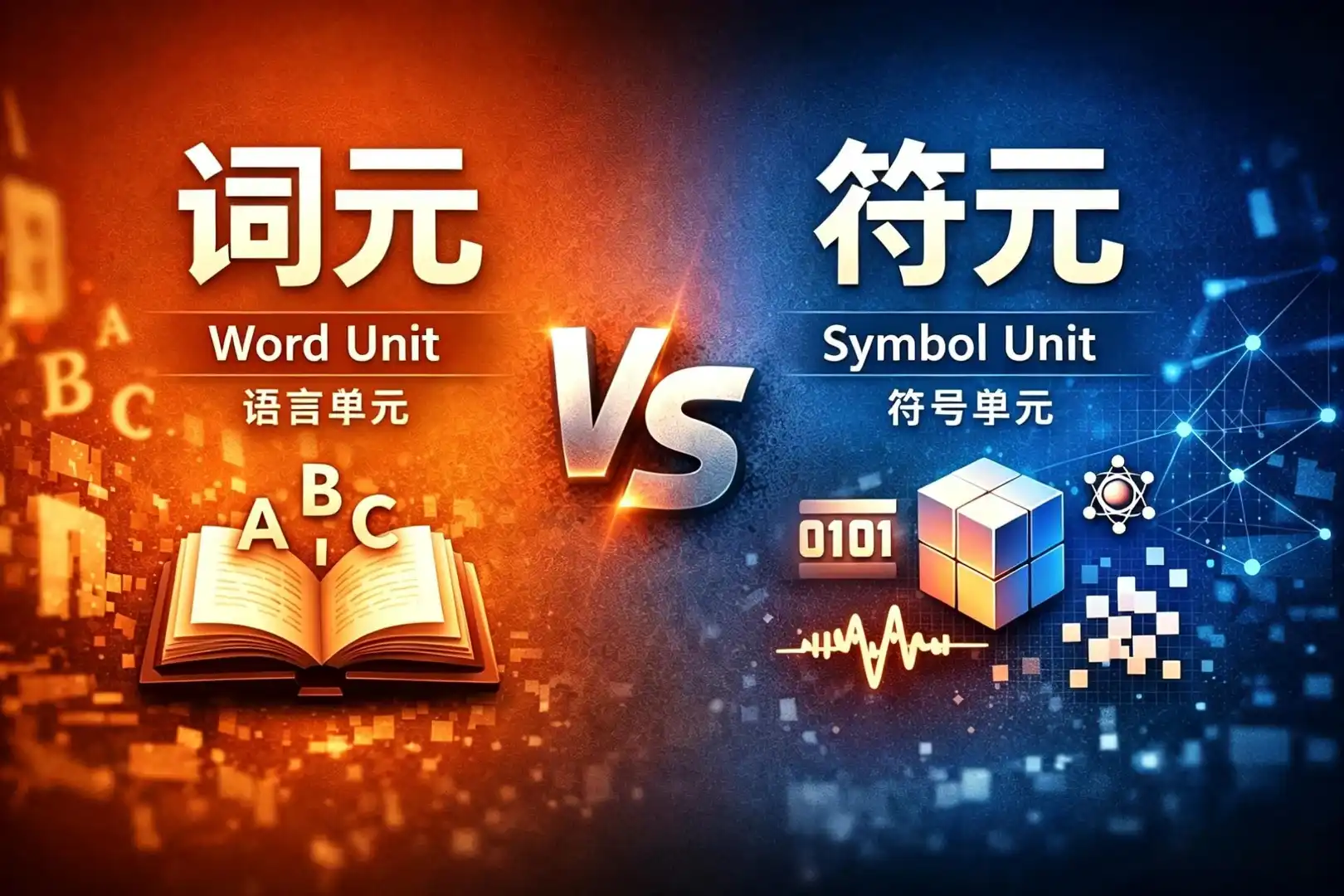
Recent discussions have emerged regarding the official Chinese translation of the AI term "Token," which has been recommended as “词元” (Cíyuán, meaning "word unit") by the National Committee for Terminology in Science and Technology. While this translation is argued to align with historical usage in natural language processing (NLP) and is considered concise and communicable, this article presents a critical counterview advocating for “符元” (Fúyuán, meaning "symbol unit") as a more structurally accurate and future-proof alternative. The author argues that defining Token based on its origin in NLP—as a linguistic semantic unit—overlooks its evolution into a general-purpose, discrete symbolic unit used across multimodal systems (text, image, audio, etc.). Using “词元” ties the concept too narrowly to language, causing cognitive misalignment and semantic drift when applied in non-linguistic contexts. By contrast, “符元” reflects Token’s fundamental role as a symbol in information theory and computation, independent of modality. The article further critiques the reliance on metaphorical extensions (e.g., comparing image patches to “words”) as insufficient for rigorous terminology. It highlights risks including confusion with existing linguistic terms like Lemma (also translated as “词元”), poor cross-lingual reversibility (e.g., difficult back-translation to English), and systemic misunderstanding among non-expert audiences. In conclusion, the author emphasizes that terminology should align with computational essence—not historical usage or explanatory convenience—to ensure conceptual clarity and scalability in AI’s multidisciplinary future. “符元” is proposed as a more neutral, stable, and structurally coherent translation for Token.

marsbit1 год тому

From 'Word Unit' to 'Symbol Unit': The Debate Over the Chinese Translation of 'Token' and Its Underlying AI Cognitive Implications

marsbit1 год тому

Торгівля

Спот
Ф'ючерси

Популярні статті

Як купити FET

Ласкаво просимо до HTX.com! Ми зробили покупку FETCH.ai (FET) простою та зручною. Дотримуйтесь нашої покрокової інструкції, щоб розпочати свою криптовалютну подорож.Крок 1: Створіть обліковий запис на HTXВикористовуйте свою електронну пошту або номер телефону, щоб зареєструвати обліковий запис на HTX безплатно. Пройдіть безпроблемну реєстрацію й отримайте доступ до всіх функцій.ЗареєструватисьКрок 2: Перейдіть до розділу Купити крипту і виберіть спосіб оплатиКредитна/дебетова картка: використовуйте вашу картку Visa або Mastercard, щоб миттєво купити FETCH.ai (FET).Баланс: використовуйте кошти з балансу вашого рахунку HTX для безперешкодної торгівлі.Треті особи: ми додали популярні способи оплати, такі як Google Pay та Apple Pay, щоб підвищити зручність.P2P: Торгуйте безпосередньо з іншими користувачами на HTX.Позабіржова торгівля (OTC): ми пропонуємо індивідуальні послуги та конкурентні обмінні курси для трейдерів.Крок 3: Зберігайте свої FETCH.ai (FET)Після придбання FETCH.ai (FET) збережіть його у своєму обліковому записі на HTX. Крім того, ви можете відправити його в інше місце за допомогою блокчейн-переказу або використовувати його для торгівлі іншими криптовалютами.Крок 4: Торгівля FETCH.ai (FET)Легко торгуйте FETCH.ai (FET) на спотовому ринку HTX. Просто увійдіть до свого облікового запису, виберіть торгову пару, укладайте угоди та спостерігайте за ними в режимі реального часу. Ми пропонуємо зручний досвід як для початківців, так і для досвідчених трейдерів.

87 переглядів усьогоОпубліковано 2024.12.11Оновлено 2025.03.21

Як купити FET

Обговорення

Ласкаво просимо до спільноти HTX. Тут ви можете бути в курсі останніх подій розвитку платформи та отримати доступ до професійної ринкової інформації. Нижче представлені думки користувачів щодо ціни FET (FET).

活动图片