SEC Promotes Tokenized Stocks, Is the Traditional Finance Industry Starting to Worry?

marsbitОпубліковано о 2026-05-22Востаннє оновлено о 2026-05-22

Анотація

The U.S. Securities and Exchange Commission (SEC) is preparing to formally release an "innovation exemption" framework this week. This framework would allow third parties to tokenize U.S. stocks like Apple and Tesla without approval from the listed companies. The move, rooted in a deregulatory vision proposed by pro-crypto commissioners earlier this year, could accelerate the migration of traditional stock markets to blockchain. This development poses a structural threat of "fragmentation" to traditional finance. Core concerns are liquidity fragmentation—where trading volume disperses across multiple blockchains and platforms, leading to price disparities and reduced market efficiency—and revenue fragmentation—where trading fees and intermediary income shift away from domestic exchanges to overseas or competing platforms. The report compares the traditional stock market to a monopolistic "supermarket." Tokenization enables countless "street stalls" to operate outside this system, threatening the exchange's dominance, diluting liquidity for large orders, and slicing into revenue streams. Evidence of this capital fragmentation is already emerging. On the same day the SEC signaled the framework, decentralized platform Hyperliquid saw its RWA (real-world asset) open interest hit a record $2.6 billion, driven by demand for 24/7 on-chain trading of traditional assets. Traditional institutions face a dilemma: either collaborate to build tokenization infrastructure proactively or...

Author: Tiger Research

Compiled by: AididiaoJP, Foresight News

The U.S. Securities and Exchange Commission (SEC) is preparing to formally announce an "innovation exemption" framework this week, which will allow third parties to tokenize U.S. stocks like Apple and Tesla without approval from the listed companies. This move could accelerate the migration of traditional stock markets to blockchain, while also raising deep concerns among exchanges about liquidity fragmentation and revenue loss.

According to a Bloomberg report on May 18, this framework originates from the deregulation vision proposed by pro-crypto commissioners Paul Atkins and Hester Peirce in February. Coinbase and the Blockchain Association had previously submitted formal letters of support, strongly advocating for granting third parties the right to tokenize. However, the guidance issued by Peirce on May 22 is narrower in scope than market expectations, applying only to on-chain stock instruments that fully retain shareholder rights and explicitly excluding synthetic stock tokens that do not carry voting or dividend rights.

Two Core Threats: Liquidity Fragmentation and Revenue Fragmentation

The core impact of tokenized stocks lies in "fragmentation." While the crypto industry often discusses liquidity aggregation, the traditional finance world views it as a structural threat.

  • Liquidity Fragmentation: When the same stock is tokenized on different blockchains and decentralized platforms, the trading volume and order flow originally concentrated on the NYSE or Nasdaq will disperse across multiple venues. This will lead to price disparities between platforms, increased slippage for large orders, and reduced overall market efficiency.
  • Revenue Fragmentation: With the dispersion of trading venues, transaction fees and intermediary revenues that originally belonged to domestic exchanges will flow to overseas or competing platforms, directly impacting national financial competitiveness.
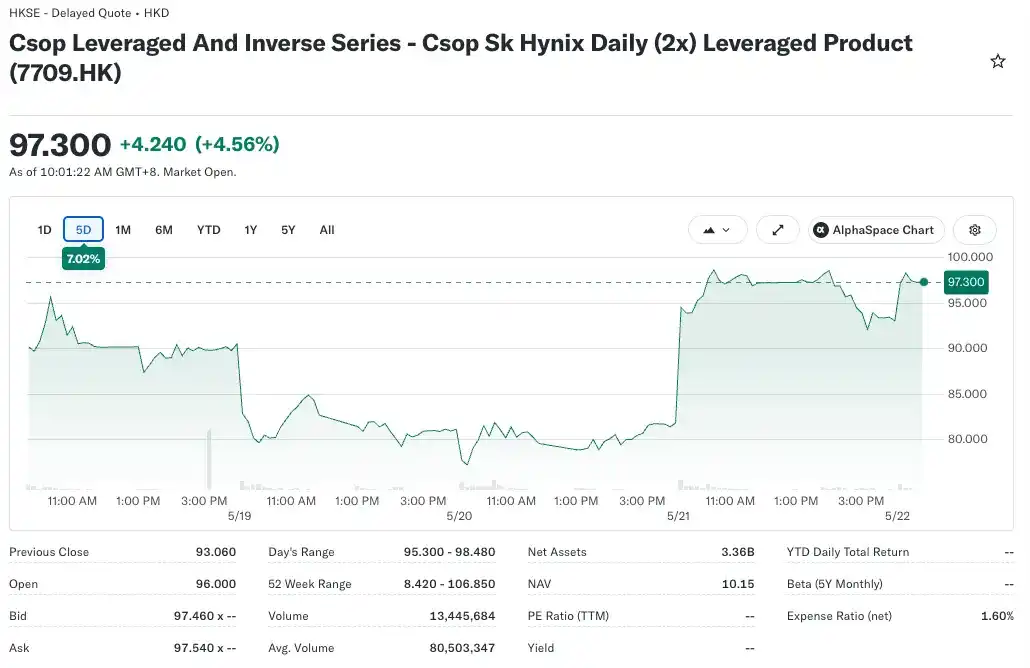
A Tiger Research report uses South Korea as an example: The SK Hynix 2x Leveraged ETF launched by Hong Kong asset manager CSOP has grown into the world's largest single-stock leveraged ETF, with assets exceeding 110 billion won (approximately $80 billion). If South Korea could have taken the lead in launching similar products through regulatory sandboxes, these management fees and financial revenues could have stayed within the country.

The End of Traditional Exchanges' "Supermarket" Monopoly
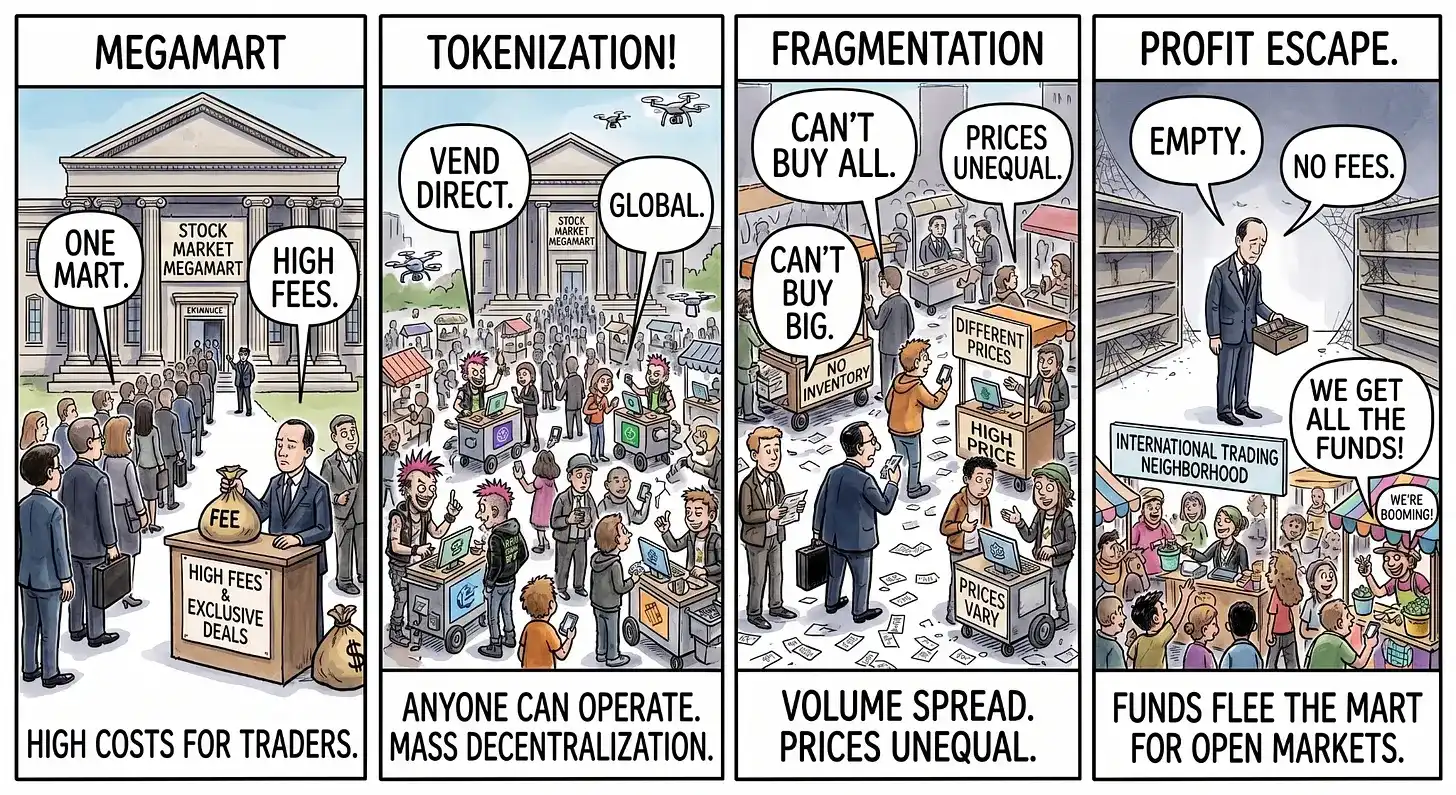
The report uses a vivid metaphor to describe this change: the traditional stock market is like a dominant supermarket where all buyers and sellers are concentrated, and the exchange monopolizes transactions and collects fees. Tokenized stocks are akin to allowing anyone to set up thousands of street stalls without permission, conducting trades directly outside the supermarket.

This dispersion will lead to buyer loss, thinner inventory at each stall, difficulty in executing large trades, and the slicing up of revenue sources. If domestic exchanges hesitate due to regulatory constraints, competing platforms in other jurisdictions will rush to seize global capital flows and intermediary revenues.

Capital Fragmentation Is Already Happening
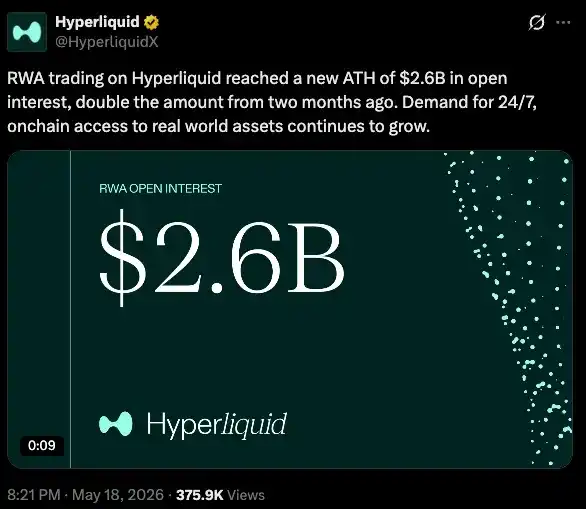
On the same day the SEC signaled the framework (May 18), the open interest for RWAs (Real World Assets) on the decentralized platform Hyperliquid surpassed $2.6 billion, reaching a record high. Driven by the demand for 24/7 on-chain trading of traditional assets, RWA trading volume on perpetual DEXs is expected to surge further.

Traditional financial institutions and regulators face a dilemma: one option is to proactively build tokenization infrastructure through cooperation, like the NYSE; the other is to lobby regulators to block innovation to protect existing revenues. Regulators are also conflicted—they must control the pace of innovation while preventing domestic revenue from being siphoned off by overseas platforms.

Even if the framework is formally announced, potential conflicts are just beginning. Future focal points will include:

  • A second "clarity war" surrounding shareholder rights;
  • How to bring platforms like Hyperliquid, which have grown in regulatory gray areas, into the regulatory system. If deemed unlicensed exchanges, this could trigger a new wave of liquidity and uncertainty shocks.

In the era of digital assets, if financial institutions and jurisdictions do not act quickly, they will permanently lose their long-monopolized fee rights and financial leadership, and capital will continue to disperse in all directions.

Пов'язані питання

QWhat is the SEC's upcoming 'innovation exemption' framework expected to allow, according to the article?

AThe SEC's upcoming 'innovation exemption' framework is expected to allow third parties to tokenize stocks like Apple and Tesla on the blockchain without requiring approval from the companies themselves, provided the tokenized instruments fully retain shareholder rights such as voting and dividends.

QWhat are the two main 'fragmentation' threats that tokenized stocks pose to traditional finance, as outlined in the Tiger Research report?

AThe two main 'fragmentation' threats are liquidity fragmentation and revenue fragmentation. Liquidity fragmentation means trading volume spreads across multiple blockchain platforms, causing price discrepancies and higher slippage. Revenue fragmentation refers to the diversion of trading fees and intermediary income away from national exchanges to competing or foreign platforms.

QWhat example does the article use to illustrate the financial loss a country can suffer by not moving quickly with tokenized products?

AThe article uses the example of South Korea. A Hong Kong-based asset manager's leveraged ETF on SK Hynix has grown into the world's largest single-stock leveraged ETF. The report suggests that if South Korea had acted faster through a regulatory sandbox, the management fees and financial revenue from such a product could have remained within the country.

QWhat platform's RWA (Real World Asset) open interest hit a record high on the same day the SEC signaled its new framework?

AOn the same day (May 18), the decentralized platform Hyperliquid saw its RWA open interest surge to a record high, exceeding $2.6 billion.

QWhat are the two strategic options traditional financial institutions and regulators face in response to tokenization, as mentioned in the article?

AThe two strategic options are: 1) To proactively build tokenization infrastructure through partnerships, similar to what the NYSE is doing. 2) To lobby regulators to block innovation in order to protect existing revenue streams.

Пов'язані матеріали

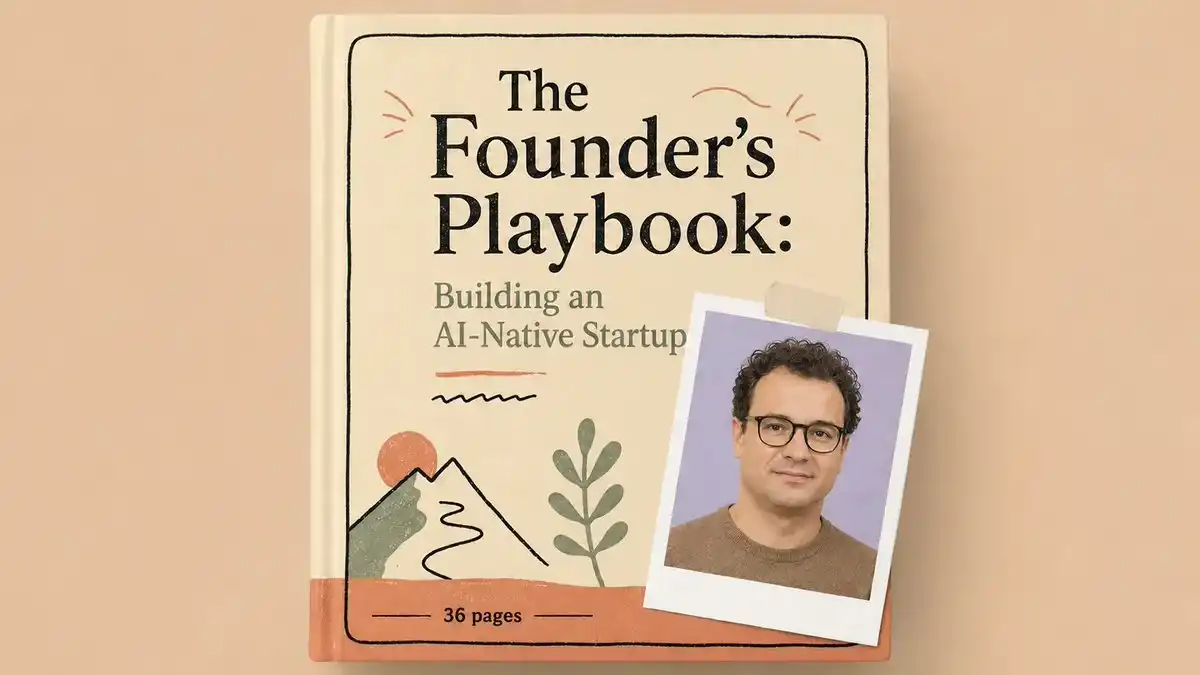
Anthropic Major Release: "The Founder's Playbook" - All 4 Stages of Entrepreneurship, Completely Reimagined with AI

**Anthropic Releases "The Founder's Playbook," Reimagining the Four Stages of Startups with AI** The logic of entrepreneurship is being fundamentally reshaped by AI. Anthropic's new handbook, "The Founder's Playbook: Building an AI-Native Startup," defines the AI-native startup as a new species: not a traditional company with AI tools, but a venture driven by AI from day one. The founder's role is transforming from a hands-on builder to a conductor or architect, orchestrating AI agents for execution while focusing on high-level judgment and strategy. Anthropic outlines a product matrix of Claude tools for different tasks: Claude Chat for interactive research, Claude Code for generating production-ready code, and Claude Cowork for automating knowledge-intensive workflows. The handbook structures the startup lifecycle into four stages, detailing core goals, pitfalls, and AI applications for each: 1. **Idea Stage**: Focuses on validating a real problem. The core challenge is avoiding confirmation bias. AI practices include using Claude as a "structured devil's advocate" to challenge assumptions and for automated market/competitor research. 2. **MVP Stage**: Aims to gather early signals of Product-Market Fit (PMF). Key risks are technical debt and scope creep due to rapid AI-assisted development. Recommended AI uses include maintaining project memory documents (e.g., CLAUDE.md), using Claude Code for structured coding, and automating user feedback analysis. 3. **Launch Stage**: Centers on establishing scalable growth, operations, and compliance. Challenges include accelerating technical debt and founders becoming bottlenecks. AI should be used to build an "operating system" for launch—automating routine tasks (scheduling, reporting, content) and code audits—freeing founders for critical decisions. 4. **Scale Stage**: Focuses on achieving sustainable business operations. The main challenge is delegating operational control. AI should be leveraged for differentiated marketing, operational optimization, and building competitive moats through data network effects. The handbook concludes that in the AI era, "Can we build it?" is no longer the primary constraint. The advantage shifts back to foundational strengths: **insight, judgment, and a deep understanding of a specific problem and audience.**

marsbit3 хв тому

Anthropic Major Release: "The Founder's Playbook" - All 4 Stages of Entrepreneurship, Completely Reimagined with AI

marsbit3 хв тому

Eight Departments Launch Severe Crackdown on Cross-Border Securities Firms, How to Interpret This?

China's top financial regulators, including the CSRC and seven other ministries, have launched a sweeping crackdown on unlicensed cross-border securities operations. The core action involves a joint enforcement plan and the issuance of administrative penalties against major offshore internet brokers like Futu and Tiger Brokers for conducting unauthorized securities business in mainland China without a domestic license. The primary legal basis is China's requirement for securities businesses to operate with proper, locally issued licenses. The crackdown aims to eliminate a major regulatory gray area, plugging channels that allowed massive, unmonitored capital outflows which posed risks to financial stability, currency controls, and foreign exchange reserves. It also seeks to protect mainland investors who previously lacked legal recourse when dealing with offshore platforms and to secure sensitive financial data. The immediate impact is severe for the targeted brokers, including a complete ban on new mainland business, forced liquidation of existing mainland client positions over two years, and the confiscation of illegal profits estimated in the billions. Their U.S.-listed shares plummeted in response. Market analysts warn that the forced sell-off of an estimated 250-280 billion RMB in assets, concentrated in U.S. tech stocks, Chinese ADRs, and Hong Kong equities, could create sustained selling pressure on these markets over the next two years, potentially lowering valuations. For mainland investors, legal cross-border investment channels will become extremely constrained. The high asset threshold for the Stock Connect program and the severe shortage of QDII fund quotas—leading to chronic high premiums on popular U.S.-focused ETFs—mean retail access to overseas markets like the U.S. will be sharply limited. Conversely, some of the returning capital may flow into domestic A-share sectors like AI, semiconductors, and advanced manufacturing. However, this could further inflate valuations in these already elevated sectors. In conclusion, regulators frame this move not as closing off cross-border investment, but as a necessary step to enforce compliance, manage systemic risk, and steer investors toward regulated, protected channels like QDII and Stock Connect for the long-term health of the financial system.

链捕手5 хв тому

Eight Departments Launch Severe Crackdown on Cross-Border Securities Firms, How to Interpret This?

链捕手5 хв тому

Торгівля

Спот
Ф'ючерси
活动图片