CoreWeave: The Inflection Point Has Arrived. Has the 'Hard-Working Underdog' Finally Turned Profitable?

marsbitОпубліковано о 2026-08-13Востаннє оновлено о 2026-08-13

Анотація

CoreWeave, an AI cloud unicorn, released its Q2 2026 earnings on August 12, with shares rising about 15% post-announcement. While overall performance did not significantly exceed expectations, key positive trends emerged. Revenue reached approximately $2.58 billion, up 112% year-over-year, though slightly below the high end of prior guidance. A major highlight was the acceleration in computing power deployment, with Active Power increasing by a record 500 Mw to 1,500 Mw, far surpassing market forecasts and signaling faster future revenue growth. Capital expenditures also hit a new high of $9.4 billion. Importantly, profitability showed signs of inflection. "True" gross margin (after deducting cost of revenue and Tech & Infrastructure expenses) rose to 7.3%, up 3 percentage points from the previous quarter. As revenue scales, depreciation and operating expenses are being diluted. Adjusted operating profit margin improved significantly to 5% from 1% last quarter. The company's guidance points to continued acceleration, with Q3 revenue growth expected at 158% and margins continuing to climb. Management raised full-year 2026 guidance, projecting Q4 revenue growth of around 194% and an adjusted operating margin of approximately 14.6%, suggesting a rapid path toward its 25%-30% long-term target. Recent developments, including a 25% price increase for its services and the launch of higher-margin Managed Inference offerings, support the improving profitability narrative. While lo...

On August 12th after US market hours, AI cloud unicorn CoreWeave released its Q2 2026 earnings report. Following the announcement, the stock price rose approximately 15%. Overall, from the perspective of earnings surprise, the quarterly performance wasn't exceptionally stellar.

The core positive factor is that, from a trend perspective, while the company's business and revenue scale continue to accelerate, profitability indeed shows signs of having bottomed out and rebounding. Additionally, the pace of compute capacity delivery, which had been delayed multiple times previously, significantly improved this quarter.

Regarding guidance, although the outlook for the next quarter and full year wasn't significantly above expectations either, it continues to point towards accelerating growth and a sustained upward trend in profitability, which is also favorable for the mid-to-long-term narrative. Looking in detail:

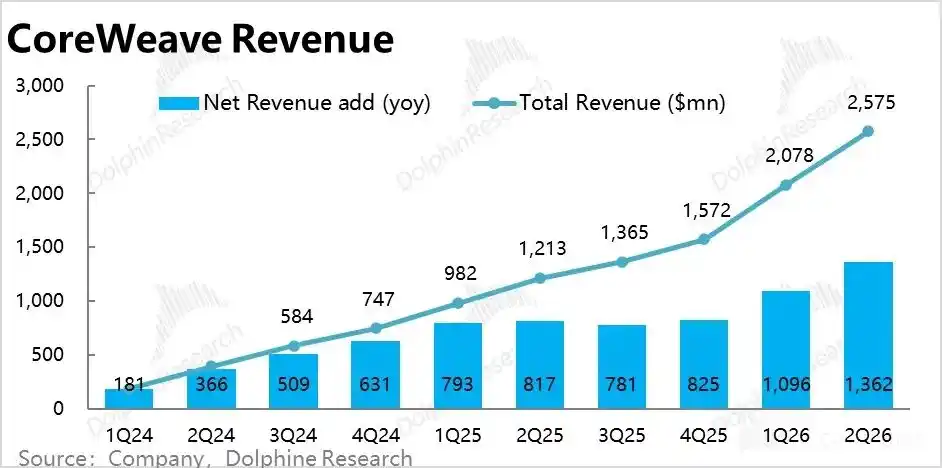
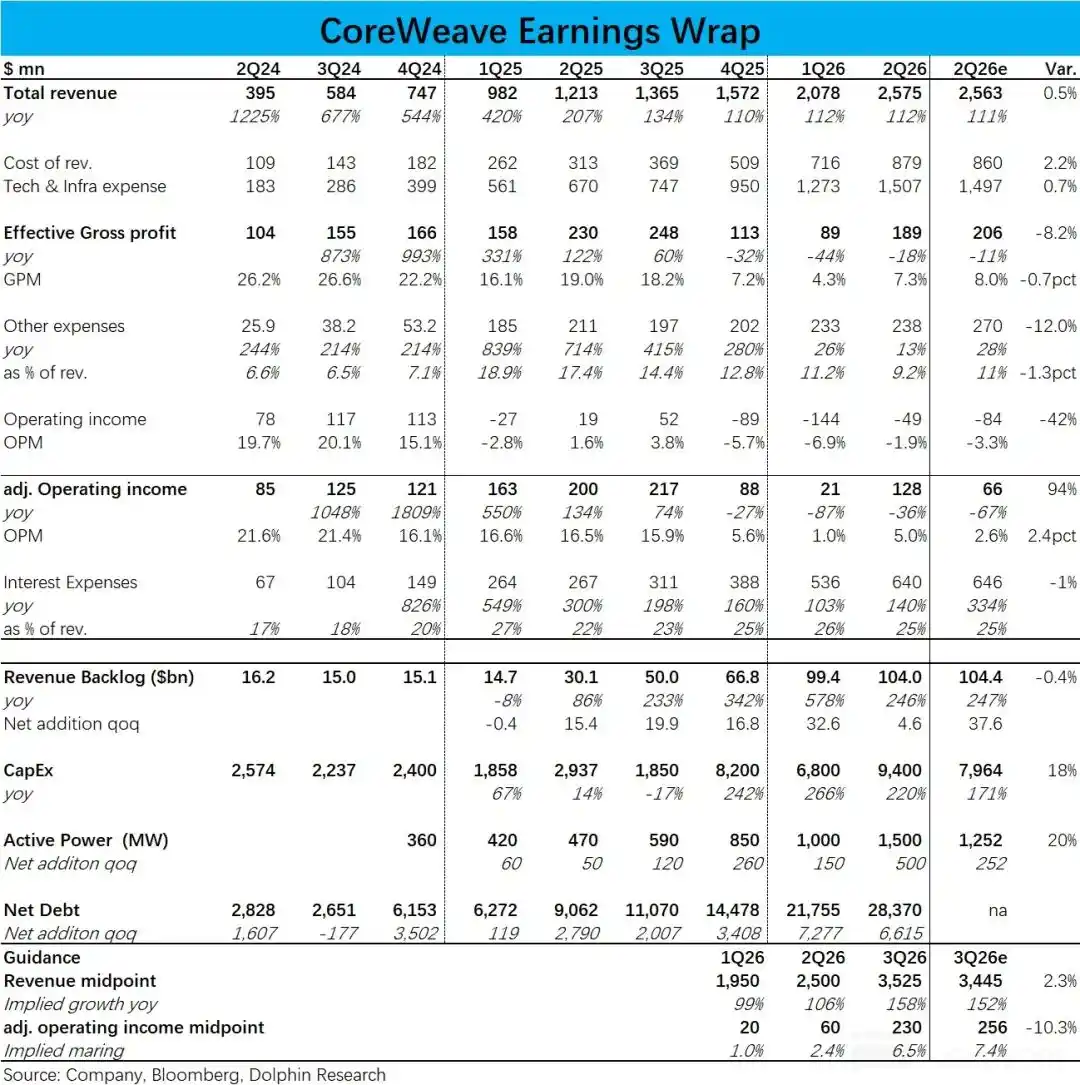
1. Growth Continues to Accelerate, But Not a Surprise: This quarter, the company's total revenue reached nearly $2.58 billion, a year-over-year increase of 112%, with a net increase of nearly $1.4 billion, showing continued upward momentum. However, this figure was slightly below the upper end of previous guidance and only roughly in line with market expectations, so it wasn't a positive surprise from an earnings surprise perspective.

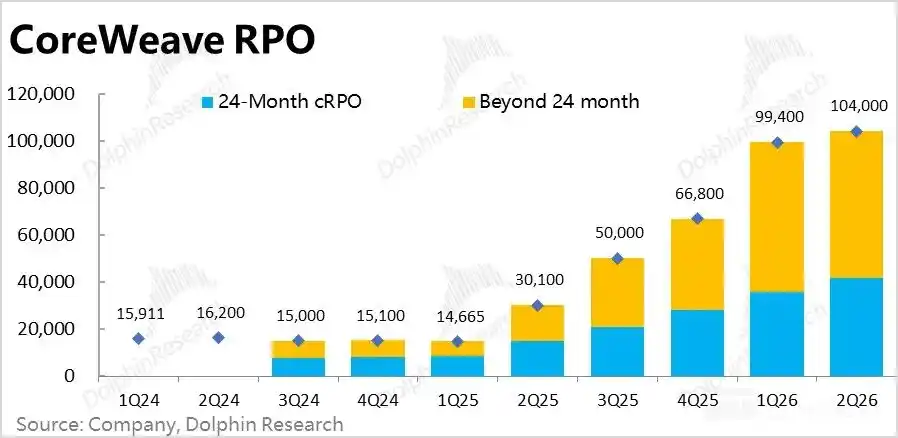
Also, by the end of the quarter, the Remaining Performance Obligations (RPO) balance stood at $104 billion, up only $4.6 billion sequentially from last quarter. Given the absence of recent news reports about the company signing major new contracts, market expectations for RPO growth were indeed not high. However, Dolphin Research noted that some investment banks had expected around $100 billion, making the actual performance slightly below expectations as well.

Additionally, according to company disclosure, the value of new contracts signed so far in Q3 is approximately $25 billion, indicating a rebound in growth momentum.
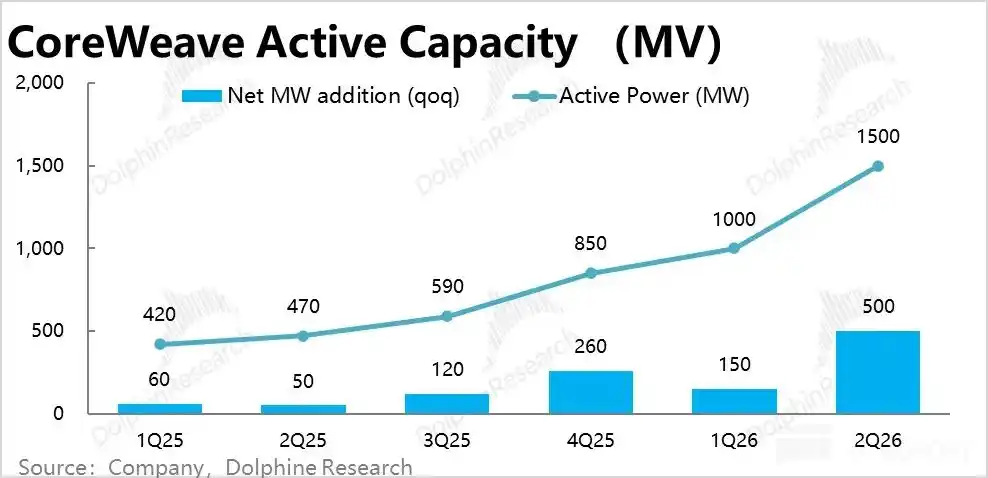
2. Accelerated Pace of Compute Capacity Deployment: The most important operational metric—deployed compute capacity scale (Active Power)—reached 1,500 MW this quarter, representing a net sequential increase of 500 MW, a record high, significantly exceeding market expectations of 250~300 MW.

A major point of market skepticism last quarter was the slow pace of compute capacity deployment, raising concerns about the company's execution efficiency. This quarter's performance effectively dispels such doubts with concrete action and, as a leading indicator, suggests a significant acceleration in subsequent revenue realization.

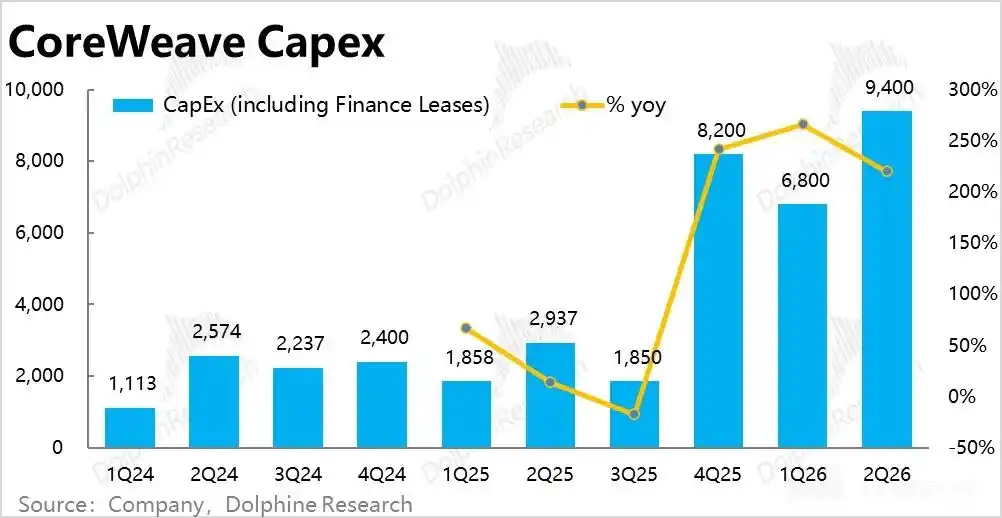
Corresponding to the substantial acceleration and outperformance in compute capacity build-out, quarterly CapEx investment reached $9.4 billion, an increase of $2.6 billion sequentially, also hitting a new record high and significantly above market expectations of $7.96 billion.

According to company guidance, next quarter's CapEx will further increase to $11.5~13.5 billion (based on full-year guidance, it may fall back below the $10 billion level in Q4). Although the increased CapEx is partly due to hardware price increases, it also implies that the scale of compute capacity deployed next quarter should exceed this quarter's, indicating an acceleration phase for both compute build-out and investment.
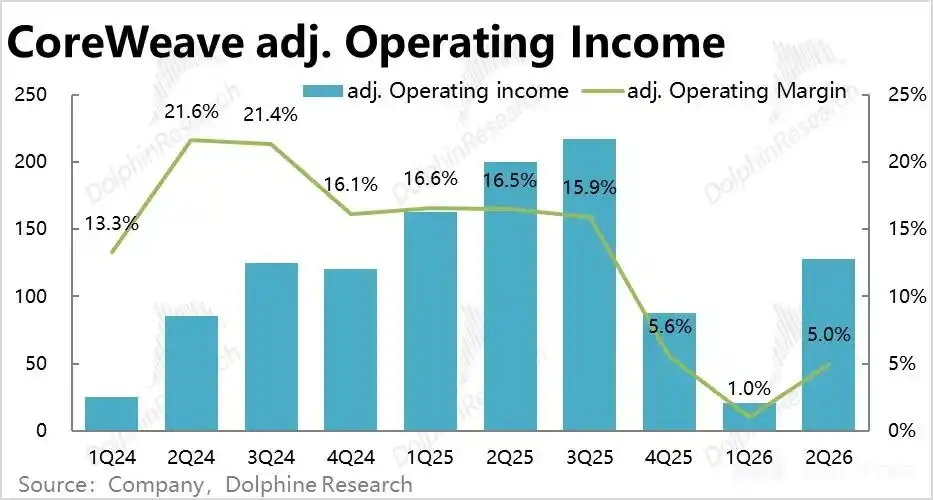
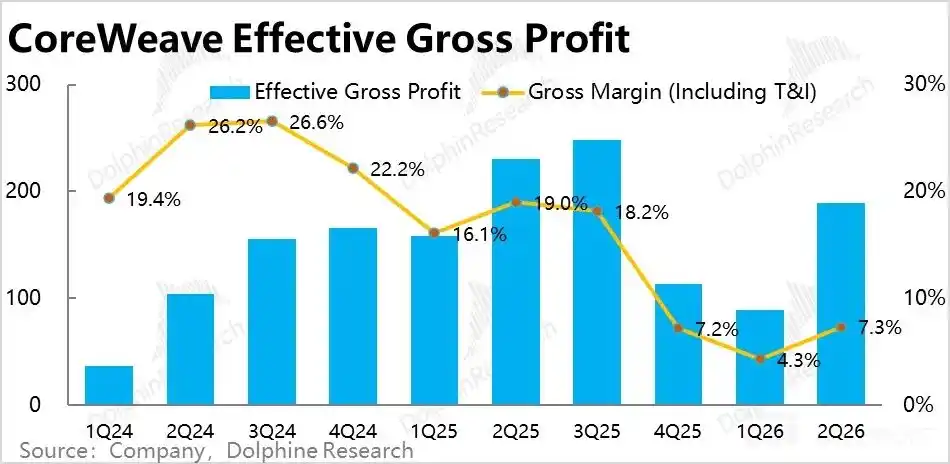
3. Has the Profitability Inflection Point Arrived? Along with the rapid expansion of revenue scale, the company's economies of scale and profitability inflection point also appear to have emerged. This quarter's "real" gross margin (deducting cost of revenue and Tech & Infra expenses) reached 7.3%, an improvement of 3 percentage points compared to the low point last quarter.

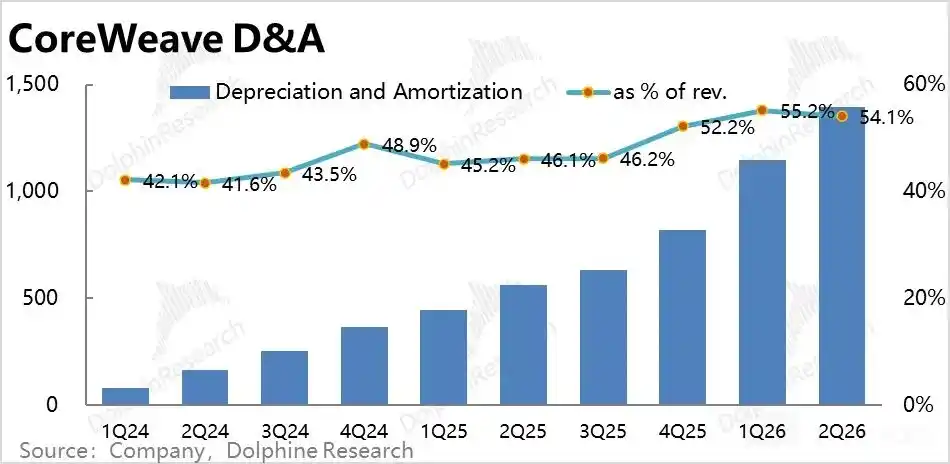
The largest single cost item—depreciation and amortization reached $1.39 billion, a year-over-year increase of 149%, accounting for 54.1% of revenue, a decrease of 1.1 percentage points sequentially. This shows that, under stronger revenue scale effects, the inflection point for diluting the depreciation expense rate has begun to appear.
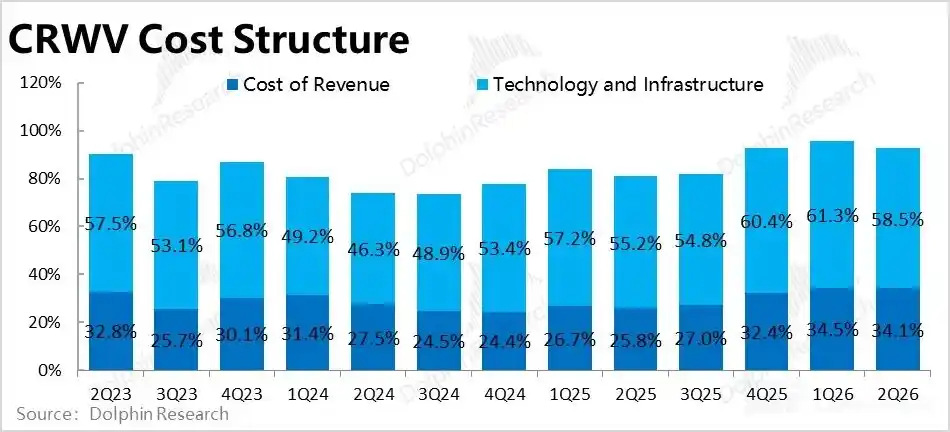
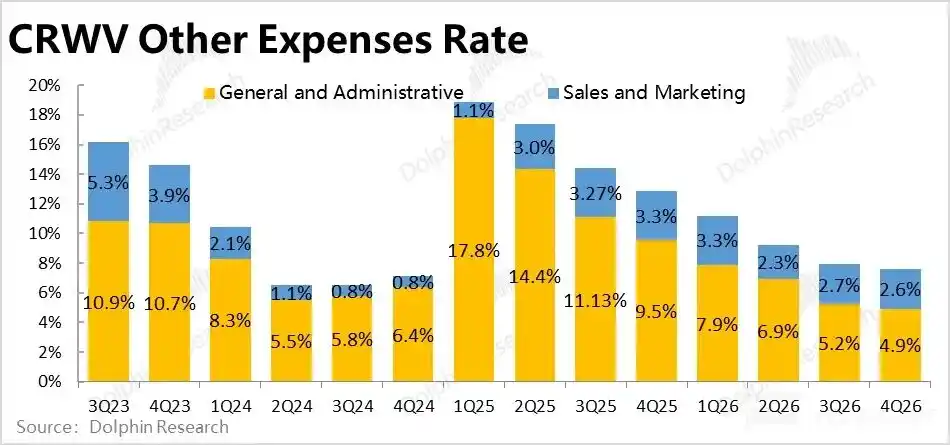
With improved gross margins, and the company's sales and administrative expenses being relatively "sticky" with limited growth, these expense rates are continuously being diluted by the growing revenue scale, contributing roughly an additional 0.3 percentage points of margin sequentially this quarter.

Furthermore, the proportion of stock-based compensation expense to revenue also decreased by about 1 percentage point sequentially. With these multiple tailwinds, the company's key metric of adjusted operating margin reached 5% this quarter, a significant improvement from 1% last quarter.

This aligns with management's previous commitment that Q1 would be the low point for profitability and supports Dolphin Research's earlier in-depth analysis that the profitability of cloud providers' AI businesses may be generally underestimated.
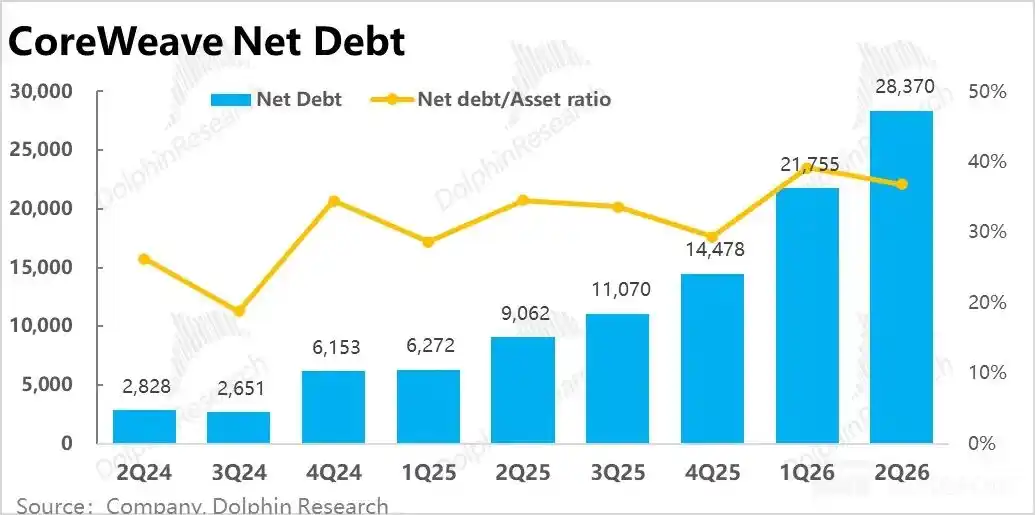
4. Debt Continues to Grow, But Pressure Isn't Increasing: As the company's current investments far exceed its cash generation, the business is essentially financed by capital raising. Therefore, the ability to secure sufficient funding and the associated risks are crucial factors.

Net debt reached nearly $27.3 billion by quarter-end, an increase of about $6.6 billion sequentially, with growth slightly decelerating compared to last quarter. The debt ratio (to total assets) reached 37%, also slightly down from 39% last quarter.

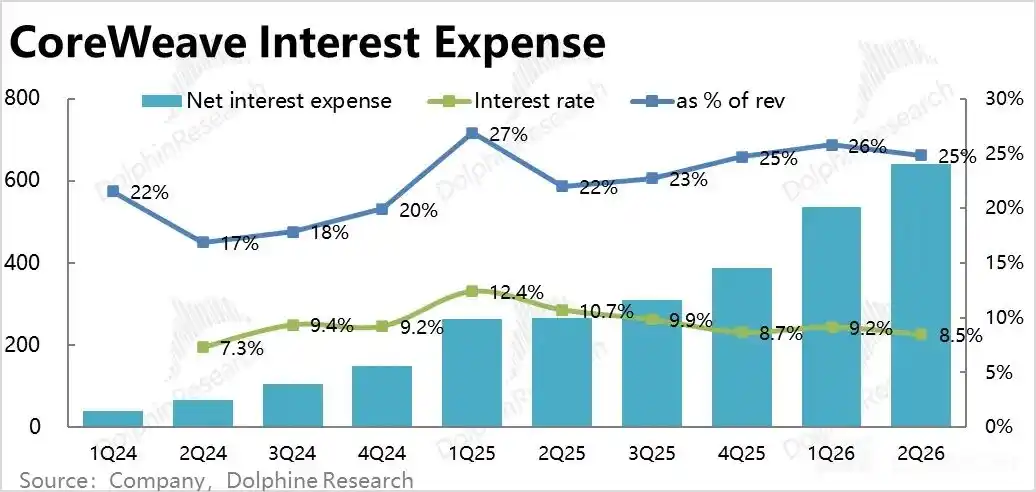
Meanwhile, interest expense reached $640 million vs. $540 million last quarter, continuing to climb. However, whether looking at interest expense as a percentage of revenue (declining from 26% to 25%) or the average interest rate on debt (decreasing from 9.2% to 8.5%), the pressure from debt and its erosion of profits is relatively easing.

During the earnings call, the company also announced it has secured over $14 billion in cumulative equity/debt financing, ensuring funding sources for investments in the coming quarters.
5. Key Earnings Information at a Glance
Dolphin Research Viewpoint:

1. As seen from the above analysis, the core positive signals conveyed in this earnings report mainly include: a. Compute capacity build-out speed significantly exceeded expectations, and more, faster compute supply implies faster revenue ramp-up. b. With accelerating business scale growth and stronger economies of scale, depreciation, expenses, and interest costs are being diluted. Both gross and operating margins have bottomed out and rebounded, showing a sustained improvement trend in the market's most-worried-about ROI.

2. It's not just the current quarter's performance; guidance also points towards continued acceleration in revenue growth and a sustained upward trend in profitability.

First, for the next quarter's guidance, the midpoint implies Q3 revenue of $3.53 billion, a growth rate of 158%, with both absolute amount and growth rate showing further significant acceleration compared to this quarter. Adjusted profit guidance for next quarter is $230 million, with a margin of 6.5%, slightly below market expectations of $260 million. However, the implied margin still continues to rise compared to this quarter.

Furthermore, the company once again raised its full-year 2026 guidance. Calculations suggest this implies Q4 revenue expectations of $4.3~4.9 billion, with a midpoint year-over-year growth rate of 194%, accelerating further from Q3.

Meanwhile, the adjusted operating profit expectation for Q4 is $610~740 million, implying a margin of 14.6%, indicating a very rapid pace of subsequent margin expansion, making the 25%~30% steady-state margin target seem not so distant.

3. Recent Developments and Investment Logic

Disregarding the earnings, judging solely from the recent stock performance of many tech companies followed by Dolphin Research, there are signs of a slight recovery in market risk appetite. This includes, but is not limited to, Shopify, Airbnb, Sea, Unity, Palantir, etc., which all saw stock price increases of at least 10% after reporting better-than-expected results (regardless of whether the magnitude of the beat was exceptionally large), with gains of 15%~20% not uncommon. Therefore, for a naturally high-beta company like CoreWeave, the after-hours gain isn't particularly exaggerated.

Additionally, the market once worried that cloud providers, as the primary bearers of CapEx spending and major victims of hardware price increases like memory, faced unprecedented concerns about ROI, leading to them becoming the short side in pairs trades. Consequently, their stock performance was generally poor, with new cloud providers suffering even greater declines.

But recently, with cloud business growth at giants like Microsoft and Amazon accelerating beyond expectations, and AI cloud profitability appearing not as bad as feared, market sentiment towards cloud providers has reversed again.

Regarding recent developments, there are two particularly significant positive news items. First, the company announced that after July, it has implemented a general price increase of 25% across its product lines (partly to offset hardware price increases). We believe this undoubtedly reflects the current significant supply-demand imbalance for compute and will notably aid the improvement of the company's profitability.

Secondly, beyond its "bare metal" direct hardware rental business, the company has begun offering a TaaS-like service—Managed Inference. This involves deploying models on servers and providing users with API access directly. According to Dolphin Research's previous analysis, TaaS-like services typically offer significantly higher margins than "bare metal" rentals, which is also a positive for the company's profitability.

Therefore, currently, achieving a steady-state margin of around 25%~30% no longer seems so distant for the company.

4. Long-term, the competitive landscape for new cloud providers doesn't appear particularly favorable. Once the current phase of compute scarcity passes and customer demands shift from who can deliver more efficiently to who can provide better services at more affordable prices, it's difficult to predict the ultimate fate of new cloud providers.

However, considering the company is inherently a high-risk, high-reward investment, with opportunities more focused on medium-term trends rather than long-term holding, the recent increase in market focus and recognition for cloud service companies, coupled with their generally better-than-expected earnings, means that more volatile new cloud providers might continue to deliver faster returns.

This article is from the WeChat public account "Dolphin Investment Research" (ID: haituntouyan), author: Dolphin Research


Пов'язані питання

QWhat were the key positive signals in CoreWeave's Q2 2026 earnings report that drove its stock price up approximately 15%?

AThe key positive signals were: 1) A significant acceleration in the scale of active computing power deployed, with a net increase of 500 Mw, far exceeding market expectations and indicating faster future revenue growth. 2) A clear inflection point in profitability, with the adjusted operating margin improving to 5% from 1% last quarter, showing that economies of scale are starting to dilute costs like depreciation and interest expenses.

QHow did CoreWeave's capital expenditure (Capex) and future guidance reflect its business acceleration?

ACapex for the quarter reached $9.4 billion, a new high and significantly above market expectations. Guidance indicates Capex will further increase to $11.5-$13.5 billion next quarter, signaling an accelerated phase of computing power construction and investment. The company's revenue and profit margin guidance for the following quarters also points towards continued acceleration and rapid margin improvement.

QWhat measures did CoreWeave take to alleviate concerns about its heavy debt burden and financing-driven model?

AWhile net debt increased, the debt ratio relative to total assets slightly decreased. More importantly, the interest expense as a percentage of revenue declined, and the average interest rate on debt fell, indicating a relative easing of debt pressure. The company also announced it had secured over $14 billion in cumulative equity/debt funding, ensuring capital sources for the coming quarters.

QWhat recent operational developments does the article mention that are beneficial for CoreWeave's future profitability?

ATwo key developments are: 1) CoreWeave implemented a 25% price increase across its product lines in July, reflecting continued strong demand and helping to offset hardware cost inflation. 2) The company began offering Managed Inference, a TaaS (Training/Inference as a Service)-like model, which typically carries higher profit margins than its core 'bare-metal' hardware rental business.

QAccording to the article, what is the long-term outlook and investment rationale for 'new cloud' providers like CoreWeave?

AThe long-term competitive landscape for 'new cloud' providers is viewed as challenging. Once the current compute shortage phase passes and competition shifts more towards price and service quality, their ultimate fate is uncertain. However, the investment rationale is seen as a mid-term trend play. Given their high-risk, high-return nature and recent positive market sentiment towards cloud services, these 'new cloud' companies offer the potential for rapid returns in the current environment, despite long-term uncertainties.

Пов'язані матеріали

Why Are Crypto Cards Struggling to Replace Visa?

Encrypted bank cards struggle to replace Visa due to fundamental differences in payment economics. Analysis reveals Visa’s fee is only about 7-9% of the total merchant discount rate (MDR), with the largest share (70-80%) going to issuing banks as interchange fees. Most crypto debit cards, operating on prepaid stablecoins like USDC, lack the credit-based revenue model of traditional reward credit cards. This results in significantly lower interchange income. Even with higher exempt rates for small banks, the total fee pool for a $100 stablecoin debit transaction is only about $0.62, leaving minimal room for profit sharing after covering network, processor, and bank costs. Stablecoins primarily innovate in the back-end settlement layer, enabling near real-time T+0 settlements on networks like Visa and Mastercard instead of the traditional T+2 cycle. This optimizes working capital for issuers but doesn't lower costs for merchants or improve the consumer checkout experience. Card networks are actively integrating stablecoins for settlement, seeing them as a system enhancement, not a threat. While stablecoins can reduce costs in cross-border payments by eliminating intermediaries and forex layers, this logic doesn't translate to domestic card payments where the cost structure is dominated by interchange fees. The core promise of bypassing card networks to save merchants money is flawed, as removing Visa only cuts the smallest fee component.

marsbit14 хв тому

Why Are Crypto Cards Struggling to Replace Visa?

marsbit14 хв тому

In the Era of MiCA, Why is the EU CASP License Becoming Increasingly Important?

In the MiCA era, the EU's Crypto-Asset Service Provider (CASP) license is becoming increasingly crucial, especially after the transitional period ends on July 1, 2026. Post-deadline, crypto service providers operating under old national frameworks must either secure MiCA authorization or exit the EU market, rendering the previous model of using a single member state's VASP registration for pan-European operations obsolete. The CASP license fundamentally changes the regulatory landscape by shifting from a fragmented, nation-by-nation registration system to a unified "passporting" regime. Authorized in one member state, a CASP can provide its licensed services across the EU, offering greater legal clarity and operational efficiency compared to the past. MiCA defines CASP authorization based on specific service types, such as custody, trading platform operation, exchange, and transfer of crypto-assets. The scope of authorization is determined by actual business functions, not self-selection, with corresponding prudential requirements like capital adequacy. Banks and institutional clients increasingly value CASP status as it provides a verifiable, standardized framework for due diligence, accessible through ESMA's public registers. The regulation significantly limits the "reverse solicitation" exception for non-EU firms. Active marketing or outreach to EU clients generally necessitates a CASP license, moving away from reliance on offshore entities. It's important to note that a CASP license is not a universal permit; it covers crypto-asset services but does not automatically authorize traditional financial activities like payment services (governed by PSD2) or dealing in financial instruments (governed by MiFID II). A complete crypto-fiat payment solution often requires both a CASP and a licensed payment institution. Priority candidates for pursuing a CASP license include: 1) Platforms with the EU as a primary long-term market; 2) Projects seeking partnerships with EU banks or large institutions; and 3) Groups aiming to consolidate cross-border operations under one regulated entity. In contrast, early-stage projects without concrete EU plans may find the process premature. Ultimately, the growing importance of the CASP stems from the end of regulatory ambiguity in Europe. It has evolved from a consideration to a fundamental requirement for market access, client trust, and sustainable operations within the EU's now-harmonized crypto regulatory framework.

marsbit17 хв тому

In the Era of MiCA, Why is the EU CASP License Becoming Increasingly Important?

marsbit17 хв тому

Bernstein Research Report Analysis: Global Semiconductor Equipment WFE Grows 75% in Two Years, DRAM and Logic Chips Are the Biggest Drivers

Bernstein significantly raises its global Wafer Front-End (WFE) equipment spending forecast: $148B in 2026 (from $141B), $204B in 2027 (from $175B), and $259B in 2028 (from $198B). This represents a cumulative 75% growth over two years, confirming a strong equipment upcycle. Memory, especially DRAM, is the primary driver, with DRAM WFE expected to surge 53% in 2027 and 37% in 2028. Logic/Foundry follows, driven by advanced node investments. The forecast upgrades are broad-based, but the largest incremental contribution comes from memory spending outside China and logic/foundry expansion within China. Bernstein expects China's WFE demand to be resilient, jumping to $101B in 2028 from $573B in 2027 due to comprehensive expansion across memory, advanced logic, and mature nodes. A key factor is the DUV lithography shortage, which is expected to ease in H2 2026, allowing imports to recover. Top equipment picks include ASML (preferred in Europe) for its exposure to DRAM and advanced logic, and Applied Materials (top US pick) for its broad exposure and attractive valuation. In China, NAURA is favored due to its comprehensive product portfolio and significant advanced logic exposure. Bernstein views the recent sector pullback as an attractive entry point, arguing that market expectations for 2027/2028 demand strength remain too low and that supplier guidance is conservative.

marsbit18 хв тому

Bernstein Research Report Analysis: Global Semiconductor Equipment WFE Grows 75% in Two Years, DRAM and Logic Chips Are the Biggest Drivers

marsbit18 хв тому

The True Cost of Strategy Being Forced to 'Hoard' U.S. Dollars

The article analyzes MicroStrategy's (now Strategy) shift towards holding substantial US dollar reserves (currently $4.65 billion) while selling Bitcoin, contrasting this with its core identity as a Bitcoin-focused company. It argues this move is a strategic necessity specific to Strategy, driven by its unique business model of issuing "digital credit" (preferred securities) with fixed USD dividend obligations. To secure favorable credit ratings (e.g., S&P's B- rating, which penalizes Bitcoin-heavy balance sheets) and sustain this credit issuance, Strategy must demonstrate significant dollar liquidity. However, this cash hoarding imposes a heavy "invisible tax" or opportunity cost: capital allocated to low-yielding cash reserves cannot be deployed into Bitcoin, artificially raising the required return threshold on its actual Bitcoin investments to cover fixed dividend costs. The author concludes that Strategy is an extreme case, and most other Bitcoin-related companies should not blindly emulate this strategy. For them, dollar reserves should be dictated strictly by operational needs and prudent buffers, not arbitrary targets. Holding excess cash typically means forfeiting potential Bitcoin returns for uncertain benefits, making it economically unsound unless a company shares Strategy's specific credit-dependent capital structure. The decision ultimately hinges on a firm's unique business model and genuine cash flow requirements.

marsbit21 хв тому

The True Cost of Strategy Being Forced to 'Hoard' U.S. Dollars

marsbit21 хв тому

Торгівля

Спот
活动图片