Arbitrum Activates ArbOS 61 Elara With Optional Orbit Compliance Filters

bitcoinistОпубліковано о 2026-08-22Востаннє оновлено о 2026-08-22

Анотація

Arbitrum has activated the ArbOS 61 "Elara" upgrade, introducing new tooling for its Orbit chains. The key addition is an optional protocol-level compliance filtering feature, designed for private or enterprise Orbit deployments to meet regulatory needs, and explicitly not for the public Arbitrum One or Nova networks. The upgrade also expands the Stylus contract size limit from 24 KB to 96 KB, providing developers greater flexibility for building more complex applications in languages like Rust and C++. This move underscores Arbitrum's evolution beyond a single L2 into a broader infrastructure stack, balancing enterprise customization with the open ethos of its public ecosystems.

Arbitrum has activated its ArbOS 61 “Elara” upgrade, adding new tooling for Orbit chains, including an optional protocol-level compliance filtering feature for enterprise deployments.

The upgrade went live on August 20. Node operators are required to update to Nitro v3.11.3. Elara also expands the Stylus contract size limit from 24 KB to 96 KB, giving developers more room for larger smart contracts.

The compliance filter will likely attract the most attention.

But the key word is “optional.”

The feature is designed for private or enterprise Orbit chain operators. It should not be described as censorship on public Arbitrum One or Nova networks.

TL;DR

  • Arbitrum activated the ArbOS 61 “Elara” upgrade.
  • The upgrade adds optional compliance filters for Orbit chains.
  • Stylus contract size limits expand from 24 KB to 96 KB.

Why Elara Matters

Arbitrum is no longer just one L2.

The ecosystem includes Arbitrum One, Nova, and a growing Orbit chain framework that lets teams launch custom chains using Arbitrum technology. That means upgrades increasingly affect not only public users, but also teams building specialized networks.

Elara fits that broader direction.

It adds capabilities aimed at developers and enterprise operators, while continuing to refine Arbitrum’s infrastructure stack.

For Orbit chains, customization is the pitch. Teams can design chains for specific use cases, compliance needs, performance goals, or application environments.

Compliance Filters Will Be Debated

The optional compliance filtering feature is likely to divide opinion.

Enterprise and regulated users may see it as necessary infrastructure. If a private Orbit chain is serving institutions, tokenized assets, or regulated workflows, operators may need tools to meet legal and compliance obligations.

Crypto purists may dislike the idea of filtering at the protocol level.

Both reactions are understandable.

The important point is scope. The feature is not described as a blanket change to public Arbitrum One activity. It is configuration-dependent and aimed at Orbit chain operators.

That distinction matters for users worried about censorship.

Stylus Contract Expansion Helps Developers

The Stylus contract size increase is also important.

Moving the limit from 24 KB to 96 KB gives developers more flexibility when building larger or more complex contracts. That can support richer applications and make migration easier for teams with heavier codebases.

Stylus is one of Arbitrum’s major developer-facing bets.

It allows smart contracts to be written in languages beyond Solidity, opening the door to Rust, C, and C++ developers. Expanding contract size helps make that environment more practical.

Orbit Is Becoming More Enterprise-Friendly

Elara shows Arbitrum leaning further into customizable infrastructure.

Enterprise adoption often requires controls that open public networks do not prioritize. That can include permissioning, compliance tooling, custom gas models, privacy considerations, and operational control.

Orbit chains are designed to serve those needs.

The challenge is maintaining a balance between enterprise flexibility and crypto’s open-network ethos.

Arbitrum’s approach appears to be letting custom chain operators choose features without forcing the same rules across the public ecosystem.

What Comes Next

The next test is adoption.

If more teams launch Orbit chains using Elara’s new capabilities, the upgrade could strengthen Arbitrum’s position in the rollup-as-a-service and enterprise L3 market. If the compliance tooling remains niche, the developer improvements may matter more than the regulatory features.

Either way, ArbOS 61 is a notable infrastructure upgrade.

It shows Arbitrum continuing to build beyond a single public rollup and toward a broader stack for custom Ethereum-aligned chains.

This article is based on Arbitrum and Offchain Labs materials for the ArbOS 61 “Elara” upgrade.

This article was written by the News Desk and edited by Samuel Rae.

This report is based on information released in disclosures at primary source documentation.

Пов'язані питання

QWhat is the main feature introduced in Arbitrum's ArbOS 61 'Elara' upgrade, and who is it primarily designed for?

AThe main feature introduced in the ArbOS 61 'Elara' upgrade is an optional protocol-level compliance filtering feature. It is primarily designed for private or enterprise Orbit chain operators, not for the public Arbitrum One or Nova networks.

QWhat significant change did the Elara upgrade make regarding Stylus smart contracts?

AThe Elara upgrade expanded the Stylus contract size limit from 24 KB to 96 KB, giving developers more room for building larger or more complex smart contracts.

QWhy might the optional compliance filtering feature in Elara be a topic of debate?

AThe optional compliance filtering feature might be debated because enterprise users may see it as necessary infrastructure for regulated workflows, while crypto purists may dislike the idea of filtering at the protocol level, viewing it as a potential form of censorship.

QHow does the Elara upgrade align with Arbitrum's broader ecosystem direction?

AThe Elara upgrade aligns with Arbitrum's broader direction by adding capabilities aimed at developers and enterprise operators within the growing Orbit chain framework, which allows teams to launch custom, specialized networks using Arbitrum's technology.

QWhat is the significance of the Orbit chain framework, as highlighted in the article?

AThe Orbit chain framework is significant because it allows teams to launch custom chains tailored for specific use cases, compliance needs, performance goals, or application environments, making Arbitrum's infrastructure more enterprise-friendly and adaptable beyond a single public rollup.

Пов'язані матеріали

Standard Chartered: Bitcoin Could Reach $126,000 and Hit a New All-Time High by Year-End

Standard Chartered has revised its year-end Bitcoin price target upward, suggesting it could reach a new all-time high of $126,000. The bank's head of digital assets research, Geoff Kendrick, noted that the current rally is driven by short liquidations and a recovery in spot Bitcoin ETF inflows. He stated that low open interest leaves room for new investors, reducing the risk of a sharp sell-off from an overheated market. This marks a shift from the bank's earlier, more conservative forecast. In February, Standard Chartered lowered its 2024 Bitcoin target from $150,000 to $100,000, anticipating a deep correction first. However, Bitcoin's steady climb has prompted Kendrick to consider the possibility that his initial $100,000 target may be too low. Other analysts are also signaling a potential market bottom. Swan Bitcoin's Cory Klippsten expects a bottom to form in October, while 10x Research's Markus Thielen suggests closing August above $63,000 could confirm the end of the bear market. Bitcoin recently rose above $79,000, gaining 25% in a week. The analysis cautions that macroeconomic factors remain crucial. Past rallies have been vulnerable to inflation data and Federal Reserve rate decisions, with sharp pullbacks following positive news cycles. The sustainability of any surge toward $126,000 will depend on upcoming CPI reports and monetary policy.

cryptonews.ru1 год тому

Standard Chartered: Bitcoin Could Reach $126,000 and Hit a New All-Time High by Year-End

cryptonews.ru1 год тому

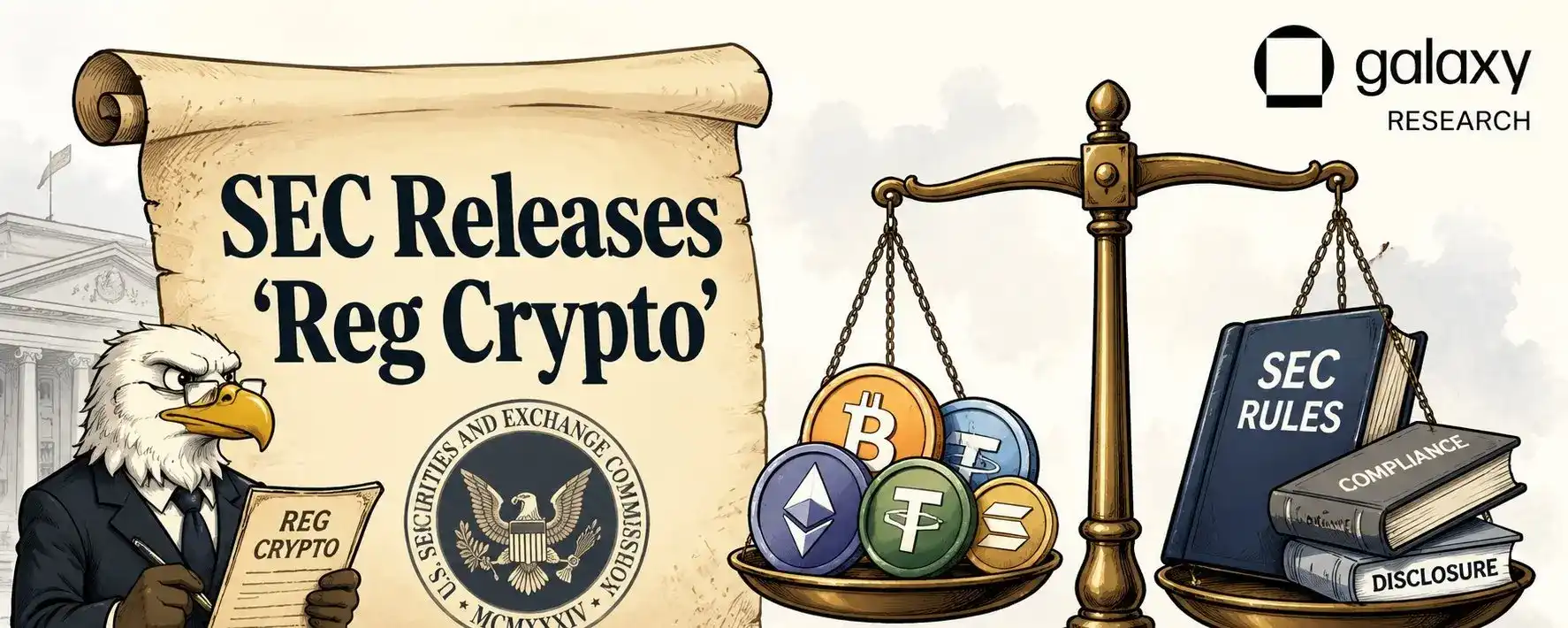
Galaxy Research: Can SEC's New Regulations Usher in a New Era for Token Financing?

**SEC Proposes New Framework for Token Offerings, Potentially Unlocking Legal Paths for U.S. Crypto Fundraising** On August 18, the U.S. Securities and Exchange Commission (SEC) proposed new rules, dubbed "Reg Crypto," specifically tailored for crypto asset offerings. This framework marks a departure from applying traditional securities rules designed for stocks to tokens. It creates a potential legal pathway for token sales to the U.S. public, including non-accredited investors, without full registration. The proposed rules apply to crypto assets that are not themselves securities but were sold as part of an investment contract where the issuer promised to build a product, network, or ecosystem. It establishes a four-phase lifecycle: Raise, Disclose, Build, and Exit. The "Raise" phase includes two new fundraising exemptions: a startup exemption allowing up to $5 million over four years and a larger, Regulation A-based exemption for up to $20 million or $75 million over 12 months. The "Disclose" phase requires specific token-related disclosures like supply schedules, governance, and development progress. After the issuer completes its promised development work and files a transition report, the "Exit" phase allows the associated investment contract to terminate, even if the token continues to trade. The analysis highlights that the framework's most immediate impact may be providing a formal "exit" path for existing tokens with unclear legal status, rather than immediately sparking a new wave of U.S.-based token offerings. It offers advantages over traditional private placements by allowing public sales and immediate token transferability but imposes ongoing disclosure and reporting obligations. A key hurdle is that the larger exemption requires a substantial U.S. operational presence, which may deter projects with offshore structures. Overall, the proposal is seen as a constructive step toward regulatory clarity, acknowledging that token offerings differ from equity offerings and require tailored investor disclosures. However, it remains a proposal subject to a 60-day public comment period, and its long-term stability may ultimately depend on congressional action.

marsbit3 год тому

Galaxy Research: Can SEC's New Regulations Usher in a New Era for Token Financing?

marsbit3 год тому

Bitcoin and Ethereum Soar Together! Eight Altcoins Worth Watching in the Later Market

Bitcoin and Ethereum Surge, Fueling Altcoin Speculation. Bitcoin Eyes $77,000, Ethereum Gains 20% in a Single Day. Market anticipates capital rotation from major cryptos to high-beta altcoins, but a selective rise is expected, favoring projects with genuine users, protocol revenue, and healthy tokenomics. Analysts highlight eight altcoins across key sectors: **High-Performance Blockchains:** * **SOL (Solana):** Market cap ~$51.88B. A dominant player with a strong ecosystem. Considered a relatively safe bet for potential catch-up growth. * **SUI (Sui):** Market cap ~$3.03B. High volatility potential but faces risks from its low circulating supply and future token unlocks. **DeFi Lending:** * **UNI (Uniswap):** Market cap ~$2.38B. Transitioning to a revenue-capturing asset post-fee switch implementation. * **AAVE (Aave):** Market cap ~$1.53B. Features balanced tokenomics and revenue but has seen significant recent gains. * **MORPHO:** Market cap ~$1.50B. Rapid protocol growth but weaker token value capture and opaque supply data. **Perpetual DEX:** * **HYPE (Hyperliquid):** Market cap ~$16.41B. The clear sector leader with strong revenue but high valuation and a large portion of tokens still locked, warranting caution. **RWA & On-Chain Finance Infrastructure:** * **LINK (Chainlink):** Market cap ~$8.09B. A key oracle provider positioned to benefit from multiple trends like RWA and institutional adoption, offering strong fundamentals. * **ONDO (Ondo Finance):** Market cap ~$1.77B. Shows strong business growth but carries high risks due to concentrated token holdings and a massive unlock scheduled for 2027. **Conclusion:** The altcoin rally is expected to be selective. Recommendations include a medium position in SOL, small allocations to SUI and UNI/AAVE for DeFi exposure, and caution with HYPE and ONDO due to their specific risks. LINK is suggested as a core holding for the RWA thematic.

marsbit6 год тому

Bitcoin and Ethereum Soar Together! Eight Altcoins Worth Watching in the Later Market

marsbit6 год тому

Торгівля

Спот
活动图片