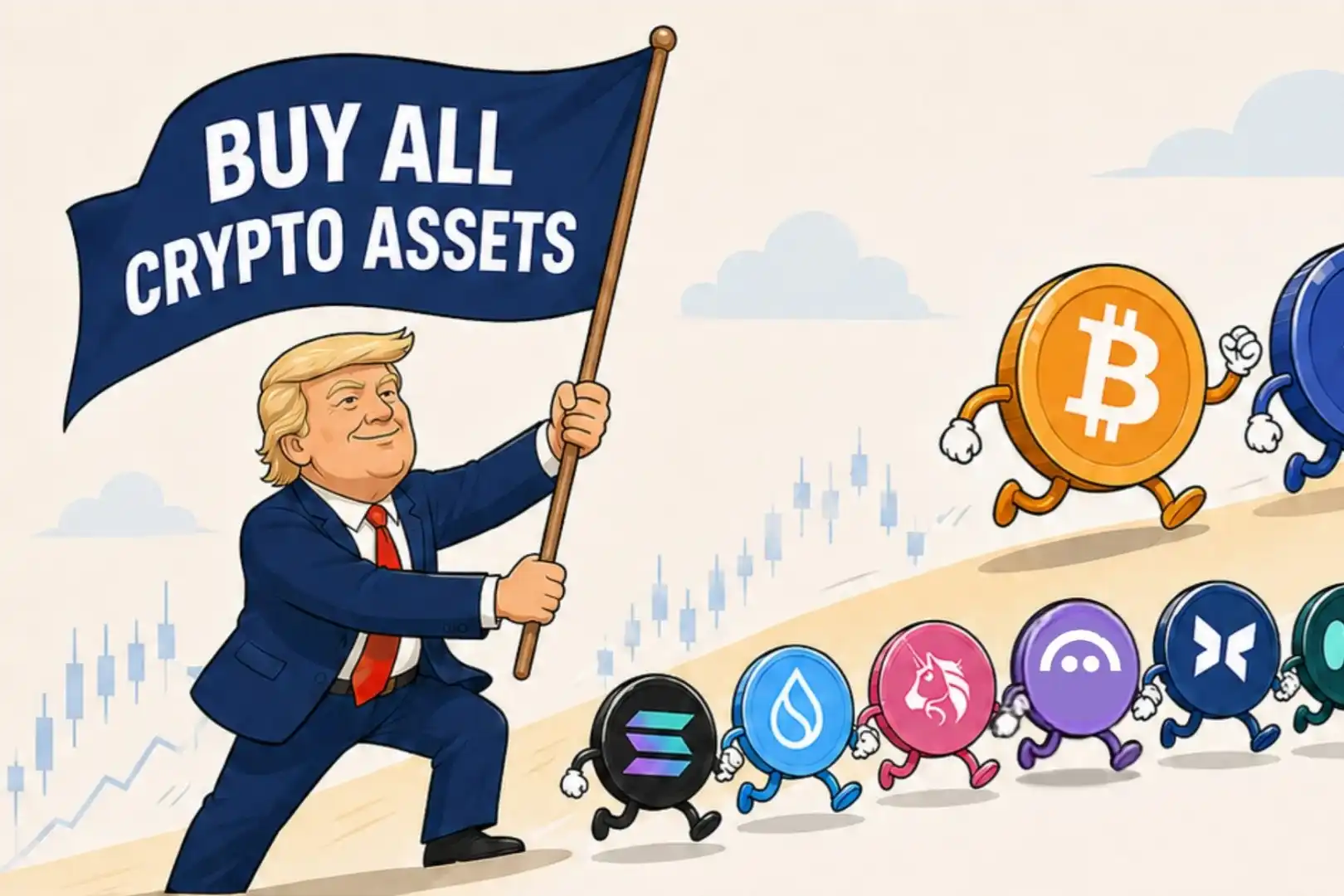
Galaxy Research: Can SEC's New Regulations Usher in a New Era for Token Financing?

marsbitОпубліковано о 2026-08-22Востаннє оновлено о 2026-08-22

Анотація

**SEC Proposes New Framework for Token Offerings, Potentially Unlocking Legal Paths for U.S. Crypto Fundraising** On August 18, the U.S. Securities and Exchange Commission (SEC) proposed new rules, dubbed "Reg Crypto," specifically tailored for crypto asset offerings. This framework marks a departure from applying traditional securities rules designed for stocks to tokens. It creates a potential legal pathway for token sales to the U.S. public, including non-accredited investors, without full registration. The proposed rules apply to crypto assets that are not themselves securities but were sold as part of an investment contract where the issuer promised to build a product, network, or ecosystem. It establishes a four-phase lifecycle: Raise, Disclose, Build, and Exit. The "Raise" phase includes two new fundraising exemptions: a startup exemption allowing up to $5 million over four years and a larger, Regulation A-based exemption for up to $20 million or $75 million over 12 months. The "Disclose" phase requires specific token-related disclosures like supply schedules, governance, and development progress. After the issuer completes its promised development work and files a transition report, the "Exit" phase allows the associated investment contract to terminate, even if the token continues to trade. The analysis highlights that the framework's most immediate impact may be providing a formal "exit" path for existing tokens with unclear legal status, rather than immediately ...

Author: Alex Thorn, Head of Research, Galaxy Research

Compiled by: Jiahuan, ChainCatcher

On August 18, the U.S. Securities and Exchange Commission (SEC) proposed the "Regulation of Crypto Assets" (hereinafter referred to as "Reg Crypto"). This is the first set of securities rules in the United States specifically designed around the offering and sale of crypto assets, rather than simply applying existing rules formulated for corporate stocks to crypto assets.

This proposal first provides a legal pathway for certain tokens to be sold to the U.S. public, including allowing participation by non-accredited investors without requiring a registered offering. Second, it establishes a formal mechanism with clear timelines for terminating investment contracts associated with tokens.

Over the past decade, token issuers in the U.S. have effectively faced two choices: either conduct a registered offering (which very few projects have managed to complete in reality) or choose to launch overseas. Reg Crypto offers a third option and also provides an exit path for the thousands of tokens already trading but whose legal status remains unclear.

The rule only applies to crypto assets that are not securities in themselves, but whose offering or sale is part of an investment contract, and where the issuer has promised through that contract to build a product, network, or ecosystem.

Tokenized stocks and bonds, as well as arrangements that link tokens to equity or other securities, are explicitly excluded from this framework. Within this scope, the proposal is divided into four phases: Raise, Disclosure, Build, and Exit.

Four Phases: Raise, Disclosure, Build, and Exit

  • Raise: A one-time financing exemption for startups will allow issuers to raise up to $5 million over a maximum period of four years, with public filings required at the beginning and end of that period. Another, larger-scale exemption based on Regulation A (a public offering exemption mechanism under U.S. securities law that allows companies to raise funds from the public after meeting disclosure requirements) allows issuers to raise up to $20 million or $75 million within 12 months, depending on the tier.

    Using this financing exemption requires SEC qualification approval and ongoing submission of reports and financial statements. Larger Tier 2 offerings also require audited financial statements, and the issuer must maintain a substantial connection with the United States in terms of organization, management, and assets.

  • Disclose: Issuers need to provide information specifically designed for tokens, including token supply and release schedule, minting and burning mechanisms, governance mechanisms and smart contract permissions, source code, and most importantly: what the issuer promises to build and the current progress of that build.

  • Build: The startup exemption provides a window of up to four years for issuers to complete their promised core development work.

  • Exit: Once the issuer completes or permanently ceases the aforementioned work, makes no new promises to undertake such work, and files a transition report, the relevant investment contract will be deemed terminated. Thereafter, the SEC will no longer consider that crypto asset as an asset subject to that investment contract under the Securities Act and the Securities Exchange Act.

Notably, this safe harbor mechanism also applies to issuers who did not use the aforementioned financing exemptions. This means it not only impacts future token offerings but also provides a potential exit path for tokens issued years ago whose security status remains undefined.

The rule's impact becomes more intuitive from the SEC's estimates of its applicable scale. To estimate the paperwork burden, the SEC assumes about 475 issuers per year would use the investment contract safe harbor mechanism, while about 130 projects per year would conduct offerings under the two new exemptions. This suggests that in the short term, Reg Crypto is more likely to address the legal status of existing assets under securities law rather than immediately sparking a new wave of token offerings.

Investment contracts sold under either of the above exemptions will not be considered restricted securities; they can be resold immediately unless contractually restricted. The proposal will also have preemptive effect over certain state registration and qualification review requirements, covering eligible initial offerings and some secondary trading, provided the issuer continues to fulfill its obligations.

However, the rule does not address exchanges, brokers, dealers, or custodial businesses, nor is it the same as another innovation exemption previously discussed by the SEC for tokenized securities and on-chain trading. The public comment period will last 60 days after the proposal is published in the Federal Register.

The SEC canceled a public meeting originally scheduled for August 14 and released the proposal four days later. Three current commissioners—Chair Paul Atkins and Commissioners Hester Peirce and Mark Uyeda—issued statements of support. Although the comment period is 60 days, the timeline remains very tight if formal adoption is to occur before 2027.

Our View

As we wrote last week, despite the continued stalemate in the Senate over the CLARITY Act, the SEC under Chair Atkins is moving forward with measures that can increase regulatory clarity for the crypto industry.

Reg Crypto is a constructive step and one of the clearest signals to date that the SEC is not prepared to wait for Congress to modernize its own regulatory system. This disclosure regime is the most obvious manifestation of the SEC beginning to understand the uniqueness of crypto assets. It requires issuers to disclose token supply and release schedule, minting and burning mechanisms, smart contract permissions, source code links, ecosystem structure, and to continuously record what the issuer promises to build and the current progress.

This is the information token buyers actually care about, and it differs from what equity investors in a company focus on. The SEC is acknowledging something it refused to acknowledge during the tenure of Atkins' predecessor, Gary Gensler: token offerings differ from equity offerings in form and function, and therefore the required disclosures for investors should also differ.

The proposal's understanding of "time" is equally important. After a stock offering, its security nature persists. Under the Reg Crypto framework, an investment contract associated with a token can begin at issuance, bind the issuer's obligations during the project build phase, and terminate on a publicly recorded date, even if the token itself continues to exist and trade.

This is not just a new exemption; it is a regulatory framework built around the token lifecycle and translated into enforceable rules. Whether issuers will adopt these financing exemptions remains an open question.

Rule 506 under Regulation D (Regulation D is a private placement exemption rule under U.S. securities law that allows companies to raise funds from qualified investors without public registration) remains valid; it has no fundraising cap, does not require SEC qualification approval, and has no ongoing public reporting requirements. In comparison, the advantages of Reg Crypto are that it allows legal public offerings to non-accredited investors, the securities can be transferred immediately, and it has preemptive effect over certain state registration requirements.

For projects that want their tokens to circulate, rather than remain in venture capital portfolios long-term, the lack of a federal holding period might be the most underrated provision in the entire proposal. Of course, the trade-off is that issuers must undertake real disclosure and reporting obligations; if using the larger financing exemption, they must also maintain a substantial connection with the U.S.

This requirement presents another test. In the past, many token projects chose to establish offshore foundations not only to circumvent U.S. securities laws but also for reasons related to governance, treasury management, and tax treatment.

The larger financing exemption in Reg Crypto requires many projects to substantially relocate their issuing entity, management, business operations, and a majority of assets back to the U.S. Until U.S. tax treatment of token sale proceeds and treasury allocations becomes clearer, this requirement may be enough for many projects to maintain their existing structures.

The startup exemption does not have similar U.S. incorporation requirements, so despite its $5 million fundraising cap, it may see higher adoption in early stages for this reason. If these issues can be resolved positively, the most noteworthy scenario would be a truly legal Token Financing 2.0.

One of the important early applications of the crypto industry was capital formation: projects could raise funds directly from future users, rather than relying entirely on venture capital firms and traditional private financing systems. The 2017 token financing cycle demonstrated both the market's demand for the ICO model and the consequences of adopting it without credible disclosure, investor protection, and enforceable rules.

Reg Crypto fills in many of the key missing elements from that era: exemption mechanisms designed for different fundraising scales; disclosure requirements tailored to token characteristics; allowance for public investor participation within limits; and a clear endpoint for when the issuer's securities law obligations terminate.

This system could also foster new service ecosystems. Securities lawyers, audit firms, technical disclosure service providers, issuance platforms, and compliance service providers will all benefit from helping projects prepare offering materials and transition reports, much like Regulation A+ spawned its own ancillary industry.

The teams most likely to adopt this framework first are those that already have U.S. entities, relatively clear organizational structures, and can bear the ongoing disclosure costs. The SEC estimates that preparing a transition report under the standalone safe harbor mechanism requires an average of about 30 hours of effort, including external professional service costs. This means even just completing the "Exit" process can rarely be done entirely by the project team itself.

However, in the short term, "Exit" is more important than "Raise."

The most immediate and obvious impact of Reg Crypto is more likely to be cleaning up legacy tokens rather than reviving U.S. token offerings. This in itself is significant: for many years, the market has been trying to infer when an investment contract terminates through regulatory speeches, settlement agreements, and litigation cases.

Previously, the industry pinned its hopes on the "sufficient decentralization" standard, i.e., when a blockchain network is no longer controlled by a single entity and token value no longer primarily depends on the issuer's efforts, it may fall outside securities regulation. But this standard has always lacked clear definition and has been a long-term source of uncertainty in past U.S. crypto regulation.

Reg Crypto would replace this vague status with formal filings and clear dates. But note that the rule is currently in the proposal stage, not a final rule. Even if ultimately adopted, the system itself may still face changes. This SEC proposal currently still needs to go through a 60-day public comment process.

In his own statement, Chair Atkins indicated that legislation remains indispensable; only congressional action can prevent future regulators from overturning the framework the SEC is currently establishing. Considering this system could indeed be adjusted in the future, this judgment is reasonable.

Additionally, state regulators may challenge the proposal's broad federal preemption provisions. Reg Crypto may bring important regulatory clarity to the crypto industry, but only Congress can make that clarity truly lasting.


Трендові криптовалюти

Пов'язані питання

QWhat are the four key stages of the proposed 'Reg Crypto' framework for crypto asset offerings?

AThe four stages of the proposed 'Reg Crypto' framework are: Raise (Financing), Disclose (Information Disclosure), Build (Development), and Exit. The 'Raise' stage involves fundraising exemptions with specific limits and requirements. The 'Disclose' stage mandates project-specific disclosures about the token. The 'Build' stage provides a development window for the project. The 'Exit' stage formally terminates the investment contract once obligations are met.

QWhat is the primary short-term impact of the 'Reg Crypto' proposal, according to Galaxy Research?

AAccording to Galaxy Research, the primary short-term impact of the 'Reg Crypto' proposal is likely to be cleaning up the legal status of existing tokens (providing an 'Exit' path) rather than immediately spurring a new wave of token offerings in the US. It offers a formal mechanism for historically issued tokens to exit their investment contract status.

QHow does the 'Reg Crypto' proposal change the information disclosure requirements for token offerings compared to traditional equity offerings?

AThe 'Reg Crypto' proposal requires disclosures specifically tailored to crypto assets, such as token supply and release schedules, minting/burning mechanisms, governance, smart contract permissions, source code, and the status of the promised development. This acknowledges that token investors need different information than traditional equity investors.

QWhat is a key advantage of the new 'Reg Crypto' exemptions over the existing Regulation D (Rule 506) for token fundraising?

AA key advantage of the new 'Reg Crypto' exemptions over the existing Regulation D (Rule 506) is that it allows legal public offerings to non-accredited investors, permits immediate transferability of the associated securities (no federal holding period), and provides preemption from certain state-level registration requirements.

QWhat significant uncertainty in US crypto regulation does the 'Reg Crypto' proposal aim to address regarding token status?

AThe 'Reg Crypto' proposal aims to replace the vague and uncertain concept of 'sufficient decentralization' as a criterion for a token to exit securities regulation. It establishes a formal process with public filings and clear dates to terminate an investment contract, providing regulatory clarity that was previously lacking.

Пов'язані матеріали

Bitcoin and Ethereum Soar Together! Eight Altcoins Worth Watching in the Later Market

Bitcoin and Ethereum Surge, Fueling Altcoin Speculation. Bitcoin Eyes $77,000, Ethereum Gains 20% in a Single Day. Market anticipates capital rotation from major cryptos to high-beta altcoins, but a selective rise is expected, favoring projects with genuine users, protocol revenue, and healthy tokenomics. Analysts highlight eight altcoins across key sectors: **High-Performance Blockchains:** * **SOL (Solana):** Market cap ~$51.88B. A dominant player with a strong ecosystem. Considered a relatively safe bet for potential catch-up growth. * **SUI (Sui):** Market cap ~$3.03B. High volatility potential but faces risks from its low circulating supply and future token unlocks. **DeFi Lending:** * **UNI (Uniswap):** Market cap ~$2.38B. Transitioning to a revenue-capturing asset post-fee switch implementation. * **AAVE (Aave):** Market cap ~$1.53B. Features balanced tokenomics and revenue but has seen significant recent gains. * **MORPHO:** Market cap ~$1.50B. Rapid protocol growth but weaker token value capture and opaque supply data. **Perpetual DEX:** * **HYPE (Hyperliquid):** Market cap ~$16.41B. The clear sector leader with strong revenue but high valuation and a large portion of tokens still locked, warranting caution. **RWA & On-Chain Finance Infrastructure:** * **LINK (Chainlink):** Market cap ~$8.09B. A key oracle provider positioned to benefit from multiple trends like RWA and institutional adoption, offering strong fundamentals. * **ONDO (Ondo Finance):** Market cap ~$1.77B. Shows strong business growth but carries high risks due to concentrated token holdings and a massive unlock scheduled for 2027. **Conclusion:** The altcoin rally is expected to be selective. Recommendations include a medium position in SOL, small allocations to SUI and UNI/AAVE for DeFi exposure, and caution with HYPE and ONDO due to their specific risks. LINK is suggested as a core holding for the RWA thematic.

marsbit3 год тому

Bitcoin and Ethereum Soar Together! Eight Altcoins Worth Watching in the Later Market

marsbit3 год тому

Shanghai's $10 Billion Unicorn Is About to Go Public

Shanghai-based automotive-grade millimeter-wave radar chip unicorn Calterah Microelectronics Technology (Shanghai) Co., Ltd. has filed for an IPO on Shanghai's STAR Market, aiming to raise 3.49 billion yuan. Founded in 2014 by Chen Jiashu, a UC Berkeley PhD graduate, and his professor Ali Niknejad, Calterah pioneered CMOS technology for 77GHz radar chips, breaking the decades-long monopoly of international giants like Texas Instruments. Its low-cost, highly integrated solutions enabled millimeter-wave radar to move from luxury to mass-market vehicles. By 2025, Calterah captured a 31.1% share in China's automotive millimeter-wave radar chip market (second domestically, fourth globally), with cumulative shipments exceeding 30 million units. Its client list includes BYD, Geely, Nio, and Volvo. The company has undergone 11 funding rounds, attracting high-profile investors such as the National Integrated Circuit Industry Investment Fund Phase II, China Capital Management, and GD Capital. Its valuation has reached tens of billions of yuan, with a projected post-IPO valuation of approximately 14 billion yuan. Despite rapid revenue growth—increasing from 206 million yuan in 2023 to 632 million yuan in 2025 with a 75.28% CAGR—Calterah remains unprofitable. It reported net losses of 323 million yuan, 334 million yuan, and 193 million yuan from 2023 to 2025, accumulating over 900 million yuan in losses over three and a half years. These losses are primarily attributed to heavy R&D investment, which totaled over 1.039 billion yuan in the reporting period, often exceeding annual revenue. The company faces significant risks, including high customer concentration (its top five customers accounted for over 99% of revenue from 2023-2025, with BYD alone representing over 50% in 2025) and supply chain concentration. Revenue pressure from key customers and dependencies on overseas suppliers for EDA tools and IP pose challenges to sustainable growth. The IPO is seen as crucial for securing capital to expand production, diversify its customer base, and reduce supply chain dependencies.

marsbit3 год тому

Shanghai's $10 Billion Unicorn Is About to Go Public

marsbit3 год тому

Ray Dalio's Latest Macro Analysis Full Text: Buy More Gold, Add Some Bitcoin

In his latest macro analysis, Ray Dalio applies his framework from "How Countries Go Broke: The Big Cycle" to the current global debt environment. He highlights recent events like Japan selling U.S. Treasuries and rising U.S. long-term yields as signs of an unsustainable debt dynamic. Dalio explains that excessive government debt leads to either unacceptably high interest rates, severe economic downturns, or significant currency debasement through central bank money printing. He summarizes the U.S. fiscal situation: with $5.5 trillion in revenue, $7.5 trillion in spending, a $2 trillion deficit, and total debt at six times annual revenue, debt servicing costs are immense. Without correction, U.S. debt could reach $55-$60 trillion in a decade. Dalio proposes a "3% Three-Way" solution: reducing the budget deficit to 3% of GDP through balanced spending cuts, tax increases, and interest rate reductions to avoid a traumatic adjustment. In response to FAQs, he argues that the risk of a U.S. debt crisis is high and could materialize within a few years if the current path continues. He dismisses the notion that the dollar's reserve status makes the U.S. immune, citing historical precedents of reserve currency declines. He is also unconvinced by Japan's high-debt stability, noting poor returns for yen-denominated assets. For investors, Dalio recommends diversifying globally, underweighting bonds, and overweighting assets like gold and a small allocation to Bitcoin (around 10-15% to gold) to hedge against currency debasement and poor debt returns.

marsbit4 год тому

Ray Dalio's Latest Macro Analysis Full Text: Buy More Gold, Add Some Bitcoin

marsbit4 год тому

Stripe’s 16-Year Chronicle: From 7 Lines of Code to a $100 Billion Valuation

Stripe's 16-year journey began with a simple promise: "7 lines of code to accept payments." Founded by Patrick and John Collison, the company started by hiding the complexity of bank integrations and merchant accounts behind a clean API, initially targeting developers at startups. This early focus on user experience and technical simplicity fueled rapid adoption. A key early milestone was establishing vital bank partnerships, a challenge overcome by hiring Billy Alvarado, who brought crucial institutional relationship skills. From this foundation, Stripe systematically expanded its product boundaries. It launched Connect for platform payments, Atlas for company formation, Radar for fraud prevention, and Billing for subscriptions. This transformed Stripe from a payment processor into a broader financial infrastructure suite for internet businesses. The COVID-19 pandemic accelerated growth but also led to over-hiring. A 14% layoff in 2022 marked a period of organizational correction. Subsequently, Stripe shifted its growth strategy towards strategic acquisitions to enter new domains quickly. It acquired Bridge (stablecoin infrastructure), Privy (wallet infrastructure), Metronome (usage-based billing), and agreed to buy OpenRouter (AI model routing). These moves signal Stripe's ambition to build a "programmable money system" for the emerging AI and agent-based economy, managing not just currency flows but also the measurement and pricing of computational resources like AI tokens. Internally, Stripe leverages AI agents (like "Minions") to boost engineering productivity. Despite scaling to nearly 8,000 employees and processing $1.9 trillion in payment volume annually, the company remains private. A recent employee tender offer valued it at $159 billion. The core question for Stripe's future is whether it can successfully integrate its expanding product matrix—spanning payments, crypto, and AI infrastructure—into a cohesive platform, positioning itself as the foundational economic layer for autonomous software agents.

marsbit4 год тому

Stripe’s 16-Year Chronicle: From 7 Lines of Code to a $100 Billion Valuation

marsbit4 год тому

Торгівля

Спот

Популярні статті

Як купити ERA

Ласкаво просимо до HTX.com! Ми зробили покупку Caldera (ERA) простою та зручною. Дотримуйтесь нашої покрокової інструкції, щоб розпочати свою криптовалютну подорож.Крок 1: Створіть обліковий запис на HTXВикористовуйте свою електронну пошту або номер телефону, щоб зареєструвати обліковий запис на HTX безплатно. Пройдіть безпроблемну реєстрацію й отримайте доступ до всіх функцій.ЗареєструватисьКрок 2: Перейдіть до розділу Купити крипту і виберіть спосіб оплатиКредитна/дебетова картка: використовуйте вашу картку Visa або Mastercard, щоб миттєво купити Caldera (ERA).Баланс: використовуйте кошти з балансу вашого рахунку HTX для безперешкодної торгівлі.Треті особи: ми додали популярні способи оплати, такі як Google Pay та Apple Pay, щоб підвищити зручність.P2P: Торгуйте безпосередньо з іншими користувачами на HTX.Позабіржова торгівля (OTC): ми пропонуємо індивідуальні послуги та конкурентні обмінні курси для трейдерів.Крок 3: Зберігайте свої Caldera (ERA)Після придбання Caldera (ERA) збережіть його у своєму обліковому записі на HTX. Крім того, ви можете відправити його в інше місце за допомогою блокчейн-переказу або використовувати його для торгівлі іншими криптовалютами.Крок 4: Торгівля Caldera (ERA)Легко торгуйте Caldera (ERA) на спотовому ринку HTX. Просто увійдіть до свого облікового запису, виберіть торгову пару, укладайте угоди та спостерігайте за ними в режимі реального часу. Ми пропонуємо зручний досвід як для початківців, так і для досвідчених трейдерів.

690 переглядів усьогоОпубліковано 2025.07.17Оновлено 2026.06.02

Як купити ERA

Обговорення

Ласкаво просимо до спільноти HTX. Тут ви можете бути в курсі останніх подій розвитку платформи та отримати доступ до професійної ринкової інформації. Нижче представлені думки користувачів щодо ціни ERA (ERA).

活动图片