Wang Xing Is Happy, Wang Xingxing Is Not Necessarily

marsbitОпубліковано о 2026-08-20Востаннє оновлено о 2026-08-20

Анотація

Yu Shu Technology's (Unitree) IPO on the STAR Market sparked discussions centered on wealth creation: the surge in founder Wang Xingxing's net worth, the substantial gains for early investors like Meituan's Wang Xing, and employee stock wealth. Yet, a key observation from the listing ceremony was the founder's calm demeanor, contrasting with the celebratory atmosphere. The article explores this divergence. For investor Wang Xing, the IPO represents a successful bet on embodied AI and robotics as the next foundational tech wave, with Meituan's stake now highly valuable. For founder Wang Xingxing, the milestone brings a new set of pressures. His company, now valued at ~341.8 billion yuan, must transition from proving technological feasibility (which it has done with its quadruped and humanoid robots) to delivering scalable commercial success. The market's high valuation is an advance payment for a future that Yu Shu must now build. Post-IPO, Yu Shu faces the critical challenge of moving beyond impressive demos to creating sustainable businesses. This means making robots reliable, affordable, and indispensable for both consumers and industrial clients, proving their real-world economic value. As the "first stock" in embodied AI on the STAR Market, Yu Shu also becomes a public benchmark for the entire industry, its performance influencing sector-wide expectations. Ultimately, while investors can celebrate realized gains, Wang Xingxing's work is just beginning. He must now mana...

The most heated discussions about Unitree's IPO have been all about the money.

How much has Wang Xingxing's net worth increased, how much has Wang Xing of Meituan earned, how much have early investors gained on paper, and how much wealth have employees received.

These figures are indeed enticing and astonishing.

However, at the listing scene, I noticed another detail instead.

Wang Xingxing looked very calm.

Of course, we cannot judge a person's emotions based solely on one photo. But in the context of today's Unitree IPO, this detail is indeed somewhat meaningful.

The same listing event could be two completely different things for Wang Xing and Wang Xingxing.

For Wang Xing, an investment he backed is finally starting to pay off. For Wang Xingxing, the company he built with his own hands is now subject to the test of a different set of rules from today onwards.

1. Wang Xing Is Happy, Wang Xingxing Is Calm

On August 19, Unitree Technology officially listed on the Sci-Tech Innovation Board.

Issuing price: 150.80 yuan

Intraday high: 1100 yuan

Closing price: 845 yuan

Increase from issuing price: +460.34%

Total market cap: approximately 341.8 billion yuan

Wang Xingxing directly holds 23.82% of the shares. Calculated at the closing price, his shareholding value already exceeds 80 billion yuan.

The Meituan ecosystem is one of Unitree's important early investors, currently holding a combined stake of approximately 9.65%. Additionally, institutions such as Sequoia China, Matrix Partners China, Tencent, and Alibaba have all gained substantial paper profits from this IPO.

Thus, a standard IPO wealth creation story emerges.

Yet Wang Xingxing on stage didn't seem particularly excited.

This is actually quite understandable.

Since founding Unitree, his most important task has always been building the robots. Today, he suddenly finds the company is worth over 340 billion yuan.

For a founder, this is certainly something to be happy about.

But at the same time, another reality is laid bare. From today on, Unitree's stock price each day will become the market's reassessment of Wang Xingxing's past judgments.

Before listing, Unitree's value was judged by a few investors, the founding team, and industry partners. After listing, this judgment and pricing have suddenly expanded to the entire market.

This is a very subtle change.

The founder originally only needed to convince himself and his investors. Now, he needs to gradually convince all shareholders.

That's why I find Wang Xingxing's calmness today more interesting than an excited celebratory expression.

2. What Did Wang Xing Bet On?

Looking at Wang Xing, another hidden thread emerges.

When Meituan invested in Unitree, embodied AI was not yet the capital market star it is today.

Back then, whether humanoid robots could truly become a major industry wasn't as clear an answer as it is now.

Wang Xing placed his bet during that phase.

Looking back today, this investment was certainly shrewd. But to understand it merely as Wang Xing betting on Unitree underestimates the matter.

What Wang Xing truly bet on was likely whether robots, upon entering the real world, would become important infrastructure for the next wave of technological revolution.

This actually has a certain continuity with Meituan's past investment logic.

The internet solved information connectivity. Meituan solved the connection between goods, services, and people. Robots go a step further—they deal with actions in the physical world.

Delivery, handling, production, service, companionship—many actions previously done by humans could potentially be taken over by machines in the future.

If this shift holds true, robots won't just be a new consumer product.

They will become a massive industry. At that point, Unitree's importance changes.

It is both a company and one of the earliest cards to emerge after Wang Xing placed his bet on this industry.

Wang Xing can reasonably feel relaxed today for a very practical reason:

He has already completed his most crucial move in this phase: placing the bet. The person who now has to bear the pressure of industry delivery is Wang Xingxing.

3. Where Does Unitree's 340 Billion Come From?

Before the IPO, the one thing Unitree most needed to prove was: can the robots be built?

This, it has already proven.

Unitree progressed from quadruped robots to humanoid robots, launched products into the consumer market and industrial scenarios, and gradually established its product, manufacturing, and supply chain capabilities.

In the first half of 2026, Unitree achieved revenue of 1.152 billion yuan, a year-on-year increase of 48.54%; net profit attributable to shareholders was 274 million yuan, achieving a turnaround from loss to profit.

These results show that Unitree has moved past the stage of having only technology but no business.

However, a market cap of 341.8 billion yuan clearly does not correspond to today's 1.1 billion yuan in revenue.

The capital market buys the future. Thus, the question post-IPO naturally shifts dimensions. When can Unitree truly turn robots into a business large enough?

This involves cost, capacity, supply chain, channels, as well as the usage efficiency and repurchase logic once robots enter real-world scenarios. These things are not as thrilling as a robot doing backflips at a product launch, but they are the deciding factors for how far the company can ultimately go.

Especially for humanoid robots.

Today, people can bet that robots will eventually enter the real world. In the coming years, Unitree needs to answer with products and orders: when exactly will this future arrive?

The higher the valuation the market gives today, the faster the company needs to deliver.

Today's 340 billion yuan is both a reward and an advance payment for Unitree. The money has arrived early; the answers are still on the way.

4. The Robots Still Need to Be Sold

Over the past few years, the easiest thing for the robotics industry to gain attention with has been technological breakthroughs.

A robot walking, running, jumping, doing backflips, even entering factories... each appearance of these capabilities triggers a wave of publicity. Unitree happens to be one of the most important participants in this phase.

But as an industry truly begins to mature, the focus gradually changes.

What robots can do is becoming increasingly clear to the market. The more important question next is: how many people are willing to buy them?

This is also one of the biggest differences between Unitree and many purely technology-focused robotics companies.

It put its products on the market quite early. Consumer-grade quadruped robots like the Go2 have reached price points within discussion range for ordinary consumers; humanoid robots are also starting to move from labs to more specific application scenarios.

This means Unitree faces a harsh question earlier than many companies: when the technology reaches 90 points, are consumers actually willing to pay?

A robot capable of an impressive demo does not equate to it becoming a stable product. Products need controllable costs, reliability, maintenance, channels, and users continuously finding reasons to purchase them.

Industrial customers are even more pragmatic.

How much labor a robot can save or how much efficiency it can improve after deployment ultimately boils down to a specific calculation. Therefore, Unitree's most crucial capability in the next phase will likely be further transmitting its technological advantages downstream.

Moving from R&D capabilities to sales, then to scaled commercial capabilities.

The true sign of robot proliferation has never been what they can do, but more and more people feeling they need one too.

5. Wang Xingxing's Next Exam

This is also the most interesting distinction between Wang Xingxing and Wang Xing today.

Wang Xing's investment in Unitree back then bought a possible future. Wang Xingxing's entrepreneurship is about turning that future into reality bit by bit.

After Unitree's listing today, the relationship between the two has changed slightly again.

Wang Xing can enjoy the market's reward for past judgment. Wang Xingxing now has to face the market's demands for the future.

What does 340 billion yuan mean? It means Unitree no longer just needs to prove it's a very good robotics company.

It needs to gradually prove:

it has the capability to become a robotics company worthy of matching this valuation.

The most critical change here is that expectations have now been made public.

Startups can have a lot of ambiguity. The market is still being cultivated, technology is still iterating, business models are still being explored. After listing, the room for such statements will diminish.

Revenue, orders, profits, cash flow will all be important considerations. The market will ultimately compress all stories into a few numbers.

For Wang Xingxing, this may be the biggest change since starting the company. He must learn to manage the expectations of a public company.

An engineer building a robot needs to solve technical problems. An entrepreneur scaling a robotics company needs to solve problems of organization, business, and capital markets. These two exams are completely different in difficulty.

6. The Weight of Being the First

There's another change possibly more important than Unitree's own market cap.

After Unitree's listing, the embodied AI industry now has a public market reference point on the Sci-Tech Innovation Board for the first time.

Previously, discussing how much a robotics company was worth relied more on financing valuations, institutional models, and industry judgment. Now there's a truly publicly traded company.

Thus, many future questions will have a reference.

What revenue growth rate is considered fast for a humanoid robotics company? What gross margin is considered healthy? What scale of robot sales is needed to support tens or hundreds of billions in market cap? Which is more valuable, consumer-grade or industrial-grade business?

Answers to these questions will gradually be reflected through Unitree's financial reports and stock price.

This is the special significance of being the first embodied AI stock on the Sci-Tech Innovation Board. The higher it rises, the higher the industry's expectations. The stronger its performance, the more the market believes the robotics industry is taking shape.

Conversely, if performance delivery lags expectations, the entire industry's valuation may also be recalculated.

Unitree's listing today actually shoulders a responsibility beyond the company itself. What it needs to prove is one company's commercialization capability. What the market hopes to see is the establishment of a new industry.

7. Capital Has Run Ahead

Looking back at today's list of wealth creation, one realizes things aren't that simple.

The money Wang Xing invested back then has now been repriced by the market.

The same goes for early investors.

They bore the risks during the most uncertain phase of the robotics industry and are now starting to share the rewards of the industry's maturation. Employees gaining wealth is also a natural result of a company's growth. These are all worth congratulating.

It's just that Wang Xingxing's position is different.

He can't close the book on this calculation like investors can. For a founder, the wealth realization from an IPO is merely a byproduct. The company is the main subject.

From today onwards, he still needs to face product iteration, manufacturing systems, talent organization, market competition, and commercialization. More importantly, he must face expectations that have already been set very high by the market.

The emotions of Wang Xing and Wang Xingxing themselves represent two people in different positions viewing the same IPO with completely different time scales.

Wang Xing sees the past decade. Wang Xingxing must face the next decade.

8. After the IPO, Reality Takes Its Turn

Over the past few years, China's embodied AI industry has experienced an intense wave of technological, capital, and entrepreneurial fervor, with a flood of companies, talent, and products entering the scene.

But for an industry to be truly confirmed by the capital market, a company needs to step forward and accept public pricing.

Unitree has taken this step.

From today, the robotics industry is no longer just a future discussed among investors. It has a public sample that trades daily, fluctuates daily, and is tested by the market daily. This fact itself is part of the industry's development.

Of course, the answer the market gives today is optimistic.

A market cap of 341.8 billion yuan is an extremely high expectation.

What's truly interesting next is whether reality will catch up to this expectation.

This road is still long. And the position Wang Xingxing now occupies happens to be the starting point of this road.

Words from [Beyond the Layout]:

A company's listing usually means it finally has a public price tag.

But price is never the answer. It's merely the market's collective bet on the future at a given moment.

Unitree received a very high answer today.

As for whether this answer is ultimately correct, it will be verified by the products, orders, and profits of the coming years.

This is also what's truly interesting about all robotics companies going forward:

When the capital market has already started pricing them according to the future, the companies still have to return to doing business in the present.

Standing on stage today, Wang Xingxing can likely no longer just be an engineer.

From this moment on, what he must face is a public company, an industry with high expectations, and a group of shareholders who have already voted in advance for the future.

The IPO has placed Unitree at a new starting point.

It has also placed its real questions before everyone for the first time.

This article is from the WeChat public account "Beyond the Layout", author: Huahua

Трендові криптовалюти

Пов'язані питання

QWhat does the article suggest about the different emotions of Wang Xing and Wang Xingxing regarding Unitree's IPO?

AThe article suggests that Wang Xing, as an investor, was very happy as his early investment paid off handsomely. In contrast, Wang Xingxing, the founder, appeared calm and had a more complex response, as the IPO marked the start of a new phase where his company must meet public market expectations and validate its high valuation.

QAccording to the article, what change does Wang Xingxing face after Unitree's IPO?

AAfter the IPO, Wang Xingxing must shift from primarily focusing on technology and product development to managing a public company. This involves addressing expectations from the capital market, delivering on financial metrics like revenue and profit, and navigating the pressures of commercialization and scaling the business.

QWhat broader significance does Unitree's IPO hold for the embodied AI/robotics industry in China?

AUnitree's IPO is significant as it provides the first publicly traded benchmark for China's embodied AI/robotics industry on the STAR Market. It establishes a public reference for valuing companies in this sector and will influence market expectations and valuations for the entire industry based on its future performance.

QWhat is the core challenge for Unitree highlighted in the article, beyond its technological achievements?

AThe core challenge for Unitree is transitioning from proving its technical capabilities to achieving large-scale commercialization. It must successfully sell its robots, control costs, ensure product reliability, build efficient supply chains and channels, and convince both consumers and industrial clients to make purchases based on real value and ROI.

QHow does the article describe the nature of Unitree's high market valuation?

AThe article describes Unitree's high market valuation (approximately 341.8 billion yuan) as a reward for its past achievements and a collective market bet on its future potential. However, it is also an 'advance payment' that the company must now justify by delivering substantial future growth, commercial success, and profitability.

Пов'язані матеріали

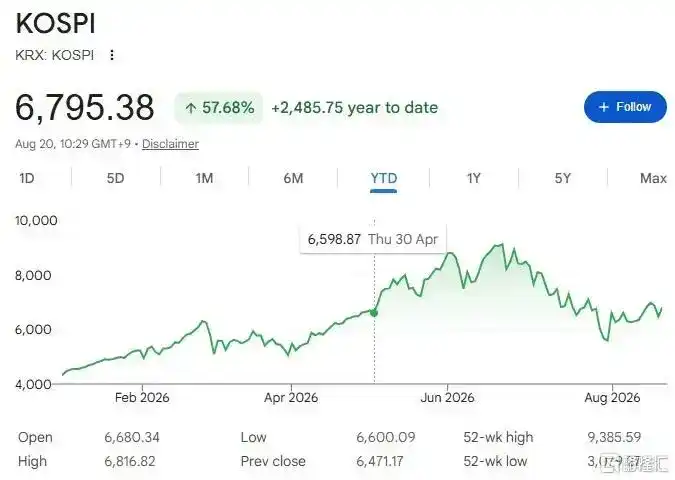
South Korean Stocks Stage Violent Rebound as Multiple Positive Factors Converge

South Korean stocks surged sharply today, with the KOSPI index rising over 5% to 6,848.81 points. Major companies like SK Hynix and Samsung Electronics saw gains exceeding 12% and 8%, respectively. The rally was triggered by multiple positive factors. A key catalyst was the U.S. Treasury's announcement to at least double its buyback size for long-term bonds, signaling intervention to curb high yields. This boosted risk sentiment globally. Concurrently, significant corporate news provided support: SK Hynix unveiled a massive 40 trillion won share buyback plan, while Samsung Electronics is reportedly preparing a record shareholder return policy potentially worth 100 trillion won. The market rebound follows a volatile period for Korean equities, which had soared earlier in the year on AI-driven semiconductor demand before correcting sharply. Analysts note the pullback cleared excess leverage. HSBC upgraded South Korean stocks to "overweight," citing robust domestic demand. Industry leaders like SK Group's Chairman forecast a severe memory chip shortage in 2025, with analysts predicting continued strong demand and price increases for HBM and other memory products. Despite the strong bounce, analysts caution about potential near-term profit-taking and ongoing market volatility, influenced by upcoming earnings, U.S. monetary policy, and external uncertainties.

marsbit13 хв тому

South Korean Stocks Stage Violent Rebound as Multiple Positive Factors Converge

marsbit13 хв тому

UBS Research Report Analysis: Murata's MLCC Factory Opens to the Public for the First Time in 20 Years, 20% Production Increase Potential from Optimization of Existing Assets

On August 18, UBS analysts visited Murata's Fukui Takefu factory, its first public opening in about 20 years. As the global MLCC leader with ~35% market share, this plant serves as the mother factory for advanced MLCCs used in AI servers and premium smartphones. UBS confirmed key findings: deep technical barriers remain, existing equipment holds ~20% latent production capacity, and physical expansion is nearing its limits. Murata's competitive edge lies in a closed-loop system encompassing proprietary ceramic material uniformity control, capacitance-maximizing self-developed technology, and self-built production equipment—a "black box" model difficult to replicate. Its flexible segmented production system efficiently manages over 50,000 product types. With new facility construction constrained and equipment lead times lengthening, optimizing existing lines becomes a crucial, lower-cost path to increase output. Murata's strategy involves shifting generic production to overseas sites like Thailand while focusing Japanese facilities on advanced, high-margin products. UBS projects significant operating margin expansion from 15.4% in FY2026 to 37.6% in FY2029, driven by this product mix upgrade toward high-capacitance, small-size MLCCs for AI and smartphones. Primary risks include U.S. economic slowdown, technology diffusion in Asia, and circuit integration trends. UBS maintains a positive industry outlook, noting potential for guidance upgrades, and sets a 13,200 yen target price based on a 30x FY2029 P/E, implying ~76% upside contingent on successful MLCC product structure advancement.

marsbit23 хв тому

UBS Research Report Analysis: Murata's MLCC Factory Opens to the Public for the First Time in 20 Years, 20% Production Increase Potential from Optimization of Existing Assets

marsbit23 хв тому

Arthur Hayes: Awaiting Fed Signal, Replenishing Ammo to Position for Crypto Bull Market

Arthur Hayes, co-founder of BitMEX, argues that the yen is significantly undervalued and analyzes three potential paths for its appreciation. He dismisses the first two options—the Bank of Japan raising interest rates or Japanese institutions selling foreign assets—as politically or economically unfeasible. Instead, he identifies the preferred method: Japan's Ministry of Finance (MOF) using the Federal Reserve's FIMA (Foreign and International Monetary Authorities) repo facility to borrow dollars against its U.S. Treasury holdings, then selling those dollars to buy yen in the forex market. Hayes explains that U.S. Treasury Secretary "Besant" has already called for removing the FIMA per-counterparty limit to enable this. The execution depends on Fed Chair "Warsh" convening a subcommittee to adjust the FIMA rules. Hayes is confident this will happen, signaling a major shift in USD/JPY dynamics and the end of the "cheap" yen era. He connects this potential massive dollar liquidity injection directly to a surge in asset prices, particularly Bitcoin, physical gold, and gold miners' stocks, drawing parallels to the Fed's balance sheet expansion during COVID-19. Within crypto, besides Bitcoin, he views Ethereum as undervalued and highlights Ethena (ENA) as a high-potential, speculative altcoin that could see 5-10x returns if liquidity increases and boosts Bitcoin basis trade yields. Hayes concludes he is waiting for the Fed's signal to fully deploy capital, anticipating a significant crypto bull market.

marsbit1 год тому

Arthur Hayes: Awaiting Fed Signal, Replenishing Ammo to Position for Crypto Bull Market

marsbit1 год тому

BTC Sees Largest Single-Day Short Liquidation in History: Overnight $1.1 Billion Short Positions Evaporate, But Calling a Bull Return is Premature

Bitcoin experienced its largest single-day short liquidation in history, with approximately $1.191 billion in short positions being forcibly closed within 24 hours as the price surged nearly 7% to approach $70,000. This event, occurring on the evening of August 19, resulted in total liquidations of about $1.345 billion across the network. The massive short squeeze was attributed to a combination of catalysts: a White House meeting between former President Trump and crypto industry executives fueling regulatory optimism, and a more substantial signal from the U.S. Treasury doubling its liquidity support for long-term bond repurchases, hinting at looser macro liquidity for risk assets. Data showed strong institutional buying, with U.S. spot Bitcoin ETFs seeing significant inflows. The liquidation process itself created a feedback loop, accelerating the price rise as forced buy-backs pushed prices higher. This event surpassed the previous record for BTC perpetual short liquidations set during the volatile "5.19" period in 2021. While such extreme short liquidations have historically signaled a potential medium-term bottom formation, analysts caution that the market often undergoes weeks of consolidation and "cooling off" afterward. Current sentiment remains mixed, with the Fear & Greed Index still in "Fear" territory, and the key test for the rally being whether it can sustain momentum to challenge higher resistance levels like $75,000. The article concludes by warning against immediate "bull market is back" assumptions, emphasizing that history provides context but not guaranteed outcomes.

marsbit1 год тому

BTC Sees Largest Single-Day Short Liquidation in History: Overnight $1.1 Billion Short Positions Evaporate, But Calling a Bull Return is Premature

marsbit1 год тому

Торгівля

Спот

Популярні статті

Що таке $S$

Розуміння SPERO: Комплексний огляд Вступ до SPERO Оскільки ландшафт інновацій продовжує еволюціонувати, виникнення технологій web3 та криптовалютних проектів відіграє ключову роль у формуванні цифрового майбутнього. Один з проектів, який привернув увагу в цій динамічній сфері, — це SPERO, позначений як SPERO,$$s$. Ця стаття має на меті зібрати та представити детальну інформацію про SPERO, щоб допомогти ентузіастам та інвесторам зрозуміти його основи, цілі та інновації в рамках web3 та крипто-сектору. Що таке SPERO,$$s$? SPERO,$$s$ — це унікальний проект у криптопросторі, який прагне використати принципи децентралізації та технології блокчейн для створення екосистеми, що сприяє залученню, корисності та фінансовій інклюзії. Проект розроблений для полегшення взаємодії між користувачами новими способами, надаючи їм інноваційні фінансові рішення та послуги. У своїй основі SPERO,$$s$ прагне надати можливості індивідам, забезпечуючи інструменти та платформи, які покращують користувацький досвід у криптовалютному просторі. Це включає в себе можливість більш гнучких методів транзакцій, сприяння ініціативам, що підтримуються спільнотою, та створення шляхів для фінансових можливостей через децентралізовані додатки (dApps). Основна концепція SPERO,$$s$ обертається навколо інклюзивності, прагнучи зменшити розриви в традиційній фінансовій системі, використовуючи переваги технології блокчейн. Хто є творцем SPERO,$$s$? Особистість творця SPERO,$$s$ залишається дещо невідомою, оскільки є обмежені публічно доступні ресурси, що надають детальну інформацію про його засновників. Ця відсутність прозорості може бути наслідком зобов'язання проекту до децентралізації — етики, яку багато проектів web3 поділяють, ставлячи колективні внески вище за індивідуальне визнання. Зосереджуючи обговорення навколо спільноти та її колективних цілей, SPERO,$$s$ втілює суть наділення без виділення конкретних осіб. Таким чином, розуміння етики та місії SPERO є більш важливим, ніж ідентифікація єдиного творця. Хто є інвесторами SPERO,$$s$? SPERO,$$s$ підтримується різноманітними інвесторами, починаючи від венчурних капіталістів до ангельських інвесторів, які прагнуть сприяти інноваціям у крипто-секторі. Зосередження цих інвесторів зазвичай узгоджується з місією SPERO — пріоритет надається проектам, які обіцяють технологічний прогрес у суспільстві, фінансову інклюзію та децентралізоване управління. Ці інвесторські фонди зазвичай зацікавлені в проектах, які не лише пропонують інноваційні продукти, але й позитивно впливають на спільноту блокчейн та її екосистеми. Підтримка з боку цих інвесторів підкріплює SPERO,$$s$ як значного конкурента в швидко змінюваній сфері крипто-проектів. Як працює SPERO,$$s$? SPERO,$$s$ використовує багатогранну структуру, яка відрізняє його від традиційних криптовалютних проектів. Ось деякі ключові особливості, які підкреслюють його унікальність та інноваційність: Децентралізоване управління: SPERO,$$s$ інтегрує моделі децентралізованого управління, надаючи користувачам можливість активно брати участь у процесах прийняття рішень щодо майбутнього проекту. Цей підхід сприяє відчуттю власності та відповідальності серед членів спільноти. Корисність токена: SPERO,$$s$ використовує свій власний криптовалютний токен, розроблений для виконання різних функцій в екосистемі. Ці токени дозволяють здійснювати транзакції, отримувати винагороди та полегшувати послуги, що пропонуються на платформі, підвищуючи загальну залученість та корисність. Шарова архітектура: Технічна архітектура SPERO,$$s$ підтримує модульність та масштабованість, що дозволяє безперешкодно інтегрувати додаткові функції та додатки в міру розвитку проекту. Ця адаптивність є надзвичайно важливою для збереження актуальності в постійно змінюваному крипто-ландшафті. Залучення спільноти: Проект підкреслює ініціативи, що підтримуються спільнотою, використовуючи механізми, які стимулюють співпрацю та зворотний зв'язок. Підтримуючи сильну спільноту, SPERO,$$s$ може краще задовольняти потреби користувачів та адаптуватися до ринкових тенденцій. Фокус на інклюзію: Пропонуючи низькі комісії за транзакції та зручні інтерфейси, SPERO,$$s$ прагне залучити різноманітну базу користувачів, включаючи осіб, які раніше не брали участі в крипто-просторі. Це зобов'язання до інклюзії узгоджується з його загальною місією наділення через доступність. Хронологія SPERO,$$s$ Розуміння історії проекту надає важливі уявлення про його розвиток та етапи. Нижче наведено пропоновану хронологію, що відображає значні події в еволюції SPERO,$$s$: Етап концептуалізації та ідеації: Початкові ідеї, що стали основою SPERO,$$s$, були сформовані, тісно пов'язані з принципами децентралізації та фокусом на спільноті в індустрії блокчейн. Запуск білого паперу проекту: Після концептуального етапу був випущений комплексний білий папір, що детально описує бачення, цілі та технологічну інфраструктуру SPERO,$$s$, щоб залучити інтерес та зворотний зв'язок від спільноти. Створення спільноти та ранні залучення: Активні зусилля були спрямовані на створення спільноти ранніх прихильників та потенційних інвесторів, що полегшило обговорення цілей проекту та отримання підтримки. Подія генерації токенів: SPERO,$$s$ провів подію генерації токенів (TGE) для розподілу своїх рідних токенів серед ранніх прихильників та встановлення початкової ліквідності в екосистемі. Запуск початкового dApp: Перший децентралізований додаток (dApp), пов'язаний з SPERO,$$s$, став доступним, дозволяючи користувачам взаємодіяти з основними функціями платформи. Постійний розвиток та партнерства: Безперервні оновлення та вдосконалення пропозицій проекту, включаючи стратегічні партнерства з іншими учасниками блокчейн-простору, сформували SPERO,$$s$ у конкурентоспроможного та еволюціонуючого гравця на крипто-ринку. Висновок SPERO,$$s$ є свідченням потенціалу web3 та криптовалют для революціонізації фінансових систем та наділення індивідів. Завдяки зобов'язанню до децентралізованого управління, залучення спільноти та інноваційно спроектованих функцій, він прокладає шлях до більш інклюзивного фінансового ландшафту. Як і з будь-якими інвестиціями в швидко змінюваному крипто-просторі, потенційним інвесторам та користувачам рекомендується ретельно досліджувати та обдумано взаємодіяти з поточними подіями в SPERO,$$s$. Проект демонструє інноваційний дух крипто-індустрії, запрошуючи до подальшого дослідження його численних можливостей. Хоча подорож SPERO,$$s$ ще триває, його основні принципи можуть справді вплинути на майбутнє того, як ми взаємодіємо з технологією, фінансами та один з одним у взаємопов'язаних цифрових екосистемах.

366 переглядів усьогоОпубліковано 2024.12.17Оновлено 2024.12.17

Що таке $S$

Що таке AGENT S

Агент S: Майбутнє автономної взаємодії в Web3 Вступ У постійно змінюваному ландшафті Web3 та криптовалюти інновації постійно переосмислюють, як люди взаємодіють з цифровими платформами. Один з таких новаторських проектів, Агент S, обіцяє революціонізувати взаємодію людини з комп'ютером через свою відкриту агентну структуру. Прокладаючи шлях для автономних взаємодій, Агент S прагне спростити складні завдання, пропонуючи трансформаційні застосування в штучному інтелекті (ШІ). Це детальне дослідження заглиблюється в складності проекту, його унікальні особливості та наслідки для сфери криптовалюти. Що таке Агент S? Агент S є революційною відкритою агентною структурою, спеціально розробленою для вирішення трьох основних викликів в автоматизації комп'ютерних завдань: Набуття специфічних знань у галузі: Структура інтелектуально навчається з різних зовнішніх джерел знань та внутрішнього досвіду. Цей подвійний підхід дозволяє їй створити багатий репозиторій специфічних знань у галузі, покращуючи її продуктивність у виконанні завдань. Планування на довгих горизонтах завдань: Агент S використовує планування з підкріпленням досвіду, стратегічний підхід, який полегшує ефективний розподіл та виконання складних завдань. Ця функція значно підвищує її здатність ефективно та результативно управляти кількома підзавданнями. Обробка динамічних, неоднорідних інтерфейсів: Проект представляє Інтерфейс Агент-Комп'ютер (ACI), інноваційне рішення, яке покращує взаємодію між агентами та користувачами. Використовуючи багатомодальні великі мовні моделі (MLLMs), Агент S може безперешкодно орієнтуватися та маніпулювати різноманітними графічними інтерфейсами користувача. Завдяки цим новаторським функціям Агент S надає надійну структуру, яка вирішує складнощі, пов'язані з автоматизацією людської взаємодії з машинами, прокладаючи шлях для численних застосувань у ШІ та за його межами. Хто є творцем Агент S? Хоча концепція Агент S є фундаментально новаторською, конкретна інформація про його творця залишається невідомою. Творець наразі невідомий, що підкреслює або початкову стадію проекту, або стратегічний вибір зберегти засновників у таємниці. Незважаючи на анонімність, акцент залишається на можливостях та потенціалі структури. Хто є інвесторами Агент S? Оскільки Агент S є відносно новим у криптографічній екосистемі, детальна інформація про його інвесторів та фінансових спонсорів не задокументована. Відсутність публічно доступних відомостей про інвестиційні фонди або організації, що підтримують проект, викликає питання щодо його фінансової структури та дорожньої карти розвитку. Розуміння підтримки є критично важливим для оцінки стійкості проекту та потенційного впливу на ринок. Як працює Агент S? В основі Агент S лежить передова технологія, яка дозволяє йому ефективно функціонувати в різних умовах. Його операційна модель побудована навколо кількох ключових функцій: Взаємодія з комп'ютером, подібна до людської: Структура пропонує розширене планування ШІ, прагнучи зробити взаємодії з комп'ютерами більш інтуїтивними. Імітуючи людську поведінку при виконанні завдань, вона обіцяє підвищити досвід користувачів. Наративна пам'ять: Використовується для використання високорівневого досвіду, Агент S використовує наративну пам'ять для відстеження історій завдань, тим самим покращуючи свої процеси прийняття рішень. Епізодична пам'ять: Ця функція надає користувачам покрокові інструкції, дозволяючи структурі пропонувати контекстуальну підтримку в міру виконання завдань. Підтримка OpenACI: Завдяки можливості працювати локально, Агент S дозволяє користувачам зберігати контроль над своїми взаємодіями та робочими процесами, узгоджуючи з децентралізованою етикою Web3. Легка інтеграція з зовнішніми API: Його універсальність і сумісність з різними платформами ШІ забезпечують те, що Агент S може безперешкодно вписатися в існуючі технологічні екосистеми, роблячи його привабливим вибором для розробників та організацій. Ці функціональні можливості колективно сприяють унікальному положенню Агент S у крипто-просторі, оскільки він автоматизує складні, багатоступеневі завдання з мінімальним втручанням людини. У міру розвитку проекту його потенційні застосування в Web3 можуть переосмислити, як відбуваються цифрові взаємодії. Хронологія Агент S Розробка та етапи Агент S можуть бути узагальнені в хронології, яка підкреслює його значні події: 27 вересня 2024 року: Концепція Агент S була представлена в комплексній науковій статті під назвою “Відкрита агентна структура, яка використовує комп'ютери як людина”, що демонструє основи проекту. 10 жовтня 2024 року: Наукова стаття була опублікована на arXiv, пропонуючи детальне дослідження структури та її оцінки продуктивності на основі бенчмарку OSWorld. 12 жовтня 2024 року: Було випущено відеопрезентацію, що надає візуальне уявлення про можливості та особливості Агент S, ще більше залучаючи потенційних користувачів та інвесторів. Ці маркери в хронології не лише ілюструють прогрес Агент S, але й вказують на його прихильність до прозорості та залучення громади. Ключові моменти про Агент S У міру розвитку структури Агент S кілька ключових характеристик виділяються, підкреслюючи її новаторський характер та потенціал: Інноваційна структура: Розроблена для забезпечення інтуїтивного використання комп'ютерів, подібного до людської взаємодії, Агент S пропонує новий підхід до автоматизації завдань. Автономна взаємодія: Здатність автономно взаємодіяти з комп'ютерами через GUI означає стрибок до більш інтелектуальних та ефективних обчислювальних рішень. Автоматизація складних завдань: Завдяки своїй надійній методології він може автоматизувати складні, багатоступеневі завдання, роблячи процеси швидшими та менш схильними до помилок. Безперервне вдосконалення: Механізми навчання дозволяють Агенту S покращуватися на основі минулого досвіду, постійно підвищуючи свою продуктивність та ефективність. Універсальність: Його адаптивність до різних операційних середовищ, таких як OSWorld та WindowsAgentArena, забезпечує його здатність служити широкому спектру застосувань. Оскільки Агент S займає своє місце в ландшафті Web3 та криптовалюти, його потенціал покращити можливості взаємодії та автоматизувати процеси означає значний прогрес у технологіях ШІ. Завдяки своїй інноваційній структурі Агент S є прикладом майбутнього цифрових взаємодій, обіцяючи більш безперешкодний та ефективний досвід для користувачів у різних галузях. Висновок Агент S представляє собою сміливий крок вперед у поєднанні ШІ та Web3, з можливістю переосмислити, як ми взаємодіємо з технологією. Хоча проект все ще на ранніх стадіях, можливості для його застосування є величезними та переконливими. Завдяки своїй комплексній структурі, що вирішує критичні виклики, Агент S прагне вивести автономні взаємодії на передній план цифрового досвіду. У міру того, як ми заглиблюємося в сфери криптовалюти та децентралізації, проекти, подібні до Агент S, безсумнівно, відіграватимуть ключову роль у формуванні майбутнього технологій та співпраці людини з комп'ютером.

980 переглядів усьогоОпубліковано 2025.01.14Оновлено 2025.01.14

Що таке AGENT S

Як купити S

Ласкаво просимо до HTX.com! Ми зробили покупку Sonic (S) простою та зручною. Дотримуйтесь нашої покрокової інструкції, щоб розпочати свою криптовалютну подорож.Крок 1: Створіть обліковий запис на HTXВикористовуйте свою електронну пошту або номер телефону, щоб зареєструвати обліковий запис на HTX безплатно. Пройдіть безпроблемну реєстрацію й отримайте доступ до всіх функцій.ЗареєструватисьКрок 2: Перейдіть до розділу Купити крипту і виберіть спосіб оплатиКредитна/дебетова картка: використовуйте вашу картку Visa або Mastercard, щоб миттєво купити Sonic (S).Баланс: використовуйте кошти з балансу вашого рахунку HTX для безперешкодної торгівлі.Треті особи: ми додали популярні способи оплати, такі як Google Pay та Apple Pay, щоб підвищити зручність.P2P: Торгуйте безпосередньо з іншими користувачами на HTX.Позабіржова торгівля (OTC): ми пропонуємо індивідуальні послуги та конкурентні обмінні курси для трейдерів.Крок 3: Зберігайте свої Sonic (S)Після придбання Sonic (S) збережіть його у своєму обліковому записі на HTX. Крім того, ви можете відправити його в інше місце за допомогою блокчейн-переказу або використовувати його для торгівлі іншими криптовалютами.Крок 4: Торгівля Sonic (S)Легко торгуйте Sonic (S) на спотовому ринку HTX. Просто увійдіть до свого облікового запису, виберіть торгову пару, укладайте угоди та спостерігайте за ними в режимі реального часу. Ми пропонуємо зручний досвід як для початківців, так і для досвідчених трейдерів.

2.1k переглядів усьогоОпубліковано 2025.01.15Оновлено 2026.06.02

Як купити S

Обговорення

Ласкаво просимо до спільноти HTX. Тут ви можете бути в курсі останніх подій розвитку платформи та отримати доступ до професійної ринкової інформації. Нижче представлені думки користувачів щодо ціни S (S).

活动图片