Google's AI Talent Loss: A Stress Test or a Prelude to an 'Obituary'?

marsbitОпубліковано о 2026-06-21Востаннє оновлено о 2026-06-21

Анотація

The departure of high-profile AI talent from Google, including transformer pioneer Noam Shazeer and AlphaFold's John Jumper, has sparked debate about the company's competitive position. However, this is less a sign of decline than a pressure test typical of the pre-IPO talent wars among AI giants like OpenAI and Anthropic. Google's true strength lies not just in models but in its unparalleled full-stack position: extensive AI research, proprietary infrastructure (TPU, Google Cloud), a massive user base across products (Search, YouTube, Android), and established enterprise relationships. It is simultaneously a competitor and a key infrastructure provider for rivals. While facing the innovator's dilemma inherent to protecting its core search business, Google is aggressively integrating AI across its ecosystem. The narrative shouldn't focus on individual departures but on Google's systemic advantages—its deep talent pool, integrated product strategy, and capacity to compete across every layer of the AI stack for the long term.

Author: Vivi

When a top AI researcher leaves Google, people might say it's a career choice. But when three high-profile AI talents leave one after another, many start writing Google's 'obituary'.

Noam Shazeer, Google Engineering VP and co-lead of Gemini, announced his departure from Google to join OpenAI. Noam is no ordinary AI researcher. He was one of the authors of the legendary 2017 paper 'Attention Is All You Need'. It was this paper that proposed the Transformer architecture, laying the foundation for today's era of large language models.

Image source: Noam Shazeer LinkedIn Profile

John Jumper, Google DeepMind VP, is leaving Google DeepMind to join Anthropic. Jumper helped create AlphaFold, the protein structure prediction system that revolutionized biology and drug discovery. In 2024, he and Demis Hassabis, co-founder and CEO of Google DeepMind, shared the Nobel Prize in Chemistry.

Image source: The Gairdner Foundation

Daniel De Freitas, longtime collaborator of Noam Shazeer and co-founder of Character.AI, is also part of this talent exodus story. He is not as widely known as Noam, but is very important in the history of conversational AI. He and Noam both worked on conversational AI at Google early on, later leaving Google in 2021 to found Character.AI, which created one of the earliest wildly popular consumer-grade AI chatbots. In 2024, Google brought them and part of the Character.AI team back to Google through a deal reportedly worth up to $2.7 billion. Now, their names are once again linked to the question: 'Can Google retain the talent that defined the conversational AI era?'

Image source: Business Insider

So, yes, market concern is understandable because this is not just ordinary employee turnover. These three individuals touch upon the three most important threads of modern AI: Transformer, conversational AI, and AlphaFold.

For a Google that is trying hard to prove to the world that Gemini can compete with OpenAI and Anthropic, this is undoubtedly painful.

But an 'obituary' is not the right framework. Talent drain is a warning signal, not a death certificate.

Interpreting from another angle - Google is being poached not because it's already unimportant. On the contrary, precisely because it remains critically important.

OpenAI and Anthropic are both young, hungry, AI giants on the eve of their IPOs. They are competing for talent, credibility, and market momentum. Where do they go when they want the world's top AI talent?

They go to Google.

Looking at it another way, this itself says one thing: Google is still one of the world's deepest pools of AI talent.

These departures are certainly not meaningless. Losing talents like Noam Shazeer, John Jumper, and Daniel De Freitas is certainly painful. They are not names that can be easily replaced.

But the real question should not just be: 'What exactly is wrong with Google?'

It should be: 'Beyond any individual genius, what else does Google have?'

I'd prefer to see it as a stress test, and Google might still be one of the few companies capable of withstanding this pressure test.

Let me elaborate.

1. First Look at the Background: This is a Classic Talent War on the Eve of IPOs

First, we must understand this is not just a Google story. It's also a classic Silicon Valley talent war on the eve of IPOs.

OpenAI and Anthropic are no longer the small research labs of a few years ago; they are now AI giants, entering the period scrutinized by capital markets.

Image source: TechCrunch

They need capital, customers, computing power, enterprise trust, regulatory credibility, and, most importantly, top-tier talent.

At this stage, top AI talent itself becomes part of the valuation narrative.

Noam Shazeer joining OpenAI sends the signal: OpenAI can still attract those who invented the foundational technology of the LLM era.

John Jumper joining Anthropic sends the signal: Anthropic is not just about Claude; it also wants to be seen as a serious frontier AI and AI for Science institution.

These hirings tell investors, employees, clients, and the entire AI community: the best people still believe in our mission.

This is also why this talent war appears so dramatic.

But it's too simplistic to interpret it as: 'Google must have a huge problem, that's why talent is leaving.'

Silicon Valley has never operated that way. Talent flows. Excellent people leaving excellent companies is a normal thing. They might leave for a new mission, bigger equity returns, faster decision-making, more autonomy, or simply entering a different stage in life.

This isn't necessarily a scandal.

In fact, a key reason Silicon Valley became an innovation engine is its extremely high talent mobility. Especially in California, where non-compete clauses are heavily restricted, people can freely move, start companies, compete, and start over.

This freedom is, of course, uncomfortable for many companies. But for the ecosystem, it's crucial.

2. Looking at Google's Real Advantage: It's Not Just a Model Company

Another common misconception is reducing the AI race to model leaderboards.

But Google's advantage is much bigger than benchmarks.

Of course, benchmarks are important.

Power users care about whether Claude writes code better, GPT has stronger reasoning, Gemini has better long-context, multimodal, or tool-calling performance, or if a model has a better personality, usability, or stronger agentic workflows.

Gemini also still needs to prove itself in areas where OpenAI and Anthropic have already established strong mindshare.

But the AI market is far larger than benchmarks.

Most average users don't wake up thinking: 'Which model should I use today?'

They want their email summarized, their schedule organized, their photos searchable, YouTube videos interpreted, and Docs, Gmail, Search, Maps, and Android to become smarter.

This is precisely Google's massive advantage.

OpenAI and Anthropic are excellent model companies. But Google's positioning is completely different: it's a full-stack AI company.
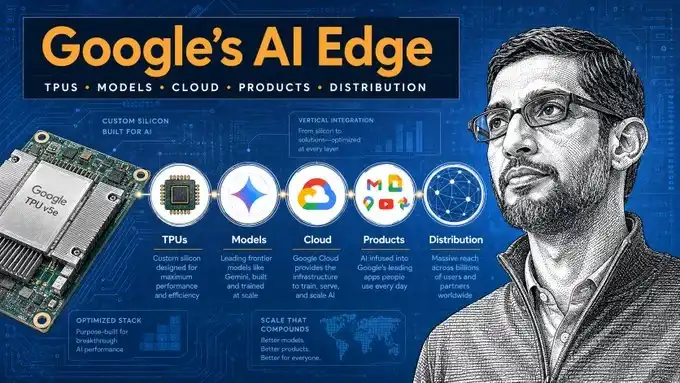
It has infrastructure: TPUs, data centers, Google Cloud, AI Hypercomputer.

It has models: Gemini, Gemma, Veo, Imagen, AlphaFold, and the deep research heritage from Google Brain and DeepMind.

It has products: Search, YouTube, Android, Chrome, Gmail, Workspace, Maps, Photos, Pixel.

It has revenue engines: Search Ads, YouTube Ads, subscriptions, Cloud, enterprise products.

Most importantly, it has distribution: billions of users are already in its ecosystem.

Most AI startups spend heavily to acquire users; Google already has a massive existing user base. Most AI startups need to build user habits from scratch; Google is already part of many people's daily routines.

Similarly, most AI startups need to convince enterprises to trust them; Google is already selling Cloud, Workspace, security, productivity, and infrastructure services to enterprises globally.

This is why the 'Google is doomed' narrative doesn't hold up.

Public opinion easily amplifies panic, but a calm look reveals Google possesses advantages most companies don't: an invisible AI intelligence layer.

The most successful consumer AI might not make users feel they're 'using AI'.

OpenAI and Anthropic need to pull users into their products; Google can push AI into the products users already use every day.

This is a very deep distribution advantage.

Search is also part of this advantage, even though it's often portrayed as Google's biggest weakness.

The bearish logic is clear: if AI changes how people access information, Google's core search business could be disrupted.

This risk is real.

Google's search advertising business is one of the most profitable in tech history. It funds AI research, YouTube infrastructure, Cloud expansion, moonshots, and massive capital expenditures.

So Google's moves here will be extra cautious. But Search isn't just a weakness for Google; it's also a superweapon.

Search gives Google distribution, user intent data, advertiser relationships, billions of daily user interactions, and a direct channel to push AI to mainstream users.

If Google can manage this transition well, Search won't simply be replaced by AI; it will become AI-native.

This process will inevitably create messy scenes - publishers will complain, advertisers will have issues, regulators will watch closely, and users will need time to build trust in AI-generated answers.

But if Google can evolve Search from a list of links into a personalized, multimodal, agentic answer engine, it will still be one of the most important gateways to the internet.

The question now is: Can Google change itself before someone else changes Search?

Google has another severely underestimated advantage: Google can even win when its competitors succeed.

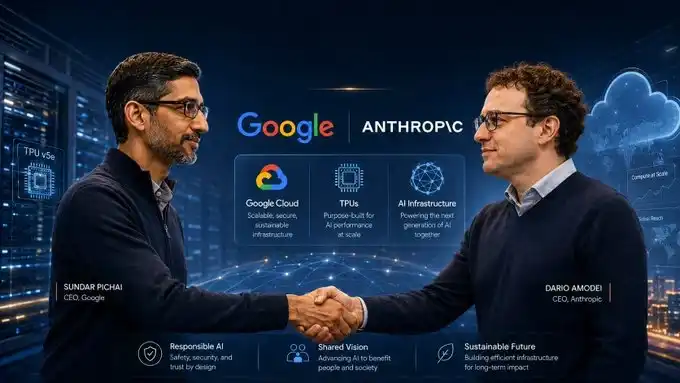
Anthropic isn't just Google's competitor. It's also its strategic partner.

Let's look at the data:

Google's parent company Alphabet has committed to invest up to $400 billion in Anthropic, including a $100 billion cash investment at a reported valuation of $3.5 trillion, with another $300 billion tied to performance goals.

Meanwhile, Anthropic reportedly committed to spending $2 trillion on Google Cloud over five years.

This isn't just a financial investment. Anthropic also announced plans to use up to 1 million Google TPUs, worth hundreds of billions of dollars, and expects to bring over 1GW of computing capacity.

This means one of Google's most important AI rivals could also become one of Google Cloud's most important AI infrastructure customers.
OpenAI has also reportedly turned to Google Cloud for additional computing power.

So Google isn't just participating in the AI model race; it's also becoming part of the underlying infrastructure for other frontier AI companies.

In the AI gold rush, Google isn't just trying to dig for gold itself.

It's also selling shovels, roads, electricity, and cloud infrastructure.

This is a very strong position.

The model race is extremely expensive. Training and serving frontier models requires massive computing power. Even the most successful AI companies need infrastructure partners.

Google has spent many years building its own chips, cloud capacity, and AI infrastructure. Now, even its rivals may need to rely on parts of its tech stack. This is its underlying strength.

Finally, it's worth mentioning that Google's AI ambitions aren't limited to chatbots; they also include AI for Science.

The Nobel Prize-winning AlphaFold is the best example. AlphaFold changed scientists' understanding of protein structure prediction, accelerated biological research, and proved AI isn't just for generating text but can solve truly difficult scientific problems.

This is crucial for the long-term AI race because, ultimately, the biggest AI winners might not just be the companies with the strongest consumer chatbots; they could also be those that can apply AI to science, medicine, climate, education, robotics, and deep technology infrastructure.

Google DeepMind has always had this larger ambition.

Indeed, John Jumper's departure might be Google's 'what could have been', as he represented one of Google's most important victories in AI for Science.

But AlphaFold wasn't the product of any single genius working alone. It came from a team and a research culture: the determination to commit long-term to world-class problems before the market was fully focused.

This culture is rare, and Google still has it.

3. The Real Innovator's Dilemma

So, does Google face the Innovator's Dilemma?

Certainly, no company is immune.

Google's core Search business is both its greatest asset and its biggest constraint.

Startups can charge forward with pure hunger. Google must protect a global business, a brand, regulatory risks, advertisers, publishers, enterprise clients, and billions of users.

This slows decision-making, makes product launches more cautious, and complicates internal coordination - this is the part many criticize.

Google has certainly made mistakes, for instance, Bard's launch was rocky.

Gemini itself has experienced its fair share of public setbacks.

But the important question isn't whether Google has weaknesses; it's: Is Google adapting and adjusting?

I think it is.

The Character.AI story well illustrates this boldness.

Noam Shazeer and Daniel De Freitas left Google to found Character.AI in 2021 and grew quickly. Later, Google decisively brought them and part of the Character.AI team back to Google through a massive deal.

This is the core tension in Google's AI story: Google was too cautious early on, appearing sluggish compared to startups; but later, Google reorganized, refocused, and started pushing Gemini across its entire ecosystem, turning it into an intelligence layer spanning Search, Workspace, Android, Cloud, and consumer products.

This doesn't mean Google can move like a 200-person startup. That's unrealistic.

But when the organization is aligned, it can move like a full-stack AI empire.

This distinction is very important - the Innovator's Dilemma is real, but Google isn't ignoring it.

From revolutionizing Search to integrating Gemini, what we see is the effort of a tech giant in transition.

4. Conclusion: This is a Stress Test, Not an Obituary

The departure of top-tier talent is more like a stress test for Google, not an obituary.

This company is facing one of the most difficult transitions in its history, but it's also one of the few with enough resources, tech stack, and distribution power to navigate this transition.

In the AI era, the shiniest model might win a news cycle; the most aggressive startup might grab headlines in the talent war.

But the best integrated system might win the next decade.

This is why I remain confident in Google - not because Google is perfect, but because Google is one of the few companies that can compete at every layer of the AI future.

The AI race is far from over, and Google is playing a long game.

Трендові криптовалюти

Пов'язані питання

QWhat is the main reason the article suggests for the recent high-profile AI talent departures from Google?

AThe article frames the departures primarily as part of a typical 'IPO eve talent war,' where companies like OpenAI and Anthropic are seeking top talent to bolster their credibility and market narrative before going public, rather than solely as a sign of Google's internal decline.

QAccording to the article, what is Google's key strategic advantage over pure model companies like OpenAI and Anthropic?

AGoogle's key advantage is its position as a 'full-stack AI company.' It has a massive ecosystem of widely-used products (Search, YouTube, Android, Workspace, etc.), vast infrastructure (TPUs, data centers, Google Cloud), and billions of existing users, allowing it to integrate AI directly into daily user habits rather than having to pull users into a new product.

QHow does the article reframe Google's role in the AI competition beyond just being a model competitor?

AThe article reframes Google as also being a crucial infrastructure provider in the AI 'gold rush.' It notes that even competitors like Anthropic and OpenAI are becoming significant customers of Google Cloud and its TPU chips, meaning Google profits from and underpins the infrastructure needs of the broader AI ecosystem.

QWhat example does the article give to show that Google is willing to be aggressive and adapt, despite its size?

AThe article cites the Character.AI story. After Noam Shazeer and Daniel De Freitas left Google to found Character.AI, Google later orchestrated a massive deal (reportedly around $27 billion) to bring them and part of their team back into the company, demonstrating a willingness to make bold moves to secure strategic talent and assets.

QWhat is the article's final conclusion about the significance of the AI talent leaving Google?

AThe article concludes that the talent departures are more accurately seen as a 'stress test' for Google, not an 'obituary.' It argues that while painful, Google possesses the unique resources, technology stack, and distribution scale to navigate this transition and compete in the long-term, multi-layered AI landscape.

Пов'язані матеріали

TechFlow Intelligence Bureau: Anthropic IPO Odds Exceed 80%, Iran Closes Strait of Hormuz Again, Triggering Oil Price Volatility

**Market Digest** **AI & Tech:** Anthropic is widely expected to announce an IPO before November 2026, raising questions about balancing its trillion-dollar valuation ambitions with its core "AI safety" mission. Brands are increasingly adopting AI-generated virtual influencers for marketing. Cloudflare introduced temporary accounts for AI agents to ease automation workflows. **Infrastructure & Hardware:** Google's IPv6 traffic surpassed 50%, marking a major internet milestone. Goldman Sachs warned that massive projected AI capital expenditure ($5.3T) is approaching credit saturation limits, potentially curbing the "AI arms race." **Space & Robotics:** SpaceX's IPO saw a historic $370M retail buying frenzy in three days. Hyundai Motor Group plans to acquire full ownership of Boston Dynamics. Elon Musk speculated about future "septillion-dollar" investments in antimatter for interstellar travel. **Energy & Geopolitics:** Iran's military announced another closure of the strategic Strait of Hormuz, accusing Israel of violating a ceasefire, causing oil market volatility. However, ship-tracking data indicated some traffic continued. Concurrently, Iran resumed crude loadings at Kharg Island, potentially releasing up to 20 million barrels to the market. **Finance & Macro:** A European CLO (collateralized loan obligation) experienced its first post-2008-crisis-era equity tranche default, raising alarms in credit markets. Nomura warned that new Federal Reserve Chair Wash's perceived hawkish debut speech could signal a significant policy shift. **The Undercurrent:** Seemingly disparate events—the Strait of Hormuz tension, the European CLO default, and warnings on AI spending—point to a tightening of global liquidity and rising marginal costs across energy, credit, and tech investment. Meanwhile, capital continues chasing grand narratives like space exploration and advanced AI, highlighting a divergence where old-world leverage frays as new-world stories grow more ambitious.

marsbit1 год тому

TechFlow Intelligence Bureau: Anthropic IPO Odds Exceed 80%, Iran Closes Strait of Hormuz Again, Triggering Oil Price Volatility

marsbit1 год тому

The Hunter Becomes the Hunted: The Most Profitable MEV Bot Gets Hacked

A well-known and highly profitable Ethereum MEV Bot, Jaredfromsubway.eth, suffered a sophisticated on-chain attack this Saturday, losing over $7.5 million. Analysis by Blockaid and others reveals this was not a conventional phishing or smart contract exploit, but a targeted "counter-MEV honeypot attack." The attacker meticulously laid a trap over several weeks, deploying 66 fake token contracts and liquidity pools disguised as major assets like WETH and USDC. These pools created the illusion of arbitrage opportunities. The MEV Bot's automated system detected these signals, executed trades, and in the process, granted approval permissions to attacker-controlled contracts. These approvals were not revoked, creating a persistent vulnerability. The attacker then exploited this in a single transaction, draining the bot's ETH, USDC, and USDT holdings. Jaredfromsubway.eth is notorious as one of Ethereum's most active and profitable MEV Bots, primarily known for executing "sandwich attacks" to profit from transaction slippage. Estimates suggest it has earned tens of millions in MEV revenue. The incident highlights escalating crypto security threats, demonstrating that even top-tier automated "predators" are vulnerable to novel, logic-based attacks designed to exploit their own operational rules. Following the hack, an unverified X account impersonating Jaredfromsubway.eth emerged, falsely offering a bounty for the return of funds, prompting developer warnings for users to stay vigilant.

marsbit2 год тому

The Hunter Becomes the Hunted: The Most Profitable MEV Bot Gets Hacked

marsbit2 год тому

Торгівля

Спот
Ф'ючерси

Популярні статті

Що таке $S$

Розуміння SPERO: Комплексний огляд Вступ до SPERO Оскільки ландшафт інновацій продовжує еволюціонувати, виникнення технологій web3 та криптовалютних проектів відіграє ключову роль у формуванні цифрового майбутнього. Один з проектів, який привернув увагу в цій динамічній сфері, — це SPERO, позначений як SPERO,$$s$. Ця стаття має на меті зібрати та представити детальну інформацію про SPERO, щоб допомогти ентузіастам та інвесторам зрозуміти його основи, цілі та інновації в рамках web3 та крипто-сектору. Що таке SPERO,$$s$? SPERO,$$s$ — це унікальний проект у криптопросторі, який прагне використати принципи децентралізації та технології блокчейн для створення екосистеми, що сприяє залученню, корисності та фінансовій інклюзії. Проект розроблений для полегшення взаємодії між користувачами новими способами, надаючи їм інноваційні фінансові рішення та послуги. У своїй основі SPERO,$$s$ прагне надати можливості індивідам, забезпечуючи інструменти та платформи, які покращують користувацький досвід у криптовалютному просторі. Це включає в себе можливість більш гнучких методів транзакцій, сприяння ініціативам, що підтримуються спільнотою, та створення шляхів для фінансових можливостей через децентралізовані додатки (dApps). Основна концепція SPERO,$$s$ обертається навколо інклюзивності, прагнучи зменшити розриви в традиційній фінансовій системі, використовуючи переваги технології блокчейн. Хто є творцем SPERO,$$s$? Особистість творця SPERO,$$s$ залишається дещо невідомою, оскільки є обмежені публічно доступні ресурси, що надають детальну інформацію про його засновників. Ця відсутність прозорості може бути наслідком зобов'язання проекту до децентралізації — етики, яку багато проектів web3 поділяють, ставлячи колективні внески вище за індивідуальне визнання. Зосереджуючи обговорення навколо спільноти та її колективних цілей, SPERO,$$s$ втілює суть наділення без виділення конкретних осіб. Таким чином, розуміння етики та місії SPERO є більш важливим, ніж ідентифікація єдиного творця. Хто є інвесторами SPERO,$$s$? SPERO,$$s$ підтримується різноманітними інвесторами, починаючи від венчурних капіталістів до ангельських інвесторів, які прагнуть сприяти інноваціям у крипто-секторі. Зосередження цих інвесторів зазвичай узгоджується з місією SPERO — пріоритет надається проектам, які обіцяють технологічний прогрес у суспільстві, фінансову інклюзію та децентралізоване управління. Ці інвесторські фонди зазвичай зацікавлені в проектах, які не лише пропонують інноваційні продукти, але й позитивно впливають на спільноту блокчейн та її екосистеми. Підтримка з боку цих інвесторів підкріплює SPERO,$$s$ як значного конкурента в швидко змінюваній сфері крипто-проектів. Як працює SPERO,$$s$? SPERO,$$s$ використовує багатогранну структуру, яка відрізняє його від традиційних криптовалютних проектів. Ось деякі ключові особливості, які підкреслюють його унікальність та інноваційність: Децентралізоване управління: SPERO,$$s$ інтегрує моделі децентралізованого управління, надаючи користувачам можливість активно брати участь у процесах прийняття рішень щодо майбутнього проекту. Цей підхід сприяє відчуттю власності та відповідальності серед членів спільноти. Корисність токена: SPERO,$$s$ використовує свій власний криптовалютний токен, розроблений для виконання різних функцій в екосистемі. Ці токени дозволяють здійснювати транзакції, отримувати винагороди та полегшувати послуги, що пропонуються на платформі, підвищуючи загальну залученість та корисність. Шарова архітектура: Технічна архітектура SPERO,$$s$ підтримує модульність та масштабованість, що дозволяє безперешкодно інтегрувати додаткові функції та додатки в міру розвитку проекту. Ця адаптивність є надзвичайно важливою для збереження актуальності в постійно змінюваному крипто-ландшафті. Залучення спільноти: Проект підкреслює ініціативи, що підтримуються спільнотою, використовуючи механізми, які стимулюють співпрацю та зворотний зв'язок. Підтримуючи сильну спільноту, SPERO,$$s$ може краще задовольняти потреби користувачів та адаптуватися до ринкових тенденцій. Фокус на інклюзію: Пропонуючи низькі комісії за транзакції та зручні інтерфейси, SPERO,$$s$ прагне залучити різноманітну базу користувачів, включаючи осіб, які раніше не брали участі в крипто-просторі. Це зобов'язання до інклюзії узгоджується з його загальною місією наділення через доступність. Хронологія SPERO,$$s$ Розуміння історії проекту надає важливі уявлення про його розвиток та етапи. Нижче наведено пропоновану хронологію, що відображає значні події в еволюції SPERO,$$s$: Етап концептуалізації та ідеації: Початкові ідеї, що стали основою SPERO,$$s$, були сформовані, тісно пов'язані з принципами децентралізації та фокусом на спільноті в індустрії блокчейн. Запуск білого паперу проекту: Після концептуального етапу був випущений комплексний білий папір, що детально описує бачення, цілі та технологічну інфраструктуру SPERO,$$s$, щоб залучити інтерес та зворотний зв'язок від спільноти. Створення спільноти та ранні залучення: Активні зусилля були спрямовані на створення спільноти ранніх прихильників та потенційних інвесторів, що полегшило обговорення цілей проекту та отримання підтримки. Подія генерації токенів: SPERO,$$s$ провів подію генерації токенів (TGE) для розподілу своїх рідних токенів серед ранніх прихильників та встановлення початкової ліквідності в екосистемі. Запуск початкового dApp: Перший децентралізований додаток (dApp), пов'язаний з SPERO,$$s$, став доступним, дозволяючи користувачам взаємодіяти з основними функціями платформи. Постійний розвиток та партнерства: Безперервні оновлення та вдосконалення пропозицій проекту, включаючи стратегічні партнерства з іншими учасниками блокчейн-простору, сформували SPERO,$$s$ у конкурентоспроможного та еволюціонуючого гравця на крипто-ринку. Висновок SPERO,$$s$ є свідченням потенціалу web3 та криптовалют для революціонізації фінансових систем та наділення індивідів. Завдяки зобов'язанню до децентралізованого управління, залучення спільноти та інноваційно спроектованих функцій, він прокладає шлях до більш інклюзивного фінансового ландшафту. Як і з будь-якими інвестиціями в швидко змінюваному крипто-просторі, потенційним інвесторам та користувачам рекомендується ретельно досліджувати та обдумано взаємодіяти з поточними подіями в SPERO,$$s$. Проект демонструє інноваційний дух крипто-індустрії, запрошуючи до подальшого дослідження його численних можливостей. Хоча подорож SPERO,$$s$ ще триває, його основні принципи можуть справді вплинути на майбутнє того, як ми взаємодіємо з технологією, фінансами та один з одним у взаємопов'язаних цифрових екосистемах.

81 переглядів усьогоОпубліковано 2024.12.17Оновлено 2024.12.17

Що таке $S$

Що таке AGENT S

Агент S: Майбутнє автономної взаємодії в Web3 Вступ У постійно змінюваному ландшафті Web3 та криптовалюти інновації постійно переосмислюють, як люди взаємодіють з цифровими платформами. Один з таких новаторських проектів, Агент S, обіцяє революціонізувати взаємодію людини з комп'ютером через свою відкриту агентну структуру. Прокладаючи шлях для автономних взаємодій, Агент S прагне спростити складні завдання, пропонуючи трансформаційні застосування в штучному інтелекті (ШІ). Це детальне дослідження заглиблюється в складності проекту, його унікальні особливості та наслідки для сфери криптовалюти. Що таке Агент S? Агент S є революційною відкритою агентною структурою, спеціально розробленою для вирішення трьох основних викликів в автоматизації комп'ютерних завдань: Набуття специфічних знань у галузі: Структура інтелектуально навчається з різних зовнішніх джерел знань та внутрішнього досвіду. Цей подвійний підхід дозволяє їй створити багатий репозиторій специфічних знань у галузі, покращуючи її продуктивність у виконанні завдань. Планування на довгих горизонтах завдань: Агент S використовує планування з підкріпленням досвіду, стратегічний підхід, який полегшує ефективний розподіл та виконання складних завдань. Ця функція значно підвищує її здатність ефективно та результативно управляти кількома підзавданнями. Обробка динамічних, неоднорідних інтерфейсів: Проект представляє Інтерфейс Агент-Комп'ютер (ACI), інноваційне рішення, яке покращує взаємодію між агентами та користувачами. Використовуючи багатомодальні великі мовні моделі (MLLMs), Агент S може безперешкодно орієнтуватися та маніпулювати різноманітними графічними інтерфейсами користувача. Завдяки цим новаторським функціям Агент S надає надійну структуру, яка вирішує складнощі, пов'язані з автоматизацією людської взаємодії з машинами, прокладаючи шлях для численних застосувань у ШІ та за його межами. Хто є творцем Агент S? Хоча концепція Агент S є фундаментально новаторською, конкретна інформація про його творця залишається невідомою. Творець наразі невідомий, що підкреслює або початкову стадію проекту, або стратегічний вибір зберегти засновників у таємниці. Незважаючи на анонімність, акцент залишається на можливостях та потенціалі структури. Хто є інвесторами Агент S? Оскільки Агент S є відносно новим у криптографічній екосистемі, детальна інформація про його інвесторів та фінансових спонсорів не задокументована. Відсутність публічно доступних відомостей про інвестиційні фонди або організації, що підтримують проект, викликає питання щодо його фінансової структури та дорожньої карти розвитку. Розуміння підтримки є критично важливим для оцінки стійкості проекту та потенційного впливу на ринок. Як працює Агент S? В основі Агент S лежить передова технологія, яка дозволяє йому ефективно функціонувати в різних умовах. Його операційна модель побудована навколо кількох ключових функцій: Взаємодія з комп'ютером, подібна до людської: Структура пропонує розширене планування ШІ, прагнучи зробити взаємодії з комп'ютерами більш інтуїтивними. Імітуючи людську поведінку при виконанні завдань, вона обіцяє підвищити досвід користувачів. Наративна пам'ять: Використовується для використання високорівневого досвіду, Агент S використовує наративну пам'ять для відстеження історій завдань, тим самим покращуючи свої процеси прийняття рішень. Епізодична пам'ять: Ця функція надає користувачам покрокові інструкції, дозволяючи структурі пропонувати контекстуальну підтримку в міру виконання завдань. Підтримка OpenACI: Завдяки можливості працювати локально, Агент S дозволяє користувачам зберігати контроль над своїми взаємодіями та робочими процесами, узгоджуючи з децентралізованою етикою Web3. Легка інтеграція з зовнішніми API: Його універсальність і сумісність з різними платформами ШІ забезпечують те, що Агент S може безперешкодно вписатися в існуючі технологічні екосистеми, роблячи його привабливим вибором для розробників та організацій. Ці функціональні можливості колективно сприяють унікальному положенню Агент S у крипто-просторі, оскільки він автоматизує складні, багатоступеневі завдання з мінімальним втручанням людини. У міру розвитку проекту його потенційні застосування в Web3 можуть переосмислити, як відбуваються цифрові взаємодії. Хронологія Агент S Розробка та етапи Агент S можуть бути узагальнені в хронології, яка підкреслює його значні події: 27 вересня 2024 року: Концепція Агент S була представлена в комплексній науковій статті під назвою “Відкрита агентна структура, яка використовує комп'ютери як людина”, що демонструє основи проекту. 10 жовтня 2024 року: Наукова стаття була опублікована на arXiv, пропонуючи детальне дослідження структури та її оцінки продуктивності на основі бенчмарку OSWorld. 12 жовтня 2024 року: Було випущено відеопрезентацію, що надає візуальне уявлення про можливості та особливості Агент S, ще більше залучаючи потенційних користувачів та інвесторів. Ці маркери в хронології не лише ілюструють прогрес Агент S, але й вказують на його прихильність до прозорості та залучення громади. Ключові моменти про Агент S У міру розвитку структури Агент S кілька ключових характеристик виділяються, підкреслюючи її новаторський характер та потенціал: Інноваційна структура: Розроблена для забезпечення інтуїтивного використання комп'ютерів, подібного до людської взаємодії, Агент S пропонує новий підхід до автоматизації завдань. Автономна взаємодія: Здатність автономно взаємодіяти з комп'ютерами через GUI означає стрибок до більш інтелектуальних та ефективних обчислювальних рішень. Автоматизація складних завдань: Завдяки своїй надійній методології він може автоматизувати складні, багатоступеневі завдання, роблячи процеси швидшими та менш схильними до помилок. Безперервне вдосконалення: Механізми навчання дозволяють Агенту S покращуватися на основі минулого досвіду, постійно підвищуючи свою продуктивність та ефективність. Універсальність: Його адаптивність до різних операційних середовищ, таких як OSWorld та WindowsAgentArena, забезпечує його здатність служити широкому спектру застосувань. Оскільки Агент S займає своє місце в ландшафті Web3 та криптовалюти, його потенціал покращити можливості взаємодії та автоматизувати процеси означає значний прогрес у технологіях ШІ. Завдяки своїй інноваційній структурі Агент S є прикладом майбутнього цифрових взаємодій, обіцяючи більш безперешкодний та ефективний досвід для користувачів у різних галузях. Висновок Агент S представляє собою сміливий крок вперед у поєднанні ШІ та Web3, з можливістю переосмислити, як ми взаємодіємо з технологією. Хоча проект все ще на ранніх стадіях, можливості для його застосування є величезними та переконливими. Завдяки своїй комплексній структурі, що вирішує критичні виклики, Агент S прагне вивести автономні взаємодії на передній план цифрового досвіду. У міру того, як ми заглиблюємося в сфери криптовалюти та децентралізації, проекти, подібні до Агент S, безсумнівно, відіграватимуть ключову роль у формуванні майбутнього технологій та співпраці людини з комп'ютером.

706 переглядів усьогоОпубліковано 2025.01.14Оновлено 2025.01.14

Що таке AGENT S

Як купити S

Ласкаво просимо до HTX.com! Ми зробили покупку Sonic (S) простою та зручною. Дотримуйтесь нашої покрокової інструкції, щоб розпочати свою криптовалютну подорож.Крок 1: Створіть обліковий запис на HTXВикористовуйте свою електронну пошту або номер телефону, щоб зареєструвати обліковий запис на HTX безплатно. Пройдіть безпроблемну реєстрацію й отримайте доступ до всіх функцій.ЗареєструватисьКрок 2: Перейдіть до розділу Купити крипту і виберіть спосіб оплатиКредитна/дебетова картка: використовуйте вашу картку Visa або Mastercard, щоб миттєво купити Sonic (S).Баланс: використовуйте кошти з балансу вашого рахунку HTX для безперешкодної торгівлі.Треті особи: ми додали популярні способи оплати, такі як Google Pay та Apple Pay, щоб підвищити зручність.P2P: Торгуйте безпосередньо з іншими користувачами на HTX.Позабіржова торгівля (OTC): ми пропонуємо індивідуальні послуги та конкурентні обмінні курси для трейдерів.Крок 3: Зберігайте свої Sonic (S)Після придбання Sonic (S) збережіть його у своєму обліковому записі на HTX. Крім того, ви можете відправити його в інше місце за допомогою блокчейн-переказу або використовувати його для торгівлі іншими криптовалютами.Крок 4: Торгівля Sonic (S)Легко торгуйте Sonic (S) на спотовому ринку HTX. Просто увійдіть до свого облікового запису, виберіть торгову пару, укладайте угоди та спостерігайте за ними в режимі реального часу. Ми пропонуємо зручний досвід як для початківців, так і для досвідчених трейдерів.

1.6k переглядів усьогоОпубліковано 2025.01.15Оновлено 2026.06.02

Як купити S

Обговорення

Ласкаво просимо до спільноти HTX. Тут ви можете бути в курсі останніх подій розвитку платформи та отримати доступ до професійної ринкової інформації. Нижче представлені думки користувачів щодо ціни S (S).

活动图片