Japan’s SBI Bank Expands Crypto Push With BTC, ETH, XRP Rewards Program For Depositors

bitcoinistОпубліковано о 2026-06-10Востаннє оновлено о 2026-06-10

Анотація

SBI Shinsei Bank, part of Japan's SBI Group, is launching a crypto rewards program this fall to expand its digital assets business. The program will reward depositors with vouchers worth 20% of their interest payments, redeemable for Bitcoin (BTC), Ethereum (ETH), or XRP. A three-month trial starts in June for deposits ranging from 300,000 to over 30 million yen. Customers must open an account with SBI's crypto exchange, VC Trade, to convert the vouchers. This initiative is part of SBI Group's broader crypto push, which includes launching a crypto-linked Visa card, developing crypto investment trusts, filing for crypto ETFs, and seeking to acquire a stake in the Bitbank exchange.

The banking arm of Japanese financial giant SBI Holdings is reportedly launching a crypto rewards program for depositors as part of a broader push to expand its digital assets business.

SBI Shinsei Launches BTC, ETH, XRP Rewards

SBI Shinsei Bank, the banking arm of Japan’s SBI Group, will reportedly launch a program this fall that rewards depositors with cryptocurrency vouchers, based on their account balances, Nikkei first reported on Monday.

According to local news outlets, depositors will receive exchange vouchers equal to 20% of their deposit interest payments, redeemable for Bitcoin (BTC), Ethereum (ETH), or XRP “within a certain period,” with conversion based on market rates at the time of execution.

The bank will hold a three-month trial campaign starting June 10. The campaign will reportedly apply to fixed-term deposits and savings accounts with maturities ranging from three months to five years.

Deposits of 300,000 yen will receive a voucher worth about 500 yen, while deposits of 30 million yen or more will earn roughly 20,000 yen in vouchers. SBI Shinsei is set to take customer feedback to shape the final structure of the service, evaluating account openings and usage before deciding on a permanent rollout this fall.

While offering digital assets as a permanent deposit product is highly unusual, the program aims to attract new customers to the group’s crypto business, SBI VC Trade, using bank deposits as the entry point.

Notably, the number of individual deposit accounts currently stands at approximately 4.33 million, the reports added, and customers will reportedly be required to open an SBI VC Trade account to exchange their vouchers.

In February, SBI Shinsei Bank and SBI VC Trade ran a campaign offering up to 20,000 yen in XRP exchange vouchers, based on the total amount deposited in Power Direct yen time deposits.

SBI Group Expands Crypto Push

SBI Group has been accelerating its crypto expansion, rolling out new products while deepening its footprint in both trading and investment services. In March, SBI VC Trade introduced a retail USDC lending service, allowing users to lend stablecoins under fixed-term agreements in exchange for returns.

In May, SBI VC Trade, APLUS, and Visa Worldwide Japan introduced the SBI Visa Crypto Card, which converts spending rewards into BTC, ETH, or XRP. The card integrates with SBI Securities’ investment services, enabling automated crypto accumulation tied to monthly investment activity.

SBI Securities, alongside Rakuten Securities, is developing crypto investment trusts for direct sale to individual investors. Meanwhile, SBI has partnered with Startale Group to build a blockchain for tokenized stocks and launched JPYSC, a yen-backed stablecoin.

The group has also moved to consolidate its position in Japan’s crypto exchange market, formally submitting a letter of intent to acquire a stake in Bitbank, one of Japan’s top regulated exchanges, to make it a consolidated subsidiary, following the integration of Bitpoint Japan into SBI VC Trade.

In addition, SBI has outlined plans to launch crypto-based exchange-traded funds (ETFs), filing for a combined Bitcoin and XRP ETF on the Tokyo Stock Exchange, targeting $32 billion in assets within three years, and a “Digital Gold Crypto” ETF that would allocate 51% to gold and 49% to digital assets.
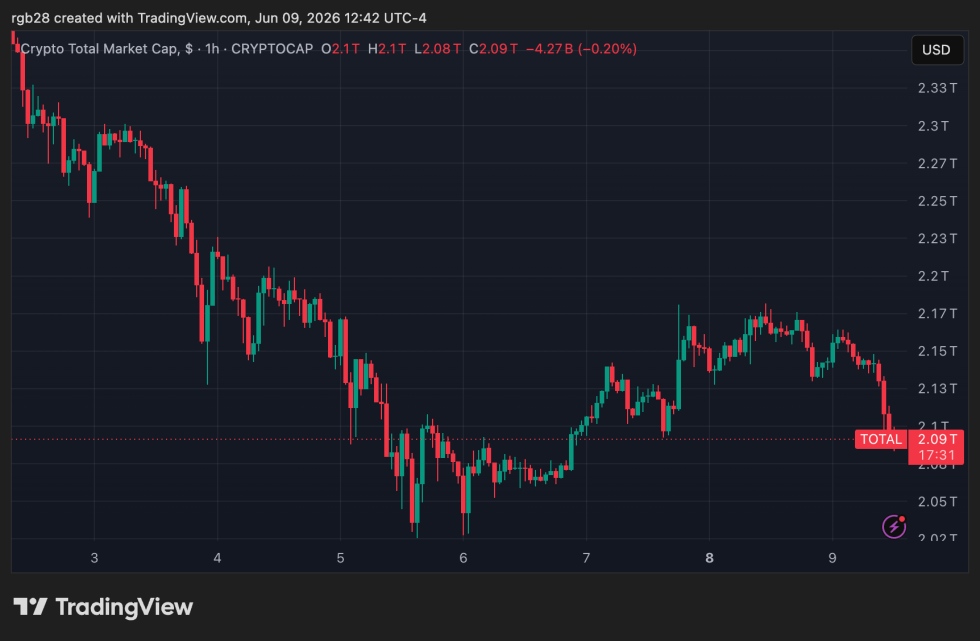
The total crypto market capitalization is at $2.09 trillion in the one-week chart. Source: TOTAL on TradingView


Пов'язані питання

QWhat is the main objective of SBI Shinsei Bank's new cryptocurrency rewards program for depositors?

AThe main objective is to attract new customers to the group's crypto business, SBI VC Trade, by using bank deposits as an entry point and offering cryptocurrency vouchers as a reward.

QHow will the crypto voucher rewards for depositors be calculated in the new program?

ADepositors will receive exchange vouchers equal to 20% of their deposit interest payments, which are redeemable for Bitcoin (BTC), Ethereum (ETH), or XRP based on market rates at the time of redemption.

QWhat is one of the other recent crypto-related products launched by an SBI Group company, as mentioned in the article?

AOne recent product is the SBI Visa Crypto Card, introduced by SBI VC Trade, APLUS, and Visa, which converts spending rewards into BTC, ETH, or XRP and integrates with SBI Securities' investment services.

QWhat strategic move is SBI Group making to strengthen its position in Japan's crypto exchange market?

ASBI Group is moving to acquire a stake in Bitbank, one of Japan's top regulated exchanges, to make it a consolidated subsidiary, following the previous integration of Bitpoint Japan.

QAccording to the article, what type of crypto-related financial product has SBI filed to launch on the Tokyo Stock Exchange?

ASBI has filed to launch crypto-based exchange-traded funds (ETFs), including a combined Bitcoin and XRP ETF and a 'Digital Gold Crypto' ETF that allocates 51% to gold and 49% to digital assets.

Пов'язані матеріали

CFTC Proposes New Rules for Prediction Markets, Redefining Which Events and Who Can Participate

The U.S. Commodity Futures Trading Commission (CFTC) has proposed new rules to establish a regulatory framework for prediction markets, aiming to define which event contracts can be traded and who can participate. The 267-page proposal seeks to amend regulations to create a structured review process for "event contracts." The core goal is to determine whether contracts involving sensitive topics like terrorism, assassination, war, or illegal activities are contrary to the "public interest." The CFTC's approach is not an outright ban but a case-by-case assessment, focusing on whether a contract predicts harmful acts themselves or merely their commercial or risk-related impacts. The proposal suggests that most mainstream sports prediction markets—based on final scores, winners, or season outcomes—may be permissible as they provide price discovery and informational value. However, markets on easily manipulated granular events (e.g., player injuries, specific referee calls) or those encouraging harm/cheating would face stricter scrutiny. A primary regulatory target is insider trading and market manipulation, where individuals with non-public knowledge or influence over an event's outcome could unfairly profit. Recent alleged incidents involving military personnel, former politicians, and corporate insiders highlight this risk. The move clarifies federal oversight but does not end the debate. State regulators and gambling associations argue that many prediction markets, especially on sports, constitute gambling and should fall under state, not federal, jurisdiction. This sets up a potential conflict over regulatory authority. Overall, the CFTC's proposal signals a shift for prediction markets from rapid, less-regulated expansion toward a more institutionalized, rules-based model resembling traditional financial markets. Growth will increasingly depend on demonstrating market fairness, transparent settlement, and controlled risks.

Odaily星球日报2 хв тому

CFTC Proposes New Rules for Prediction Markets, Redefining Which Events and Who Can Participate

Odaily星球日报2 хв тому

U.S. Stock Market Trend: Dow Plunges Below 50,000 Points, Strongest Earnings Can't Save Oracle

U.S. stocks fell sharply on Wednesday, June 10th, with the Dow Jones Industrial Average dropping 1.87% to close below the 50,000 point mark. The sell-off was driven by a dual shock: hotter-than-expected inflation data and a significant escalation in U.S.-Iran military conflict, which pushed the VIX fear index above 20. While the May CPI matched expectations, afternoon news of retaliatory strikes between the U.S. and Iran triggered a broad market retreat, particularly hitting industrial and tech sectors. The prospect of renewed inflationary pressure from rising oil prices has fully priced in a Fed rate hike by December, shifting the monetary policy narrative. Concurrently, the AI investment theme faced a severe reality check. Super Micro Computer's stock plummeted nearly 28% after announcing a major fundraising plan to fulfill orders, highlighting the massive capital demands of the AI infrastructure build-out. This was underscored by Oracle's post-market reaction: despite posting a strong quarterly earnings beat and a massive $850 billion increase in remaining performance obligations (RPO), its stock fell due to negative free cash flow and a new $40 billion financing plan for data centers. The market's pivot towards defensive plays like Coca-Cola and TJX Companies, which hit record highs, signals a shift from growth to safety. Analysts view the downturn as a convergence of an "AI credit cycle"—where the market questions the funding for massive capital expenditures—and a "geopolitical inflation cycle." While a technical rebound is possible, the structural change is that AI giants are now funding growth through significant equity and debt, forcing a re-pricing of risk and valuation anchors.

marsbit52 хв тому

U.S. Stock Market Trend: Dow Plunges Below 50,000 Points, Strongest Earnings Can't Save Oracle

marsbit52 хв тому

Торгівля

Спот
Ф'ючерси

Популярні статті

Як купити PUSH

Ласкаво просимо до HTX.com! Ми зробили покупку Push Protocol (PUSH) простою та зручною. Дотримуйтесь нашої покрокової інструкції, щоб розпочати свою криптовалютну подорож.Крок 1: Створіть обліковий запис на HTXВикористовуйте свою електронну пошту або номер телефону, щоб зареєструвати обліковий запис на HTX безплатно. Пройдіть безпроблемну реєстрацію й отримайте доступ до всіх функцій.ЗареєструватисьКрок 2: Перейдіть до розділу Купити крипту і виберіть спосіб оплатиКредитна/дебетова картка: використовуйте вашу картку Visa або Mastercard, щоб миттєво купити Push Protocol (PUSH).Баланс: використовуйте кошти з балансу вашого рахунку HTX для безперешкодної торгівлі.Треті особи: ми додали популярні способи оплати, такі як Google Pay та Apple Pay, щоб підвищити зручність.P2P: Торгуйте безпосередньо з іншими користувачами на HTX.Позабіржова торгівля (OTC): ми пропонуємо індивідуальні послуги та конкурентні обмінні курси для трейдерів.Крок 3: Зберігайте свої Push Protocol (PUSH)Після придбання Push Protocol (PUSH) збережіть його у своєму обліковому записі на HTX. Крім того, ви можете відправити його в інше місце за допомогою блокчейн-переказу або використовувати його для торгівлі іншими криптовалютами.Крок 4: Торгівля Push Protocol (PUSH)Легко торгуйте Push Protocol (PUSH) на спотовому ринку HTX. Просто увійдіть до свого облікового запису, виберіть торгову пару, укладайте угоди та спостерігайте за ними в режимі реального часу. Ми пропонуємо зручний досвід як для початківців, так і для досвідчених трейдерів.

574 переглядів усьогоОпубліковано 2024.12.13Оновлено 2026.06.02

Як купити PUSH

Обговорення

Ласкаво просимо до спільноти HTX. Тут ви можете бути в курсі останніх подій розвитку платформи та отримати доступ до професійної ринкової інформації. Нижче представлені думки користувачів щодо ціни PUSH (PUSH).

活动图片