Congress Advances CBDC Ban Until 2030 Through Major Housing Reform Bill

TheNewsCryptoОпубліковано о 2026-06-17Востаннє оновлено о 2026-06-17

Анотація

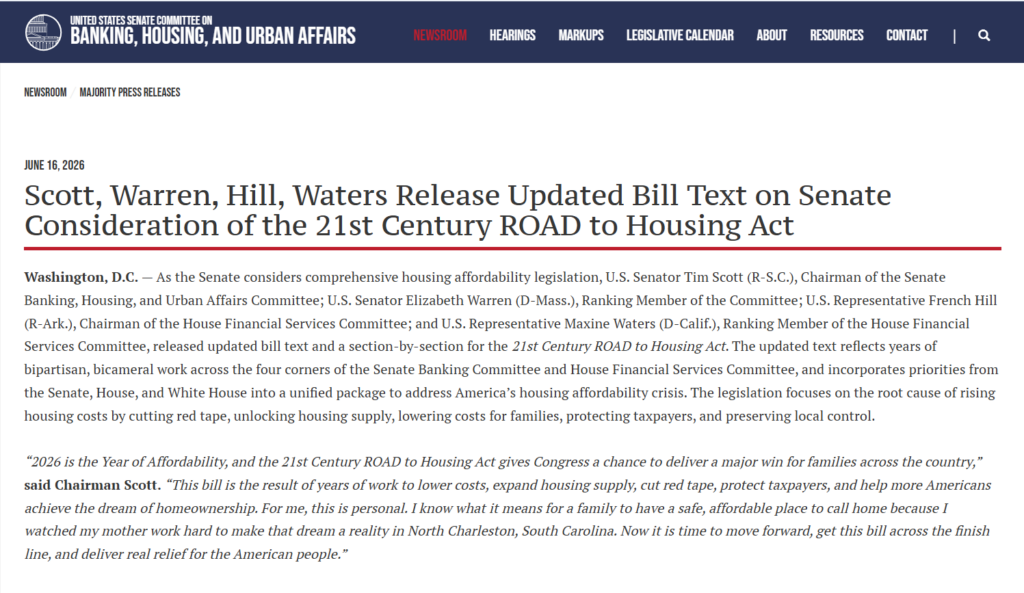
Congress has passed the 21st Century Road to Housing Act, a bipartisan bill primarily focused on housing reform to improve affordability and supply. Included within it is a significant provision that bans the Federal Reserve from issuing a central bank digital currency (CBDC) or "digital dollar" before December 31, 2030. The measure defines a CBDC as a dollar-denominated digital asset, a direct liability of the Fed, accessible to all Americans. Proponents argue the ban allows more time to study a digital dollar's impacts and addresses concerns about privacy, financial surveillance, and government overreach in digital payments. The provision specifically targets a retail CBDC but does not restrict permissionless blockchain networks. This crypto-related language, embedded in broader housing legislation, has drawn considerable attention for its potential to shape the future of digital assets and payments in the U.S. The bill's final passage will determine if the ban takes effect for the next decade.

Legislators have passed a bill aimed at pushing housing reforms that feature a temporary ban on a Federal Reserve CBDC. The ban forms one of the many proposals included in the bipartisan bill, the 21st Century Road to Housing Act. The bill seeks to improve affordable housing, boost the supply of houses, and bring about various reforms.

A proposal in the bill bans the Federal Reserve from creating a digital dollar before December 31, 2030. Lawmakers inserted the provision into the broader housing bill rather than introducing it as a standalone crypto-related measure. Under the proposal, lawmakers classify a CBDC as a dollar-denominated digital asset. This serves as a direct liability of the Federal Reserve and remains accessible to all Americans.
Supporters of the provision argue that it gives policymakers additional time to evaluate the potential impacts of a digital dollar. The ban also reflects concerns that some lawmakers have raised about privacy, financial surveillance, and government involvement in digital payment systems. On the other hand, this proposal does not impose restrictions on permissionless blockchain networks.

Focus on Crypto Policy in Housing Legislation

Lawmakers designed the housing legislation to address housing supply challenges through permitting reforms, regulatory changes, and expanded financing opportunities. Nevertheless, it is the CBDC policy language that caught much attention in the cryptocurrency community. Since it impacts the issuance of the digital dollar in the future. The language was adopted in Congress in light of further discussions. This was regarding the place of digital assets in the country’s financial system.

In accordance with the language, the ban applies to the efforts of the Federal Reserve to issue a retail CBDC regardless of whether it will be issued directly by the institution or by means of intermediaries. In addition, there are some drafts of the bill that have an exception in the case when private digital dollars retain privacy traits comparable to those of physical dollars.

The market analysts are continuing to watch the developments since the legislation could affect further discussions about digital payments and cryptocurrencies. Although the housing bill is what lawmakers are concentrating on, the clause regarding CBDCs can be seen as an important factor in terms of the cryptocurrency sector. The next few steps in the legislation process will decide whether or not the ban will be enforced within the next decade.

Highlighted Crypto News:

Ethereum Advances Glamsterdam Upgrade Ahead of Planned 2026 Launch

TagsBlockchainCBDCcrypto legislationFederal ReserveU.S Congress

Трендові криптовалюти

Пов'язані питання

QWhat is the main purpose of the 21st Century Road to Housing Act as mentioned in the article?

AThe main purpose of the 21st Century Road to Housing Act is to improve affordable housing, boost the supply of houses, and bring about various reforms.

QWhat specific restriction does the bill place on the Federal Reserve regarding a Central Bank Digital Currency (CBDC)?

AThe bill bans the Federal Reserve from creating a digital dollar, or retail CBDC, before December 31, 2030.

QWhy did supporters of the CBDC provision include it in the bill according to the text?

ASupporters argue the provision gives policymakers additional time to evaluate the potential impacts of a digital dollar and reflects concerns about privacy, financial surveillance, and government involvement in digital payment systems.

QHow does the article describe the focus of the housing legislation versus the attention it received?

AWhile the housing legislation is designed to address housing supply challenges, it was the CBDC policy language within the bill that caught much attention in the cryptocurrency community.

QAccording to the bill's language, does the CBDC ban apply to private, permissionless blockchain networks?

ANo, the proposal does not impose restrictions on permissionless blockchain networks. Some drafts of the bill even have an exception for private digital dollars that retain privacy traits comparable to physical dollars.

Пов'язані матеріали

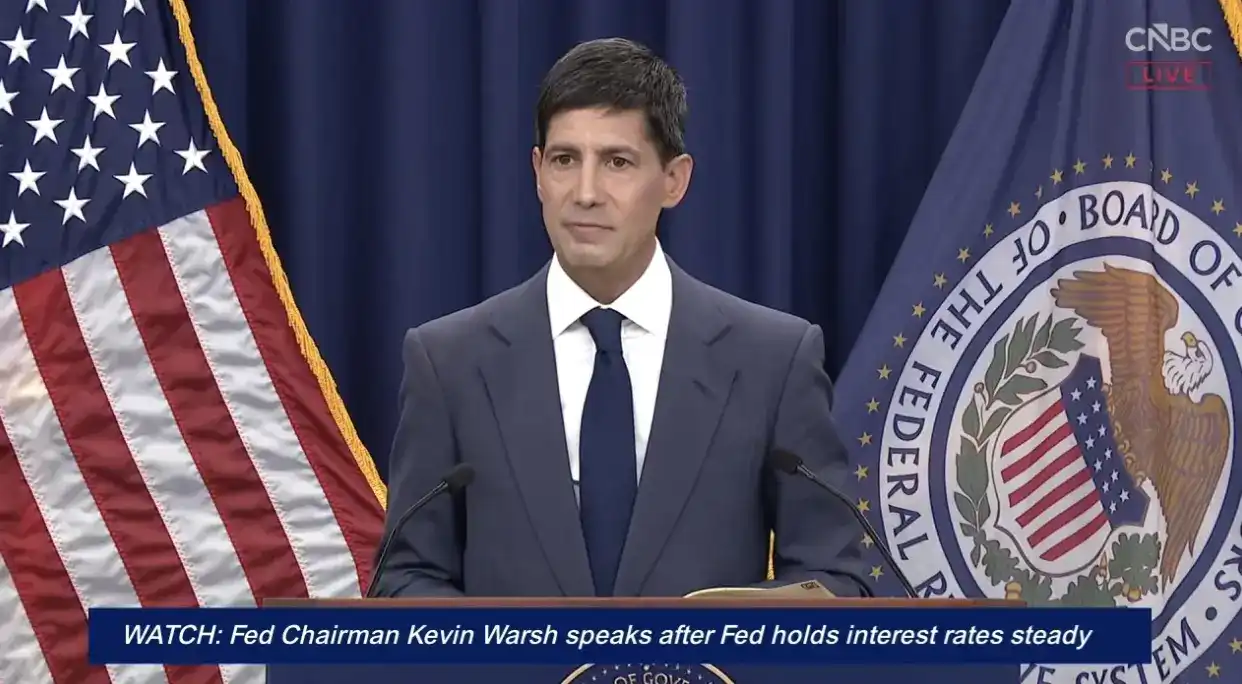
Full Debut Q&A! Fed Chair Wash: Firmly Adhering to 2% Inflation Target, Establishing Five Special Task Forces, Personally Did Not Submit Dot Plot

Federal Reserve Chair Kevin Warsh delivered his first FOMC press conference, maintaining the federal funds rate at 3.5%-3.75% and emphasizing the Committee's unanimous and explicit commitment to achieving its 2% inflation target. Key announcements included significant changes to Fed communication and operations. The policy statement was significantly shortened and, notably, forward guidance was removed. Chair Warsh broke from precedent by declining to submit his own economic forecasts and "dot plot." He announced the immediate formation of five special working groups focusing on: Fed communication, the balance sheet, data sources, productivity and employment (including AI's impact), and the inflation framework. These groups, which will include external experts, are tasked with recommending improvements by year-end. One key group will review the Fed's $6.7 trillion balance sheet to assess the roles of interest rates versus balance sheet tools in monetary policy. Warsh characterized the current restrictive stance of policy as "uneven," noting its effect on housing but questioning its impact on financial markets where conditions appear less restrictive. He expressed a desire to move away from a "Fed-speak" driven market, arguing that markets should react to economic data rather than Fed commentary to provide better informational signals. On inflation, he stated there is no need to reconsider the 2% target until the Fed re-establishes its commitment and capability to achieve it. Economic projections (SEP) from other officials showed a split on the rate outlook for 2024, with half expecting at least one hike and half forecasting unchanged or lower rates. The median projection saw the federal funds rate at 3.8% by year-end 2024. Following the announcements, risk assets sold off sharply, Treasury yields rose, and the dollar strengthened.

marsbit12 хв тому

Full Debut Q&A! Fed Chair Wash: Firmly Adhering to 2% Inflation Target, Establishing Five Special Task Forces, Personally Did Not Submit Dot Plot

marsbit12 хв тому

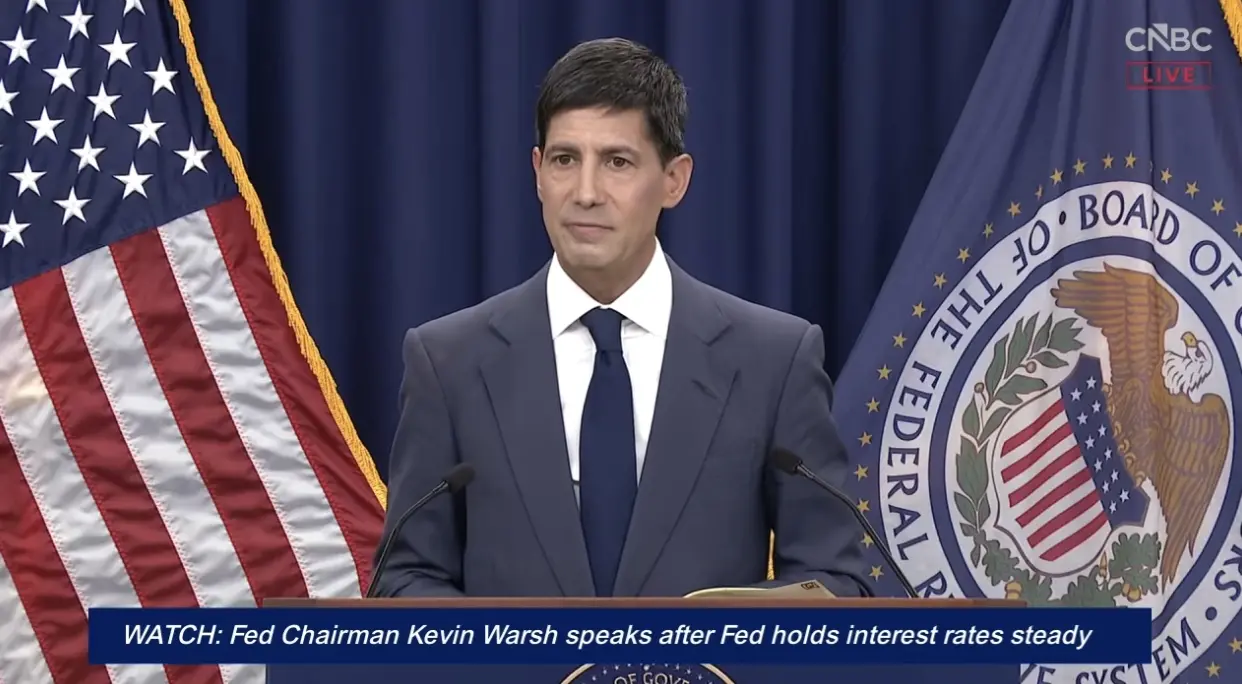
Full First Q&A! Fed Chair Warsh: Sticks to 2% Inflation Target, Establishes Five Special Working Groups, Personally Did Not Submit Dot Plot

The Federal Reserve, under new Chair Kevin Warsh, held its first FOMC meeting, maintaining the federal funds rate target range at 3.5% to 3.75%. The central bank issued a significantly shortened policy statement, explicitly removing forward guidance. Chair Warsh delivered a strong, unified commitment to achieving the 2% inflation target, stating the FOMC has the "capability and the commitment" to restore price stability and sees no need to review the target itself at this time. Warsh announced the immediate formation of five special working groups to examine and propose improvements in key areas by year-end: Fed communication, the balance sheet (including a review of the $6.7 trillion portfolio and its role in policy), data sources and methodology, productivity and employment (including AI's impact), and the inflation framework. In a break from tradition, Chair Warsh did not submit his own economic projections or "dot plot." The submitted Summary of Economic Projections (SEP) showed a split among other officials: half anticipate at least one rate hike this year, while half expect rates to remain steady or fall. The median projection sees the federal funds rate at 3.8% by year-end 2026. Warsh characterized the current policy stance as "uneven," noting restrictive effects in sectors like housing but less so in financial markets. He emphasized a desire to move away from a market dynamic overly focused on Fed signaling, advocating for markets to react more to economic data. On AI, he called it potentially the most significant economic change in his adult life, driving clear demand but with uncertain timing and scale on the supply side, creating a "race" between the two.

链捕手14 хв тому

Full First Q&A! Fed Chair Warsh: Sticks to 2% Inflation Target, Establishes Five Special Working Groups, Personally Did Not Submit Dot Plot

链捕手14 хв тому

The DeepSeek Financing Story

DeepSeek's financing round, totaling approximately 3 billion USD, concluded recently, revealing details about the process and key investors. The round was initiated around April with strict initial terms: a minimum commitment of 5 billion RMB, no syndication, and a pure RMB structure. These were later relaxed, with the minimum ticket size reduced to 1.5 billion RMB. A pivotal four-hour online investor meeting in mid-May served as the primary interaction for many backers with DeepSeek's founder, Liang Wenfeng. Despite not being a naturally eloquent speaker, Liang's philosophy deeply resonated. He consistently emphasized the company's singular focus on AGI (Artificial General Intelligence), the principle of "less is more," extreme caution in spending, and the paramount importance of team stability. His notable quotes included describing the team as "ordinary people doing extraordinary things" and stating that "AGI is a big enough thing; everything else is just process." The final investor list featured 10 entities, but underlying fund structures indicate participation from nearly 100 institutions and individuals. Notable lead investors include Monolith Capital (increasing its commitment from 1.5 to 3 billion RMB), Zhenxingu Capital, IDG Capital, and state-affiliated investors like Guozhitou. Conspicuously absent were major firms like Sequoia China and Hillhouse Capital, despite earlier speculation about their involvement. A core condition set by Liang Wenfeng for all investors, whether corporate or venture capital, was a strict prohibition against poaching DeepSeek employees or encouraging them to leave to start ventures. The financing process highlighted DeepSeek's unexpected openness to external capital, surprising many in the investment community. The company's low-profile nature, combined with its ambitious AGI vision and principled approach, fostered a sense of reverence among participating investors, many of whom were reluctant to discuss the deal publicly, preferring to maintain its discreet and purposeful ethos.

链捕手21 хв тому

The DeepSeek Financing Story

链捕手21 хв тому

The DeepSeek Fundraising Story

"The DeepSeek Funding Story: Insights from the $2.15 Billion Round" This article details behind-the-scenes narratives from DeepSeek's recent massive funding round. Key highlights include the legendary four-hour online investor meeting where CEO Liang Wenfeng, despite not being a charismatic speaker, impressed attendees with his focus on AGI and team stability. He emphasized the philosophy of "ordinary people doing extraordinary things" and a steadfast commitment to solely advancing intelligence. The fundraising process, initiated in April, saw initial demands for a minimum investment of 5 billion RMB, no syndication, and a pure RMB structure. These terms were later adjusted to a 1.5 billion RMB minimum to accommodate more investors. A notable absence was the lack of participation from major VC firms Sequoia China and Hillhouse Capital, despite early rumors, making IDG the only established VC in the final lineup. The investor list, while showing 10 entities, actually involved nearly 100 underlying institutions and individuals upon closer examination. Significant participants included Monolith Capital, which doubled its commitment to 3 billion RMB, and Zhenxingu Capital, an unexpected entrant. Liang Wenfeng's paramount condition for all investors was a strict agreement not to poach DeepSeek employees. The article reflects on DeepSeek's unexpected openness to funding and the mix of strategies—synergy, insight, brand alignment, and persistence—that secured investors a stake. The overarching sentiment among participants is one of pride and a shared belief in DeepSeek's potential to become a landmark Chinese company, driven by a profound sense of purpose in the AGI race.

marsbit23 хв тому

The DeepSeek Fundraising Story

marsbit23 хв тому

DAT Companies Take on Side Businesses

The article details the strategic shifts of Digital Asset Treasury (DAT) companies amid a prolonged market downturn. Initially popularized by firms like MicroStrategy, the DAT model—where companies hold cryptocurrencies on their balance sheets—has faced significant pressure as crypto ETFs eroded their investment thesis and bear markets strained finances. Key players are adapting in several ways. Some, like ETHzilla, have abandoned the model entirely. Others are pivoting towards becoming active, revenue-generating participants in the crypto ecosystem rather than passive holders. This evolution is taking two main paths: 1. **Transformation into Institutional Crypto Asset Managers:** Companies like SharpLink Gaming and GameSquare are leveraging their holdings to generate yield, moving beyond simple storage. They employ strategies like 100% ETH staking or using machine learning to optimize DeFi yields, positioning themselves as platforms offering institutional-grade crypto yield products. 2. **Becoming Blockchain Infrastructure Operators:** This is prominent in the Solana ecosystem. Firms like DeFi Development and SOL Strategies are acquiring validator businesses, issuing liquid staking tokens (e.g., dfdvSOL, fwdSOL), and integrating them into DeFi protocols. They generate fee-based revenue from these operations, building network effects. The article notes that successful转型 hinges on building operational expertise and defensible business models around crypto assets, such as technical advantages or deep ecosystem integration. However, these new paths carry risks like smart contract vulnerabilities or ecosystem dependence. Ultimately, this collective shift signals a maturation phase for the DAT movement. It highlights that in crypto, sustainable value is increasingly tied to active participation, cash flow generation, and providing real utility, rather than speculative capital allocation alone.

Foresight News26 хв тому

DAT Companies Take on Side Businesses

Foresight News26 хв тому

Торгівля

Спот
Ф'ючерси

Популярні статті

Як купити BAN

Ласкаво просимо до HTX.com! Ми зробили покупку Comedian (BAN) простою та зручною. Дотримуйтесь нашої покрокової інструкції, щоб розпочати свою криптовалютну подорож.Крок 1: Створіть обліковий запис на HTXВикористовуйте свою електронну пошту або номер телефону, щоб зареєструвати обліковий запис на HTX безплатно. Пройдіть безпроблемну реєстрацію й отримайте доступ до всіх функцій.ЗареєструватисьКрок 2: Перейдіть до розділу Купити крипту і виберіть спосіб оплатиКредитна/дебетова картка: використовуйте вашу картку Visa або Mastercard, щоб миттєво купити Comedian (BAN).Баланс: використовуйте кошти з балансу вашого рахунку HTX для безперешкодної торгівлі.Треті особи: ми додали популярні способи оплати, такі як Google Pay та Apple Pay, щоб підвищити зручність.P2P: Торгуйте безпосередньо з іншими користувачами на HTX.Позабіржова торгівля (OTC): ми пропонуємо індивідуальні послуги та конкурентні обмінні курси для трейдерів.Крок 3: Зберігайте свої Comedian (BAN)Після придбання Comedian (BAN) збережіть його у своєму обліковому записі на HTX. Крім того, ви можете відправити його в інше місце за допомогою блокчейн-переказу або використовувати його для торгівлі іншими криптовалютами.Крок 4: Торгівля Comedian (BAN)Легко торгуйте Comedian (BAN) на спотовому ринку HTX. Просто увійдіть до свого облікового запису, виберіть торгову пару, укладайте угоди та спостерігайте за ними в режимі реального часу. Ми пропонуємо зручний досвід як для початківців, так і для досвідчених трейдерів.

493 переглядів усьогоОпубліковано 2024.12.11Оновлено 2026.06.02

Як купити BAN

Обговорення

Ласкаво просимо до спільноти HTX. Тут ви можете бути в курсі останніх подій розвитку платформи та отримати доступ до професійної ринкової інформації. Нижче представлені думки користувачів щодо ціни BAN (BAN).

活动图片