Blockchain Platform WEMIX Hacked for $6.25 Million

cryptonews.ruОпубліковано о 2026-07-27Востаннє оновлено о 2026-07-27

Анотація

Hackers exploited administrator privileges of a smart contract on the WEMIX blockchain platform, minting approximately 5.23 million unbacked $WEMIX tokens worth about $5.22 million. These tokens were swapped on a decentralized exchange for 30,736 $WEMIX and 724,198.27 $USDC.e, a version of USDC native to the WEMIX3.0 network. The attackers then bridged the $USDC.e to Ethereum and BNB Smart Chain, converting the funds to ETH and USDT and distributing them across multiple wallets, with some reportedly sent to centralized exchanges. Total losses are estimated at $6.25 million. In response, WEMIX halted nearly all services, suspended cross-chain bridges, and froze trading in affected liquidity pools. The platform is seeking to have the withdrawn assets frozen on exchanges. The incident caused the WEMIX stablecoin to depeg, plummeting 98% to $0.01. This follows a previous hack in February 2023, where attackers stole $8.65 million worth of $WEMIX from the Play Bridge.

Hackers used administrator privileges of a smart contract and minted approximately 5,225,525 unbacked $WEMIX tokens worth about $5.22 million. The freshly issued tokens were then passed through a decentralized exchange and swapped for 30,736 $WEMIX and 724,198.27 $USDC.e — this is a version of the stablecoin $USDC circulating on the mainnet of the WEMIX3.0 project.

Then the attackers withdrew the $USDC.e to the Ethereum network and the BNB Smart Chain. There, the funds were converted into ETH and USDT and distributed across numerous wallets. Representatives of $WEMIX reported that some of these assets were later sent to centralized exchanges. The total damage from the hack is estimated at $6.25 million.

$WEMIX has disabled almost all of its services, suspended the operation of all bridges connecting the WEMIX3.0 mainnet to external blockchains. In addition, trading in the affected liquidity pools has been frozen, including for the pairs $WEMIX$USDC.e, $WEMIX$WEMIX, CROW–$WEMIX, TIPO–$WEMIX$ and PLAY–$WEMIX$. On the $WEMIX PLAY platform, trading and staking on the $NFT marketplace have been disabled.
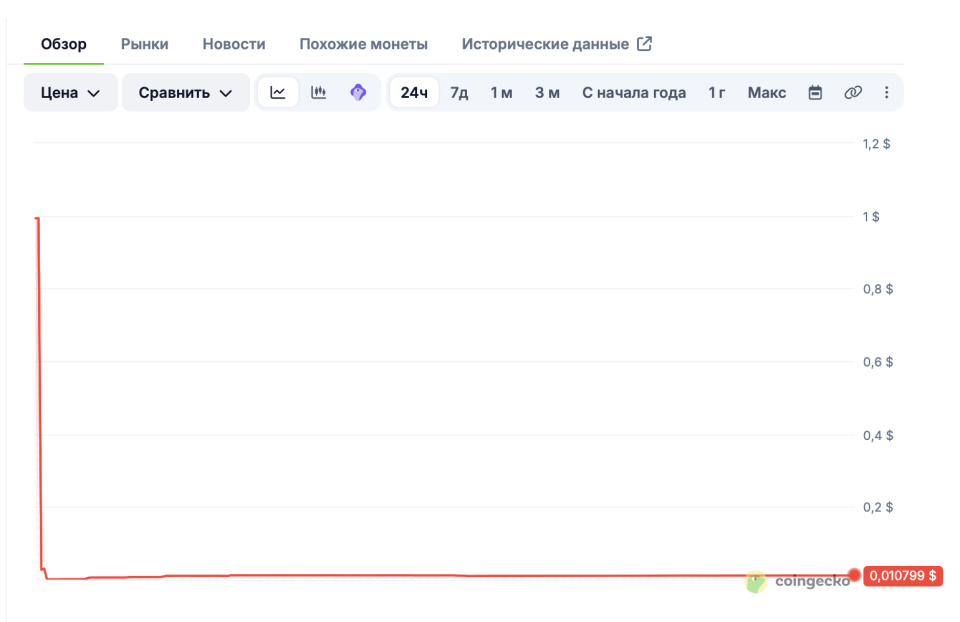
The platform is now trying to get exchanges to freeze the withdrawn assets. The WEMIX stablecoin lost its peg to the dollar, falling by 98% to $0.01.

In February of last year, attackers withdrew approximately $8.65 million worth of $WEMIX from the Play Bridge vault — at that time, the token's value was about $6.15 million. The incident was related to the compromise of authentication keys used for monitoring the $NFT platform Nile. According to the investigation, the hackers spent nearly two months in the system before withdrawing the funds.

end-content

Пов'язані питання

QHow did the hackers exploit the WEMIX platform to steal funds?

AThe hackers exploited administrator privileges of a smart contract to mint approximately 5,225,525 unbacked $WEMIX tokens, worth about $5.22 million. They then swapped these tokens on a decentralized exchange for other assets.

QWhat actions did the WEMIX platform take immediately after discovering the hack?

AWEMIX disabled nearly all its services, suspended all bridges connecting its mainnet to external blockchains, and froze trading in affected liquidity pools, including several key trading pairs. It also disabled trading and staking on its NFT marketplace.

QWhat was the total estimated financial damage from the WEMIX platform hack?

AThe total estimated damage from the hack is $6.25 million.

QWhat happened to the WEMIX stablecoin's price following the security incident?

AFollowing the hack, the WEMIX stablecoin lost its peg to the US dollar, plummeting by 98% to a value of $0.01.

QHas WEMIX experienced a similar security breach in the past?

AYes, in February of the previous year, attackers withdrew approximately $8.65 million worth of $WEMIX (valued at about $6.15 million at the time) from the Play Bridge vault. That incident was linked to compromised authentication keys.

Пов'язані матеріали

Crossing Boundaries Is Hard: Neither Prediction Market Nor Perp DEX Leader Has Replicated Their Own Success

Over the past six months, two of the hottest trading sectors—prediction markets and Perpetual DEXs (Perp DEXs)—have been attempting to cross into each other's territories. In April, prediction market platform Polymarket announced plans to launch perpetual contracts (Perps) for crypto, stocks, and commodities. In late May, the regulated platform Kalshi launched CFTC-regulated crypto Perps. Meanwhile, leading Perp DEX Hyperliquid moved in the opposite direction, launching its HIP-4 outcome markets for event-based trading in May. Initial results from these crossovers have been mixed, showing that established user habits and liquidity do not easily transfer to new product categories. Hyperliquid's HIP-4 platform saw strong initial demand, with daily volume reaching nearly $30 million during the World Cup, but active markets have since collapsed from over 120 to under 20, with daily volume often falling below $1 million. This highlights the inherent challenge: perpetual contracts maintain liquidity around core assets, while event contracts expire and require constant renewal of interest and liquidity. Similarly, Polymarket's Perps, still in an invite-only phase, saw daily volume drop from an initial ~$48 million to around $18 million by late July, with open interest (OI) at only ~$26.4 million—a fraction of Hyperliquid's ~$7.7 billion OI. Kalshi's Perps had a faster start, accumulating $16.1 billion in volume over six weeks, but recent daily volume has plummeted over 80% to around $80 million, with OI remaining in the millions, far below major Perp DEXs. The article concludes that replicating the deep liquidity and entrenched user behavior of a core market is exceptionally difficult. For these platforms, deepening their dominance in their original "home" sectors—whether Perp DEXs or prediction markets—may be a more viable strategy than pursuing a broad "everything exchange" model through跨界 expansion. Success ultimately depends on sustained accumulation of users, liquidity, and market depth in a core niche.

Odaily星球日报10 хв тому

Crossing Boundaries Is Hard: Neither Prediction Market Nor Perp DEX Leader Has Replicated Their Own Success

Odaily星球日报10 хв тому

Google's earnings report is bright enough, so why isn't Wall Street buying it?

Google's parent company, Alphabet, reported strong Q2 2026 results with revenue of $119.8 billion (up 24% YoY) and operating profit of $40.8 billion (up 30% YoY). Its Google Cloud segment was a standout, with revenue surging 82% to $24.77 billion. However, despite these positive figures, the company's stock fell nearly 3% in after-hours trading. The market's negative reaction stems from concerns over the massive costs of competing in the AI era. Alphabet's capital expenditures hit $44.9 billion in Q2, and its full-year 2026 Capex guidance was raised to $195-$205 billion. This intense spending on AI infrastructure (servers, data centers) caused Alphabet's free cash flow to turn negative for the first time, at -$5.855 billion. While Google Cloud's rapid growth demonstrates some return on AI investments, its ~$100 billion annualized revenue is still overshadowed by the nearly $200 billion in annual Capex. Investors are questioning how long it will take for these enormous investments to translate into sustainable, profitable growth. Furthermore, doubts persist about the competitiveness of Google's core Gemini AI model, especially after reported delays. The market is shifting its focus from sheer AI spending to which company can most effectively monetize its investments. For Google, the challenge is to prove its "full-stack AI" strategy can deliver long-term value that justifies the current financial strain.

Odaily星球日报12 хв тому

Google's earnings report is bright enough, so why isn't Wall Street buying it?

Odaily星球日报12 хв тому

Data Review: How Much Profit Did Prediction Markets Reap from a Single World Cup?

**How Much Did the 2026 World Cup Boost Prediction Markets? A Data Review.** The 2026 World Cup provided a major, temporary boost to leading prediction markets, according to an analysis of Kalshi, Polymarket, and predict.fun. During the tournament, total nominal trading volume reached $543.38 billion on Kalshi, $209.88 billion on Polymarket, and $10.92 billion on predict.fun. While Kalshi maintained an overall lead, Polymarket narrowed the gap significantly in World Cup-specific markets. All platforms saw daily trading volumes roughly double or more during the event compared to pre-tournament levels, but activity largely retreated to baseline shortly after the final. Fee revenue also surged. Kalshi's weekly fees peaked at over $100 million in the fourth week, totaling $473.2 million for the tournament. Polymarket's weekly fees stabilized around $20 million, totaling $111.4 million. Predict.fun saw its weekly fee income rise from a pre-tournament $159k to a peak of $755k, with a six-week total of $3.48 million. Post-tournament, daily fee income declined for all three. Analysis of Total Value Locked (TVL) showed Polymarket's deposits remained flat around $4.4-$4.8 billion during the World Cup and later fell, suggesting the event spurred high-frequency trading but not long-term capital commitment. In contrast, predict.fun's TVL saw a clear inflow during the tournament's knockout stages, rising to a peak near $25 million before easing. The data confirms that mega-sports events can generate massive, concentrated trading volume and revenue for prediction platforms. However, the post-tournament pullback indicates this growth is largely event-driven and doesn't automatically translate into sustained higher activity. The World Cup validated sports as a core trading category and helped users develop repeated trading habits, setting the stage for the next phase of competition focused on user retention and creating consistent trading demand.

Odaily星球日报16 хв тому

Data Review: How Much Profit Did Prediction Markets Reap from a Single World Cup?

Odaily星球日报16 хв тому

Торгівля

Спот
活动图片