BIP-110 Controversy Intensifies: Bitcoin May Face Its Most Divisive Hard Fork Battle in Years

Foresight NewsОпубліковано о 2026-06-12Востаннє оновлено о 2026-06-12

Анотація

Bitcoin is approaching a critical block height of 961,632, which could activate the controversial BIP-110 proposal. This proposal aims to restrict the amount of non-financial data, such as inscriptions and other large data payloads, within Bitcoin transactions. Supporters, including some node operators and Bitcoin purists, argue that BIP-110 is necessary to preserve Bitcoin's core function as a monetary settlement layer by reducing network congestion and node operational burdens caused by non-essential data. They frame it as a correction to keep the network true to its original purpose. However, critics, including prominent figures like Blockstream's Adam Back and developer Jameson Lopp, warn that the proposal's implementation mechanism is dangerously flawed. They highlight that its low 55% miner signaling threshold, coupled with a contentious enforcement mechanism allowing nodes to unilaterally reject non-compliant blocks, significantly increases the risk of a chain split. Opponents argue this sets a dangerous precedent for transaction censorship, undermines Bitcoin's protocol neutrality, and creates excessive uncertainty for developers and businesses, especially since the rule is proposed as a temporary one-year measure. Market analysts, such as those from Bitfinex, suggest a full-scale network split is unlikely due to a lack of broad economic consensus. Major mining pools remain neutral, and adoption of the new rules is minimal. They view the situation more as a governa...


Written by: Oluwapelumi Adejumo

Compiled by: Saoirse, Foresight News


Core Summary


  • Bitcoin's block height is approaching 961632, at which point the BIP-110 proposal may restrict non-financial data within transactions.
  • Proponents claim this adjustment will allow Bitcoin to refocus on its core function of settlement, alleviating network strain caused by inscriptions and other applications consuming significant on-chain data.
  • Critics warn that the proposal's miner voting threshold is too low and lacks an accompanying enforcement mechanism, potentially leading to a mainnet split and forcing major exchanges and node operators into defensive measures.


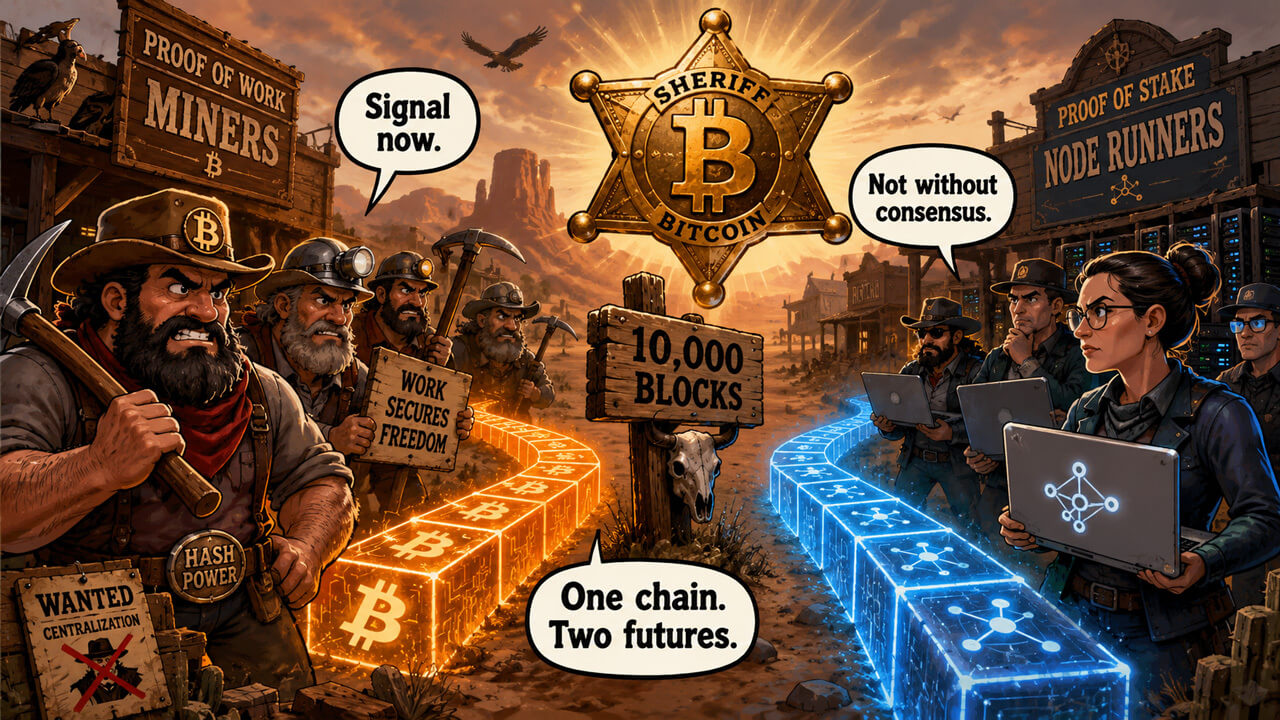
Bitcoin is approaching a critical juncture where a long-standing ideological divide may escalate into the network's most severe governance conflict in years. At the heart of this dispute is Bitcoin Improvement Proposal (BIP) 110, which aims to limit the total amount of non-financial data that can be embedded in Bitcoin transactions. With the network just under 10,000 blocks away from the mandatory activation window at block height 961632, what began as a technical disagreement over network "spam transactions" has transformed into a high-stakes confrontation.


Supporters of BIP-110 view this restriction as crucial for preserving Bitcoin's core value as a monetary settlement layer. Opponents warn that such an aggressive implementation risks fracturing the entire ecosystem, potentially freezing user assets in transit and eroding market trust in the neutrality of the Bitcoin protocol.


Although the proposal currently lacks the widespread miner and institutional backing typically required for major protocol changes, this imminent flashpoint will serve as a significant stress test for Bitcoin's decentralized power structure. The proposal pits network developers and node operators against miners and market makers—the core groups that ultimately determine the economic value trajectory of the entire blockchain.


A Battle Over What Bitcoin Should Carry


BIP-110 plans to temporarily restrict arbitrary data storage on the Bitcoin blockchain by adding a new consensus rule to the transaction structure. In simple terms, nodes running the proposal's code would treat transactions carrying large amounts of data as invalid. The proposal targets applications such as ordinal inscriptions, runes, and other activities that directly inscribe text, images, or token data onto Bitcoin's base layer.


While these applications have attracted new users and increased miner fee revenue, they have also drawn criticism from Bitcoin purists who argue that the blockchain should not be used as a permanent storage medium.


Proponents frame the change as an effort to safeguard Bitcoin's core functionality. They argue that non-financial data excessively consumes block space, burdens node operations, and deviates from Bitcoin's fundamental purpose as sound money. In their view, filtering high-capacity data payloads is not censorship of payments but a restoration of rule-based boundaries to refocus the network on its original purpose.


This perspective has gained support among some node operators and Bitcoin users who have long resisted the inscription craze. To them, the upcoming activation window proves that when users perceive Bitcoin's rules drifting from their original intent, the node operators responsible for validating the chain still have the power to check miners and commercial entities.


Bitcoin analyst Luis Marcano, a supporter of the proposal, suggests that the actual scenario post-BIP-110 activation might not be as dire as critics predict. His view is that nodes running the new rules will reject blocks filled with irrelevant data, and mining power will gradually shift to the blockchain with stronger economic value that adheres to the new rules.


Some supporters take an even harder line, portraying opponents as a small group of social media influencers, token investors, and businesses profiting from on-chain data ventures. They claim that thousands of node operators are already prepared to enforce the new rules, and miners will not tolerate the negative impacts of prolonged network uncertainty.


However, the market does not share this optimistic assessment.


Critics Warn: Implementation Mechanism Significantly Increases Conflict Risk


The sharpest conflict over BIP-110 centers on its implementation design. Previous large-scale protocol upgrades required near-unanimous consensus among the miners securing the network to activate. BIP-110 completely changes this model: it sets a miner signaling threshold of only 55% and pairs it with a highly controversial enforcement fallback mechanism.


Even if miners fail to meet the minimum voting threshold, proponents of the proposal code still plan for nodes to unilaterally reject all blocks that do not comply with the new rules. This aggressive architecture transforms what was a technical disagreement over block space allocation into a fundamental governance crisis.


Blockstream CEO Adam Back has outright rejected the proposal, citing serious technical flaws. He warns that forcing code changes without achieving economic consensus will almost certainly result in a forked chain with very little adoption.


Adam Back also explicitly opposes proponents comparing this proposal to the 2017 Segregated Witness (SegWit) upgrade. He notes that while SegWit was contentious before implementation, it ultimately achieved broad consensus among developers, miners, and various infrastructure providers—a foundation BIP-110 currently completely lacks.


Veteran Bitcoin developer and security lead Jameson Lopp calls the proposal a dangerous overreach disguised as governance over spam transactions.


Beyond the immediate risk of a chain split, Jameson Lopp warns that the code could break some niche wallet functionalities, indirectly rendering user assets inoperable. Furthermore, he argues the restriction is a band-aid solution: determined users will simply find other transaction fields to hide irrelevant data. Ultimately, Bitcoin would bear all the systemic risks of a contentious hard fork without eradicating the behavior the proposal aims to curb.


Yet the most fundamental divide tearing at the industry's fabric remains ideological. Bitcoin's core value proposition rests on absolute neutrality: as long as a sender pays the market rate for fees, the network processes any compliant transaction.


Critics warn that modifying consensus rules to actively punish "unwanted" on-chain behavior sets an extremely dangerous precedent. If the protocol can be changed today to filter inscription data, future factions or national regulators could use the same logic to demand the network block privacy-enhancing coin mixing transactions, gambling payments, or transfers containing politically sensitive information.


Proponents dismiss this "slippery slope" concern, arguing the network has historically distinguished between purely monetary use and abuse of on-chain storage. They emphasize that BIP-110 is a precise tweak, with the code explicitly setting an automatic expiration date of approximately one year.


However, this "temporary adjustment" explanation has done little to placate the opposition.


Bitcoin Core developers like Jameson Lopp argue that a rule change lasting only one year could cause more disruption than a permanent one. Various enterprise wallets, cryptographic libraries, and smart contract protocols would need to build and maintain two sets of infrastructure adapted to different rules.


More critically, Bitcoin as a settlement network relies heavily on stable, predictable rules. A one-year temporary change introduces significant long-term uncertainty. Developers cannot predict whether the restriction will simply expire, be extended, or replaced with stricter control rules.


Market May Downplay BIP-110 Impact Unless Exchanges Forced into Contingency Measures


Despite escalating rhetoric between core developers and node operators, market analysts generally believe the activation point in early August will not trigger a catastrophic network split.


In commentary provided to CryptoSlate, Bitfinex analysts stated that the entire BIP-110 situation looks more like a "governance stress test" than a genuine crisis likely to cause a chain split.


This pragmatic judgment stems from the clear lack of economic consensus: nodes actively running the restrictive rules currently number in the single-digit percentages, all major mining pools are taking a wait-and-see approach, and there are no signs of the broader crypto industry urgently adjusting supporting systems to differentiate between two potential chains.


All indicators suggest the proposal will most likely fail to activate; at worst, it would only spawn a niche forked chain with minimal liquidity and recognition.


The crypto market has established patterns for resolving such disputes. Following the contentious 2017 fork that gave rise to Bitcoin Cash, liquidity, exchange support, and user activity quickly consolidated on the main chain that retained the original economic scale and the BTC ticker.


Furthermore, the maturation of Bitcoin's market structure in recent years provides a buffer against panic from protocol disputes. Unlike past cycles dominated by retail investors, the core forces influencing price action today are sustained spot ETF inflows, professional derivatives positioning, and institutional allocation. In this mature market environment, a route dispute among a subset of developers is unlikely to trigger a long-term fundamental revaluation of the asset.


The real tail risk lies with market infrastructure. If a contingent of nodes adhering to the new rules persistently supports a niche forked chain during the activation window, centralized exchanges and custodians would be forced to initiate defensive contingency plans.


To guard against replay attacks, ensure sufficient fund liquidity, and assess the overall stability of both chains, major trading platforms would likely temporarily suspend Bitcoin on-chain deposits and withdrawals.


While such operations are familiar to crypto industry veterans, many new investors from traditional finance are unaccustomed to operational disruptions caused by decentralized consensus conflicts, which could easily trigger market sentiment swings.


In summary, BIP-110 currently lacks sufficient industry-wide economic backing to shake the position of the existing main chain. However, in the lead-up to block height 961632, the market is destined to experience short-term volatility driven by related news, see a surge in hedging orders in derivatives markets, and witness the entire industry's custodial infrastructure undergo a critical stress test.


Пов'язані питання

QWhat is the core objective of the BIP-110 proposal?

AThe core objective of the BIP-110 proposal is to limit the amount of non-financial data that can be embedded in Bitcoin transactions. It aims to curb applications like Ordinals inscriptions and Runes that store large amounts of arbitrary data (e.g., text, images) on-chain, in order to reduce network congestion and refocus Bitcoin on its primary role as a monetary settlement layer.

QWhat are the main criticisms against the activation mechanism of BIP-110?

AThe main criticisms against BIP-110's activation mechanism are its low miner signaling threshold (55%) and its controversial enforcement fallback. Critics warn that even if miners don't meet the threshold, node operators supporting the proposal plan to unilaterally reject non-compliant blocks. This design is seen as a radical shift from requiring broad consensus, significantly increasing the risk of a chain split and a governance crisis.

QWhy do critics argue that BIP-110 could set a dangerous precedent for Bitcoin?

ACritics argue that BIP-110 sets a dangerous precedent because it would establish that the Bitcoin network's consensus rules can be changed to actively filter out 'unwanted' on-chain activities. They warn that this could later be used as a basis to censor other types of transactions, such as privacy-enhancing coin mixes, gambling payments, or politically sensitive transfers, undermining Bitcoin's core principle of neutrality.

QAccording to market analysts like those at Bitfinex, why is BIP-110 unlikely to cause a major chain split?

AMarket analysts believe BIP-110 is unlikely to cause a major chain split because it lacks broad economic consensus. Key indicators include only single-digit percentages of nodes running the new rules, major mining pools remaining neutral, and no widespread industry preparation to support a forked chain. The most likely outcome is activation failure or the creation of a minor, low-liquidity fork, similar to past governance disputes.

QWhat potential operational disruption is highlighted as a key risk if the BIP-110 conflict escalates?

AA key operational risk if the conflict escalates is that centralized exchanges and custody providers may be forced to temporarily suspend Bitcoin deposits and withdrawals as a defensive measure. This would be necessary to protect user funds from replay attacks, ensure sufficient liquidity, and assess the stability of potentially competing chains. Such disruptions could cause market volatility, especially among new institutional investors unfamiliar with consensus conflicts.

Пов'язані матеріали

Popular Interaction Collection | Interstate Launches Points Event; Flip Early Waitlist Application (June 12)

**Interstate Launches Points Event, Flip Opens Early Waitlist Applications** *Originally published by Odaily Planet Daily, author Asher.* **Interstate**, an infrastructure platform integrating on-chain transactions for assets like Meme tokens, prediction markets, and xStocks, has launched a points event. Each trade on the platform now rewards users with points. The project has completed a $1.5 million seed round from investors including MH Ventures, Alchemy Ventures, and Marshland Capital. Users can visit the official website to connect their wallets and start earning points through trading tasks (note: the site may experience high traffic). **Flip**, an AI-powered financial assistant, has opened applications for its early waitlist. The platform allows users to manage finances via chat, helping with spending tracking, bill management, investment portfolio monitoring (including stocks and crypto), and more. Flip recently raised $1.4 million in a pre-seed round led by The House Fund and participated in a16z's Speedrun accelerator. Interested users can join the waitlist via the official website. **ArcNova**, an AI-native infrastructure platform for short-form video and entertainment, continues to offer tasks for earning points. Users can sign in daily, complete social and app tasks, and refer friends to accumulate points. The project announced a $15 million funding round in May, backed by Adaverse Ventures, Animoca Brands, and others. The task portal is accessible through the ArcNova website. These updates highlight ongoing opportunities for user engagement and potential rewards across emerging crypto and AI projects.

Odaily星球日报1 год тому

Popular Interaction Collection | Interstate Launches Points Event; Flip Early Waitlist Application (June 12)

Odaily星球日报1 год тому

MoneyGram: Why Did We Launch Our Own Stablecoin?

MoneyGram, a global leader in cross-border remittances for over 80 years, has launched its own stablecoin, MGUSD. The initiative aims to evolve from single-transaction services to becoming a more integral part of users' financial lives. By allowing customers to hold a stable US dollar balance within the MoneyGram app, MGUSD enables not only remittances but also everyday spending, currency exchange, cash access, and future financial services. Targeting the billions globally who face challenges like currency volatility or lack of bank accounts, MGUSD leverages Stellar blockchain technology with a self-custody wallet architecture. This gives users control over their assets while providing a secure, compliant experience through a trusted brand. The approach focuses on solving existing customer pain points within MoneyGram's established network, rather than competing for broad crypto market liquidity. A key advantage is MoneyGram's hybrid model, combining digital services with the world's largest physical network for crypto-to-cash conversions. The stablecoin also modernizes the company's internal infrastructure, streamlining treasury management and partner settlements, with annual forex volume via stablecoins already reaching $2 billion. The project was delivered in about a year, driven by a reorganization into agile, cross-functional teams that operate with startup-like speed while leveraging decades of institutional expertise. Partners include Stablecoin (issuance), Crossmint (wallet APIs), Fireblocks (enterprise treasury), m0 (smart contracts), and the Stellar network. MoneyGram emphasizes that enhancing direct consumer offerings strengthens its partner ecosystem. The future direction is clear: to provide users worldwide with stable value storage, better financial tools, and greater control over their funds through a trusted, existing network.

Foresight News2 год тому

MoneyGram: Why Did We Launch Our Own Stablecoin?

Foresight News2 год тому

Торгівля

Спот
Ф'ючерси

Популярні статті

Що таке BITCOIN

Розуміння HarryPotterObamaSonic10Inu (ERC-20) та його позиції у крипто-просторі Останніми роками ринок криптовалют спостерігав за зростанням популярності мем-коінів, які привертають інтерес не тільки трейдерів, але й тих, хто шукає спілкування та розважальну цінність. Серед цих унікальних токенів є HarryPotterObamaSonic10Inu (ERC-20), інтригуючий проект, що поєднує культурні посилання з тканинами криптовалюти. Ця стаття досліджує ключові аспекти HarryPotterObamaSonic10Inu, вивчаючи його механізми, спільноту та його взаємодію з ширшим крипто-ландшафтом. Що таке HarryPotterObamaSonic10Inu (ERC-20)? Як випливає з його назви, HarryPotterObamaSonic10Inu є мем-коіном, побудованим на блокчейні Ethereum, класифікованим за стандартом ERC-20. На відміну від традиційних криптовалют, які можуть підкреслювати практичну корисність або інвестиційний потенціал, цей токен процвітає завдяки розважальній цінності та силі своєї спільноти. Проект спрямований на створення середовища, де зацікавлені користувачі можуть об'єднуватися, ділитися ідеями та брати участь у заходах, натхненних різноманітними культурними явищами. Однією з примітних особливостей HarryPotterObamaSonic10Inu є нульовий податок на транзакції. Цей привабливий елемент має на меті заохочувати торгівлю та участь у спільноті, позбавлену додаткових витрат, які можуть відлякувати дрібних трейдерів. Загальна пропозиція монет становить один мільярд токенів, що позначає намір підтримувати суттєву циркуляцію в межах спільноти. Творець HarryPotterObamaSonic10Inu (ERC-20) Походження HarryPotterObamaSonic10Inu дещо окутане таємницею; деталі про творця залишаються невідомими. Розвиток цього токена позбавлений впізнаваної команди або чіткої стратегії, що не є рідкістю в секторі мем-коінів. Натомість проект виник органічно, а його розвиток значною мірою залежить від ентузіазму та участі його спільноти. Інвестори HarryPotterObamaSonic10Inu (ERC-20) Щодо зовнішніх інвестицій та підтримки, HarryPotterObamaSonic10Inu також залишається невизначеним. Токен не зазначає жодних відомих інвестиційних фондів або значної організаційної підтримки. Натомість життєва сила проекту полягає в його базовій спільноті, яка інформує про його зростання та стійкість через колективні дії та залученість у крипто-просторі. Як працює HarryPotterObamaSonic10Inu (ERC-20)? Як мем-коін, HarryPotterObamaSonic10Inu функціонує передусім поза традиційними рамками, що часто регулюють вартість активів. Є кілька відмінних аспектів, що визначають, як працює проект: Транзакції без податку: Завдяки відсутності податкових зборів на транзакції, користувачі можуть вільно купувати та продавати токен, не турбуючись про приховані витрати. Залучення спільноти: Проект процвітає завдяки взаємодії спільноти, використовуючи соціальні медіа для створення шуму та сприяння залученню. Обговорення, обмін контентом та залученість є ключовими елементами, що допомагають розширити його охоплення та зміцнити лояльність серед прихильників. Відсутність практичної корисності: Слід зазначити, що HarryPotterObamaSonic10Inu не пропонує конкретної корисності в рамках фінансової екосистеми. Натомість він класифікується як токен, що призначений в основному для розваги та спільнотних активностей. Культурне посилання: Токен кмітливо вплітає елементи популярної культури, щоб привернути інтерес, зв'язуючи з ентузіастами мемів та крипто-стежками. HarryPotterObamaSonic10Inu ілюструє, як мем-коіни функціонують інакше, ніж традиційні криптовалютні проекти, увійшовши на ринок як інноваційні соціальні конструкти, а не утилітарні активи. Хронологія HarryPotterObamaSonic10Inu (ERC-20) Історія HarryPotterObamaSonic10Inu відзначена кількома значними етапами: Створення: Токен виник з вірусного мему, захопивши уяву багатьох крипто-ентузіастів. Конкретні дати створення недоступні, що підкреслює його органічний розвиток. Лістинг на біржах: HarryPotterObamaSonic10Inu з'явився на різних біржах, дозволяючи зручніший доступ і торгівлю спільноти. Ініціативи залучення спільноти: Ведення діяльності, спрямованої на покращення взаємодії спільноти, включаючи конкурси, кампанії в соціальних мережах та створення контенту від фанатів та прихильників. Плани на майбутнє: Дорожня карта проекту включає запуск колекції NFT, мерчандайзинг та електронну комерцію, пов'язану з його культурними темами, що далі залучає спільноту та намагається додати більше вимірів до його екосистеми. Ключові моменти про HarryPotterObamaSonic10Inu (ERC-20) Спільнотний підхід: Проект надає пріоритет колективному внеску та креативності, забезпечуючи, щоб участь користувачів була в центрі його розвитку. Класифікація як мем-коін: Це є його епігенез розважальної криптовалюти, що відрізняється від традиційних інвестиційних інструментів. Жодного прямого відношення до Bitcoin: Незважаючи на схожість у назві, HarryPotterObamaSonic10Inu є відмінним і не має жодного зв’язку з Bitcoin або іншими усталеними криптовалютами. Зосередженість на співпраці: HarryPotterObamaSonic10Inu створено для того, щоб надати простір для співпраці та обміну історіями серед його власників, забезпечуючи шлях для творчості та спільного зв'язку. Перспективи на майбутнє: Амбіція розширитися за межі початкової концепції в NFT та мерчандайз відкриває шлях для проекту потенційно потрапити в більш мейнстрімні сфери цифрової культури. Оскільки мем-коіни продовжують захоплювати уяву спільноти криптовалют, HarryPotterObamaSonic10Inu (ERC-20) вирізняється своїми культурними зв'язками та орієнтованим на спільноту підходом. Хоча він може не відповідати типовій моделі утилітарного токена, його суть полягає в радощах і товариськості, що підтримуються серед його прихильників, підкреслюючи еволюційну природу криптовалют в усе більш цифрову епоху. Оскільки проект продовжує розвиватися, важливо спостерігати за тим, як динаміка спільноти вплине на його траєкторію в постійно змінюваному ландшафті технології блокчейн.

2.1k переглядів усьогоОпубліковано 2024.04.01Оновлено 2024.12.03

Що таке BITCOIN

Як купити BTC

Ласкаво просимо до HTX.com! Ми зробили покупку Bitcoin (BTC) простою та зручною. Дотримуйтесь нашої покрокової інструкції, щоб розпочати свою криптовалютну подорож.Крок 1: Створіть обліковий запис на HTXВикористовуйте свою електронну пошту або номер телефону, щоб зареєструвати обліковий запис на HTX безплатно. Пройдіть безпроблемну реєстрацію й отримайте доступ до всіх функцій.ЗареєструватисьКрок 2: Перейдіть до розділу Купити крипту і виберіть спосіб оплатиКредитна/дебетова картка: використовуйте вашу картку Visa або Mastercard, щоб миттєво купити Bitcoin (BTC).Баланс: використовуйте кошти з балансу вашого рахунку HTX для безперешкодної торгівлі.Треті особи: ми додали популярні способи оплати, такі як Google Pay та Apple Pay, щоб підвищити зручність.P2P: Торгуйте безпосередньо з іншими користувачами на HTX.Позабіржова торгівля (OTC): ми пропонуємо індивідуальні послуги та конкурентні обмінні курси для трейдерів.Крок 3: Зберігайте свої Bitcoin (BTC)Після придбання Bitcoin (BTC) збережіть його у своєму обліковому записі на HTX. Крім того, ви можете відправити його в інше місце за допомогою блокчейн-переказу або використовувати його для торгівлі іншими криптовалютами.Крок 4: Торгівля Bitcoin (BTC)Легко торгуйте Bitcoin (BTC) на спотовому ринку HTX. Просто увійдіть до свого облікового запису, виберіть торгову пару, укладайте угоди та спостерігайте за ними в режимі реального часу. Ми пропонуємо зручний досвід як для початківців, так і для досвідчених трейдерів.

4.7k переглядів усьогоОпубліковано 2024.12.12Оновлено 2026.06.02

Як купити BTC

Що таке $BITCOIN

ЦИФРОВЕ ЗОЛОТО ($BITCOIN): Комплексний аналіз Вступ до ЦИФРОВОГО ЗОЛОТА ($BITCOIN) ЦИФРОВЕ ЗОЛОТО ($BITCOIN) — це проект на основі блокчейну, що працює в мережі Solana, який має на меті поєднати характеристики традиційних дорогоцінних металів з інноваціями децентралізованих технологій. Хоча він має таку ж назву, як і Bitcoin, який часто називають “цифровим золотом” через його сприйняття як засобу збереження вартості, ЦИФРОВЕ ЗОЛОТО є окремим токеном, розробленим для створення унікальної екосистеми в ландшафті Web3. Його мета — позиціонувати себе як життєздатний альтернативний цифровий актив, хоча деталі щодо його застосувань і функціональностей все ще розробляються. Що таке ЦИФРОВЕ ЗОЛОТО ($BITCOIN)? ЦИФРОВЕ ЗОЛОТО ($BITCOIN) — це токен криптовалюти, спеціально розроблений для використання в блокчейні Solana. На відміну від Bitcoin, який виконує широко визнану роль зберігання вартості, цей токен, здається, зосереджується на більш широких застосуваннях і характеристиках. Помітні аспекти включають: Інфраструктура блокчейну: Токен побудований на блокчейні Solana, відомому своєю здатністю обробляти швидкі та низьковартісні транзакції. Динаміка постачання: ЦИФРОВЕ ЗОЛОТО має максимальне постачання, обмежене 100 квадрильйонами токенів (100P $BITCOIN), хоча деталі щодо його обігового постачання наразі не розголошуються. Утиліта: Хоча точні функціональності не викладені, є вказівки на те, що токен може бути використаний для різних застосувань, потенційно пов'язаних з децентралізованими додатками (dApps) або стратегіями токенізації активів. Хто є творцем ЦИФРОВОГО ЗОЛОТА ($BITCOIN)? На даний момент особа творців і команди розробників, що стоять за ЦИФРОВИМ ЗОЛОТОМ ($BITCOIN), залишається невідомою. Ця ситуація є типовою для багатьох інноваційних проектів у сфері блокчейну, особливо тих, що пов'язані з децентралізованими фінансами та феноменом мем-коінів. Хоча така анонімність може сприяти культурі, орієнтованій на спільноту, вона посилює занепокоєння щодо управління та підзвітності. Хто є інвесторами ЦИФРОВОГО ЗОЛОТА ($BITCOIN)? Доступна інформація вказує на те, що ЦИФРОВЕ ЗОЛОТО ($BITCOIN) не має жодних відомих інституційних спонсорів або помітних венчурних капіталовкладень. Проект, здається, працює за моделлю “рівний до рівного”, зосереджуючись на підтримці та прийнятті спільноти, а не на традиційних шляхах фінансування. Його активність і ліквідність переважно розташовані на децентралізованих біржах (DEX), таких як PumpSwap, а не на встановлених централізованих торгових платформах, що ще більше підкреслює його підхід знизу вгору. Як працює ЦИФРОВЕ ЗОЛОТО ($BITCOIN) Операційні механізми ЦИФРОВОГО ЗОЛОТА ($BITCOIN) можна детальніше розглянути на основі його дизайну блокчейну та характеристик мережі: Механізм консенсусу: Використовуючи унікальний proof-of-history (PoH) Solana в поєднанні з моделлю proof-of-stake (PoS), проект забезпечує ефективну валідацію транзакцій, що сприяє високій продуктивності мережі. Токеноміка: Хоча конкретні дефляційні механізми не були детально описані, велике максимальне постачання токенів вказує на те, що воно може задовольняти мікротранзакції або нішеві випадки використання, які ще потрібно визначити. Інтероперабельність: Існує потенціал для інтеграції з більш широкою екосистемою Solana, включаючи різні платформи децентралізованих фінансів (DeFi). Однак деталі щодо конкретних інтеграцій залишаються невизначеними. Хронологія ключових подій Ось хронологія, яка підкреслює значні віхи, пов'язані з ЦИФРОВИМ ЗОЛОТОМ ($BITCOIN): 2023: Початкове розгортання токена відбувається на блокчейні Solana, позначене його адресою контракту. 2024: ЦИФРОВЕ ЗОЛОТО набуває видимості, оскільки стає доступним для торгівлі на децентралізованих біржах, таких як PumpSwap, що дозволяє користувачам торгувати ним проти SOL. 2025: Проект спостерігає спорадичну торгову активність і потенційний інтерес до ініціатив, очолюваних спільнотою, хоча на даний момент не зафіксовано жодних значних партнерств або технічних досягнень. Критичний аналіз Сильні сторони Масштабованість: Основна інфраструктура Solana підтримує високі обсяги транзакцій, що може підвищити утиліту $BITCOIN у різних сценаріях транзакцій. Доступність: Потенційно низька торгова ціна за токен може привабити роздрібних інвесторів, сприяючи більш широкій участі завдяки можливостям дробового володіння. Ризики Відсутність прозорості: Відсутність публічно відомих спонсорів, розробників або процесу аудиту може викликати скептицизм щодо стійкості та надійності проекту. Волатильність ринку: Торгова активність сильно залежить від спекулятивної поведінки, що може призвести до значної волатильності цін і невизначеності для інвесторів. Висновок ЦИФРОВЕ ЗОЛОТО ($BITCOIN) постає як цікавій, але неоднозначний проект у швидко розвиваючійся екосистемі Solana. Хоча він намагається використати наратив “цифрового золота”, його відхід від встановленої ролі Bitcoin як засобу збереження вартості підкреслює необхідність чіткішого розмежування його передбачуваної утиліти та структури управління. Майбутнє прийняття та адаптація, ймовірно, залежатиме від вирішення поточної непрозорості та більш чіткого визначення його операційних та економічних стратегій. Примітка: Цей звіт охоплює синтезовану інформацію, доступну станом на жовтень 2023 року, і можуть відбутися події, що виходять за межі дослідницького періоду.

75 переглядів усьогоОпубліковано 2025.05.13Оновлено 2025.05.13

Що таке $BITCOIN

Обговорення

Ласкаво просимо до спільноти HTX. Тут ви можете бути в курсі останніх подій розвитку платформи та отримати доступ до професійної ринкової інформації. Нижче представлені думки користувачів щодо ціни BTC (BTC).

活动图片