OCC Promises to Publish Final Rules on GENIUS by November

cryptonews.ruОпубліковано о 2026-08-19Востаннє оновлено о 2026-08-19

Анотація

The U.S. Comptroller of the Currency, Jonathan Gould, stated that his agency will publish final rules for implementing the GENIUS Act, the stablecoin payments law, by November. Speaking at the Wyoming Blockchain Symposium, Gould noted that the OCC reviewed industry feedback on the proposed rules released in February. He expects the regulator to begin processing applications from stablecoin issuers in 2027. The GENIUS Act, signed in July 2025, aims to establish a U.S. regulatory framework for payment stablecoins and requires several federal agencies, including the OCC, Treasury, FDIC, and Federal Reserve, to develop corresponding rules. While multiple regulators have released proposals and gathered public comments, they have not published final rules yet, creating regulatory uncertainty for issuers ahead of the law's effective date in January 2027.

The U.S. Comptroller of the Currency, Jonathan Gould, stated that his agency will publish the final rules for implementing the stablecoin payments law by November.

Speaking at the Wyoming Blockchain Symposium on Wednesday, the regulator announced that after the Office of the Comptroller of the Currency (OCC) published the proposed rules for implementing the U.S. Stablecoin Guidelines and National Innovation Act ($GENIUS), the OCC will publish the final rules before the law takes effect in January 2027.

Gould stated that the OCC "will publish the final rule by November," as the agency considered feedback from the cryptocurrency industry after publishing the proposed rules in February. He added that he expects the regulator to begin processing applications from stablecoin issuers in 2027.

The $GENIUS Act, signed in July 2025, aims to create a regulatory framework for payment stablecoins in the United States and requires the government agencies overseeing these products, including the OCC, the Department of the Treasury, the Federal Deposit Insurance Corporation (FDIC), and the Board of Governors of the Federal Reserve, to develop appropriate regulations.

In February, the OCC published a 376-page proposed rule for implementing the $GENIUS Act. Government agencies have only until January 18, when the law takes effect, to complete the rulemaking process. Several regulators have already published proposals and gathered public feedback regarding the implementation of $GENIUS but have not published final rules by July, creating regulatory uncertainty for stablecoin issuers.

Related: OCC Approves Trump Family Cryptocurrency Company for Trust Charter

end-content
Трендові криптовалюти

Пов'язані питання

QWhat did the U.S. Comptroller of the Currency promise regarding the rules for the GENIUS Act?

AThe U.S. Comptroller of the Currency, Jonathan Gould, promised that the OCC will publish the final rules for implementing the GENIUS Act by November.

QWhat is the GENIUS Act, and what does it aim to do?

AThe GENIUS Act, signed into law in July 2025, is a U.S. law aimed at creating a regulatory framework for payment stablecoins. It mandates relevant government agencies to develop rules for overseeing these products.

QBy when must government agencies complete their rulemaking for the GENIUS Act?

AGovernment agencies must complete their rulemaking by January 18, 2027, which is when the GENIUS Act takes effect.

QWhat was the outcome of the OCC's publication of the proposed GENIUS Act rules in February?

AFollowing the publication of the proposed 376-page rules in February, the OCC received feedback from the cryptocurrency industry, which it has been considering before publishing the final rules.

QWhen does Jonathan Gould expect the OCC to start processing stablecoin issuer applications?

AJonathan Gould expects that the OCC will be able to start processing applications from stablecoin issuers in 2027.

Пов'язані матеріали

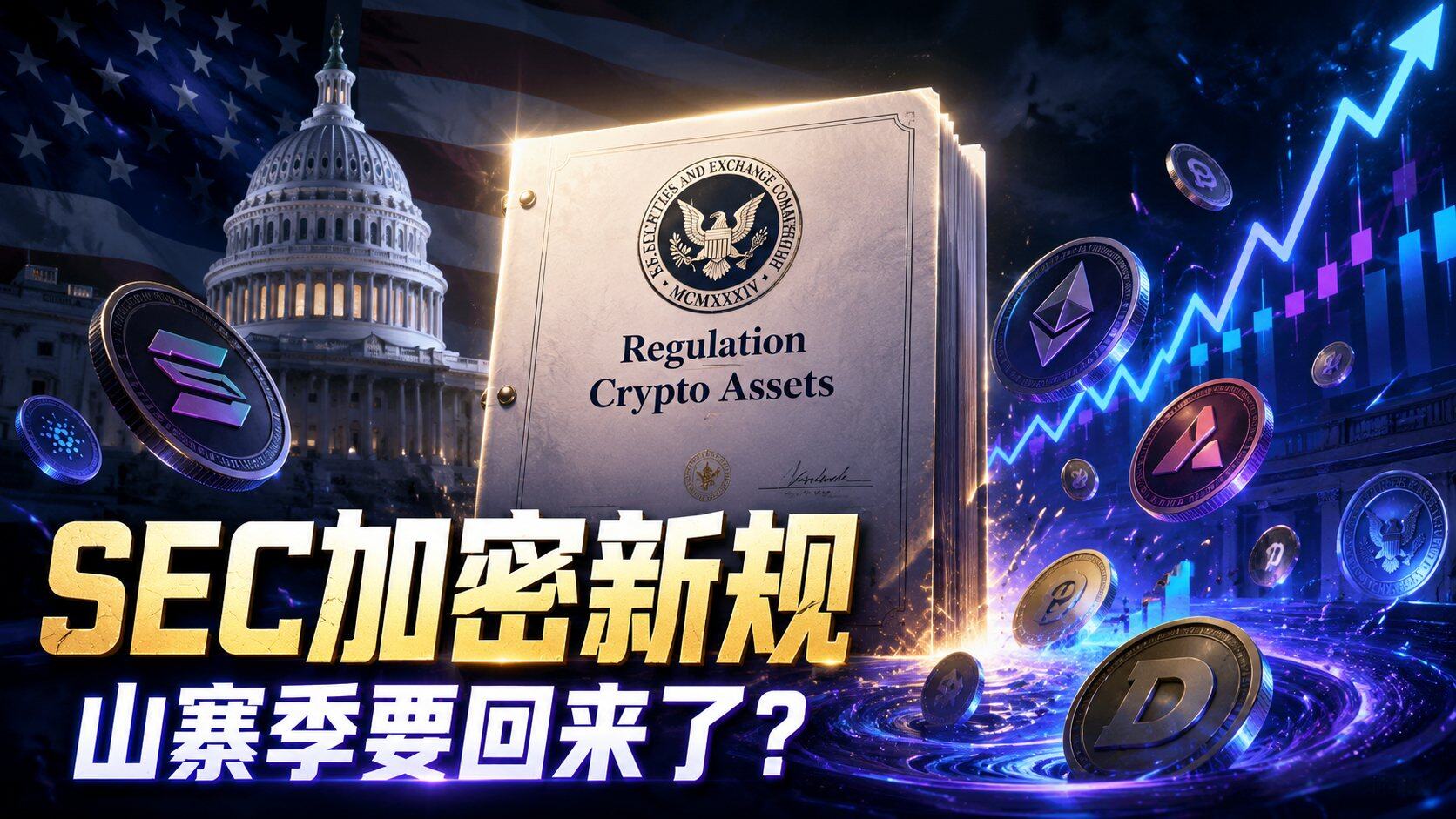
Interpretation of SEC's New Crypto Regulatory Rules: Fundraising Below $5 Million Exempt from Registration, Is Altcoin Season Making a Comeback?

The U.S. Securities and Exchange Commission (SEC) has proposed a new regulatory framework titled "Regulation Crypto Assets." This proposal aims to establish tailored exemptions for crypto asset fundraising and a pathway for tokens to transition out of being classified as securities. The core provisions include two exemptions from standard securities registration: 1. **Startup Exemption**: Allows early-stage projects to raise up to $5 million over four years with simplified, narrative-based disclosures, avoiding full registration. 2. **Fundraising Exemption**: Permits raising up to $75 million within any 12-month period. It requires audited financial statements and imposes ongoing reporting obligations, similar to the Regulation A+ framework. A key component is the **Investment Contract Safe Harbor**. This rule allows a token initially sold as an investment contract (a security) to lose that designation once the issuer has completed or permanently ceased the "essential managerial efforts" promised to investors. This theoretically clears regulatory hurdles for tokens where development is finished or abandoned. The proposal defines a narrow scope, applying only to crypto assets that are not securities themselves and are part of an investment contract involving no other assets. This SEC initiative is seen as a response to the stalled progress of the comprehensive *CLARITY Act* in Congress. It represents a shift from relying solely on the historical Howey test, which the SEC admits is ill-suited for dynamic crypto assets. The proposal is currently in a 60-day public comment period, with a final rule likely months away, leaving the U.S. regulatory landscape for crypto in a transitional state.

Odaily星球日报10 хв тому

Interpretation of SEC's New Crypto Regulatory Rules: Fundraising Below $5 Million Exempt from Registration, Is Altcoin Season Making a Comeback?

Odaily星球日报10 хв тому

Latest: Korean QFI Has Bought Changxin Technology

Latest Data Shows Korean QFI Has Purchased Changxin Technology According to data from SEIBro (under Korea Securities Depository, KSD), Korean investors, acting as Qualified Foreign Investors (QFI), have been actively purchasing shares of Changxin Technology (stock code 688825), a company recently listed on China's Sci-Tech Innovation Board (STAR Market). Over the past month until August 18, they made a net purchase of this stock worth approximately $45.32 million (around CNY 307 million), making it the top A-share by net purchase volume for Korean investors during that period. This activity has significantly boosted overall Korean net buying in A-shares. As Changxin Technology is not yet included in the Stock Connect schemes, QFI is currently the only channel for overseas investors like these Koreans to access its shares. SEIBro data indicates Korean buying began as early as July 28, the stock's second trading day. The stock appeared in Korean investor purchase lists using a temporary virtual ISIN code in settlement instructions, as its official international code had not yet been assigned. The listing has garnered significant international attention. On its first trading day (July 27), the actively managed U.S. ETF Tema Memory ETF (DISK) swiftly added Changxin Technology to its portfolio, giving it a substantial 10.56% weighting. Another active ETF, Roundhill Memory ETF (DRAM), also quickly included the stock. Furthermore, global index provider MSCI has added Changxin Technology to its MSCI China All Shares Index, prompting passive fund inflows. Analysts highlight Changxin Technology's unique position to serve China's rapidly growing AI ecosystem amid a global semiconductor memory supply shortage driven by AI demand. Besides Changxin Technology, other A-shares heavily bought by Korean investors recently include Weichai Power, Demingli, Changdian Technology, and CSOP China STAR Chip ETF.

marsbit1 год тому

Latest: Korean QFI Has Bought Changxin Technology

marsbit1 год тому

China Pinches the Vital Point of CPO

The article "China Grips the Achilles' Heel of CPO" details how China holds a strategic position in the global indium phosphide (InP) supply chain, a critical material for high-speed optical modules and CPO (Co-Packaged Optics) technology used in AI data centers. China controls over 70% of global indium reserves and produces more than half of the world's primary indium, primarily as a by-product of zinc/tin smelting. It further refines 70-80% of the globe's refined indium. This upstream dominance is compounded by the fact that key InP wafer producer AXT operates its primary production through its Chinese subsidiary, Beijing Tongmei. Adding to this leverage are China's export controls, first on InP products and later extending to high-purity indium (6N+ grade). These restrictions have created supply bottlenecks and uncertainty, straining foreign manufacturers like Japan's Sumitomo and Dowa, who rely heavily on Chinese materials. The resulting shortage has led to intense demand, with industry figures like Lumentum's CEO warning of severe constraints and companies like Coherent seeking direct assurances from China. This situation benefits Chinese InP supply chain companies. Firms like Yunnan Chihong Zinc & Germanium (a leading domestic InP wafer producer) and Zhuzhou Keneng (high-purity indium) report surging domestic revenues and orders. They are also making progress in high-end product validation and capacity expansion. However, challenges remain, including lengthy customer qualification cycles and a significant capacity gap compared to foreign leaders. The article frames the current AI-driven demand surge as a pivotal moment for China's InP industry. It references a historical lesson where China, despite controlling indium resources, once ceded value-add and pricing power to Japanese processors. The current scenario is seen as an opportunity to leverage upstream resource control to develop advanced manufacturing capabilities and secure greater influence in the global semiconductor materials market.

marsbit1 год тому

China Pinches the Vital Point of CPO

marsbit1 год тому

Торгівля

Спот

Популярні статті

Як купити GENIUS

Ласкаво просимо до HTX.com! Ми зробили покупку Genius (GENIUS) простою та зручною. Дотримуйтесь нашої покрокової інструкції, щоб розпочати свою криптовалютну подорож.Крок 1: Створіть обліковий запис на HTXВикористовуйте свою електронну пошту або номер телефону, щоб зареєструвати обліковий запис на HTX безплатно. Пройдіть безпроблемну реєстрацію й отримайте доступ до всіх функцій.ЗареєструватисьКрок 2: Перейдіть до розділу Купити крипту і виберіть спосіб оплатиКредитна/дебетова картка: використовуйте вашу картку Visa або Mastercard, щоб миттєво купити Genius (GENIUS).Баланс: використовуйте кошти з балансу вашого рахунку HTX для безперешкодної торгівлі.Треті особи: ми додали популярні способи оплати, такі як Google Pay та Apple Pay, щоб підвищити зручність.P2P: Торгуйте безпосередньо з іншими користувачами на HTX.Позабіржова торгівля (OTC): ми пропонуємо індивідуальні послуги та конкурентні обмінні курси для трейдерів.Крок 3: Зберігайте свої Genius (GENIUS)Після придбання Genius (GENIUS) збережіть його у своєму обліковому записі на HTX. Крім того, ви можете відправити його в інше місце за допомогою блокчейн-переказу або використовувати його для торгівлі іншими криптовалютами.Крок 4: Торгівля Genius (GENIUS)Легко торгуйте Genius (GENIUS) на спотовому ринку HTX. Просто увійдіть до свого облікового запису, виберіть торгову пару, укладайте угоди та спостерігайте за ними в режимі реального часу. Ми пропонуємо зручний досвід як для початківців, так і для досвідчених трейдерів.

674 переглядів усьогоОпубліковано 2026.04.29Оновлено 2026.06.02

Як купити GENIUS

Обговорення

Ласкаво просимо до спільноти HTX. Тут ви можете бути в курсі останніх подій розвитку платформи та отримати доступ до професійної ринкової інформації. Нижче представлені думки користувачів щодо ціни GENIUS (GENIUS).

活动图片