Crypto adoption in 2022: What events moved the industry forward?

CointelegraphОпубліковано о 2023-01-04Востаннє оновлено о 2023-01-04

Анотація

While the crypto market in 2022 was hit by a slew of insolvencies and daily volatility, adoption seems to have continued apace on the global level.

It’s no secret that the crypto market was gripped by bearish pressure for the entirety of 2022. However, amid all the volatility and chaos, many positive news stories appeared as well — especially regarding the global adoption of digital assets and crypto-related technologies in general.

Looking back at 2022, here are some key adoption-related events that helped drive the industry last year.

Polygon accrues 200 million addresses despite challenging 2022

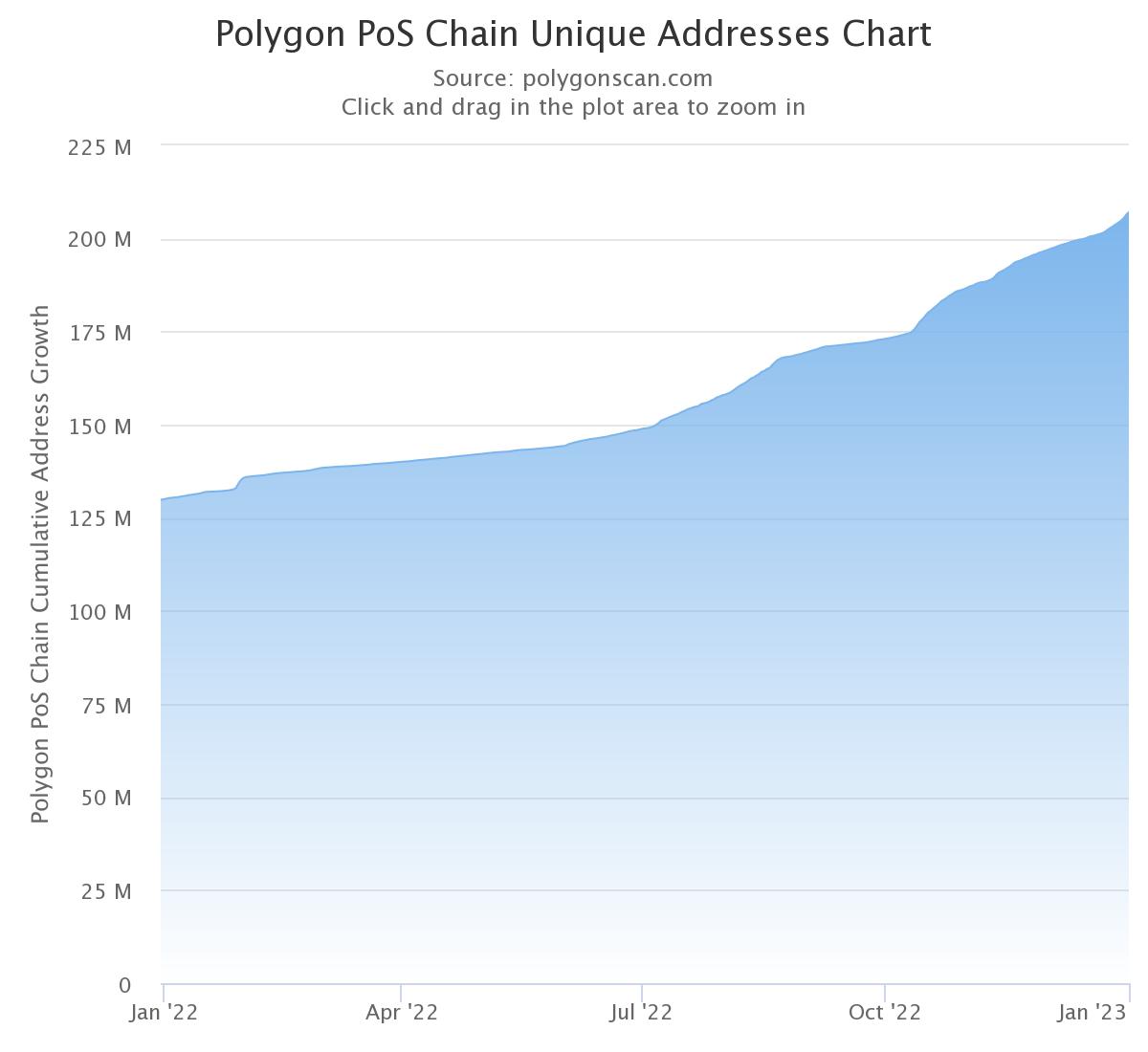
Even though an air of financial uncertainty has shrouded the crypto market since the end of 2021, Polygon — a layer-2 scaling solution running alongside the Ethereum blockchain, allowing for speedy transactions and low fees — continued to witness a lot of growth in 2022. To this point, the network’s unique address count recently surpassed the 200 million mark, reaching a new all-time high of 205,420,908 on Dec. 31.

Additionally, the Polygon ecosystem saw its unique address count surge by a whopping 8,783,568 between Dec. 1 and Dec. 31, suggesting that over the last month of 2022 alone, an average of 283,340 new Polygon-related network addresses came into existence daily. Moreover, it bears mentioning that the number of transactions taking place within the network has continued to hover around the 3 million mark.

Growth in Polygon address count throughout 2022. Source: PolygonScan

Lastly, the proof-of-stake project recently announced the release of its final testnet, an improved iteration of its zero-knowledge Ethereum Virtual Machine.

Major brands continue to enter the Web3 arena

The nonfungible token (NFT) market and the metaverse industry have continued to pique the interest of several fashion and luxury brands. For example, in October, Rolex — a popular watch matchmaker with a global presence — filed for multiple NFT-related trademarks in addition to one for a cryptocurrency exchange. Popular sporting goods giants such as Reebok, Nike and Adidas also made similar moves.

Nike launched a metaverse venture called .Swoosh, a Web3-enabled platform where customers can buy and sell virtual products. The platform will reportedly initially look at community building while hosting the launch of the company’s first virtual collection — comprising footwear, apparel and accessories — sometime during January 2023. Upon its launch, the platform will only allow the use of cash, not digital currencies, with all transactions recorded on the Polygon blockchain.

Adidas released a new line of virtual gear last year along with a picture-for-proof dressing tool allowing avatars from compatible partner collections, such as Bored Ape Yacht Club, to be dressed up with their gear. Reebok filed numerous trademark applications in the United States for a wide range of virtual apparel, including footwear, headwear and sports equipment.

Lastly, luxury car manufacturer BMW announced that it, too, had decided to enter the metaverse fray by applying for a trademark for its logo that will be used in relation to its upcoming virtual vehicles, digital retail and other related services.

Total volume of staked Ether continues to grow

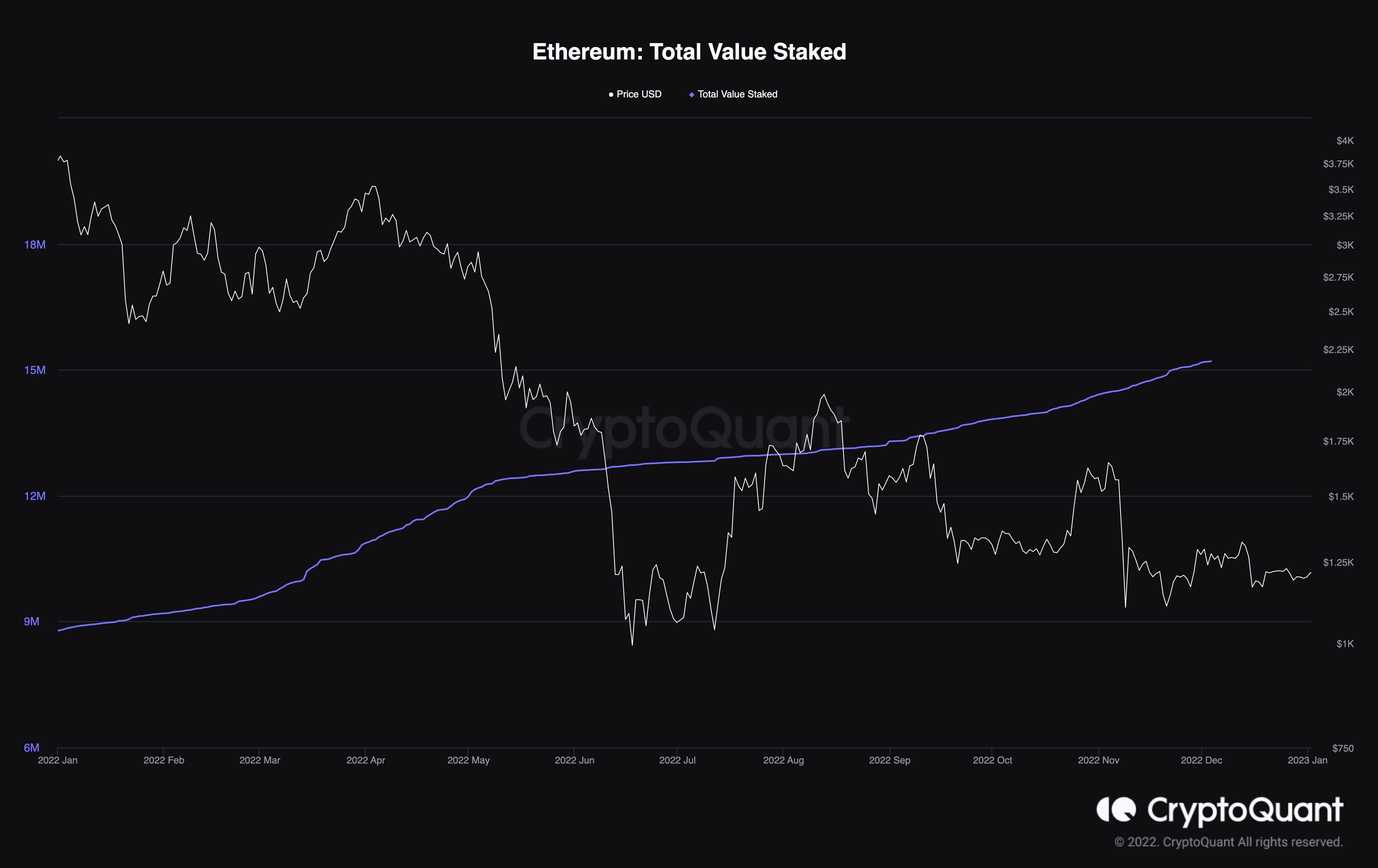
Throughout 2022, the total volume of Ether locked within the Ethereum ecosystem has continued to climb steadily. Between February and June, the amount of staked ETH rose from just over 9 million to nearly 13 million. As seen from the chart below, the trend plateaued between June and September, only to muster steam once again around mid-September, just before Ethereum’s much-awaited transition to proof-of-stake.

Total value of ETH staked. Source: CryptoQuant

Within the context of the Ethereum network, staking refers to the act of depositing 32 ETH into the network, which allows individuals to accrue validator rights and affords them the ability to earn additional ETH. As a validator, users must perform several duties, such as storing data, processing transactions and adding new blocks to the blockchain to help protect the network for all participants.

Meta integrates support for NFTs

Earlier in May, social media behemoth Instagram revealed its testing program for sharing NFTs for select users across the United States. At the time, a representative for the firm stated that it would create more monetization opportunities for influencers on the platform while introducing NFTs to a larger customer base. A few months later, in August, Instagram decided to expand its NFT operations to over 100 countries across Africa, North America and Asia.

Meta also announced that it would integrate support for third-party projects, including Coinbase Wallet and Dapper Wallet, while extending its NFT offerings to its other core social media platform, Facebook. In November, Instagram’s development team announced that it was testing the ability to mint and sell NFTs with a select group of digital creators. The feature will go live on the Polygon network, with creators and collectors not having to shell out any gas fees initially.

Starbucks’ blockchain-based loyalty program goes live

Starbucks announced the launch of its blockchain-based loyalty program and NFT community, Starbucks Odyssey, to a group of testers in the United States in September. The initiative builds upon the company’s existing loyalty program but uses a decentralized structure built atop the Polygon blockchain.

Starbucks Odyssey is a rewards program that allows users to earn perks and whose scope extends beyond the realm of simply earning free drinks. Odyssey allows customers to interact with a wide array of game-style offerings, allowing them to earn NFTs (referred to as Journey Stamps) in the process. These assets can later be traded and redeemed.

VCs continue to pour money into the Web3 ecosystem

During Q4 2022, Animoca Brands — the firm behind several successful crypto projects, including The Sandbox — created a multibillion-dollar fund to invest in various metaverse projects.

According to Animoca co-founder Yat Siu, the fund will spur the utility of the metaverse and blockchain gaming market. “More people are joining crypto every day, especially in gaming,” he stated, adding: “I’m hoping that this will also drive a scenario where digital property will be recognized like physical property in the legal system.”

In addition to Animoca, other popular firms that have invested heavily in the burgeoning metaverse economy include South Korean venture capital giant Daesung Private Equity. The company recently announced that it had allocated a total of 110 South Korean won ($83.9 million) toward its metaverse-centric fund.

JPMorgan partners with Ripple

American banking giant JPMorgan Chase joined with core Ripple partner Al Fardan Exchange in 2022 in an effort to provide users across the United Arab Emirates access to faster transaction settlement and transfer services.

Al Fardan’s clients will be able to conduct crypto transactions via several popular fiat assets, including the U.S. dollar, British pound and euro.

It is worth highlighting that this partnership comes amid Ripple’s ongoing lawsuit with the United States Securities and Exchange Commission. The regulatory agency continues to allege that the project’s associated crypto offering, XRP, is a security and, therefore, subject to the legal and regulatory implications associated with such assets.

Reddit users mint 5 million-plus NFT avatars

Social sharing website Reddit saw its users continue to adopt NFTs at a furious pace last year, even though its sales declined immensely. It is estimated that the Polygon-backed initiative has already witnessed the minting of more than 5 million collectibles to date.

Moreover, it bears mentioning that these avatars aren’t concentrated among high-value NFT collectors (ala whales) and are instead spread out among more than 4 million unique wallets. Lastly, a vast majority of the aforementioned minted NFTs have been offered to Reddit’s high-value users free of cost.

Tiffany enters the crypto sphere

Luxury jewelry and specialty retailer Tiffany & Co. announced in August that it was releasing a limited NFT collection called NFTiff, each of which would be available for a base price of 30 ETH (approximately $36,000). In all, a total of 250 of these NFTs were produced.

Earlier in March, Tiffany purchased an Okapi NFT from Tom Sachs for a reported sum of $380,000. The image has been the company’s Twitter profile photo ever since.

Positive legislation continued to gain traction

Late in 2022, Brazil’s Congress approved a bill seeking to regulate the use of digital currencies for daily payments within its borders, thereby potentially boosting the adoption of crypto within the South American nation. The bill provides legal status to payments made in cryptocurrencies for goods and services but does not grant them status as legal tender.

In a somewhat similar vein, Abdellatif Jouahri, the governor of Morocco’s central bank — Bank Al-Maghrib (BAM) — announced that his country’s key regulatory agencies would soon finalize a comprehensive crypto governance framework. The relevant agencies include the Moroccan Capital Markets Authority and the Supervisory Authority of Insurance and Social Welfare.

Jouahri revealed that the BAM worked on the document alongside the World Bank and the International Monetary Fund.

Other countries that have either tabled favorable regulations in 2022 or are planning to do so in the near future include India, Germany, Australia and the United Kingdom, among others.

Crypto adoption soars across MENA, Asia and Latin America

According to a study conducted by blockchain analytics firm Chainalysis, the Middle East and North Africa (MENA) region was the fastest-growing market for cryptocurrency adoption last year.

Between July 2021 and June 2022, the region received $566 billion in crypto transactions, a rise of nearly 49% from the year prior. To put things into perspective, there were increases of 40% in Europe, 36% across North America, and 35% across Central and South Asia.

Similarly, Latin America made up 9.1% of the total crypto value received during 2022, reaching a cumulative total of $562 billion while showcasing a growth of 40% between Q3 2021 and Q3 2022. Also, a total of four Latin American countries entered Chainalysis’ top crypto adopters list.

Lastly, Vietnam currently has the world’s highest crypto adoption rate, followed by the Philippines and Ukraine. Other emerging nations that dominated Chainalysis’ adoption index in 2022 include India, Brazil, Thailand and Pakistan.

Трендові криптовалюти

Пов'язані матеріали

Interview with Strategy CEO: Can STRC Recover After Selling Bitcoin?

Interview with Strategy CEO Phong Le on the recent sale of 32 Bitcoin and its impact. He clarifies the move was a small, strategic action to demonstrate liquidity to debt holders, test internal processes, and prove operational discipline—not a response to fears of a "death spiral" from DeFi protocols leveraging STRC (Strategy's preferred stock product), which he notes holds less than 10% of STRC. Le emphasizes Strategy’s long-term focus as the largest corporate Bitcoin holder, using the adage that markets are a "voting machine" short-term but a "weighing machine" long-term. Decision-making is data-driven, involving the board, complex modeling, and multiple stakeholder considerations, moving beyond a founder-centric model. He outlines various capital options but stresses the strategic importance of "doing nothing" as a valid choice, citing resilience built during the 2022 bear market. Le expresses unwavering belief in Bitcoin's foundational value for global sovereignty and its future role in an AI-driven economy with trillions of autonomous agents. Addressing STRC's current price below its $100 face value, Le explains recent pressure was due to using dollar reserves for bond buybacks. He expects STRC to return to par as reserves are replenished and its semi-monthly dividend payments begin, noting the product is heavily over-collateralized. Finally, Le confirms the company sold Bitcoin the week prior to May 31st, as disclosed in an 8-K filing, leaving prediction market interpretations to others. The overarching philosophy remains "Spread Bitcoin with love," embracing all methods of gaining Bitcoin exposure.

marsbit9 хв тому

Interview with Strategy CEO: Can STRC Recover After Selling Bitcoin?

marsbit9 хв тому

IOSG Founder: Ethereum Doesn't Need Another Leap of Technical Faith, It Needs a Musk-style Compromise

Jocy, founder of IOSG Ventures, argues that Ethereum does not need renewed technological faith but a "Musk-like compromise." The recent formation of ETHLabs—funded by major ETH holders like BitMine and Lubin—highlights a market-driven move to fill a gap left by the Ethereum Foundation (EF), signaling a loss of confidence in its decentralized, hands-off approach. The core critique contrasts Vitalik Buterin's (V) idealistic, technology-first vision with Elon Musk's pragmatic, business-driven execution. The author asserts Ethereum's current shortage is not another technical roadmap but a clear, real-world application narrative and a leader willing to engage directly with commercial realities—like Musk. Internal issues are emphasized, citing EF's management problems and talent drain. While the new decentralized model with independent nodes like ETHLabs addresses the single foundation's limitations, it risks fragmentation without cohesive direction. True cohesion, the author suggests, must come from a shared, compelling narrative around ETH's value, not just from aligned financial interests. Independence claims for new entities are seen as aspirational, needing years of transparency to build trust. The ultimate threat is not competitors like Solana, but the broader shift of attention and talent toward AI. Ethereum has a limited window—12 to 18 months—to recapture focus by delivering tangible, real-world applications. The conclusion urges V to shift from abstract ideals to grounded, pragmatic leadership. The time for this crucial pivot is running out.

marsbit1 год тому

IOSG Founder: Ethereum Doesn't Need Another Leap of Technical Faith, It Needs a Musk-style Compromise

marsbit1 год тому

Google Starts Selling TPUs, Big Tech Aims to Produce "Low-Cost Tokens" with AI Chips

Google has begun selling its proprietary TPU chips and AI computing hardware directly to third-party data centers and clients, marking a strategic shift. Previously only accessible via cloud rentals, TPUs are specialized processors designed for the matrix and tensor operations central to AI models. By combining thousands into supercomputing clusters managed by CPUs, Google achieves high-efficiency AI processing. This move enables Google’s Gemini AI to offer competitive token pricing, challenging rivals like OpenAI. It also signals a broader industry trend where AI compute is becoming a commoditized resource like electricity. While NVIDIA remains dominant with its CUDA ecosystem and high-performance GPUs, the focus is shifting from raw power to cost efficiency and system integration. Google’s approach mirrors NVIDIA’s by selling an entire ecosystem—hardware, software, and data center expertise—rather than just chips. This threatens NVIDIA’s grip on the mid-range inference market, where lower-cost, efficient solutions are increasingly demanded. Similarly, cloud providers like Huawei Cloud and Alibaba Cloud in China are developing their own AI chip ecosystems (e.g., Ascend, Zhenwu), packaging chips, clusters, and tools into full-stack solutions. They aim to reduce token costs and capture market share through integrated systems. In summary, the AI infrastructure race is evolving from a competition for the strongest chips to a contest for the most efficient and cost-effective systems. Google’s TPU sales highlight this transition, emphasizing that future success lies in delivering affordable, scalable AI compute as a foundational service.

marsbit1 год тому

Google Starts Selling TPUs, Big Tech Aims to Produce "Low-Cost Tokens" with AI Chips

marsbit1 год тому

Торгівля

Спот
Ф'ючерси

Популярні статті

Що таке XRP 2.0

XRP 2.0: Нова межа в світі криптовалют Вступ до XRP 2.0 У постійно змінюючомуся світі криптовалют нові проекти постійно з'являються, змагаючись за увагу та прийняття. Однією з таких обіцяючих ініціатив є XRP 2.0, новий криптовалютний проект, що має на меті використання сучасних технологій блокчейн та надійних методів шифрування. Хоча назва нагадує про XRP від Ripple, важливо зазначити, що XRP 2.0 функціонує автономно, концентруючи увагу на підвищенні безпеки транзакцій, конфіденційності та масштабованості. Оскільки цифровий фінансовий ландшафт все більше приймає децентралізовані рішення, XRP 2.0 прагне значно сприяти веб3 та загальному розширенню крипто проектів. Що таке XRP 2.0? У своїй основі XRP 2.0 є криптовалютним проектом, що має на меті створення безпечної та децентралізованої екосистеми цифрової валюти. Його фундаментальна технологія інтегрує складні принципи блокчейну з передовими техніками шифрування. Загальною метою XRP 2.0 є встановлення себе як надійної та ефективної платформи, що дозволяє швидко виконувати транзакції, при цьому надаючи пріоритет підвищеним захистам конфіденційності для своїх користувачів. Проект позиціонується як рішення багатьох обмежень, з якими стикаються існуючі криптовалюти, пропонуючи систему, яка може обробляти вищий обсяг транзакцій з покращеною швидкістю та конфіденційністю. Ця універсальність позиціонує XRP 2.0 як значного гравця на ринку, наповненому різними цифровими валютами. Хто творець XRP 2.0? Особистість творця XRP 2.0 була позначена як «Вілбур». Проте, вичерпні деталі про Вілбура або пов'язану з ним організацію залишаються недоступними. Анонімність багатьох творців криптовалют не є незвичним явищем в індустрії, часто запроваджена для збереження певного рівня конфіденційності та безпеки. Хто інвестори XRP 2.0? На даний момент конкретна інформація про інвестиційні фонди або організації, що підтримують XRP 2.0, не є публічно доступною. У секторі криптовалют підтримка від визнаних інвесторів може значно вплинути на кредитоспроможність і успіх проекту, але прозорість щодо фінансових підтримувачів XRP 2.0 не була встановлена. Як працює XRP 2.0? XRP 2.0 вирізняється використанням комбінації технології блокчейн та просунутих алгоритмів шифрування, що забезпечують безпечні та децентралізовані транзакції. Його інноваційна структура включає унікальні функції, спрямовані на залучення користувачів та розширення функціональності за межами традиційних транзакцій криптовалюти. Серед цих функцій, XRP 2.0 включає можливості на базі ШІ, такі як текст в зображення та текст в мову. Ці нововведення розроблені для покращення інтерактивного досвіду для користувачів, сприяючи ширшій застосовності в різних секторах. Завдяки поєднанню технологічних досягнень з орієнтованим на користувача дизайном, XRP 2.0 прагне привернути увагу різноманітних осіб і підприємств, які шукають способи інтеграції рішень криптовалют у свої операційні структури. Хронологія XRP 2.0 Розуміння XRP 2.0 вимагає вивчення основних етапів, які визначили його подорож до теперішнього часу: 23 липня 2023 року: XRP 2.0 представлено як новий криптовалютний проект, що має на меті революціонізувати безпечні та децентралізовані можливості транзакцій у галузі блокчейн. 8 вересня 2023 року: Запускається інший проект, XRP20, що відзначає виникнення токена ERC-20 на блокчейні Ethereum, який не пов'язаний з XRP 2.0. 13 листопада 2023 року: XRP Ledger зазнає значного оновлення з виходом програмного забезпечення rippled server версії 2.0.0. Важливо зазначити, що цей розвиток не пов'язаний з криптовалютним проектом XRP 2.0. Ключові моменти про XRP 2.0 Щоб узагальнити суть XRP 2.0, кілька критично важливих факторів emerge: Унікальні функції: Включення функцій, таких як текст в зображення і текст в мову на базі ШІ, ще більше розширює потенційні застосування XRP 2.0. Технологія блокчейн: Архітектура використовує сучасні механізми блокчейн і протоколи шифрування, забезпечуючи безпечне та децентралізоване середовище для транзакцій. Масштабованість і конфіденційність: XRP 2.0 надає пріоритет підвищеним захистам конфіденційності в процесах транзакцій і масштабованості, необхідній для задоволення зростаючої бази користувачів. Відсутність зв'язку з Ripple: Важливо, що, незважаючи на свою назву, XRP 2.0 не має жодної прив'язки чи співпраці з XRP від Ripple, що відрізняє його операційну структуру та цілі в рамках криптовалютної екосистеми. Висновок XRP 2.0 представляє амбітну ініціативу у світі криптовалют, прагнучи запропонувати поєднання безпеки, конфіденційності та ефективності у цифрових транзакціях. Інтегруючи складні технології та дружні до користувача функції, проект ставить за мету розширити горизонти того, що криптовалюта може досягти в сучасній цифровій економіці. Хоча анонімність його творця та відсутність розкритих інвесторів можуть викликати запитання у деяких, фокус XRP 2.0 на передових функціональностях і децентралізації підвищує його привабливість на дедалі більшому ринку криптовалют. Оскільки ландшафт криптовалют продовжує еволюціонувати, XRP 2.0 може ще стати важливим гравцем у розширенні безпечних і масштабованих рішень блокчейн.

167 переглядів усьогоОпубліковано 2024.04.05Оновлено 2024.12.03

Що таке XRP 2.0

Як купити XRP

Ласкаво просимо до HTX.com! Ми зробили покупку XRP (XRP) простою та зручною. Дотримуйтесь нашої покрокової інструкції, щоб розпочати свою криптовалютну подорож.Крок 1: Створіть обліковий запис на HTXВикористовуйте свою електронну пошту або номер телефону, щоб зареєструвати обліковий запис на HTX безплатно. Пройдіть безпроблемну реєстрацію й отримайте доступ до всіх функцій.ЗареєструватисьКрок 2: Перейдіть до розділу Купити крипту і виберіть спосіб оплатиКредитна/дебетова картка: використовуйте вашу картку Visa або Mastercard, щоб миттєво купити XRP (XRP).Баланс: використовуйте кошти з балансу вашого рахунку HTX для безперешкодної торгівлі.Треті особи: ми додали популярні способи оплати, такі як Google Pay та Apple Pay, щоб підвищити зручність.P2P: Торгуйте безпосередньо з іншими користувачами на HTX.Позабіржова торгівля (OTC): ми пропонуємо індивідуальні послуги та конкурентні обмінні курси для трейдерів.Крок 3: Зберігайте свої XRP (XRP)Після придбання XRP (XRP) збережіть його у своєму обліковому записі на HTX. Крім того, ви можете відправити його в інше місце за допомогою блокчейн-переказу або використовувати його для торгівлі іншими криптовалютами.Крок 4: Торгівля XRP (XRP)Легко торгуйте XRP (XRP) на спотовому ринку HTX. Просто увійдіть до свого облікового запису, виберіть торгову пару, укладайте угоди та спостерігайте за ними в режимі реального часу. Ми пропонуємо зручний досвід як для початківців, так і для досвідчених трейдерів.

1.6k переглядів усьогоОпубліковано 2024.12.10Оновлено 2026.06.02

Як купити XRP

Обговорення

Ласкаво просимо до спільноти HTX. Тут ви можете бути в курсі останніх подій розвитку платформи та отримати доступ до професійної ринкової інформації. Нижче представлені думки користувачів щодо ціни XRP (XRP).

活动图片