Taper Landed: the Turning Point of The Cryptocurrency Market is Coming?

Huobi ResearchОпубліковано о 2022-02-18Востаннє оновлено о 2022-02-18

Анотація

As the Federal Reserve FOMC announced the launch of Taper after the meeting, the turning point of global liquidity growth has arrived.

Abstract:On November 4,as the Federal Reserve FOMC announced the launch of Taper after the meeting, the turning point of global liquidity growth has arrived. Taper means a diminishing marginal dollar liquidity,it may affect the price of Bitcoin. In addition, under normal circumstances, after the end of Taper, interest rate hikes will follow. Faced persistent inflation concerns, voices for accelerating Taper has become increasingly loud, which will have a bearing on bitcoin.

Author:William Lee, Huobi Research

Among the big names in the crypto community in 2021, a Twitter user named PlanB may be the most watched. This Dutch investor named PlanB created a Bitcoin price model based on S2F (Stock to Flow) and successfully predicted the Bitcoin price in the first three quarters of this year, stunned the market. Unfortunately, PlanB's model is likely to fail for the first time -it predicted bitcoin would reach at least 98,000 US dollars by the end of November. However, recent bitcoin price has fallen all the way to 57,000 US dollars, which is far from the predetermined target.
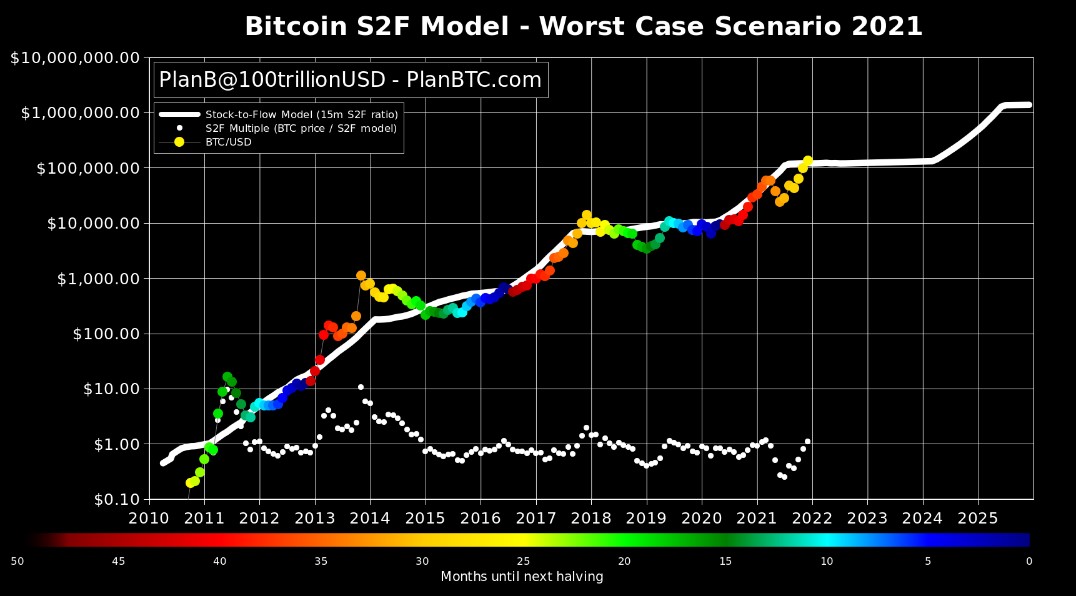
Figure 1. PlanB's Bitcoin S2F model

Sources:Tiwtter,Huobi Research

Why does the "victorious" Bitcoin S2F model suddenly fail? Because PlanB only considered the monthly SF ratio of Bitcoin and historical Bitcoin price data when constructing the model, but ignored the impact of external macro changes on the market.

As we all know, the background of the bitcoin price rise is the spread of COVID-19 around the world and the extremely loose monetary policies implemented by central banks to rescue the market. Due to the tremendous liquidity released by central banks to the market, many risky assets, including Bitcoin, have surged in the past year. However, on the 3rd of this month, as the Federal Reserve FOMC announced the launch of Taper after the meeting, the turning point of global liquidity growth has arrived.
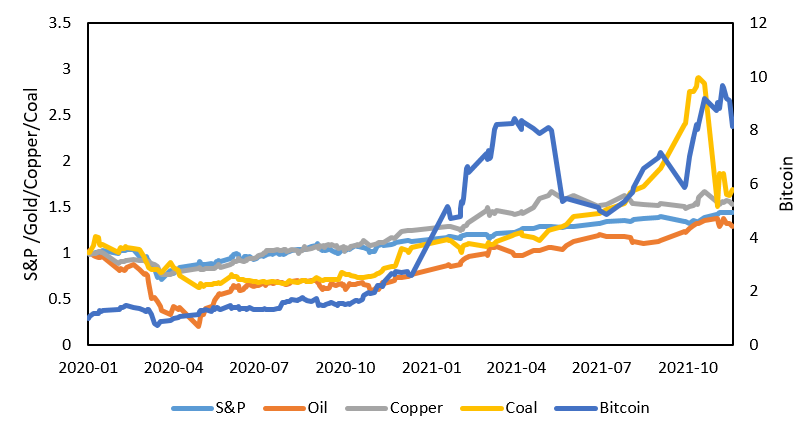
Figure 2. Changes in the prices of major global assets since 2020 (current price/initial price)

Sources:Wind,Huobi Research

So, what is Taper? Why should we pay attention to Taper?

When it comes to Taper, we must first understand what quantitative easing is. When the Federal Reserve launched quantitative easing in March last year, we discussed the difference between "interest rate cuts" and "quantitative easing"-cutting interest rates means lowering the "price of funds" and injecting liquidity into the market by controlling the borrowing costs of the market; and "quantitative easing" is to increase the "quantity of funds" and inject liquidity into banks through the continuous purchase of a large number of bonds, forcing banks to lend out even under conditions of zero interest rates, thereby increasing market liquidity. Therefore, quantitative easing is an unconventional policy that is forced to be implemented when interest rates cannot be lowered. The two main types of bonds purchased during the quantitative easing are Treasury and MBS. The more they purchase, the larger the Fed assets is.

We know that the original meaning of Taper is "gradual contraction". In the context of central bank monetary policy, "Taper" means "gradual reduction in quantitative easing." Therefore, Taper does not mean the end of quantitative easing ,or let alone tightening liquidity, rather, it means a gradual reduction in the scale of bond purchases in quantitative easing.

According to the minutes of this FOMC meeting, the Fed opened Taper in November, which signifies an increase in its holding by at least US$70 billion in US Treasury bonds and $35 billion in institution MBS this month, followed by a shrink of $10 billion in Treasury purchases and $5 billion MBS each month. A simple calculation, if you buy 15 billion dollars less each month, the total amount of $120 billion in assets purchased per month will be exhausted in 8 months. That is to say, putting an end in bond purchasing and quantitative easing in next June.
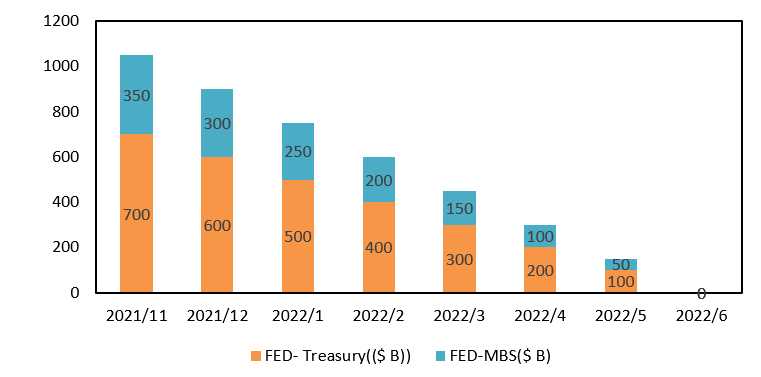
Figure 3. Forecast of the Fed's bond purchases during the Taper period

Sources: Huobi Reseach

So why should we pay attention to Taper? We know that Taper means a diminishing marginal dollar liquidity. While it does not change the expansion, or contraction, of liquidity itself, it may change the destination of fund flow or the degree of asset mismatch. Especially for Bitcoin, an extraordinarily risky asset, its sensitivity to changes in liquidity of dollars will be theoretically higher. (As we observed during March last year, due to the shortage of market liquidity, Bitcoin price dropped by nearly 50% in one day). Here we can recall the price trend of Bitcoin during the Fed's last round of Taper implementation.

As shown in the figure below, since the 2008 financial crisis, after nearly five years of quantitative easing, the Federal Reserve began to kick off the normalization of monetary policy to the market in 2013, and officially launched Taper. At that time, the overall process of Taper can be divided into 2 stages: 1) the price release stage from May 2013 to December 2013, and 2)the formal implementation stage from December 2013. The asset purchase scale was reduced from $85 billion to $75 billion per month. Since then, the scale of debt purchases has continued to decline until it completely withdrew from QE in October 2014. In order to eliminate the influence of quarterly factors on the Fed's balance sheet, we reflect the impact of Taper by calculating the year-on-year change in the size of the Fed's assets (note that Taper represents the deceleration of QE). From the figure below, we can clearly see that around the time when the Federal Reserve officially announced the launch of Taper in December, it was at the peak of Bitcoin's bull market in 2013. During the previous round of Taper, Bitcoin was trapped in a bear market.
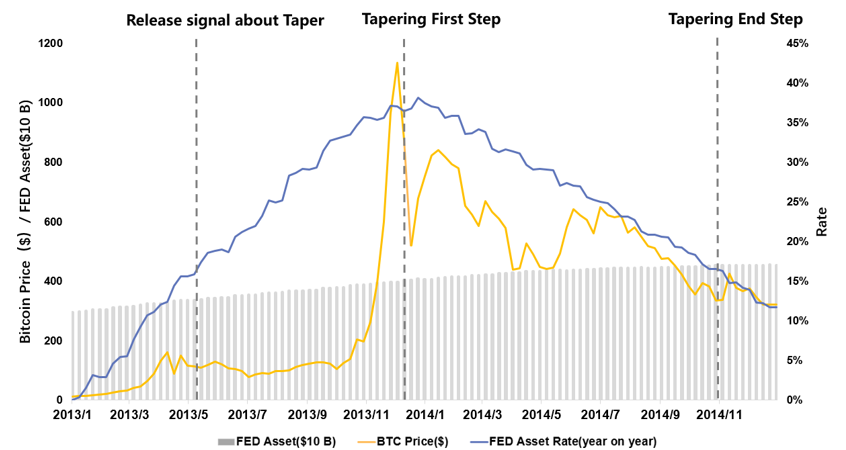
Figure 4. Bitcoin price movements during the last Round of Federal Reserve Taper Taper periods (2013-2014)

Sources: Wind,Huobi Reseach

So, what impact will this round of Taper have on the cryptocurrency market?

There are two special features: First, the starting point of this round is higher, but the speed of reduction is faster; Second, at the end of this round, the Fed's asset scale will be significantly higher than previous round. This has two implications: First, the market liquidity growth rate will slow down significantly, which means that it is difficult for various asset prices to rise wildly; Second, even if Taper ends, there will still be sufficient liquidity in the market. It is more likely that asset prices will continue to remain high.
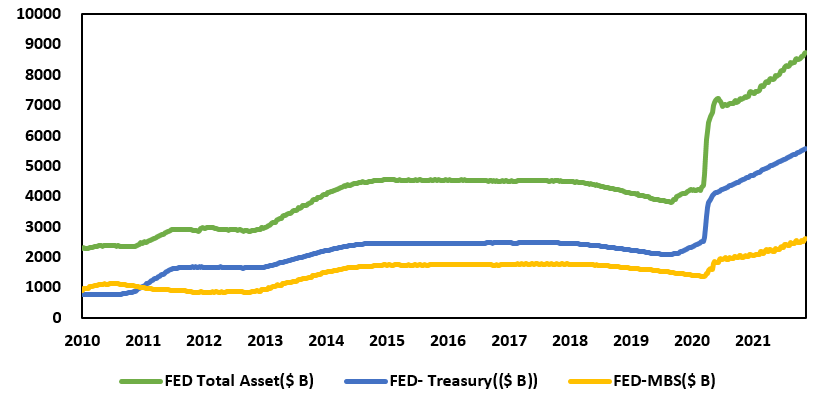
Figure 5. Changes in the size of FED assets

Sources:Wind,Huobi Research

However, story continues. According to regular operation of the Fed's monetary policy, after the end of Taper, interest rate hikes will follow, which means that liquidity will shrink, bringing about a huge impact on various risk assets.

First of all, we need to understand the Fed's monetary policy decision-making framework. According to the Federal Reserve Act, the goal of Federal Reserve monetary policy is to "maintain the growth of money and credit supply that echoes the long-term economic growth, so as to effectively 1) maximize employment, 2) price stability, and 3) moderate long-term economic growth." In order to achieve the above monetary policy goals, the Taylor Rule proposed by John B. Taylor in 1993 played an important role. The expression of Taylor's Rule is as follows:

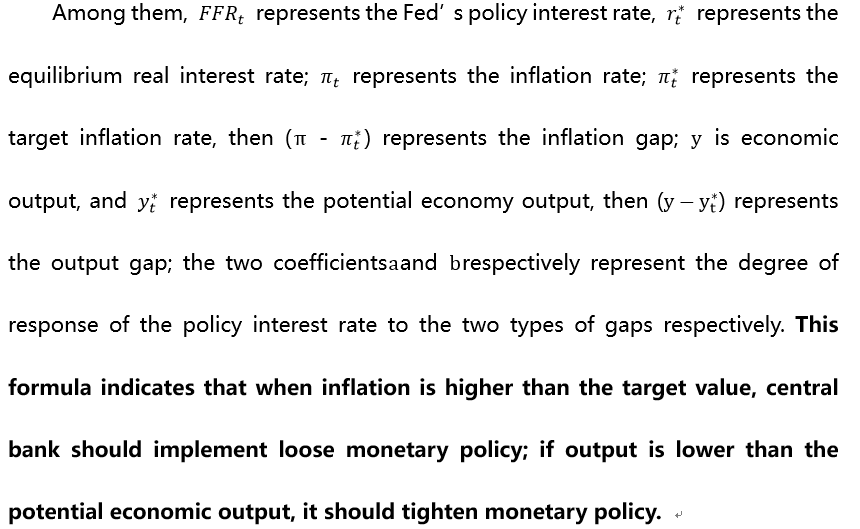
After 2014, based on the previous Taylor Rule, the Federal Reserve developed an optimal control policy so that the target interest rate of federal funds can minimize the deviation of the unemployment rate and inflation rate from the target; the latest monetary policy framework still does not diverge from the core logic of Taylor Rule.

Specifically, since 2012, the Federal Reserve has maintained a relatively stable long-term goal for eight years: consistently implementing the target of achieving 2% inflation in the long run, and reducing the expectation of long-term natural unemployment rate year by year responding to the constant restructure and adjustment of the labor market.

On August 27, 2020, the Federal Reserve introduced a new monetary policy framework in the "Long-term Goals and Monetary Policy Strategy Statement", which made major adjustments to specific targets for inflation and employment. For the first time, the Fed put forward the concept of an average inflation rate, that is, while emphasizing the long-term inflation expectations of 2%, it allows for a period of time to achieve an inflation rate moderately higher than 2%, which means the Fed’s tolerance for temporary high inflation improved. This is why, since the beginning of this year, inflation of the United States has set new highs frequently, but the Fed has not changed monetary policy; because inside of the Fed is still arguing whether inflation is "temporary" or not.
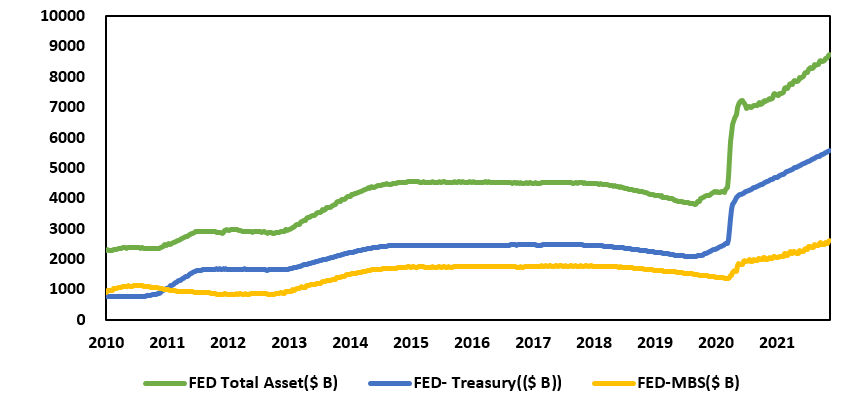
Figure 6. Changes in U.S. CPI since 2020

Sources:Wind,Huobi Research

However, since the summer of this year, inflation of the United States has remained above 4%. Confronted persistent inflation concerns, the Fed officially initiated Taper on November 4 , and announcing an end of QE by the end of next year. However, data released by the U.S. Department of Labor on November 10 illustrated that the CPI rose 6.2% year-on-year in October, reaching a 31-year high, which further aggravated the market’s concerns about inflation, voices for accelerating Taper has become increasingly loud. On November 19, a number of senior Federal Reserve officials hinted that they might speed up the Taper process. Speeding up Taper means speeding up the withdrawal of QE, which means that the turning point of liquidity will be advanced. Therefore, under the influence of market expectations, it is difficult for various high-risk assets, represented by Bitcoin, to continue to rise in the future, and even the possibility of further decline cannot be ruled out.


Пов'язані матеріали

After Marvell's 32% Surge, the Chinese Chip Family Behind It Emerges

The stock price of Marvell Technology surged 32.5% on June 2nd, driven by NVIDIA CEO Jensen Huang highlighting its custom ASICs and optical interconnects as core to AI data center architecture. This event brought attention to the Chinese semiconductor family behind Marvell: the Dai siblings. The story centers on three siblings, all UC Berkeley graduates, whose three-decade entrepreneurial journey aligns with major semiconductor industry shifts. In 1995, youngest sister Dai Wei Li co-founded Marvell with her husband Sehat Sutardja and his brother, focusing on storage controllers. Eldest brother Dai Wei Min founded EDA company Ultima, later sold to Cadence, and later founded VeriSilicon (芯原) in China, becoming a leading semiconductor IP provider. Second brother Dai Wei Jin co-founded EDA firm Silicon Perspective (sold to Cadence) and GPU IP company Vivante, later acquired by VeriSilicon. The combined "Dai-Sutardja" family network extends beyond Marvell. Their ventures and investments form a comprehensive ecosystem for the post-Moore's Law, chiplet era. Key holdings include: Dream Big Semiconductor (AI SuperNICs, acquired by Arm), Alphawave (high-speed SerDes IP, acquired by Qualcomm), and Silicon Box (a chiplet advanced packaging foundry). VeriSilicon itself thrives on the AI ASIC and IP boom in China. Collectively, the family's AI infrastructure-related portfolio is estimated at over $22 billion. Their strategy represents a distinct path: building critical components for open standards and key manufacturing capacity in the chiplet era, rather than pursuing standalone AI chip dominance. While this path may not create the next NVIDIA, it has enabled repeated successful exits and sustained influence within the global semiconductor industry.

marsbit10 хв тому

After Marvell's 32% Surge, the Chinese Chip Family Behind It Emerges

marsbit10 хв тому

Microsoft is Afraid of Being Marginalized by AI Giants

Microsoft, once the defining force of the PC era, now faces a familiar challenge in the AI age: the risk of being relegated to a profitable but invisible infrastructure provider. This anxiety was laid bare at Build 2026, where CEO Satya Nadella unveiled a major strategic pivot. The catalyst was a quiet April agreement that dissolved Microsoft's exclusive licensing and cloud-hosting deal with OpenAI, its once-vital partner. This erased Microsoft's key AI moat. With OpenAI and Anthropic defining AI applications and gaining enterprise traction—even within Microsoft's own ranks—Nadella had to answer: without exclusivity, what is Microsoft's role? The answer was a suite of seven in-house AI models, a developer-focused AI workstation (Surface RTX Spark Dev Box), and, most crucially, the Agent 365 platform for enterprise AI governance. The models, notably targeting Anthropic's strengths in coding and enterprise, signal a defensive move. However, the broader strategy is to make the models themselves less decisive. Financially, Microsoft's AI revenue is strong, driven largely by Azure running others' models. Yet its user-facing products like Copilot show weak penetration and engagement. Microsoft earns infrastructure money but lacks direct user mindshare. Nadella's core fear is being "hollowed out." As OpenAI and Anthropic prepare for IPOs and gain financial independence, they may build their own infrastructure, threatening Azure's lucrative AI revenue stream. Microsoft's window is to entrench itself deeper: not as the model creator, but as the indispensable platform for securely deploying, managing, and governing all AI models within the enterprise through Agent 365. Build 2026 revealed Microsoft's bet: in the AI era, the ultimate power lies not in any single model, but in the enterprise "operating system" that controls them. Nadella is determined to ensure Microsoft is the driver of this new era, not just a passenger.

marsbit24 хв тому

Microsoft is Afraid of Being Marginalized by AI Giants

marsbit24 хв тому

CPU, Quietly Returning to the Center of the AI Computing Power Stage

Over the past three years, AI computing power narratives have been dominated by GPUs. However, starting in 2026, this story began to shift. While training large models remains GPU-intensive, the rapid growth of inference and AI agent workloads, which require high levels of task orchestration, concurrency, and data flow management, has highlighted a renewed critical role for CPUs. These are tasks GPUs are not designed to handle. Intel's recent launch of the Xeon 6+ processor, built on its Intel 18A process and featuring up to 288 efficiency cores (E-cores), exemplifies this strategic pivot. It is positioned not as a mere companion to GPUs but as the essential "control plane" for AI infrastructure, optimized for high-density, energy-efficient, and high-throughput workloads characteristic of AI agents and inference. This "CPU resurgence" is not about CPUs outperforming GPUs in raw computation. It reflects a systemic bottleneck: as AI scales from training single models to deploying countless intelligent agents, the demand for coordination and data handling surges. Major cloud providers are also developing their own high-density ARM-based server CPUs for similar workloads. However, Intel's success with this strategy faces significant challenges. Competition includes NVIDIA's integrated CPU-GPU solutions, the expanding adoption of cloud vendors' in-house ARM CPUs, and the crucial market test of Intel's 18A manufacturing process against rivals like TSMC's N2. In conclusion, CPUs are indeed reclaiming a central, though redefined, role in AI compute—managing the complex orchestration that enables massive-scale AI deployment. While the trend is clear, which company will ultimately lead this CPU resurgence remains an open question to be decided in the data centers of 2027 and beyond.

marsbit45 хв тому

CPU, Quietly Returning to the Center of the AI Computing Power Stage

marsbit45 хв тому

Торгівля

Спот
Ф'ючерси

Популярні статті

Що таке BITCOIN

Розуміння HarryPotterObamaSonic10Inu (ERC-20) та його позиції у крипто-просторі Останніми роками ринок криптовалют спостерігав за зростанням популярності мем-коінів, які привертають інтерес не тільки трейдерів, але й тих, хто шукає спілкування та розважальну цінність. Серед цих унікальних токенів є HarryPotterObamaSonic10Inu (ERC-20), інтригуючий проект, що поєднує культурні посилання з тканинами криптовалюти. Ця стаття досліджує ключові аспекти HarryPotterObamaSonic10Inu, вивчаючи його механізми, спільноту та його взаємодію з ширшим крипто-ландшафтом. Що таке HarryPotterObamaSonic10Inu (ERC-20)? Як випливає з його назви, HarryPotterObamaSonic10Inu є мем-коіном, побудованим на блокчейні Ethereum, класифікованим за стандартом ERC-20. На відміну від традиційних криптовалют, які можуть підкреслювати практичну корисність або інвестиційний потенціал, цей токен процвітає завдяки розважальній цінності та силі своєї спільноти. Проект спрямований на створення середовища, де зацікавлені користувачі можуть об'єднуватися, ділитися ідеями та брати участь у заходах, натхненних різноманітними культурними явищами. Однією з примітних особливостей HarryPotterObamaSonic10Inu є нульовий податок на транзакції. Цей привабливий елемент має на меті заохочувати торгівлю та участь у спільноті, позбавлену додаткових витрат, які можуть відлякувати дрібних трейдерів. Загальна пропозиція монет становить один мільярд токенів, що позначає намір підтримувати суттєву циркуляцію в межах спільноти. Творець HarryPotterObamaSonic10Inu (ERC-20) Походження HarryPotterObamaSonic10Inu дещо окутане таємницею; деталі про творця залишаються невідомими. Розвиток цього токена позбавлений впізнаваної команди або чіткої стратегії, що не є рідкістю в секторі мем-коінів. Натомість проект виник органічно, а його розвиток значною мірою залежить від ентузіазму та участі його спільноти. Інвестори HarryPotterObamaSonic10Inu (ERC-20) Щодо зовнішніх інвестицій та підтримки, HarryPotterObamaSonic10Inu також залишається невизначеним. Токен не зазначає жодних відомих інвестиційних фондів або значної організаційної підтримки. Натомість життєва сила проекту полягає в його базовій спільноті, яка інформує про його зростання та стійкість через колективні дії та залученість у крипто-просторі. Як працює HarryPotterObamaSonic10Inu (ERC-20)? Як мем-коін, HarryPotterObamaSonic10Inu функціонує передусім поза традиційними рамками, що часто регулюють вартість активів. Є кілька відмінних аспектів, що визначають, як працює проект: Транзакції без податку: Завдяки відсутності податкових зборів на транзакції, користувачі можуть вільно купувати та продавати токен, не турбуючись про приховані витрати. Залучення спільноти: Проект процвітає завдяки взаємодії спільноти, використовуючи соціальні медіа для створення шуму та сприяння залученню. Обговорення, обмін контентом та залученість є ключовими елементами, що допомагають розширити його охоплення та зміцнити лояльність серед прихильників. Відсутність практичної корисності: Слід зазначити, що HarryPotterObamaSonic10Inu не пропонує конкретної корисності в рамках фінансової екосистеми. Натомість він класифікується як токен, що призначений в основному для розваги та спільнотних активностей. Культурне посилання: Токен кмітливо вплітає елементи популярної культури, щоб привернути інтерес, зв'язуючи з ентузіастами мемів та крипто-стежками. HarryPotterObamaSonic10Inu ілюструє, як мем-коіни функціонують інакше, ніж традиційні криптовалютні проекти, увійшовши на ринок як інноваційні соціальні конструкти, а не утилітарні активи. Хронологія HarryPotterObamaSonic10Inu (ERC-20) Історія HarryPotterObamaSonic10Inu відзначена кількома значними етапами: Створення: Токен виник з вірусного мему, захопивши уяву багатьох крипто-ентузіастів. Конкретні дати створення недоступні, що підкреслює його органічний розвиток. Лістинг на біржах: HarryPotterObamaSonic10Inu з'явився на різних біржах, дозволяючи зручніший доступ і торгівлю спільноти. Ініціативи залучення спільноти: Ведення діяльності, спрямованої на покращення взаємодії спільноти, включаючи конкурси, кампанії в соціальних мережах та створення контенту від фанатів та прихильників. Плани на майбутнє: Дорожня карта проекту включає запуск колекції NFT, мерчандайзинг та електронну комерцію, пов'язану з його культурними темами, що далі залучає спільноту та намагається додати більше вимірів до його екосистеми. Ключові моменти про HarryPotterObamaSonic10Inu (ERC-20) Спільнотний підхід: Проект надає пріоритет колективному внеску та креативності, забезпечуючи, щоб участь користувачів була в центрі його розвитку. Класифікація як мем-коін: Це є його епігенез розважальної криптовалюти, що відрізняється від традиційних інвестиційних інструментів. Жодного прямого відношення до Bitcoin: Незважаючи на схожість у назві, HarryPotterObamaSonic10Inu є відмінним і не має жодного зв’язку з Bitcoin або іншими усталеними криптовалютами. Зосередженість на співпраці: HarryPotterObamaSonic10Inu створено для того, щоб надати простір для співпраці та обміну історіями серед його власників, забезпечуючи шлях для творчості та спільного зв'язку. Перспективи на майбутнє: Амбіція розширитися за межі початкової концепції в NFT та мерчандайз відкриває шлях для проекту потенційно потрапити в більш мейнстрімні сфери цифрової культури. Оскільки мем-коіни продовжують захоплювати уяву спільноти криптовалют, HarryPotterObamaSonic10Inu (ERC-20) вирізняється своїми культурними зв'язками та орієнтованим на спільноту підходом. Хоча він може не відповідати типовій моделі утилітарного токена, його суть полягає в радощах і товариськості, що підтримуються серед його прихильників, підкреслюючи еволюційну природу криптовалют в усе більш цифрову епоху. Оскільки проект продовжує розвиватися, важливо спостерігати за тим, як динаміка спільноти вплине на його траєкторію в постійно змінюваному ландшафті технології блокчейн.

2.0k переглядів усьогоОпубліковано 2024.04.01Оновлено 2024.12.03

Що таке BITCOIN

Як купити BTC

Ласкаво просимо до HTX.com! Ми зробили покупку Bitcoin (BTC) простою та зручною. Дотримуйтесь нашої покрокової інструкції, щоб розпочати свою криптовалютну подорож.Крок 1: Створіть обліковий запис на HTXВикористовуйте свою електронну пошту або номер телефону, щоб зареєструвати обліковий запис на HTX безплатно. Пройдіть безпроблемну реєстрацію й отримайте доступ до всіх функцій.ЗареєструватисьКрок 2: Перейдіть до розділу Купити крипту і виберіть спосіб оплатиКредитна/дебетова картка: використовуйте вашу картку Visa або Mastercard, щоб миттєво купити Bitcoin (BTC).Баланс: використовуйте кошти з балансу вашого рахунку HTX для безперешкодної торгівлі.Треті особи: ми додали популярні способи оплати, такі як Google Pay та Apple Pay, щоб підвищити зручність.P2P: Торгуйте безпосередньо з іншими користувачами на HTX.Позабіржова торгівля (OTC): ми пропонуємо індивідуальні послуги та конкурентні обмінні курси для трейдерів.Крок 3: Зберігайте свої Bitcoin (BTC)Після придбання Bitcoin (BTC) збережіть його у своєму обліковому записі на HTX. Крім того, ви можете відправити його в інше місце за допомогою блокчейн-переказу або використовувати його для торгівлі іншими криптовалютами.Крок 4: Торгівля Bitcoin (BTC)Легко торгуйте Bitcoin (BTC) на спотовому ринку HTX. Просто увійдіть до свого облікового запису, виберіть торгову пару, укладайте угоди та спостерігайте за ними в режимі реального часу. Ми пропонуємо зручний досвід як для початківців, так і для досвідчених трейдерів.

4.7k переглядів усьогоОпубліковано 2024.12.12Оновлено 2026.06.02

Як купити BTC

Що таке $BITCOIN

ЦИФРОВЕ ЗОЛОТО ($BITCOIN): Комплексний аналіз Вступ до ЦИФРОВОГО ЗОЛОТА ($BITCOIN) ЦИФРОВЕ ЗОЛОТО ($BITCOIN) — це проект на основі блокчейну, що працює в мережі Solana, який має на меті поєднати характеристики традиційних дорогоцінних металів з інноваціями децентралізованих технологій. Хоча він має таку ж назву, як і Bitcoin, який часто називають “цифровим золотом” через його сприйняття як засобу збереження вартості, ЦИФРОВЕ ЗОЛОТО є окремим токеном, розробленим для створення унікальної екосистеми в ландшафті Web3. Його мета — позиціонувати себе як життєздатний альтернативний цифровий актив, хоча деталі щодо його застосувань і функціональностей все ще розробляються. Що таке ЦИФРОВЕ ЗОЛОТО ($BITCOIN)? ЦИФРОВЕ ЗОЛОТО ($BITCOIN) — це токен криптовалюти, спеціально розроблений для використання в блокчейні Solana. На відміну від Bitcoin, який виконує широко визнану роль зберігання вартості, цей токен, здається, зосереджується на більш широких застосуваннях і характеристиках. Помітні аспекти включають: Інфраструктура блокчейну: Токен побудований на блокчейні Solana, відомому своєю здатністю обробляти швидкі та низьковартісні транзакції. Динаміка постачання: ЦИФРОВЕ ЗОЛОТО має максимальне постачання, обмежене 100 квадрильйонами токенів (100P $BITCOIN), хоча деталі щодо його обігового постачання наразі не розголошуються. Утиліта: Хоча точні функціональності не викладені, є вказівки на те, що токен може бути використаний для різних застосувань, потенційно пов'язаних з децентралізованими додатками (dApps) або стратегіями токенізації активів. Хто є творцем ЦИФРОВОГО ЗОЛОТА ($BITCOIN)? На даний момент особа творців і команди розробників, що стоять за ЦИФРОВИМ ЗОЛОТОМ ($BITCOIN), залишається невідомою. Ця ситуація є типовою для багатьох інноваційних проектів у сфері блокчейну, особливо тих, що пов'язані з децентралізованими фінансами та феноменом мем-коінів. Хоча така анонімність може сприяти культурі, орієнтованій на спільноту, вона посилює занепокоєння щодо управління та підзвітності. Хто є інвесторами ЦИФРОВОГО ЗОЛОТА ($BITCOIN)? Доступна інформація вказує на те, що ЦИФРОВЕ ЗОЛОТО ($BITCOIN) не має жодних відомих інституційних спонсорів або помітних венчурних капіталовкладень. Проект, здається, працює за моделлю “рівний до рівного”, зосереджуючись на підтримці та прийнятті спільноти, а не на традиційних шляхах фінансування. Його активність і ліквідність переважно розташовані на децентралізованих біржах (DEX), таких як PumpSwap, а не на встановлених централізованих торгових платформах, що ще більше підкреслює його підхід знизу вгору. Як працює ЦИФРОВЕ ЗОЛОТО ($BITCOIN) Операційні механізми ЦИФРОВОГО ЗОЛОТА ($BITCOIN) можна детальніше розглянути на основі його дизайну блокчейну та характеристик мережі: Механізм консенсусу: Використовуючи унікальний proof-of-history (PoH) Solana в поєднанні з моделлю proof-of-stake (PoS), проект забезпечує ефективну валідацію транзакцій, що сприяє високій продуктивності мережі. Токеноміка: Хоча конкретні дефляційні механізми не були детально описані, велике максимальне постачання токенів вказує на те, що воно може задовольняти мікротранзакції або нішеві випадки використання, які ще потрібно визначити. Інтероперабельність: Існує потенціал для інтеграції з більш широкою екосистемою Solana, включаючи різні платформи децентралізованих фінансів (DeFi). Однак деталі щодо конкретних інтеграцій залишаються невизначеними. Хронологія ключових подій Ось хронологія, яка підкреслює значні віхи, пов'язані з ЦИФРОВИМ ЗОЛОТОМ ($BITCOIN): 2023: Початкове розгортання токена відбувається на блокчейні Solana, позначене його адресою контракту. 2024: ЦИФРОВЕ ЗОЛОТО набуває видимості, оскільки стає доступним для торгівлі на децентралізованих біржах, таких як PumpSwap, що дозволяє користувачам торгувати ним проти SOL. 2025: Проект спостерігає спорадичну торгову активність і потенційний інтерес до ініціатив, очолюваних спільнотою, хоча на даний момент не зафіксовано жодних значних партнерств або технічних досягнень. Критичний аналіз Сильні сторони Масштабованість: Основна інфраструктура Solana підтримує високі обсяги транзакцій, що може підвищити утиліту $BITCOIN у різних сценаріях транзакцій. Доступність: Потенційно низька торгова ціна за токен може привабити роздрібних інвесторів, сприяючи більш широкій участі завдяки можливостям дробового володіння. Ризики Відсутність прозорості: Відсутність публічно відомих спонсорів, розробників або процесу аудиту може викликати скептицизм щодо стійкості та надійності проекту. Волатильність ринку: Торгова активність сильно залежить від спекулятивної поведінки, що може призвести до значної волатильності цін і невизначеності для інвесторів. Висновок ЦИФРОВЕ ЗОЛОТО ($BITCOIN) постає як цікавій, але неоднозначний проект у швидко розвиваючійся екосистемі Solana. Хоча він намагається використати наратив “цифрового золота”, його відхід від встановленої ролі Bitcoin як засобу збереження вартості підкреслює необхідність чіткішого розмежування його передбачуваної утиліти та структури управління. Майбутнє прийняття та адаптація, ймовірно, залежатиме від вирішення поточної непрозорості та більш чіткого визначення його операційних та економічних стратегій. Примітка: Цей звіт охоплює синтезовану інформацію, доступну станом на жовтень 2023 року, і можуть відбутися події, що виходять за межі дослідницького періоду.

75 переглядів усьогоОпубліковано 2025.05.13Оновлено 2025.05.13

Що таке $BITCOIN

Обговорення

Ласкаво просимо до спільноти HTX. Тут ви можете бути в курсі останніх подій розвитку платформи та отримати доступ до професійної ринкової інформації. Нижче представлені думки користувачів щодо ціни BTC (BTC).

活动图片