The Risks in DeFi Stack

HACKERNOONОпубліковано о 2022-10-17Востаннє оновлено о 2022-10-17

Анотація

Decentralized Finance or DeFi is a form of blockchain-based finance that offers financial services without any central intermediaries.

Decentralized Finance or DeFi is a form of blockchain-based finance that offers financial services without any central intermediaries. What used to be a niche ecosystem with a TVL of less than $100 Million in the year 2017 grew to over $200 Billion at the peak of the last bull run in 2022.

TVL or Total Value Locked is the value of the crypto assets locked in a DeFi smart contract. - Source

The flip side of the tremendous growth is that it has become a honeypot for some of the most sophisticated hackers across the world. Billions of dollars have been lost to security vulnerabilities and economic failures.

If you are a crypto believer, you can’t ignore the movement of Decentralized Finance. While the ecosystem is too nascent for us to identify all potential risks, a look at the DeFi stack can help us understand the different ways things can break and thus inform how we can go about participating in the ecosystem.

None of what follows is financial advice. Neither will I claim to be an exhaustive list of risks in DeFi. Treat it more as a starting point and a framework for identifying different risks that may exist in a DeFi Investment Approach.

The DeFi Stack

We can look at the DeFi ecosystem as a combination of the following five layers.

Blockchain Networks - All DeFi protocols are deployed on a blockchain network. The blockchain network provides the computational platform for the execution of the smart contracts that power the DeFi service.

Crypto Tokens - The tokens are the underlying assets that are used by the protocol to deliver a service. A Lending Protocol might enable the lending and borrowing of a particular crypto token to be used by traders as a form of leverage. A Decentralized Exchange might have a pool that allows users to swap one token for another.

Protocol - DeFi Protocols are open-source computer programs that run on blockchain networks and provide financial services.

dApp Interface - These are the web interfaces that users use to interact with the DeFi Protocols. Some wallets such as Argent, Coinbase, and Brew Money offer in wallet integrations with Protocols too directly from the mobile.

Wallets - Cryptocurrency wallets hold the private keys that allow users to make payments, deploy and withdraw funds from defi protocols, and more.

Risks in Blockchain Network Layer

Unlike popular perception, blockchains are not infallible. Security vulnerabilities can allow malicious actors to siphon off funds or take over control of the network.

The 51% Attack

A 51% Attack on a Blockchain Network is a scenario where one single entity or group has control over 50% of the network hash rate. The implication of this is that the group can censor transactions, and reorder and rewrite blocks leading to double spending where a network participant can spend/utilize the same asset multiple times.

"Hashrate" refers to the total combined computational power that is being used to mine

and process transactions on a Proof-of-Work blockchain, such as Bitcoin. - Source

A 51% attack while complex and expensive to pull off is a risk that even mature blockchain networks such as Bitcoin have had to face at some point in time.

Bitcoin’s reckoning with 51% Attack

In 2014, ghash.io, a popular bitcoin mining pool for a brief duration of 24-48 hours had over 51% of Bitcoin’s hash rate. While GHash didn’t demonstrate any signs of malicious intent, it did raise debates on how bitcoin can avoid such scenarios of a pool or entity taking over 51% of the network’s hash rate. In this particular case, miners from the pool volunteered to move away from ghash. Moreover, ghash publicly vowed to limit its hash rate to 40% of the network’s hash rate.

A mining pool is the pooling of resources by miners, who share their processing power over a network, to split the reward equally, according to the amount of work they contributed to the probability of finding a block. - Source

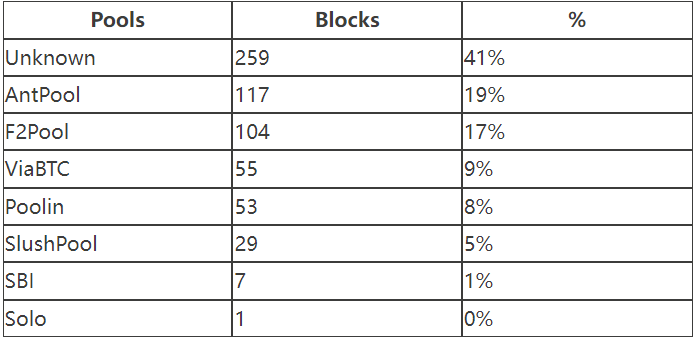
Bitcoin hash rate is more widely distributed today. For instance, the last days of data for blocks mined look like the following. The largest mining pool makes up for 19% of the network’s hashrate.
51% Attacks on Ethereum Classic

Ethereum Classic blockchain came into being after the infamous The DAO Hack. It has a market cap of over $4 Billion. In August 2020 Ethereum Classic was attacked three times and over $5 Million were siphoned off from the network through double-spending.

Vulnerabilities in Blockchain Network

Eventually, blockchain networks are powered by code and code can be buggy. In August 2010 an anonymous hacker was able to exploit a bug to create 184 Billion Bitcoin. Bitcoin supply is supposed to be capped at 21 Million. The anomaly was detected by the Bitcoin community soon. Satoshi Nakamoto coded up a fix for the issue and rolled it out within 5 hours that soft forked the network to state before the faulty block was mined.

In blockchain technology, a soft fork is a change to the software protocol where only previously valid transaction blocks are made invalid. Because old nodes will recognize the new blocks as valid, a soft fork is backwards-compatible. This kind of fork requires only a majority of the miners upgrading to enforce the new rules. - Source

In the recent past, Polygon, one of the leading scaling solutions for Ethereum and a sidechain, lost over 800K Matic worth $ 2 million to a hack. Two white hat hackers reported the vulnerability and Polygon rolled out a fix within 48 hours. Polygon Foundation covered the money lost and paid out a sum of $3.5 Million in bounty to the two white hat hackers.

The Volatility in Crypto Assets

Every asset class has inherent volatility. Crypto Assets more so. In stock markets, a 1% dip makes headlines and is reported as a crash. In crypto markets, it is fairly common to see such fluctuations in prices multiple times in a month.
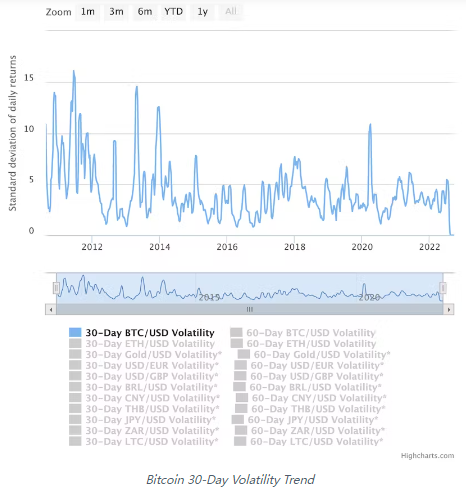
Bitcoin 30-Day Volatility Trend

The above graph shows the trend of Bitcoin price volatility over time. While it may seem that over the years, the volatility is reducing a bit, but still, 5% up and down swings are not that uncommon.

Volatility refers to the amount of uncertainty or risk related to the size of changes in a security's value. - Investopedia

30-Day Rolling Volatility = Standard Deviation of the last 30 percentage changes in Total Return Price * Square-root of number of trading days

Token prices are a function of market perception. The perception can be based on how the specific project is doing or it can be more macro as in where the overall market is headed.

For instance, the crypto market still has a very high correlation with bitcoin price. Whenever bitcoin price dips, we see people liquidating their other crypto assets bringing down the overall market. This is understandable considering even now bitcoin makes up almost 40% of the total crypto market.

Earlier this year, in May, 2022 a bank run on US Terra Stablecoin wiped off $ 40 Billion from the market. Anchor Protocol was one of the most popular lending protocols on Luna that offered ~20% APY on US Terra Stablecoin deposits. While the protocol itself worked as it was supposed to, a known economical weakness in Luna ecosystem led to US Terra losing its peg to US Dollar.

1 US Terra = 3 cents as of now

The Fault in the Protocols

Security breaches, code exploits, and flash loan attacks led to the loss of billions of dollars in DeFi. As per Chainanalysis, over $ 1.3 Billion were stolen in the first 3 months of 2022.

Security Breaches are instances when a hacker gains control of the private key or keys of wallets that have admin controls over the protocol. [The Ronin Hack](https://medium.com/uno-re/biggest-crypto-hack-of-all-time-a-breakdown-of-the-ronin-network-hack-ef8d9e25ba6b#:\~:text=The attacker discovered a backdoor,them using the stolen keys.) is one of the largest hacks in DeFi where allegedly a North Korean Hacking Group stole over $ 600 Million worth crypto tokens.

Ronin is an Ethereum Sidechain developed and operated by Sky Mavis to support their popular play-2-earn game, Axie Infinity.

Ronin Network has nine validators to process the transactions and as long as the majority of them approve a transaction it goes through. The catch was that the nine keys were controlled by just two entities. Sky Mavis had 4 keys and Axie DAO 5. However, Axie DAO had earlier provided Sky Mavis with access to sign transactions on its behalf for a short-term period. The access was never revoked. This miss allowed hackers to gain access to the majority of the keys and process the transactions.

Code Exploits are faults in smart contracts that allow a hacker to siphon off funds. The Polynetwork hack where $610 Million worth of crypto assets were hacked (and later returned) is one of the largest hacks that happened due to code exploits.

Polynetwork is a protocol that enables cross-chain assets transfer.

In this particular case, the hacker was able to figure out a way to invoke a restricted smart contract that enabled them to take control of the wallets that held assets managed by Polynetwork and transfer them to a wallet they controlled.

Frontend and DNS Exploits

Users interact with DeFi protocols by connecting their wallet to a protocol through a web interface. In May 2022 a hacker was able to leverage a vulnerability in the DNS to inject a malicious smart contract on the web interface for mm.finance, a leading DeFi protocol on Cronos chain, and diverted over $2 Million to their wallet.

The domain name system (i.e., “DNS”) is responsible for translating domain names into a specific IP address so that the initiating client can load the requested Internet resources. The domain name system works much like a phone book where users can search for a requested person and retrieve their phone number. - [Learn more](https://www.infoblox.com/glossary/domain-name-system-dns/#:~:text=The%20domain%20name%20system%20(i.e.,and%20retrieve%20their%20phone%20number.)

Losing Private keys or Seed Phrase

Cryptocurrency Wallets store the public key and the private key. The private key is used to access the fund and transfer them. The public key is your address. Private Keys or the more popular seed phrase where a 12 - 24 words phrase is used to generate the private keys.

If a hacker is able to access your seed phrase or your wallet’s private keys, they can take over your assets. Malicious software on your computer or mobile, or phishing attacks that trick users into sharing their seed phrase on a website are some of the common ways in which hackers gain access to their seed phrase and steal assets in your wallet.

In April 2022 an iPhone user lost crypto and NFTs in his wallet when a hacker pretending to be an Apple representative tricked the user to share a secure code that was sent to the user’s number and use that to hack into their iCloud Account. From there on, they were able to access the user’s wallet seed phrase

Navigating DeFi Safely

It is essential to practice caution when navigating DeFi considering the different risks that exist in the stack. As you delve into the DeFi Ecosystem, choosing the right platforms and ecosystems for your risk tolerance is a critical step. A few things to look for

Track record

How long has the blockchain or protocols been in existence? How have they performed in volatile market conditions?

What has been the TVL's growth over time?

What is the caliber of the core team working on the protocol or chain?

Independent Audits

Has it gone through independent security audits?

How robust are their processes? Here processes can range from their development activities, and security practices, to taking key decisions with community participation

Liquidity

How much liquidity the asset or the protocol has? This is especially critical in selecting an asset or protocol. Low liquidity can translate to higher risks.

How much AUM does the DAOs’Community’s treasury have?

A lot of products have emerged that help with such research. A few of them are DeFiLllama, DeFi Safety, and Exponential Finance. Beyond this, there are a few things you can do as a user that can ensure the safety of your funds

Maintain Wallet Hygiene

Don’t hold all your assets in a single wallet. Use a Hardware Wallet

Never share your seed phrase or private key online or offline

Maintain multiple backups of your seed phrase

Ensure safety in the devices where your wallets reside, desktop, mobile, or browser.

Be cautious about the dApps you’re interacting with and the kind of permissions you are allowing. Do a regular audit of the funds

Stay Informed - You can do all of these yet, if the dapp or protocol you interact with has been hacked, you can end up losing your funds. Stay aware of the happenings in the chain, assets, and protocols you use. You can use twitter for that.

Despite these risks, DeFi presents multiple opportunities for early adopters to not only grow their crypto assets but also get familiar with an emerging phenomenon that will reimagine how financial services are delivered in the coming years.

Трендові криптовалюти

Пов'язані матеріали

Two Giants' Credit Expansion: Loan Balances of $9.9 Billion vs. $14.6 Billion, Brazil Emerges as the Main Battlefield

Title: Two Giants "Credit" Surge: Loan Balances of 99 Billion vs. 146 Billion USD, Brazil Emerges as Main Battlefield Summary: The article compares the rapid expansion of credit businesses by two major e-commerce and fintech players, Sea (via Monee) and Mercado Libre (via Mercado Pago), in overseas markets like Southeast Asia and Latin America, contrasting with a slowing domestic Chinese credit market. Using Q1 2026 financial data, it highlights their significant growth. Sea's Monee reached a loan balance of $99 billion, up 71% year-over-year (YoY), contributing 17.5% to Sea's total revenue. Mercado Pago's loan balance hit $146 billion, up 87% YoY, contributing 45% to its parent company's revenue. Both maintained stable risk metrics (e.g., Monee's 90+ day NPL at 1.1%) despite rapid scaling. Brazil is identified as a key and accelerating growth market for both. Sea's Brazilian operations saw loan volumes exceed $10 billion, growing 250% YoY, with SPayLater GMV penetration still low (~10%) indicating high potential. Sea also secured a key Brazilian financial credit license (SCFI). Mercado Libre's Brazil segment contributed over half (54%) of total group revenue, with its credit business there generating $11.24 billion in revenue, up 89% YoY and accounting for 12.7% of global revenue. Mercado Pago's credit portfolio, especially credit cards (46% of loans, +105% YoY), is a strategic focus, described as crucial as building logistics was a decade ago. Its net interest margin after loss (NIMAL) remains high at 17.8%. The article concludes that while Brazil presents immense opportunities, the success is largely driven by these integrated "e-commerce + fintech" giants with proprietary transaction data and ecosystems, making it challenging for standalone fintech players to compete effectively.

链捕手14 хв тому

Two Giants' Credit Expansion: Loan Balances of $9.9 Billion vs. $14.6 Billion, Brazil Emerges as the Main Battlefield

链捕手14 хв тому

Research Report Analysis: Is Intel Making a Comeback with Apple? Bernstein's Calculations Show the Right Direction, but the Price Is Already Overvalued

Bernstein analyst Stacy A. Rasgon published a report on June 18 regarding Intel, assessing the potential impact of recent political support for a US-based PC chip design and manufacturing collaboration between Apple and Intel. The report views this as a significant signal for the foundry landscape shift but concludes the initial financial contribution would be minimal. Key conclusions: 1) An Apple deal is seen as a small-scale "proof of concept." Even if Intel wins 40% of Apple's premium notebook chip orders (~5 million units/year), Bernstein estimates it would generate only about $500M in annual revenue and ~$0.03 EPS, negligible against Intel's ~$55B revenue. 2) Political encouragement is not equivalent to enforceable mandates. Winning orders ultimately depends on Intel demonstrating competitive technology (like its 18A node), cost, and reliable supply. 3) The path from validation to large-scale production involves significant challenges, capital investment, and time. Due to these uncertainties, Bernstein maintains a Market-Perform (Hold) rating with a $100 price target, implying potential downside from the ~$121.10 price at the report date. The analysis highlights the tension between near-term validation value—serving as a crucial trust signal for Intel's foundry ambitions and US supply chain resilience—and the long-term opportunity to attract larger cloud and AI chip customers. The investment thesis hinges on successful 18A execution and sustained policy support, not on immediate financial gains from Apple.

marsbit38 хв тому

Research Report Analysis: Is Intel Making a Comeback with Apple? Bernstein's Calculations Show the Right Direction, but the Price Is Already Overvalued

marsbit38 хв тому

27-Year Reign Ends: SK Hynix Market Cap Surpasses Samsung for First Time, an AI-Driven Reshuffle of Korean Chip Power

On June 22, 2026, SK Hynix made history by surpassing Samsung Electronics in market capitalization, ending Samsung's 27-year reign as South Korea's most valuable company. This dramatic reversal is powered by the AI boom and SK Hynix's dominant position in High Bandwidth Memory (HBM), a critical component for AI model training. Once a heavily indebted firm on the brink of bankruptcy, SK Hynix bet early on HBM, which has evolved from a niche product to essential AI infrastructure. It now commands a 59% share of the global HBM market. Its financial performance is staggering, with Q1 2026 net profit soaring nearly fourfold year-over-year to KRW 40.35 trillion, translating to over 2 billion RMB in daily net profit. HBM now drives roughly 40% of its revenue with exceptionally high margins. In contrast, Samsung, with its broad portfolio spanning memory chips, smartphones, and foundry services, has lagged in the HBM race while facing headwinds in other divisions. This shift signifies a deeper restructuring of South Korea's economy, moving from consumer electronics to AI-driven growth. However, the future remains competitive. With major capacity expansions planned industry-wide by 2028 and Samsung aiming to catch up in HBM technology, the new market leader cannot afford complacency. This event marks a pivotal moment in the global semiconductor industry's ongoing power realignment.

marsbit49 хв тому

27-Year Reign Ends: SK Hynix Market Cap Surpasses Samsung for First Time, an AI-Driven Reshuffle of Korean Chip Power

marsbit49 хв тому

Торгівля

Спот
Ф'ючерси

Популярні статті

Що таке BITCOIN

Розуміння HarryPotterObamaSonic10Inu (ERC-20) та його позиції у крипто-просторі Останніми роками ринок криптовалют спостерігав за зростанням популярності мем-коінів, які привертають інтерес не тільки трейдерів, але й тих, хто шукає спілкування та розважальну цінність. Серед цих унікальних токенів є HarryPotterObamaSonic10Inu (ERC-20), інтригуючий проект, що поєднує культурні посилання з тканинами криптовалюти. Ця стаття досліджує ключові аспекти HarryPotterObamaSonic10Inu, вивчаючи його механізми, спільноту та його взаємодію з ширшим крипто-ландшафтом. Що таке HarryPotterObamaSonic10Inu (ERC-20)? Як випливає з його назви, HarryPotterObamaSonic10Inu є мем-коіном, побудованим на блокчейні Ethereum, класифікованим за стандартом ERC-20. На відміну від традиційних криптовалют, які можуть підкреслювати практичну корисність або інвестиційний потенціал, цей токен процвітає завдяки розважальній цінності та силі своєї спільноти. Проект спрямований на створення середовища, де зацікавлені користувачі можуть об'єднуватися, ділитися ідеями та брати участь у заходах, натхненних різноманітними культурними явищами. Однією з примітних особливостей HarryPotterObamaSonic10Inu є нульовий податок на транзакції. Цей привабливий елемент має на меті заохочувати торгівлю та участь у спільноті, позбавлену додаткових витрат, які можуть відлякувати дрібних трейдерів. Загальна пропозиція монет становить один мільярд токенів, що позначає намір підтримувати суттєву циркуляцію в межах спільноти. Творець HarryPotterObamaSonic10Inu (ERC-20) Походження HarryPotterObamaSonic10Inu дещо окутане таємницею; деталі про творця залишаються невідомими. Розвиток цього токена позбавлений впізнаваної команди або чіткої стратегії, що не є рідкістю в секторі мем-коінів. Натомість проект виник органічно, а його розвиток значною мірою залежить від ентузіазму та участі його спільноти. Інвестори HarryPotterObamaSonic10Inu (ERC-20) Щодо зовнішніх інвестицій та підтримки, HarryPotterObamaSonic10Inu також залишається невизначеним. Токен не зазначає жодних відомих інвестиційних фондів або значної організаційної підтримки. Натомість життєва сила проекту полягає в його базовій спільноті, яка інформує про його зростання та стійкість через колективні дії та залученість у крипто-просторі. Як працює HarryPotterObamaSonic10Inu (ERC-20)? Як мем-коін, HarryPotterObamaSonic10Inu функціонує передусім поза традиційними рамками, що часто регулюють вартість активів. Є кілька відмінних аспектів, що визначають, як працює проект: Транзакції без податку: Завдяки відсутності податкових зборів на транзакції, користувачі можуть вільно купувати та продавати токен, не турбуючись про приховані витрати. Залучення спільноти: Проект процвітає завдяки взаємодії спільноти, використовуючи соціальні медіа для створення шуму та сприяння залученню. Обговорення, обмін контентом та залученість є ключовими елементами, що допомагають розширити його охоплення та зміцнити лояльність серед прихильників. Відсутність практичної корисності: Слід зазначити, що HarryPotterObamaSonic10Inu не пропонує конкретної корисності в рамках фінансової екосистеми. Натомість він класифікується як токен, що призначений в основному для розваги та спільнотних активностей. Культурне посилання: Токен кмітливо вплітає елементи популярної культури, щоб привернути інтерес, зв'язуючи з ентузіастами мемів та крипто-стежками. HarryPotterObamaSonic10Inu ілюструє, як мем-коіни функціонують інакше, ніж традиційні криптовалютні проекти, увійшовши на ринок як інноваційні соціальні конструкти, а не утилітарні активи. Хронологія HarryPotterObamaSonic10Inu (ERC-20) Історія HarryPotterObamaSonic10Inu відзначена кількома значними етапами: Створення: Токен виник з вірусного мему, захопивши уяву багатьох крипто-ентузіастів. Конкретні дати створення недоступні, що підкреслює його органічний розвиток. Лістинг на біржах: HarryPotterObamaSonic10Inu з'явився на різних біржах, дозволяючи зручніший доступ і торгівлю спільноти. Ініціативи залучення спільноти: Ведення діяльності, спрямованої на покращення взаємодії спільноти, включаючи конкурси, кампанії в соціальних мережах та створення контенту від фанатів та прихильників. Плани на майбутнє: Дорожня карта проекту включає запуск колекції NFT, мерчандайзинг та електронну комерцію, пов'язану з його культурними темами, що далі залучає спільноту та намагається додати більше вимірів до його екосистеми. Ключові моменти про HarryPotterObamaSonic10Inu (ERC-20) Спільнотний підхід: Проект надає пріоритет колективному внеску та креативності, забезпечуючи, щоб участь користувачів була в центрі його розвитку. Класифікація як мем-коін: Це є його епігенез розважальної криптовалюти, що відрізняється від традиційних інвестиційних інструментів. Жодного прямого відношення до Bitcoin: Незважаючи на схожість у назві, HarryPotterObamaSonic10Inu є відмінним і не має жодного зв’язку з Bitcoin або іншими усталеними криптовалютами. Зосередженість на співпраці: HarryPotterObamaSonic10Inu створено для того, щоб надати простір для співпраці та обміну історіями серед його власників, забезпечуючи шлях для творчості та спільного зв'язку. Перспективи на майбутнє: Амбіція розширитися за межі початкової концепції в NFT та мерчандайз відкриває шлях для проекту потенційно потрапити в більш мейнстрімні сфери цифрової культури. Оскільки мем-коіни продовжують захоплювати уяву спільноти криптовалют, HarryPotterObamaSonic10Inu (ERC-20) вирізняється своїми культурними зв'язками та орієнтованим на спільноту підходом. Хоча він може не відповідати типовій моделі утилітарного токена, його суть полягає в радощах і товариськості, що підтримуються серед його прихильників, підкреслюючи еволюційну природу криптовалют в усе більш цифрову епоху. Оскільки проект продовжує розвиватися, важливо спостерігати за тим, як динаміка спільноти вплине на його траєкторію в постійно змінюваному ландшафті технології блокчейн.

2.1k переглядів усьогоОпубліковано 2024.04.01Оновлено 2024.12.03

Що таке BITCOIN

Як купити BTC

Ласкаво просимо до HTX.com! Ми зробили покупку Bitcoin (BTC) простою та зручною. Дотримуйтесь нашої покрокової інструкції, щоб розпочати свою криптовалютну подорож.Крок 1: Створіть обліковий запис на HTXВикористовуйте свою електронну пошту або номер телефону, щоб зареєструвати обліковий запис на HTX безплатно. Пройдіть безпроблемну реєстрацію й отримайте доступ до всіх функцій.ЗареєструватисьКрок 2: Перейдіть до розділу Купити крипту і виберіть спосіб оплатиКредитна/дебетова картка: використовуйте вашу картку Visa або Mastercard, щоб миттєво купити Bitcoin (BTC).Баланс: використовуйте кошти з балансу вашого рахунку HTX для безперешкодної торгівлі.Треті особи: ми додали популярні способи оплати, такі як Google Pay та Apple Pay, щоб підвищити зручність.P2P: Торгуйте безпосередньо з іншими користувачами на HTX.Позабіржова торгівля (OTC): ми пропонуємо індивідуальні послуги та конкурентні обмінні курси для трейдерів.Крок 3: Зберігайте свої Bitcoin (BTC)Після придбання Bitcoin (BTC) збережіть його у своєму обліковому записі на HTX. Крім того, ви можете відправити його в інше місце за допомогою блокчейн-переказу або використовувати його для торгівлі іншими криптовалютами.Крок 4: Торгівля Bitcoin (BTC)Легко торгуйте Bitcoin (BTC) на спотовому ринку HTX. Просто увійдіть до свого облікового запису, виберіть торгову пару, укладайте угоди та спостерігайте за ними в режимі реального часу. Ми пропонуємо зручний досвід як для початківців, так і для досвідчених трейдерів.

4.8k переглядів усьогоОпубліковано 2024.12.12Оновлено 2026.06.02

Як купити BTC

Що таке $BITCOIN

ЦИФРОВЕ ЗОЛОТО ($BITCOIN): Комплексний аналіз Вступ до ЦИФРОВОГО ЗОЛОТА ($BITCOIN) ЦИФРОВЕ ЗОЛОТО ($BITCOIN) — це проект на основі блокчейну, що працює в мережі Solana, який має на меті поєднати характеристики традиційних дорогоцінних металів з інноваціями децентралізованих технологій. Хоча він має таку ж назву, як і Bitcoin, який часто називають “цифровим золотом” через його сприйняття як засобу збереження вартості, ЦИФРОВЕ ЗОЛОТО є окремим токеном, розробленим для створення унікальної екосистеми в ландшафті Web3. Його мета — позиціонувати себе як життєздатний альтернативний цифровий актив, хоча деталі щодо його застосувань і функціональностей все ще розробляються. Що таке ЦИФРОВЕ ЗОЛОТО ($BITCOIN)? ЦИФРОВЕ ЗОЛОТО ($BITCOIN) — це токен криптовалюти, спеціально розроблений для використання в блокчейні Solana. На відміну від Bitcoin, який виконує широко визнану роль зберігання вартості, цей токен, здається, зосереджується на більш широких застосуваннях і характеристиках. Помітні аспекти включають: Інфраструктура блокчейну: Токен побудований на блокчейні Solana, відомому своєю здатністю обробляти швидкі та низьковартісні транзакції. Динаміка постачання: ЦИФРОВЕ ЗОЛОТО має максимальне постачання, обмежене 100 квадрильйонами токенів (100P $BITCOIN), хоча деталі щодо його обігового постачання наразі не розголошуються. Утиліта: Хоча точні функціональності не викладені, є вказівки на те, що токен може бути використаний для різних застосувань, потенційно пов'язаних з децентралізованими додатками (dApps) або стратегіями токенізації активів. Хто є творцем ЦИФРОВОГО ЗОЛОТА ($BITCOIN)? На даний момент особа творців і команди розробників, що стоять за ЦИФРОВИМ ЗОЛОТОМ ($BITCOIN), залишається невідомою. Ця ситуація є типовою для багатьох інноваційних проектів у сфері блокчейну, особливо тих, що пов'язані з децентралізованими фінансами та феноменом мем-коінів. Хоча така анонімність може сприяти культурі, орієнтованій на спільноту, вона посилює занепокоєння щодо управління та підзвітності. Хто є інвесторами ЦИФРОВОГО ЗОЛОТА ($BITCOIN)? Доступна інформація вказує на те, що ЦИФРОВЕ ЗОЛОТО ($BITCOIN) не має жодних відомих інституційних спонсорів або помітних венчурних капіталовкладень. Проект, здається, працює за моделлю “рівний до рівного”, зосереджуючись на підтримці та прийнятті спільноти, а не на традиційних шляхах фінансування. Його активність і ліквідність переважно розташовані на децентралізованих біржах (DEX), таких як PumpSwap, а не на встановлених централізованих торгових платформах, що ще більше підкреслює його підхід знизу вгору. Як працює ЦИФРОВЕ ЗОЛОТО ($BITCOIN) Операційні механізми ЦИФРОВОГО ЗОЛОТА ($BITCOIN) можна детальніше розглянути на основі його дизайну блокчейну та характеристик мережі: Механізм консенсусу: Використовуючи унікальний proof-of-history (PoH) Solana в поєднанні з моделлю proof-of-stake (PoS), проект забезпечує ефективну валідацію транзакцій, що сприяє високій продуктивності мережі. Токеноміка: Хоча конкретні дефляційні механізми не були детально описані, велике максимальне постачання токенів вказує на те, що воно може задовольняти мікротранзакції або нішеві випадки використання, які ще потрібно визначити. Інтероперабельність: Існує потенціал для інтеграції з більш широкою екосистемою Solana, включаючи різні платформи децентралізованих фінансів (DeFi). Однак деталі щодо конкретних інтеграцій залишаються невизначеними. Хронологія ключових подій Ось хронологія, яка підкреслює значні віхи, пов'язані з ЦИФРОВИМ ЗОЛОТОМ ($BITCOIN): 2023: Початкове розгортання токена відбувається на блокчейні Solana, позначене його адресою контракту. 2024: ЦИФРОВЕ ЗОЛОТО набуває видимості, оскільки стає доступним для торгівлі на децентралізованих біржах, таких як PumpSwap, що дозволяє користувачам торгувати ним проти SOL. 2025: Проект спостерігає спорадичну торгову активність і потенційний інтерес до ініціатив, очолюваних спільнотою, хоча на даний момент не зафіксовано жодних значних партнерств або технічних досягнень. Критичний аналіз Сильні сторони Масштабованість: Основна інфраструктура Solana підтримує високі обсяги транзакцій, що може підвищити утиліту $BITCOIN у різних сценаріях транзакцій. Доступність: Потенційно низька торгова ціна за токен може привабити роздрібних інвесторів, сприяючи більш широкій участі завдяки можливостям дробового володіння. Ризики Відсутність прозорості: Відсутність публічно відомих спонсорів, розробників або процесу аудиту може викликати скептицизм щодо стійкості та надійності проекту. Волатильність ринку: Торгова активність сильно залежить від спекулятивної поведінки, що може призвести до значної волатильності цін і невизначеності для інвесторів. Висновок ЦИФРОВЕ ЗОЛОТО ($BITCOIN) постає як цікавій, але неоднозначний проект у швидко розвиваючійся екосистемі Solana. Хоча він намагається використати наратив “цифрового золота”, його відхід від встановленої ролі Bitcoin як засобу збереження вартості підкреслює необхідність чіткішого розмежування його передбачуваної утиліти та структури управління. Майбутнє прийняття та адаптація, ймовірно, залежатиме від вирішення поточної непрозорості та більш чіткого визначення його операційних та економічних стратегій. Примітка: Цей звіт охоплює синтезовану інформацію, доступну станом на жовтень 2023 року, і можуть відбутися події, що виходять за межі дослідницького періоду.

82 переглядів усьогоОпубліковано 2025.05.13Оновлено 2025.05.13

Що таке $BITCOIN

Обговорення

Ласкаво просимо до спільноти HTX. Тут ви можете бути в курсі останніх подій розвитку платформи та отримати доступ до професійної ринкової інформації. Нижче представлені думки користувачів щодо ціни BTC (BTC).

活动图片