ETH hard fork gets major traction, are Ethereum traders in jeopardy?

CoingapeОпубліковано о 2022-09-15Востаннє оновлено о 2022-09-15

Анотація

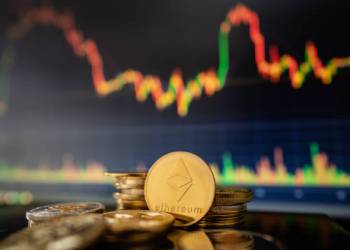
The Ethereum merge is just a little less than 4 hours away from going live. The final upgrade, Paris, is less than 1000 blocks away from being triggered. Paris will mark the end of Proof-of-work on Ethereum and finish the merge. However, the Ethereum hard fork is receiving significant support in keeping PoW active on Ethereum.  

The Ethereum merge is just a little less than 4 hours away from going live. The final upgrade, Paris, is less than 1000 blocks away from being triggered. Paris will mark the end of Proof-of-work on Ethereum and finish the merge. However, the Ethereum hard fork is receiving significant support in keeping PoW active on Ethereum.  

""

Who Is Supporting ETHW
""

ETHW reveals that they are receiving support from top mining pools for a hard fork. Large mining pools such as f2pool, BTC.com, and poolin have supported ETHW mining after the merge. The second largest mining pool, f2pool, earlier hoped for a successful transition to proof-of-stake. However, it appears that the group has changed its stance.
""

ETHW has revealed a list of a total of 18 mining pools that are supporting ETHW mining. Eight pools are already available for the ETHW testnet. The Ethereum Hard Fork will be mineable 24 hours after the merge.

""

Many other influential figures have supported a hard fork in the past. Justin Sun, the founder of the Tron blockchain, revealed that his Poloniex exchange will list the ETHW token. Crypto exchanges like Huobi and BitMEX also supported the hard fork.
""

How Ethereum Hard Fork Can Impact Ethereum
""

Ethereum Hard Fork can have a major impact on the merge. DeBank Defi, a major crypto portfolio company, has called a successful merge a disaster for the entire crypto ecosystem. Chainlink, a major smart contract company made it clear that it will not support any hard fork tokens. 

""

Vitalik Buterin called anyone supporting the hard fork to be exchange owners trying to make a quick buck. He highlighted that the Proof-of-work supporters should support the Ethereum Classic blockchain. Ethereum Classic is another hard fork of Ethereum.  However, Vitalik remains confident that the hard fork will no0t receive traction from the consumers. 
""

Ethereum is currently trading at $1,616. While Ethereum is a fundamentally bullish event, it is also possible that its price plummets after the merge before a strong rally.


Пов'язані матеріали

The Reality of Payments in Latin America Is Not What You Think

The payment landscape in Latin America is undergoing a fundamental shift, driven by on-the-ground realities that challenge common perceptions. Based on over 500 hours of field research across the region, key insights emerge. Firstly, QR code payments, like Brazil's Pix, are becoming the dominant payment method in most emerging markets, overtaking cards. However, these domestic instant payment systems lack international interoperability, creating a significant gap for cross-border users. Secondly, the narrative around crypto cards is often misunderstood; their primary volume comes from high-net-worth professionals using them for salary conversions (e.g., USDT to local currency via Pix), not retail micro-payments. Competition in payments is shifting from customer acquisition to controlling the settlement layer, leading fintechs to acquire banking licenses for efficiency. Thirdly, treating "Latin America" as a single market is a mistake. Countries like Argentina, Brazil, and Mexico have distinct economic realities, user segments, and regulatory approaches. Brazil alone has at least five distinct user segments with different financial flows. Overlooked markets like Guatemala, Honduras, and El Salvador (the "forgotten five") offer high remittance volumes with lower competitive density. Finally, regulation in Latin America is often ahead of the US, with clearer frameworks for digital assets and a pragmatic approach from regulators focused on safety rather than obstruction. The margin on stablecoin forex is rapidly compressing toward zero, meaning future winners will be those building value-added services on top of the infrastructure, not just the cheapest exchange.

marsbit11 хв тому

The Reality of Payments in Latin America Is Not What You Think

marsbit11 хв тому

Making Music in a Bear Market: The Survival Experiment of a Bitcoin Band

"Orange Pill Jam: A Bitcoin Band's Survival in the Bear Market" Orange Pill Jam is a musical group exploring themes of financial sovereignty and privacy, born from the Bitcoin community. Formed after singer Mermaid performed her song "Dollar Apocalypse" at a 2022 conference, the band creates music intended for both Bitcoin enthusiasts and general audiences. Their creative process involves Mermaid writing lyrics and melodies, which producer/multi-instrumentalist Michi then shapes with a precise, rhythm-focused approach, often demanding numerous retakes to achieve his unique standard of timing. Their songs, like "Cypherpunks' Manifesto" and "Fire of Freedom," tackle concepts of digital privacy, the pitfalls of "free" services, and personal sovereignty, influenced by experiences in places like El Salvador. Despite operating in a crypto bear market with a Copyleft model (offering music for free sharing/remixing and accepting optional Bitcoin donations), they face practical challenges. Their growth is slow on platforms like YouTube and Spotify, which aren't optimized for their niche content. The band also navigates the rise of AI-generated music. While acknowledging AI's efficiency for certain tasks, they believe human creativity occupies a unique space that algorithms cannot replicate—the ability to create new genres and capture intangible rhythmic feeling. For Orange Pill Jam, the core argument for both Bitcoin in a downturn and human artistry in the AI age lies in this irreplaceable, intentional, and imperfectly human creative process. Their project persists as an anti-algorithm experiment, valuing the unquantifiable impact of music over scalable metrics.

marsbit17 хв тому

Making Music in a Bear Market: The Survival Experiment of a Bitcoin Band

marsbit17 хв тому

Latin America's Payments Landscape Is Not What You Think It Is

This report challenges common misconceptions about Latin America's payment landscape, based on over 500 hours of firsthand research. Key findings include: 1) Crypto card transaction volume primarily comes from high-net-worth individuals receiving USDT salaries, not retail spending. 2) QR code payments (e.g., Brazil's Pix, Argentina's Mercado Pago) are the dominant payment method across most emerging markets, not cards. 3) A major untapped opportunity lies in enabling cross-border interoperability between domestic instant payment systems. 4) Payment competition is shifting from customer acquisition to owning the settlement layer (e.g., acquiring banks). 5) Latin America is not a single market; Brazil, Mexico, Argentina, and smaller "forgotten five" countries (e.g., Guatemala, Honduras) have vastly different dynamics. 6) Stablecoin-to-fiat conversion margins are collapsing toward zero, pushing companies to build value-added services on top. 7) Future payment winners will be multi-country brands, not single-corridor specialists. 8) Marketing must target specific user segments (e.g., digital nomads, unbanked immigrants) with tailored messaging, not a generic "Brazilian" audience. 9) Contrary to perception, Latin American regulators are often ahead of the US in creating frameworks for digital assets and instant payments, with clear licensing deadlines. The core takeaway is that the region's payment rules are being rewritten, moving beyond cards and stablecoin arbitrage towards integrated, cross-border QR-based solutions.

链捕手28 хв тому

Latin America's Payments Landscape Is Not What You Think It Is

链捕手28 хв тому

Торгівля

Спот
Ф'ючерси
活动图片