540 Million Token Airdrop About to Be Confiscated? OP Governance Vote Descends into Civil War

marsbitОпубліковано о 2026-08-18Востаннє оновлено о 2026-08-18

Анотація

Optimism Foundation has proposed reallocating the remaining 546.9 million OP tokens from the user airdrop pool into a new "Strategic Ecosystem Fund," a move requiring a governance vote from August 14 to 20. The fund would target institutional partnerships and on-chain growth. While support currently leads with ~9.1 million OP votes versus ~4.26 million opposed, participation falls short of the ~16.54 million quorum. The proposal follows a strategic shift away from broad user airdrops and Retro Funding, with no new airdrops since May and reduced annual token issuance. Critics argue it centralizes control and diminishes user incentives, as highlighted by a major voter's first-ever opposition vote. OP's price hovers around $0.08, with its TVL significantly down from peak levels. The outcome remains uncertain pending final voter turnout.

Original author: Ma He, Foresight News

In early August, the Optimism Foundation formally submitted a proposal on the governance forum, planning to reallocate the remaining 546.9 million OP tokens from the user airdrop allocation to a "Strategic Ecosystem Fund." As this may materially affect token holders' expectations regarding future airdrops, it requires a vote for approval. The voting commenced at 12:07 Beijing Time on August 14 and will close at 12:07 Beijing Time on August 20.
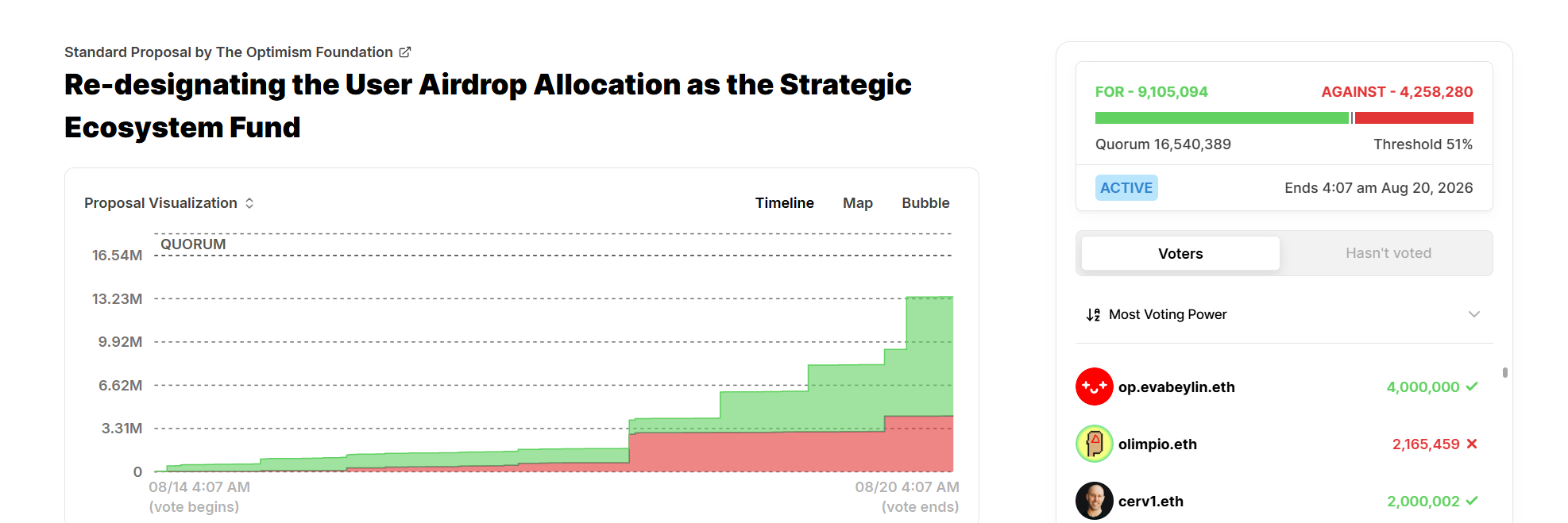
According to the latest on-chain data available, there are approximately 9.105 million OP tokens in support votes and about 4.258 million OP tokens in opposition votes. The quorum requirement is approximately 16.54 million OP tokens, and there remains a significant gap between the current participation level and reaching the required threshold. The final voting outcome has not yet been decided, and community contention continues.

OP Buybacks Halted After May This Year

The initial total supply of OP is approximately 4.295 billion tokens. Of this, 19% (about 816 million tokens) was explicitly reserved for user airdrops. While this arrangement is not a formal legal obligation, Optimism has repeatedly confirmed it in public communications over the years, including as recently as October 2024 when Airdrop 5 was distributed, still mentioning that approximately 550 million tokens could be used for future airdrops.

The actual execution shows: between 2022 and 2024, five rounds of airdrops were completed, distributing a cumulative total of about 269.1 million OP tokens, accounting for approximately 33% of the reserved total. The first round accounted for the highest proportion. Subsequent rounds continuously adjusted criteria, shifting from early usage and gas consumption towards delegated governance, OP Mainnet activity, NFT creators, and Superchain activities, among others.

The fourth year (May 2025 to April 2026) saw no new airdrops, with the official clearly pivoting towards "targeted growth projects with measurable retention and revenue outcomes."
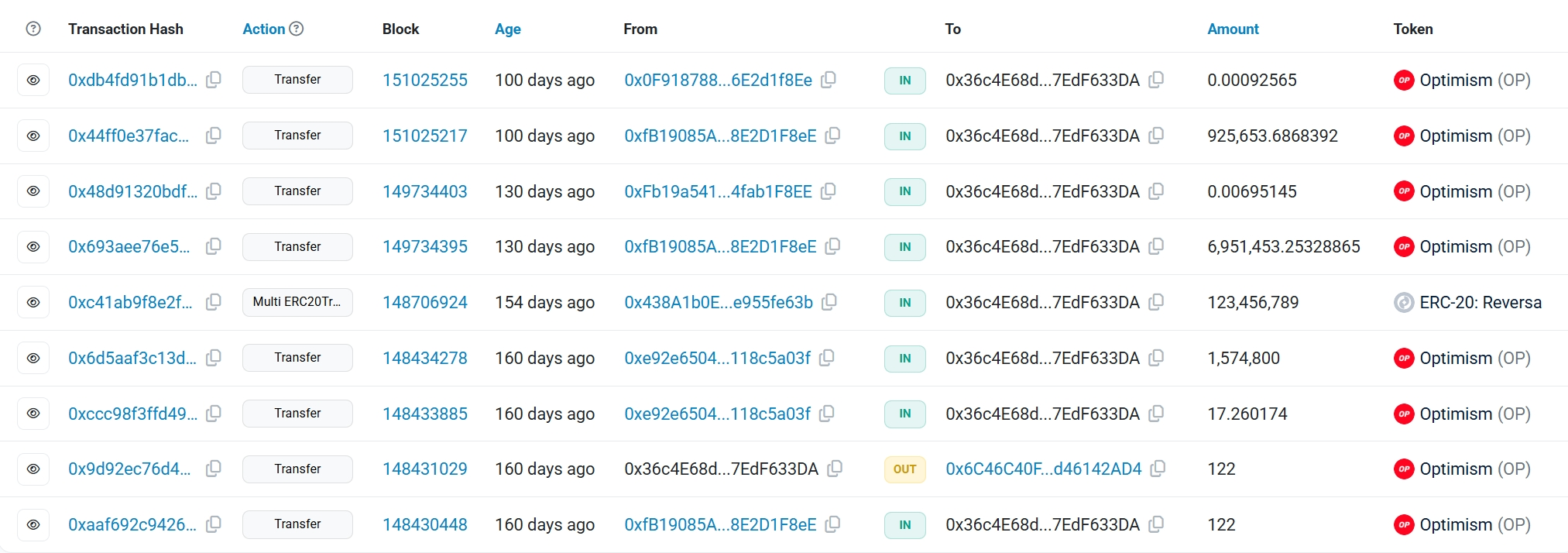
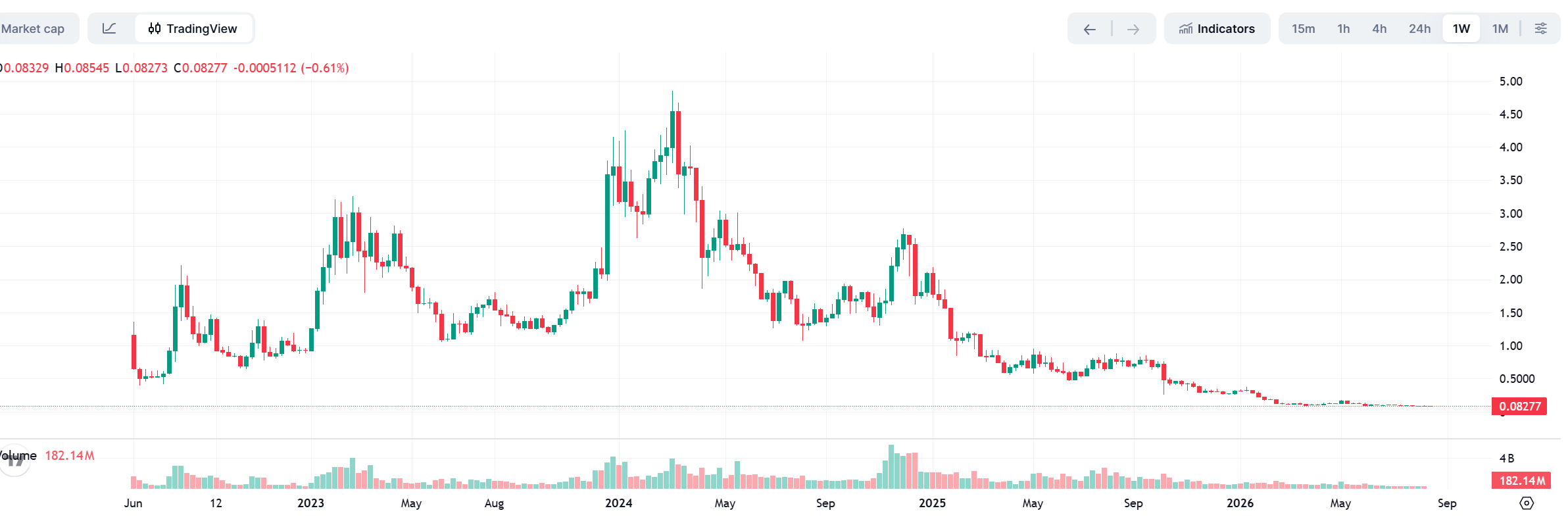
On-chain data also indicates that Optimism has not followed through with its original plan to buy back OP after May. After completing the second and third rounds (March and April) of monthly community buybacks, the official unilaterally halted the subsequent buyback plan. In March, the foundation spent 367.905 ETH to buy back 6,951,453 OP, and in April, 50.16 ETH to buy back 925,654 OP. To date, its cumulative buyback of OP tokens stands at 9,451,924 OP, valued at approximately $756,200 based on the latest price of $0.08.
The foundation stated it will reassess after the 12-month period ends and does not commit to a long-term continuation.

Simultaneously, the overall OP deployment volume for the fourth year decreased by approximately 35% compared to the third year. New circulating supply from the Governance Fund decreased by 53% year-on-year, Retro Funding (a public goods funding mechanism where OP rewards are distributed based on actual contributions) expenditures dropped by 30%, and airdrops were zeroed. The foundation also released a fourth-year budget update and fifth-year outlook, projecting approximately 273 million new OP tokens entering circulation in the fifth year (excluding the potential reallocation from this airdrop quota), with about 200 million OP expected to be deployed from the Ecosystem Fund.

According to DefiLlama data, its Total Value Locked (TVL) has significantly dropped from a peak of $5.5 billion to $526 million.

Strategic Shift Towards Enterprise Growth

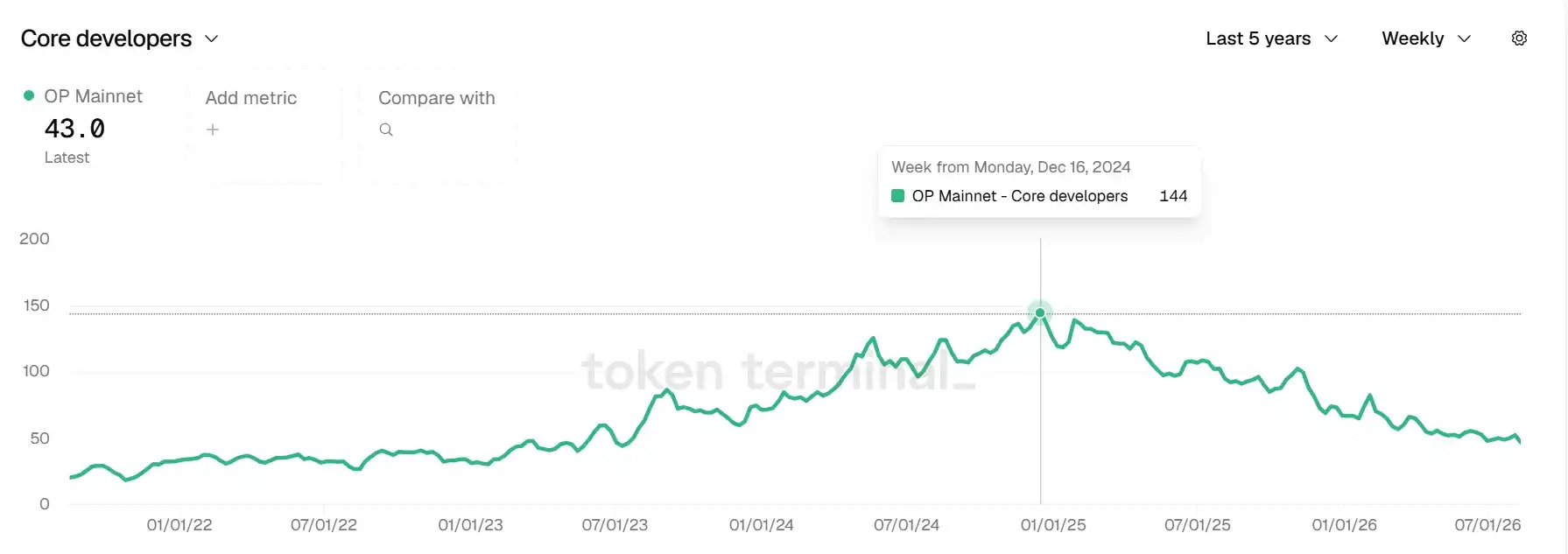
The Layer 2 network crypto market is currently facing issues like user attrition and a lack of innovation. According to the latest data from Token Terminal, its core developers have dwindled to 42, compared to 144 at its peak at the end of 2024.
Currently, Optimism is pivoting towards the enterprise market, including fintech, exchanges, payment institutions, and traditional financial institutions. Current partnerships include Bitpanda, Ink, and Dunamu, among others.

Specifically, the proposal requires:

  • Creating a new allocation category called "Strategic Ecosystem Fund";
  • Reallocating the remaining 546.9 million OP tokens from the user airdrop category into this fund;
  • The fund's use includes facilitating partnership deals to bring chains, protocols, institutions, and infrastructure to the OP Stack, deepening incentives for on-chain activity and liquidity on OP Mainnet, and expanding collaborations with top-tier brands and institutions.

The already distributed Rounds 1 to 5 airdrops will not be affected. If the proposal passes, the foundation will update the token allocation documentation and public accounting records and will continue using the existing grant oversight and annual budget reporting mechanisms. The fifth-year budget outlook itself already assumes zero airdrop deployment and notes that this outlook is independent of this reallocation proposal.

After being initiated by the official, early voting leaned in favor. However, as community discussions intensified, opposition voices quickly rose. Main criticisms focus on three points: the portion originally reserved for users is being reallocated to foundation-controlled enterprise growth funds, effectively allowing the official team to reclaim tokens under the guise of DAO governance; and with airdrops and Retro Funding successively phased out, incentive pathways for ordinary users are further narrowed.

The changing stance of the airdrop whale olimpio.eth, a long-time participant in Optimism governance, has drawn attention. This account previously maintained a high participation rate in over 120 governance votes. Its voting record shows it cast 2,165,459 votes in opposition, which the community views as its first-ever vote against a proposal in Optimism governance history. Some participating players criticized

Community discussions repeatedly feature calls to "preserve the right to future airdrops." Conversely, there are also views that even if the proposal fails, the official currently has no plans for new airdrops, making the practical impact limited.

If the proposal ultimately passes, Optimism's token allocation structure will formally shift further from the dual-track model of "user airdrops + ecosystem incentives" towards a greater tilt towards enterprise and institutional growth. This aligns with its OP Enterprise product line, Superchain expansion, and the overall trend of expenditure discipline. For token holders, this may strengthen the expectation of "growth prioritized over broad distribution" in the short term, potentially putting greater pressure on the token price.

There remains about a two-day window before the voting deadline, leaving room for a change in the final outcome. As of the time of writing, market data shows that the Optimism (OP) token's current market capitalization is approximately $185 million, with the token price fluctuating around $0.08, and a Fully Diluted Valuation (FDV) of $348 million.


Трендові криптовалюти

Пов'язані питання

QWhat is the main purpose of the new proposal submitted by the Optimism Foundation?

AThe proposal aims to reallocate the remaining 546.9 million OP tokens, originally reserved for future user airdrops, into a newly created 'Strategic Ecosystem Fund'.

QWhat are the main criticisms from the community regarding this proposal?

ACommunity criticisms primarily focus on three points: 1) The reallocation of user-reserved tokens to a fund for enterprise-focused growth, seen as the foundation reclaiming tokens under the guise of DAO governance. 2) The narrowing of incentive pathways for ordinary users after airdrops and Retro Funding have been reduced or halted. 3) Concerns that the move prioritizes corporate and institutional growth over broad user distribution.

QWhat significant change in Optimism's strategy does the article highlight?

AThe article highlights a strategic shift for Optimism from broad user incentive programs like airdrops towards focusing on the enterprise market, including financial technology firms, exchanges, payment institutions, and traditional financial institutions.

QAccording to the article, what was the change in Optimism's Total Value Locked (TVL)?

AAccording to DeFiLlama data cited in the article, Optimism's Total Value Locked (TVL) has significantly decreased from its peak of $5.5 billion to $526 million.

QWhat was notable about the voting behavior of the account 'olimpio.eth'?

AThe account 'olimpio.eth', a long-term participant and a whale in Optimism governance, cast over 2.16 million OP votes against the proposal. This was noted by the community as its first opposition vote in its history of participation in Optimism governance.

Пов'язані матеріали

JPMorgan Research Report Analysis: Moderna's INT Trial Meets Endpoints, but Market Already Priced In

On August 19, J.P. Morgan (JPM) published a research report analyzing Moderna's recent Phase III trial success for its Individualized Neoantigen Therapy (INT), developed in partnership with Merck, in adjuvant melanoma. The trial met its primary endpoint of significantly improved recurrence-free survival and the key secondary endpoint of distant metastasis-free survival. While JPM acknowledged the strong clinical value of these results, particularly the prevention of distant metastasis, the bank stated that this success was widely anticipated, with an 85% prior probability of success, and is already reflected in Moderna's current market valuation. Following the announcement, Moderna's stock rose in pre-market trading. However, JPM maintained its Underweight rating and $40 price target, implying approximately 36% downside from the current price of ~$63. The core rationale is that the success in adjuvant melanoma, a relatively small market in immuno-oncology, is fully priced in. Moderna's future valuation hinges entirely on INT's ability to demonstrate similar efficacy across broader cancer indications. JPM's valuation model incorporates only a modest risk-adjusted value (~$3/share) for the melanoma approval. Approximately $15/share of its target price is attributed to INT's potential in other cancer types. The report identifies upcoming data readouts in non-melanoma cancers (e.g., lung, head & neck, renal) as the critical variable that will determine the platform's ultimate value. Upside risks include better-than-expected data in these new indications, while downside risks involve clinical failures, regulatory delays, or commercial underperformance. In conclusion, JPM views the pre-market stock move as driven by short covering and trading sentiment rather than a fundamental re-rating. The bank remains bearish, arguing that Moderna must now prove INT's efficacy as a platform technology beyond melanoma to justify its current market cap.

marsbit32 хв тому

JPMorgan Research Report Analysis: Moderna's INT Trial Meets Endpoints, but Market Already Priced In

marsbit32 хв тому

Treasury Department Directly Intervenes to Suppress Long-Term Interest Rates

The article discusses the U.S. Treasury's recent direct intervention to suppress long-term bond yields through buyback operations. While distinct from traditional Yield Curve Control (YCC), this move is interpreted as direct government intervention in its own financing costs. The author emphasizes the short-term tactical nature of this action and contrasts it with the Federal Reserve's upcoming, potentially divergent, policy stance at Jackson Hole. The core issue is framed as a long-term U.S. strategic dilemma: managing high deficit levels. The analysis argues that deficit reduction cannot realistically come from spending cuts or traditional industries, but must rely on achieving higher economic growth driven by technological breakthroughs. Current monetary tightening, while possibly curbing yields and inflation in the short term, is seen as potentially counterproductive to this necessary long-term investment in technology and supply chain resilience. The piece draws historical parallels, placing the current intervention between the 2000-2002 Treasury buybacks (for liquidity) and larger-scale Fed-led "Operation Twist" maneuvers. The effectiveness of the Treasury's action is deemed limited without Federal Reserve cooperation, which would signify a more significant policy shift. Ultimately, the author views such technical, bureaucratic interventions as treating symptoms rather than the underlying disease of the U.S. economy's structural challenges and "K-shaped" divergence. The conclusion suggests that sustained yield suppression by the Fed, combined with specific geopolitical outcomes, could serve as a catalyst for a more profound discussion on broader U.S. and dollar trajectory.

marsbit32 хв тому

Treasury Department Directly Intervenes to Suppress Long-Term Interest Rates

marsbit32 хв тому

Торгівля

Спот

Популярні статті

Як купити WAR

Ласкаво просимо до HTX.com! Ми зробили покупку WAR (WAR) простою та зручною. Дотримуйтесь нашої покрокової інструкції, щоб розпочати свою криптовалютну подорож.Крок 1: Створіть обліковий запис на HTXВикористовуйте свою електронну пошту або номер телефону, щоб зареєструвати обліковий запис на HTX безплатно. Пройдіть безпроблемну реєстрацію й отримайте доступ до всіх функцій.ЗареєструватисьКрок 2: Перейдіть до розділу Купити крипту і виберіть спосіб оплатиКредитна/дебетова картка: використовуйте вашу картку Visa або Mastercard, щоб миттєво купити WAR (WAR).Баланс: використовуйте кошти з балансу вашого рахунку HTX для безперешкодної торгівлі.Треті особи: ми додали популярні способи оплати, такі як Google Pay та Apple Pay, щоб підвищити зручність.P2P: Торгуйте безпосередньо з іншими користувачами на HTX.Позабіржова торгівля (OTC): ми пропонуємо індивідуальні послуги та конкурентні обмінні курси для трейдерів.Крок 3: Зберігайте свої WAR (WAR)Після придбання WAR (WAR) збережіть його у своєму обліковому записі на HTX. Крім того, ви можете відправити його в інше місце за допомогою блокчейн-переказу або використовувати його для торгівлі іншими криптовалютами.Крок 4: Торгівля WAR (WAR)Легко торгуйте WAR (WAR) на спотовому ринку HTX. Просто увійдіть до свого облікового запису, виберіть торгову пару, укладайте угоди та спостерігайте за ними в режимі реального часу. Ми пропонуємо зручний досвід як для початківців, так і для досвідчених трейдерів.

369 переглядів усьогоОпубліковано 2024.12.11Оновлено 2026.06.02

Як купити WAR

Обговорення

Ласкаво просимо до спільноти HTX. Тут ви можете бути в курсі останніх подій розвитку платформи та отримати доступ до професійної ринкової інформації. Нижче представлені думки користувачів щодо ціни WAR (WAR).

活动图片