La comunidad cripto critica la publicación de la base de datos de propiedades de Nueva York

cryptonews.ruОпубліковано о 2026-07-28Востаннє оновлено о 2026-07-28

Анотація

Las autoridades de Nueva York han publicado una base de datos pública sobre propiedades inmobiliarias de alto valor, lo que ha generado críticas dentro de la comunidad cripto. El registro, vinculado a un nuevo impuesto anual para residencias secundarias valuadas en más de $5 millones, estará disponible para consulta pública hasta diciembre de 2026. Según el gobierno, la medida apunta a dueños de propiedades lujosas que no viven principalmente en la ciudad y podría generar unos $500 millones anuales. Figuras destacadas de la industria criptográfica han expresado su alarma. Hayden Adams, fundador de Uniswap, calificó la publicación como un "doxxing masivo", señalando que incluye direcciones de residencias principales, no solo secundarias. Mert Mumtaz, CEO de Helius, y Nic Carter, socio de Castle Island Ventures, advirtieron que centralizar y organizar estos datos, antes dispersos, crea una lista de objetivos fácilmente identificable para delincuentes, aumentando el riesgo de secuestros, extorsiones y ataques físicos contra personas adineradas, una tendencia ya observada en Europa. La firma de seguridad CertiK reportó un aumento significativo en ataques con coerción física en la primera mitad de 2026, con 52 incidentes que resultaron en una exposición financiera de $124,1 millones. La mayoría de estos casos fueron allanamientos de morada, concentrados principalmente en Francia y Europa. Los críticos argumentan que esta base de datos agrava la creciente erosión de la privacidad...

La base de datos de propiedades publicada por las autoridades de Nueva York ha generado críticas por parte de representantes de la industria cripto. Según ellos, la lista abierta de propietarios de inmuebles costosos puede aumentar los riesgos de presión física y ataques, escribe Decrypt.

Se trata de un registro de tasación adicional, vinculado a la tarifa anual por residencia no principal. Su aparición en abril fue anunciada por la alcaldesa de Nueva York, Zohran Mamdani, y la gobernadora del estado, Kathy Hochul. La tarifa se aplicará a viviendas unifamiliares, dúplex y tríplex, condominios y apartamentos cooperativos con un valor superior a 5 millones de dólares, si el propietario tiene su residencia principal fuera de la ciudad.

Según las autoridades, la medida está dirigida a propietarios de propiedades secundarias costosas y debería generar alrededor de 500 millones de dólares en ingresos anuales. El 24 de julio, el Departamento de Finanzas local abrió el registro para verificación pública hasta el 31 de diciembre de 2026. Al mismo tiempo, la agencia enfatizó que el alcance del registro es más amplio que el grupo final de contribuyentes.

Los críticos señalan el riesgo de agregación de datos

La información sobre propiedades en Nueva York ya era pública antes, pero los críticos creen que el problema radica en la agregación de datos y la búsqueda conveniente. Según ellos, este formato facilita la identificación de propietarios de viviendas costosas.

El fundador de Uniswap, Hayden Adams, calificó la publicación como "doxxing masivo" y afirmó que la base de datos abarcaba un rango demasiado amplio de propiedades.

This is the worst mass doxxing I've ever seen

Just personally searched several high end apartment buildings that include people I personally know's PRIMARY residence (not pied a terre)

Not only were their units listed, but nearly every unit in the entire building was listed... https://t.co/d101R8Qm9V

— Hayden Adams 🦄 (@haydenzadams) July 27, 2026

"Acabo de revisar personalmente varios edificios de apartamentos de lujo donde viven personas que conozco personalmente [...]. Al diablo con todos los involucrados en esto, es increíblemente peligroso", escribió.

El CEO de Helius, Mert Mumtaz, calificó la base de datos como "inquietante" y afirmó que las autoridades convirtieron registros públicos dispersos en un recurso centralizado que destaca a las personas adineradas.

this is unsettling

while this data was largely public prior to this in a messy way

they have cleaned it, organized it, singled out "the rich", and mass distributed it

only the 50th sign this year of privacy continuing to become scarcer https://t.co/o6JvI90egu

— mert (@mert) July 27, 2026

El socio de Castle Island Ventures, Nick Carter, advirtió que dicha lista podría facilitar la selección de objetivos para los delincuentes. Vinculó el riesgo con el aumento de ataques a propietarios de criptoactivos.

So this is a list of wealthy people and their addresses. As we’ve seen in France and Sweden this leads to crypto kidnappings torturings and murders. Yes real estate records are semi public but this is an easily searchable database and target list. That makes a difference — again... https://t.co/NRcm50DUNE

— nic carter (@nic_carter) July 27, 2026

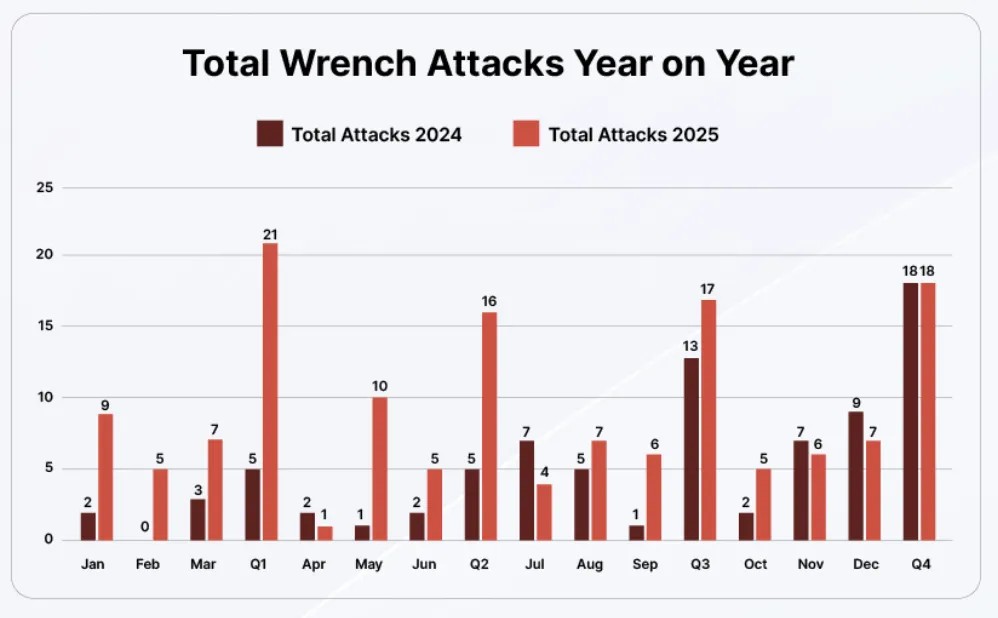
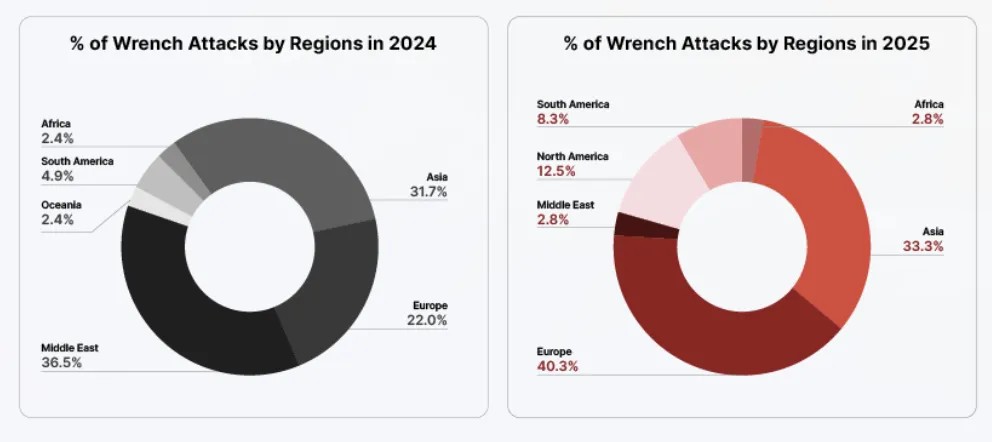
Según CertiK, en el primer semestre se registraron 52 ataques confirmados con coacción física. La exposición financiera asociada alcanzó los 124,1 millones de dólares, aumentando casi 12 veces en comparación con el mismo período de 2025.

El tipo principal de estos delitos fueron las invasiones domiciliarias, enfatizaron los analistas. En Europa se registraron 39 de los 52 casos, y en Francia, 33 incidentes.
Fuente: CertiK.
Fuente: CertiK.

Recordemos que en mayo de 2025, ForkLog informó que las amenazas fuera de línea para los emprendedores cripto se habían convertido en una categoría de riesgo independiente.

Derramen, datos... Cómo proteger la privacidad en la era de las filtraciones totales
end-content

Трендові криптовалюти

Пов'язані питання

Q¿Qué medida tomaron las autoridades de Nueva York que ha generado críticas de la industria cripto?

ALas autoridades de Nueva York publicaron una base de datos abierta (registro) de propiedades inmobiliarias de alto valor, relacionada con un impuesto anual para residencias no principales, que permite identificar públicamente a los propietarios de viviendas de lujo valoradas en más de 5 millones de dólares si su residencia principal está fuera de la ciudad.

QSegún los críticos, ¿cuál es el principal peligro de esta base de datos pública?

AEl principal peligro, según los críticos, es que la base de datos centraliza, organiza y facilita la búsqueda de información sobre personas adineradas y sus direcciones, lo que podría aumentar los riesgos de presión física, ataques, secuestros (criptosecuestros) y allanamientos de morada al facilitar a los delincuentes la identificación de objetivos.

Q¿Cómo calificó Hayden Adams, fundador de Uniswap, la publicación de esta base de datos?

AHayden Adams calificó la publicación como "el peor caso de doxxing masivo que he visto jamás", criticando que la lista incluye no solo propiedades secundarias sino también residencias principales de personas que él conoce personalmente, lo que considera increíblemente peligroso.

QSegún el artículo, ¿qué tendencia de ataques contra propietarios de criptoactivos menciona Nick Carter y qué datos la respaldan?

ANick Carter, de Castle Island Ventures, vincula el riesgo de la base de datos con el aumento de ataques físicos contra propietarios de criptoactivos, como secuestros y asesinatos, citando ejemplos en Francia y Suecia. Esto se respalda con datos de CertiK, que registraron 52 ataques con coerción física en el primer semestre del año, con una exposición financiera de 124,1 millones de dólares, un aumento de casi 12 veces respecto al mismo período de 2025.

Q¿Qué justificación dieron las autoridades de Nueva York para implementar esta medida y cuál es su objetivo financiero?

ALas autoridades justificaron la medida como un impuesto dirigido a los dueños de propiedades secundarias de alto valor, con el objetivo de recaudar aproximadamente 500 millones de dólares anuales. El registro publicado es más amplio que el grupo final de contribuyentes y está abierto a verificación pública hasta el 31 de diciembre de 2026.

Пов'язані матеріали

Breaking: Google Earth Urgently Pulls Back Nano Banana 2 Image Generation Feature!

Google Earth's newly launched "Create image" feature, powered by the Nano Banana 2 AI image generation model, was abruptly withdrawn shortly after its release due to being "played" by users. The feature allowed users to generate and overlay AI-created visuals directly onto real-world satellite and 3D maps in Google Earth. The tool enabled creative applications like historical recreations (e.g., visualizing ancient Pompeii), generating informational graphics for landmarks, and envisioning architectural projects or futuristic cityscapes on real terrain. It operated under "geospatial grounding," meaning the AI respected the underlying geography, topography, and perspective of the chosen map view. The model also integrated with Gemini to retrieve relevant factual information. However, upon release, users quickly tested its limits. A prominent example involved reimagining Philadelphia's historic Independence Hall as a post-apocalyptic ruin overrun by "happy" zombies, evil clowns, and giant alien mechs. This highlighted both the feature's playful potential and its risks regarding the generation of inappropriate or misleading content on realistic maps, leading to its swift temporary removal. Google stated it would re-release the feature after implementing "enhanced guardrails." Analysts note this move strategically leverages Google's vast proprietary geospatial data, positioning its AI not just for artistic generation but for spatially accurate world visualization—a unique advantage in the competitive AI image generation landscape.

marsbit43 хв тому

Breaking: Google Earth Urgently Pulls Back Nano Banana 2 Image Generation Feature!

marsbit43 хв тому

Altman Admits: Overestimated AI Snatching Jobs! Huang Renxun: The Unemployment Narrative Is Completely Backwards

Sam Altman has revised his earlier predictions about AI rapidly replacing jobs, admitting he overestimated the speed at which AI would eliminate entry-level white-collar roles. Speaking on the "Invest Like the Best" podcast, he stated that people do not truly want an AI CEO, as accountability and human connection remain critical. He found that individuals prefer interacting with people who can be held responsible for decisions. Similarly, NVIDIA's Jensen Huang argued that the narrative of AI destroying jobs is misguided. He distinguishes between tasks and jobs, noting that while AI can automate specific tasks, entire jobs—encompassing communication, judgment, coordination, and accountability—are not eliminated. He cited examples like radiologists and software engineers, where demand for these roles has increased as AI handles repetitive tasks, allowing for business expansion and the creation of more positions. Data from a University of Maryland and LinkUp study supports this, showing that U.S. job postings for new graduates have actually risen, countering the fear of vanishing entry-level roles. However, a significant shift is occurring: the traditional entry-level tasks that help newcomers gain experience are being automated, making initial career access more challenging. The key insight is that as AI takes over standardized tasks, the enduring value of human work shifts toward areas of responsibility, trust-building, and final decision-making—aspects that AI cannot replicate. The real "moat" for professionals lies in these irreplaceable human elements.

marsbit48 хв тому

Altman Admits: Overestimated AI Snatching Jobs! Huang Renxun: The Unemployment Narrative Is Completely Backwards

marsbit48 хв тому

Weekly Editor's Picks (0725-0731)

Weekly Editor's Picks (0725-0731) provides a curated selection of deep analysis, filtering out market noise. Key themes from this week include: **Macro & Policy:** The Federal Reserve's upcoming meeting is marked by high uncertainty, balancing cooling inflation data against persistent price pressures. Meanwhile, the U.S. crypto regulatory Clarity Act faces critical political hurdles, with its 2026 passage probability seen as low. **Investing & Crypto:** Analysis suggests long-term crypto success depends on conviction through volatile cycles, focusing on assets like Bitcoin and core smart contract platforms. A trend noted is the increasing similarity between global equity markets (especially tech) and crypto, driven by narrative and leverage. Several major crypto protocols show strong revenue growth, but this isn't always translating to token price appreciation due to sell pressure and structural factors. **AI & Semiconductors:** Nvidia's rising credit default swap rates signal market concern over AI infrastructure financing risks. The storage sector experienced volatility as markets began pricing in potential 2027 oversupply. Despite a record profitable quarter, SK Hynix's results were deemed "below expectations," reflecting heightened investor demands for future growth visibility. **Markets & DeFi:** TradeXYZ demonstrated remarkable accuracy in pre-market pricing for a major A股 listing. The token ONDO saw gains, linked to its growing role in the on-chain tokenized stock ecosystem. **Ethereum:** Post-Pectra upgrade, a major structural shift is underway as Lido begins migrating millions of ETH to new validator architectures designed for capital efficiency. **Also Highlighted:** Butian's bullish stock market move; OpenAI's Altman promising major advances; Samsung and SK Hynix securing large AI chip deals; Apple reaching a $5T market cap; and ongoing discussions around exchange security following Poolin's bankruptcy case.

marsbit1 год тому

Weekly Editor's Picks (0725-0731)

marsbit1 год тому

Low Investment Isn't Apple's Immunity Pass

While Meta and Google face investor scrutiny over ballooning AI capital expenditures, Apple's minimal AI investment has paradoxically become a strength. Its market cap recently reclaimed the global top spot, surpassing $5 trillion. The irony is deep: Apple's own AI efforts have lagged, with "Apple Intelligence" delayed and core talent lost, forcing reliance on partners like Google Gemini and Alibaba's Qianwen. Its Q3 FY2026 (Q2 CY) earnings initially seemed stellar. Revenue hit $109.4B (up 16% YoY), with iPhone and Mac sales, growing 22% and 29% respectively, driving most of the growth. However, the stock fell over 8% post-earnings. The primary concern was a weaker Q4 revenue growth forecast of 9-11%, below expectations, due to looming supply chain constraints. Apple is feeling the indirect cost of the AI boom. Soaring memory and chip prices, fueled by massive data center investments from Microsoft, Amazon, and others, are forcing Apple to raise Mac and iPad prices significantly. The upcoming iPhone launch is also expected to see substantial price hikes. Despite avoiding heavy AI infrastructure spending—its capital expenditures are actually down 28%—Apple cannot escape the industry-wide supply and cost pressures. While Apple's operating cash flow remains robust, its substantial R&D spending (up 32% YoY) has yet to yield major AI breakthroughs. As Tim Cook prepares to step down as CEO, Apple faces a challenging transition: balancing its premium hardware success against the strategic and cost pressures of the AI era it has so far cautiously navigated.

marsbit2 год тому

Low Investment Isn't Apple's Immunity Pass

marsbit2 год тому

Торгівля

Спот

Популярні статті

Як купити F

Ласкаво просимо до HTX.com! Ми зробили покупку Synfutures (F) простою та зручною. Дотримуйтесь нашої покрокової інструкції, щоб розпочати свою криптовалютну подорож.Крок 1: Створіть обліковий запис на HTXВикористовуйте свою електронну пошту або номер телефону, щоб зареєструвати обліковий запис на HTX безплатно. Пройдіть безпроблемну реєстрацію й отримайте доступ до всіх функцій.ЗареєструватисьКрок 2: Перейдіть до розділу Купити крипту і виберіть спосіб оплатиКредитна/дебетова картка: використовуйте вашу картку Visa або Mastercard, щоб миттєво купити Synfutures (F).Баланс: використовуйте кошти з балансу вашого рахунку HTX для безперешкодної торгівлі.Треті особи: ми додали популярні способи оплати, такі як Google Pay та Apple Pay, щоб підвищити зручність.P2P: Торгуйте безпосередньо з іншими користувачами на HTX.Позабіржова торгівля (OTC): ми пропонуємо індивідуальні послуги та конкурентні обмінні курси для трейдерів.Крок 3: Зберігайте свої Synfutures (F)Після придбання Synfutures (F) збережіть його у своєму обліковому записі на HTX. Крім того, ви можете відправити його в інше місце за допомогою блокчейн-переказу або використовувати його для торгівлі іншими криптовалютами.Крок 4: Торгівля Synfutures (F)Легко торгуйте Synfutures (F) на спотовому ринку HTX. Просто увійдіть до свого облікового запису, виберіть торгову пару, укладайте угоди та спостерігайте за ними в режимі реального часу. Ми пропонуємо зручний досвід як для початківців, так і для досвідчених трейдерів.

253 переглядів усьогоОпубліковано 2024.12.21Оновлено 2026.06.02

Як купити F

Обговорення

Ласкаво просимо до спільноти HTX. Тут ви можете бути в курсі останніх подій розвитку платформи та отримати доступ до професійної ринкової інформації. Нижче представлені думки користувачів щодо ціни F (F).

活动图片