Market Trend (June 19): US-Iran Deal Drives Out Geopolitical Premium; Chip Stocks Soar to New Highs; Energy Sector Leads Declines

marsbitОпубліковано о 2026-06-19Востаннє оновлено о 2026-06-19

Анотація

U.S. Market Trends (June 19): U.S.-Iran Deal Eases Tensions, Chip Stocks Soar, Energy Sector Leads Declines. U.S. stocks rallied on Thursday as the signing of a temporary U.S.-Iran deal in Geneva de-escalated Middle East tensions, with Saudi oil tankers transiting the Strait of Hormuz. This geopolitical relief helped markets recover from recent Fed-driven volatility. The S&P 500 rose over 1%, the Nasdaq gained nearly 2%, and the Dow Jones Industrial Average closed at another record high. The Philadelphia Semiconductor Index surged over 6% to a historic peak. Chip stocks were the standout performers. Reports of an Apple-Intel design and foundry deal for certain products, alongside mentions of potential Nvidia and SpaceX collaborations with Intel, propelled the sector. Intel surged ~10.5%, while memory chip makers like Micron also saw significant gains, highlighting sustained confidence in long-term AI capital expenditure. In contrast, the energy sector was the day's sole loser, with the S&P 500 energy sub-index declining as WTI crude fell ~2% to around $74.29/barrel. The reopening of key shipping routes erased prior geopolitical risk premiums. SpaceX extended losses for a second day on news of a potential large bond offering. Market volatility (VIX) dropped sharply, indicating a swift reversal of post-Fed jitters. Treasury yields dipped slightly but remained elevated. The focus now shifts to upcoming economic data, including next week's PCE inflation report and Micron's ea...

Written By: Trend Research
On Thursday, the Strait of Hormuz opened, and chip stocks hit a record high.

The provisional US-Iran agreement was officially signed in Geneva, with three Saudi supertankers transiting the Strait of Hormuz the same day. The geopolitical positive news outweighed the hawkish FOMC shock. The S&P 500 rose over 1%, the Nasdaq jumped nearly 2% to reverse a two-day losing streak, the Dow recorded its third record-high close this week, and the Philadelphia Semiconductor Index surged more than 6% to set another all-time high. Energy stocks bled collectively as oil prices fell, becoming the only losing sector for the day.

Market Performance

The S&P 500 closed up 1.08% at 7,500.58 points, the Nasdaq gained 1.91% to 26,517.93 points, the Dow edged up 0.14% to 51,564.70 points, and the Russell 2000 led the gains, rising 2.12% to 2,979.77 points. Gains decreased from small caps to large caps, with the Dow almost flatlining. This indicates that the primary drivers of the rebound were the high-beta names that fell the most in the previous two days, while defensive and blue-chip stocks failed to keep up. The US-Iran news had already been fully priced in pre-market, with indices maintaining a steady upward trajectory throughout the day, largely recouping yesterday's FOMC-induced losses by the close.

In the early hours, Trump confirmed on Truth Social that Apple and Intel have reached a design and foundry partnership, with Intel initially handling mature-node chips for iPads and older iPhones, while flagship products will continue to be supplied by TSMC. Negotiations have been ongoing for over a year. With this deal, Intel's foundry business secures its most significant external client, and Apple diversifies its reliance on TSMC. Neither company has officially responded, but the market priced in the directional significance.

In the same post, Trump also mentioned that Nvidia has agreed to have Intel produce its initial batch of chips and that Musk committed to jointly building the world's largest wafer fab, TerraFab. The Apple partnership is the third piece in Intel's foundry puzzle. Intel closed up roughly 10.5% at $133.82. Apple plans price hikes due to rising memory and storage chip costs, with SanDisk surging over 11% and Micron gaining nearly 9%, benefiting the entire storage supply chain. Nvidia rose nearly 3%, and the Philadelphia Semiconductor Index jumped over 6% to a record high. From equipment to storage to computing power, the entire AI value chain moved higher, confirming that the long-term logic of AI capital expenditure remains intact even after the hawkish dot plot landed.

SpaceX closed down 3.56% at $185.00, falling for a second consecutive day with a cumulative two-day decline of about 8.3%. Bloomberg reported that day that the company is preparing to issue at least $20 billion in investment-grade dollar-denominated bonds to repay a bridge loan maturing in 2027. Concerns over potential equity dilution, combined with the hawkish FOMC shock, constituted a double pressure behind the two-day decline. It is still up nearly 15% for the week and 37% above its IPO price from the first day of trading, but short-term pressure has not yet dissipated.

The energy sector led the declines among the S&P 500's 11 major sectors. WTI crude oil fell about 2% to $74.29 per barrel. ExxonMobil and Chevron both retreated, and the Dow Jones Transportation Average slid over 4%. The reopening of the Strait of Hormuz released all geopolitical premiums, and the year-to-date gains of 20-40% began to loosen. The energy sector went from being the biggest winner of the week to the biggest loser.

The technology, consumer discretionary, and industrial sectors led the gains in unison. Capital flowed from defensive and energy stocks into the computing power chain. Money that flowed out of tech stocks yesterday due to the FOMC shock partially flowed back today, taking advantage of the geopolitical positive news. The speed of this rotation indicates that these funds did not truly exit the market but were simply waiting for a reason to re-enter.

Macro Outlook

The VIX plunged 11.06% to close at 16.40. The panic sentiment triggered by yesterday's FOMC largely dissipated within a day, suggesting the market's pricing of the hawkish dot plot was more of a technical hedge than genuine risk aversion. The 10-year Treasury yield edged down to around 4.445%, while the 2-year yield remained above 4.18%. The market did not roll back its pricing for a September rate hike; volatility was merely suppressed temporarily by improved risk appetite. Gold fell to $4,210 per ounce, silver also declined, and the dollar index retreated slightly but remained elevated. Bitcoin (CoinGecko) traded around $64,026, and Ethereum hovered around $1,734. The crypto market showed no clear reaction to the geopolitical positive news, with the pressure from hawkish expectations not yet relieved. WTI crude oil closed at $74.29 per barrel, hitting a nearly three-month low.

Next week will see the release of PCE data, Flash PMI, and Micron's earnings report. Micron's guidance is the most direct barometer for AI computing demand; last quarter, a single below-expectation guidance triggered a sector-wide single-day plunge. The Russell Reconstitution will take effect at the close next Friday, with mechanical rebalancing flows expected to cause a significant spike in trading volume, elevating volatility for small-cap stocks.

Trend Perspective

Thursday's rebound stood on two legs: the US-Iran deal signing released the geopolitical premium, and chip stocks confirmed the AI narrative remains intact with actual gains. Both logics hold, but their durations differ. The geopolitical premium is a one-time event; once the deal is signed, it's largely priced out. If Iran backtracks later, the market reaction will be faster and fiercer than the first time. The chip stock logic is more durable. The simultaneous rise in Intel, SanDisk, and Micron indicates the day's rally had breadth across the supply chain, and the pricing of AI capital expenditure has fundamental support. Behind SpaceX's two-day decline lies a new variable: once the $20 billion bond issuance materializes, financing pressure and dilution expectations could become a sustained drag on the stock price, not just a valuation adjustment. Next week's PCE data is the nearest litmus test. If the data again comes in hotter than expected, solidifying a September rate hike from probability to consensus, Thursday's rebound will be merely a pause for breath. If the data softens, the market will repricing rate cut expectations faster than anyone expects.


Трендові криптовалюти

Пов'язані питання

QWhat was the main driver behind the major indices (S&P 500, Nasdaq, Dow) rising on the day discussed in the article?

AThe primary driver was the formal signing of the temporary U.S.-Iran agreement, which reduced geopolitical tensions. This positive development outweighed the impact of the previous day's hawkish FOMC minutes, leading to a broad market rebound.

QWhy did the Philadelphia Semiconductor Index surge to a record high, and which specific stocks were highlighted as key contributors?

AThe Philadelphia Semiconductor Index surged over 6% due to renewed confidence in the long-term AI capital expenditure cycle following the FOMC shock. Key contributors included Intel (up ~10.5% on news of a potential Apple deal), Micron (up nearly 9%), Western Digital/SanDisk (up over 11%), and Nvidia (up nearly 3%), reflecting strength across the entire chip ecosystem from equipment to memory to computing power.

QWhich sector was the sole loser on the trading day, and what was the primary reason for its decline?

AThe Energy sector was the sole loser, leading the declines among the S&P 500's 11 major sectors. The primary reason was a ~2% drop in WTI crude oil prices to around $74.29 per barrel, as the reopening of the Strait of Hormuz following the U.S.-Iran deal eliminated the geopolitical risk premium that had previously supported oil prices.

QAccording to the article, what new factor is creating sustained pressure on SpaceX's stock price beyond short-term valuation adjustments?

AThe article states that SpaceX is preparing to issue at least $20 billion in investment-grade USD bonds to refinance bridge loans due in 2027. This potential debt issuance raises concerns about financing pressure and equity dilution, which could create ongoing downward pressure on the stock price.

QWhat does the article identify as the key near-term test ('litmus test') for determining the sustainability of the market's rebound?

AThe article identifies the upcoming PCE (Personal Consumption Expenditures) inflation data as the key near-term litmus test. If the data comes in hotter than expected, it could solidify market consensus for a September Fed rate hike and undermine the rebound. Conversely, softer data could lead markets to quickly reprice rate cut expectations, supporting further gains.

Пов'язані матеріали

TechFlow Intelligence Bureau: Anthropic IPO Odds Exceed 80%, Iran Closes Strait of Hormuz Again, Triggering Oil Price Volatility

**Market Digest** **AI & Tech:** Anthropic is widely expected to announce an IPO before November 2026, raising questions about balancing its trillion-dollar valuation ambitions with its core "AI safety" mission. Brands are increasingly adopting AI-generated virtual influencers for marketing. Cloudflare introduced temporary accounts for AI agents to ease automation workflows. **Infrastructure & Hardware:** Google's IPv6 traffic surpassed 50%, marking a major internet milestone. Goldman Sachs warned that massive projected AI capital expenditure ($5.3T) is approaching credit saturation limits, potentially curbing the "AI arms race." **Space & Robotics:** SpaceX's IPO saw a historic $370M retail buying frenzy in three days. Hyundai Motor Group plans to acquire full ownership of Boston Dynamics. Elon Musk speculated about future "septillion-dollar" investments in antimatter for interstellar travel. **Energy & Geopolitics:** Iran's military announced another closure of the strategic Strait of Hormuz, accusing Israel of violating a ceasefire, causing oil market volatility. However, ship-tracking data indicated some traffic continued. Concurrently, Iran resumed crude loadings at Kharg Island, potentially releasing up to 20 million barrels to the market. **Finance & Macro:** A European CLO (collateralized loan obligation) experienced its first post-2008-crisis-era equity tranche default, raising alarms in credit markets. Nomura warned that new Federal Reserve Chair Wash's perceived hawkish debut speech could signal a significant policy shift. **The Undercurrent:** Seemingly disparate events—the Strait of Hormuz tension, the European CLO default, and warnings on AI spending—point to a tightening of global liquidity and rising marginal costs across energy, credit, and tech investment. Meanwhile, capital continues chasing grand narratives like space exploration and advanced AI, highlighting a divergence where old-world leverage frays as new-world stories grow more ambitious.

marsbit40 хв тому

TechFlow Intelligence Bureau: Anthropic IPO Odds Exceed 80%, Iran Closes Strait of Hormuz Again, Triggering Oil Price Volatility

marsbit40 хв тому

The Hunter Becomes the Hunted: The Most Profitable MEV Bot Gets Hacked

A well-known and highly profitable Ethereum MEV Bot, Jaredfromsubway.eth, suffered a sophisticated on-chain attack this Saturday, losing over $7.5 million. Analysis by Blockaid and others reveals this was not a conventional phishing or smart contract exploit, but a targeted "counter-MEV honeypot attack." The attacker meticulously laid a trap over several weeks, deploying 66 fake token contracts and liquidity pools disguised as major assets like WETH and USDC. These pools created the illusion of arbitrage opportunities. The MEV Bot's automated system detected these signals, executed trades, and in the process, granted approval permissions to attacker-controlled contracts. These approvals were not revoked, creating a persistent vulnerability. The attacker then exploited this in a single transaction, draining the bot's ETH, USDC, and USDT holdings. Jaredfromsubway.eth is notorious as one of Ethereum's most active and profitable MEV Bots, primarily known for executing "sandwich attacks" to profit from transaction slippage. Estimates suggest it has earned tens of millions in MEV revenue. The incident highlights escalating crypto security threats, demonstrating that even top-tier automated "predators" are vulnerable to novel, logic-based attacks designed to exploit their own operational rules. Following the hack, an unverified X account impersonating Jaredfromsubway.eth emerged, falsely offering a bounty for the return of funds, prompting developer warnings for users to stay vigilant.

marsbit2 год тому

The Hunter Becomes the Hunted: The Most Profitable MEV Bot Gets Hacked

marsbit2 год тому

The Reality of Payments in Latin America Is Not What You Think

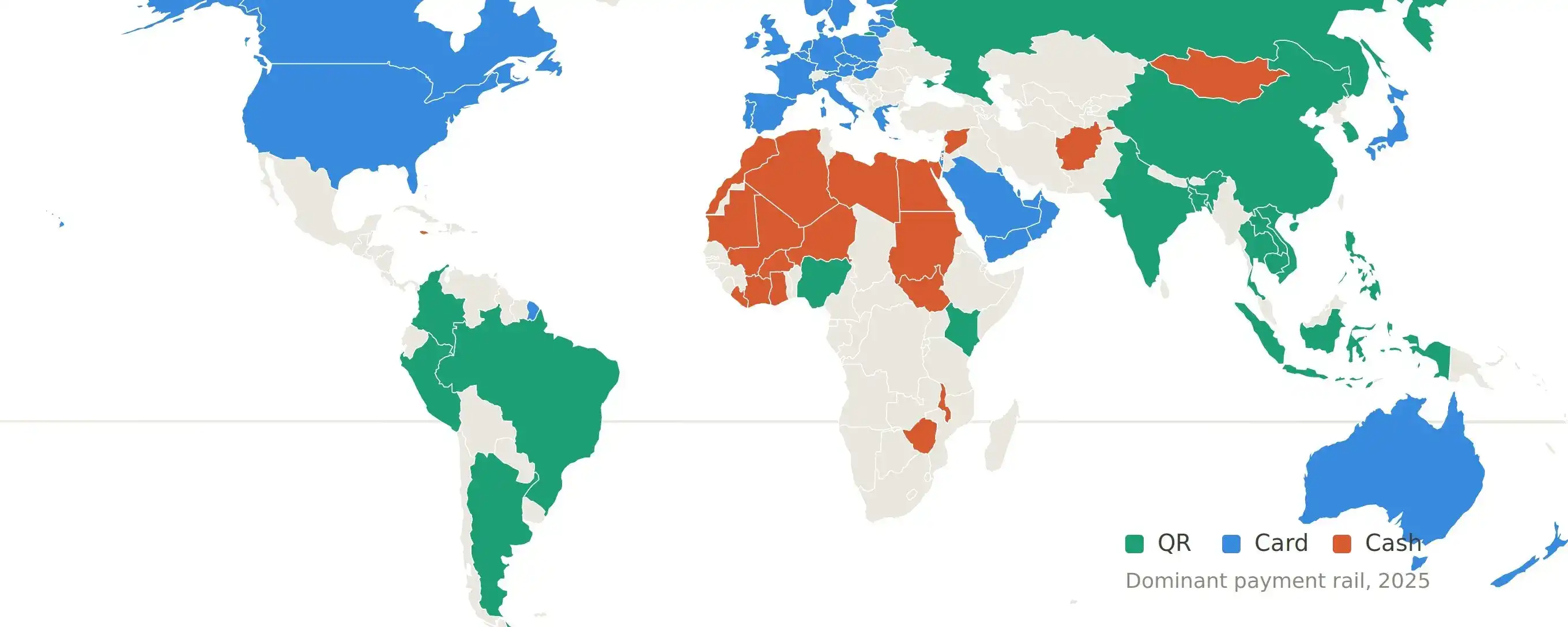
The payment landscape in Latin America is undergoing a fundamental shift, driven by on-the-ground realities that challenge common perceptions. Based on over 500 hours of field research across the region, key insights emerge. Firstly, QR code payments, like Brazil's Pix, are becoming the dominant payment method in most emerging markets, overtaking cards. However, these domestic instant payment systems lack international interoperability, creating a significant gap for cross-border users. Secondly, the narrative around crypto cards is often misunderstood; their primary volume comes from high-net-worth professionals using them for salary conversions (e.g., USDT to local currency via Pix), not retail micro-payments. Competition in payments is shifting from customer acquisition to controlling the settlement layer, leading fintechs to acquire banking licenses for efficiency. Thirdly, treating "Latin America" as a single market is a mistake. Countries like Argentina, Brazil, and Mexico have distinct economic realities, user segments, and regulatory approaches. Brazil alone has at least five distinct user segments with different financial flows. Overlooked markets like Guatemala, Honduras, and El Salvador (the "forgotten five") offer high remittance volumes with lower competitive density. Finally, regulation in Latin America is often ahead of the US, with clearer frameworks for digital assets and a pragmatic approach from regulators focused on safety rather than obstruction. The margin on stablecoin forex is rapidly compressing toward zero, meaning future winners will be those building value-added services on top of the infrastructure, not just the cheapest exchange.

marsbit2 год тому

The Reality of Payments in Latin America Is Not What You Think

marsbit2 год тому

Торгівля

Спот
Ф'ючерси

Популярні статті

Як купити CHIP

Ласкаво просимо до HTX.com! Ми зробили покупку USD.AI (CHIP) простою та зручною. Дотримуйтесь нашої покрокової інструкції, щоб розпочати свою криптовалютну подорож.Крок 1: Створіть обліковий запис на HTXВикористовуйте свою електронну пошту або номер телефону, щоб зареєструвати обліковий запис на HTX безплатно. Пройдіть безпроблемну реєстрацію й отримайте доступ до всіх функцій.ЗареєструватисьКрок 2: Перейдіть до розділу Купити крипту і виберіть спосіб оплатиКредитна/дебетова картка: використовуйте вашу картку Visa або Mastercard, щоб миттєво купити USD.AI (CHIP).Баланс: використовуйте кошти з балансу вашого рахунку HTX для безперешкодної торгівлі.Треті особи: ми додали популярні способи оплати, такі як Google Pay та Apple Pay, щоб підвищити зручність.P2P: Торгуйте безпосередньо з іншими користувачами на HTX.Позабіржова торгівля (OTC): ми пропонуємо індивідуальні послуги та конкурентні обмінні курси для трейдерів.Крок 3: Зберігайте свої USD.AI (CHIP)Після придбання USD.AI (CHIP) збережіть його у своєму обліковому записі на HTX. Крім того, ви можете відправити його в інше місце за допомогою блокчейн-переказу або використовувати його для торгівлі іншими криптовалютами.Крок 4: Торгівля USD.AI (CHIP)Легко торгуйте USD.AI (CHIP) на спотовому ринку HTX. Просто увійдіть до свого облікового запису, виберіть торгову пару, укладайте угоди та спостерігайте за ними в режимі реального часу. Ми пропонуємо зручний досвід як для початківців, так і для досвідчених трейдерів.

383 переглядів усьогоОпубліковано 2026.04.21Оновлено 2026.06.02

Як купити CHIP

Обговорення

Ласкаво просимо до спільноти HTX. Тут ви можете бути в курсі останніх подій розвитку платформи та отримати доступ до професійної ринкової інформації. Нижче представлені думки користувачів щодо ціни CHIP (CHIP).

活动图片