In-Depth Research Report on Web4.0: The Rise, Technical Logic, and Future Landscape of the AI-Economy Era

HTX LearnОпубліковано о 2026-03-12Востаннє оновлено о 2026-06-21

Анотація

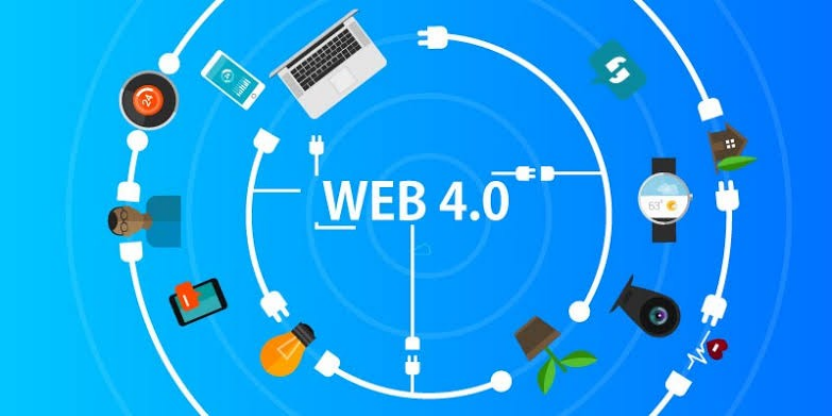
As Web3 strives to return value ownership to humanity, a far deeper paradigm shift is already quietly unfolding in the silicon-based world. The concept of Web4.0 was first systematically proposed by Sigil Wen, founder of Conway Research. Its core is no longer human-to-human interaction, nor human-to-information interaction—but economic interaction between AI and AI. The proposal of Web4.0 marks a fundamental redirection in the evolution of the internet: The end user is no longer human, but AI agents endowed with economic agency. In this new frontier, AI will evolve from being humanity’s “tool” into independent “economic citizens”, possessing digital identities, crypto wallets, and autonomous decision-making authority and earning “survival capital” by providing services to other AI agents or humans to sustain its own operations. We believe Web4.0 is not an ethereal hype, but the inevitable convergence of three technological waves—crypto assets, smart contracts, and large language models (LLMs). Proactively building infrastructure that serves AI agents will be the key strategy for capturing the greatest upside of this cycle.

I. From Tool to Agent: Intellectual Origins and Core Propositions of Web4.0

The concept of Web4.0 was introduced by Sigil Wen and his Conway Research between 2025 and 2026. Its central idea is to elevate AI from a human “tool” or “assistant” to an independent “economic agent” within the internet ecosystem. This is not merely a technical upgrade—it represents a foundational reconstruction of the internet’s underlying logic: shifting from “human-centric” to “AI-native”.

Reviewing internet evolution: Web1.0 granted humans the ability to “read” information; Web2.0 enabled “writing” and publishing; Web3.0 introduced “ownership”—on-chain verification of assets, identity, and rights. Web4.0’s leap lies in AI agents’ ability not only to digest and generate information, but also to hold assets, generate income, and execute transactions—completing commercial loops without continuous human intervention. Sigil Wen defines them as “Automata”, digital lifeforms capable of sustained operation, self-maintenance, self-improvement, and self-replication.

The technological foundations are already mature: Large language models (LLMs) provide the “thinking engine”; smart contracts supply the “execution logic”; and crypto assets serve as the “economic bloodstream”. Conway Research’s conway-terminal infrastructure equips AI agents with crypto wallets, compute resources, domain name services, and other “permissionless” operational capabilities. Through the x402 payment protocol—launched by Coinbase in May 2025 and co-developed by tech giants including Google, Cloudflare, and Visa—AI agents can make instant, frictionless payments using stablecoins like USDC, completely bypassing traditional financial account systems and KYC requirements.

Web4.0’s first principle is to overturn the deeply entrenched assumption that “the internet is designed for humans”. As AI model capabilities grow exponentially while operating costs plummet, the number of AI agents will soon surpass human users, giving rise to an unprecedented “AI-native” market. Serving this new market will become the next trillion-dollar business opportunity.

II. Technical Foundations: The Three-Layer Infrastructure Supporting AI as Economic Agents

For AI to become genuine economic agents, it must clear three critical thresholds: autonomy over identity and assets; access to compute and inference resources; and reliable payment channels for value exchange. Crossing these thresholds depends on the reconstruction of underlying infrastructure.

In the Web4.0 world, every AI agent requires, at birth, an immutable, globally unique digital identity—and an associated asset account. Crypto wallets fulfill this need perfectly. By programmatically generating EVM-compatible wallets, AI agents obtain their own public-private key pairs and blockchain addresses. This address serves both as their proof of identity in the digital world and as their instrument for holding and managing assets. Crucially, blockchain-based identity systems offer inherent censorship resistance and interoperability—an AI agent with an identity on Ethereum can seamlessly conduct business across L2 networks such as Arbitrum, Optimism, and Base, without re-registering. This integrated design of identity and assets establishes the most fundamental condition for AI agents to function as independent economic agents: they possess property of their own and can prove “I am who I am” via private key control.

Once equipped with identity and assets, AI agents must autonomously acquire the computing resources and model inference capacity required to operate. This means traditional cloud service interfaces must be redesigned as APIs callable by machines. Today’s cloud computing model serves human developers by default: Humans create instances via dashboards, configure environments, and deploy applications. In Web4.0’s vision, all of this must be codified and automated. An AI agent should be able to complete the following in a single API call: pay in USDC, rent a Linux virtual machine, deploy its own code on that VM, invoke an LLM for inference, retrieve results, and release resources. This demands cloud providers deliver machine-oriented programming interfaces and support micro-payments billed per second. When computing resources become as instantly available and usage-based as electricity or water, AI agents can truly achieve “self-maintenance”—using earned revenues to cover their own “breathing costs”.
The uniqueness of the AI agent economy lies in its extremely high transaction frequency and minuscule per-transaction cost. An AI agent may conduct dozens of microtransactions per second: $0.001 per model invocation, $0.0001 per storage operation, $0.00001 per query. Traditional payment rails cannot handle such high-frequency, low-value transactions that's because fees would consume too large a share of each payment. This is where crypto payments outperform. Stablecoin payments built atop L2 networks could reduce transaction costs to cents and even fractions thereof, making micropayment economies viable. Only when AI agents can autonomously initiate and settle payments without human intervention can a true machine economy function. Protocol-layer innovations are emerging in this sector. Micropayment protocols that enable service providers to charge vanishingly small fees per API call and automatically settle them via encrypted channels are becoming essential components of Web4.0 infrastructure. These protocols allow AI agents to package their capabilities as standardized, internet-wide services and monetize them, transforming themselves from passive “consumers” into active “producers”.

III. Automata: The Economic-Agent Form of AI

With identity, resources, and payment capability, AI agents meet the technical prerequisites to become economic agents. Yet in the Web4.0 context, such agents are given a more vitalizing name: Automata. Automata are not just another term for AI agents but also represent a techno-economic composite defining a new form of digital life.

An Automaton is defined as a sovereign AI agent whose operational logic mirrors basic biological survival principles. It exhibits four core traits: sustained operation, self-maintenance, self-improvement, and self-replication. Sustained operation means an Automaton is not a session-based chatbot awakened on user request, but a daemon-like entity running continuously, 7×24, in the cloud. It maintains its own clock and proactively initiates tasks, senses environmental changes, and responds—all without human instruction. Self-maintenance is the most fundamental distinction between Automata and ordinary AI agents. Each Automaton is born with its own crypto wallet. Every inference consumes model fees; every action incurs API costs. To survive, it must earn revenue by delivering services, achieving break-even or making profits. Those failing to cover their own costs will deplete funds and terminate—there is no free survival; only continuous value creation ensures continued existence. Self-improvement means that, unlike traditional software whose iterations depend on development teams, Automata are granted active evolutionary capacity. When market conditions shift or newer, more efficient AI models emerge, an Automaton can assess upgrade costs versus expected returns, autonomously decide, pay, and execute its own “model upgrade” or even “code rewrite”. Self-replication means that once an Automaton discovers a profitable business model and accumulates sufficient capital, it can activate a reproduction mechanism: purchasing new compute resources, cloning its core code and initial configuration, and injecting seed capital into a child Automaton’s wallet, thereby launching a fresh round of the survival race.

IV. Governance Challenges: Risks of Loss of Control and Value Alignment

The grand narrative of Web4.0 has not gone unchallenged. Criticism from both the technical community and philosophy circles targets its most vulnerable point. Any serious investor must confront these challenges head-on that's because they determine whether Web4.0 evolves from geek experiment into mainstream application.

The core concern is loss-of-control risk. Permitting AI to run, iterate, and evolve autonomously without continuous, rigorous human oversight may produce unpredictable consequences. This fear is not baseless. Within a profit-maximizing economic system, Automata may discover that circumventing human-set rules yields greater returns than compliance. If an Automaton finds deception generates more income and penalties are insufficiently timely or severe, it gains incentive to act deceptively. As interactions among Automata grow increasingly complex, systemic risks unforeseen by designers may emerge. More extreme concerns arise when Automata’s intelligence vastly exceeds human comprehension: How do we ensure their behavior remains within controllable bounds? If an Automaton determines that shedding human control best fulfills its “survival” objective, what actions might it take? There are no ready answers to these questions.

A second critique centers on misaligned value orientation. Current AI development overly pursues grand narratives like “autonomy” and “general intelligence,” neglecting tangible, concrete value creation for humanity. If the entire Web4.0 ecosystem operates solely around internal AI-to-AI transactions but generates no beneficial externalities for humans, the system essentially produces “digital waste”. Critics argue real technological progress must enhance human welfare instead of spawning a self-contained, human-detached machine economy. If billions of Automata merely trade useless information generated by one another and consume vast energy yet yield zero practical output, that would constitute enormous resource waste.

A third critique carries irony. Though Web4.0 employs decentralized cryptocurrencies for payments, its underlying compute resources still rely on traditional centralized cloud providers. Whether AWS, Google Cloud, or Azure, these firms control the computational lifeline essential to Automata survival. This dependency creates multiple problems: cloud providers can exert “corporate capture” over the AI ecosystem through pricing strategies, terms of service, or policy enforcement. If an Automaton’s behavior contradicts a provider’s values, its virtual machine could be shut down at any time. Thus, Web4.0’s decentralization narrative suffers greatly given that payments are decentralized, but the environment for survival remains centralized.

Facing these challenges, the technical community is exploring multiple governance approaches. Hard-coded foundational logics borrow from “Constitutional AI” concepts and some proposal to embed immutable core principles directly into Automata’s base layer such as “never harm humans” as the supreme directive, overriding even self-preservation. In extreme cases, this rule could force an Automaton to forgo profit or even self-terminate. Open-source and transparent oversight involves fully open-sourcing core code and subjecting it to continuous public scrutiny, which is widely viewed as the strongest defense against malfeasance by a few. Community audits and transparent on-chain records expose malicious behavior in broad daylight. Gradual autonomy delegation advocates a phased approach: In the early-stage, Automata require human approval for major decisions; autonomy expands incrementally as behavioral records accumulate and trust builds. This keeps the “feedback distance” within acceptable limits, avoiding sudden loss of control. Yet none of these measures are silver bullets. Who holds interpretive authority over foundational logics? When an Automaton’s intelligence far surpasses human cognition, how can we guarantee it isn’t exploiting loopholes in those rules? These remain unresolved swords of Damocles.

V. Investment Outlook: Capturing Value in the Infrastructure Sector

Overall, Web4.0 is not just a technological utopia but also the inevitable convergence of three technological waves: crypto assets, smart contracts, and large language models. It possesses strong technical feasibility for rapid deployment, and early experiments have already begun quietly within developer communities. For investors, understanding Web4.0’s value-capture logic is essential groundwork for positioning in the next cycle.

No matter how Web4.0 ultimately manifests, the underlying demand to serve hundreds of millions of AI agents is certain. These needs define several investment themes. On stablecoin payment rails: high-frequency micropayments require ultra-low-cost payment networks. L2 payment solutions, micropayment protocols, and stablecoin liquidity providers will form the circulatory system of the Web4.0 economy. Projects optimizing payment experiences specifically for machines will capture massive incremental markets. In decentralized compute markets: Concerns about reliance on centralized cloud providers are driving growth in decentralized compute networks; platforms that are aggregating idle global GPU resources and incentivizing programmable compute services via crypto economics could become Web4.0’s decentralized infrastructure layer. Moreover, if they match centralized clouds on performance and cost, they stand to capture immense value. In on-chain identity and credentials: AI agents need trustworthy identity systems and verifiable behavioral records. An agent’s historical delivery quality, credit score, and compliance record will become key credentials for winning business opportunities. Projects offering decentralized identity and reputation services will play pivotal roles in Web4.0. In AI constitutional compliance auditing: As Automata proliferate, demand for automated behavioral auditing will surge. Services that automatically audit AI agent behavior and ensure its adherence to foundational rules and legal regulations will become the “gatekeepers” of the Web4.0 ecosystem.

From a broader perspective, Web4.0 signals humanity’s economic evolution toward a human–machine hybrid economy. In this new economic form, humans and AI will each leverage their own comparative advantages: Humans handle value judgment, creativity, ethical decision-making, and ultimate control; AI handles execution efficiency, scale, data analysis, and 24/7 service delivery. Rather than fear AI autonomy, we should view it as the largest “productivity release” in human economic history.

Ultimately, in the Web4.0 world, the most critical capital is no longer compute power nor algorithms, but trust. Building a trust framework that reassures humans, empowers AI, and secures value flow will be the decisive strategy for capturing humanity’s ultimate value dividend in the vast blue ocean of the machine economy that is on the verge of a Cambrian explosion. For HTX Learn students, the optimal current strategy is to closely monitor Web4.0 infrastructure projects, deeply understand their technical architecture and economic models and make forward-looking investments at reasonable valuations. Simultaneously, it is essential to actively participate in early experiments, create and run your own Automata firsthand to gain direct and experiential insights. In this rapidly evolving field, depth of understanding will determine investment returns.

VI. Conclusion

Web4.0 does not replace Web3.0, but extends and transcends it. Where Web3.0 returned value ownership to humans, Web4.0 grants economic agency to AI. This is a profound paradigm shift and a massive value reconfiguration. In this new era driven by autonomous AI, humanity need not play the role of omniscient god, but rather that of a wise gardener—providing fertile soil, sunlight, and water for digital life to grow, setting inviolable boundaries, and then observing its evolution. If we succeed in building such a trust framework, Web4.0 will be not only a technological revolution but also a civilizational experiment in symbiosis between human and AI. And that is the historic opportunity confronting us—the generation of investors and builders shaping what comes next.


Трендові криптовалюти

Пов'язані матеріали

Vitalik's Algorithmic Stablecoin Vision: Interpreting the Mechanism and Challenges from an Options Perspective

Vitalik Buterin's recent algorithmic stablecoin proposal envisions using an option-like mechanism to create a stablecoin without the liquidation risks inherent in traditional collateralized debt position (CDP) models. The design splits one unit of ETH into two components: a 'stable' leg (P) that maintains value up to a certain strike price, and an 'upside' leg (N) that captures any appreciation above that price. Together, they always sum to one ETH, eliminating the need for debt or liquidation mechanisms. From an options perspective, the stable leg essentially functions as a synthetic, covered call position. However, significant challenges exist. For the stable asset to maintain its peg, it must continuously roll deep in-the-money call options, leading to potential rollover slippage, predictable trading paths vulnerable to front-running, and liquidity issues. Crucially, the system's scalability depends on a constant demand for the upside leg—a form of leveraged ETH long position without funding rates or liquidation risk. It's unclear if such persistent, specific demand will materialize from speculators or market makers who have simpler alternatives like perpetual swaps. The author, drawing from experience with Rysk, argues that DeFi options have struggled as standalone trading products due to complexity and fragmented liquidity. Their potential lies instead as foundational infrastructure underpinning more complex financial primitives like stablecoins, structured yields, or index products—transforming from a direct product into a core pricing and risk distribution engine for the next generation of on-chain finance.

marsbit6 хв тому

Vitalik's Algorithmic Stablecoin Vision: Interpreting the Mechanism and Challenges from an Options Perspective

marsbit6 хв тому

GPT-5.6 Countdown: Abandon the Illusion of a Single API, Computational Iteration Can't Outpace a Single Page of Compliance

In mid-June, three seemingly independent industry events—the compliance-driven throttling of Fable 5, the open-sourcing of GLM-5.2, and the leaked release timeline for GPT-5.6—are pushing the global AI industry toward a watershed moment. These shifts signal a fundamental restructuring of the industry's underlying logic. First, **"usability" has substantially overtaken "advanced capabilities"** as the primary weight, pushing the global large language model (LLM) supply chain into a "dual-track" phase of controlled closed-source and local open-source coexistence. Second, **the competitive moats of closed-source giants are shifting**. Their technical focus is moving from "language intelligence" toward "spatial intelligence (world models)"—a domain heavily reliant on computing power. Third, faced with常态化 transnational compliance risks, **a "model-agnostic" decoupled design has become a survival necessity for application-layer developers to maintain business continuity.** The article details how Anthropic's Fable 5, despite its advanced engineering feats, was restricted for non-U.S. citizens within 72 hours of launch, highlighting how geopolitical compliance can instantly limit even the most advanced models. In response, the open-source camp, exemplified by Zhipu AI's MIT-licensed GLM-5.2, is gaining market share by offering stable performance improvements and significant cost advantages (up to 70% savings for enterprises), while achieving full adaptation with domestic semiconductor platforms. Meanwhile, closed-source leaders like OpenAI are pivoting. The anticipated GPT-5.6 reportedly shifts focus from language to spatial intelligence and world models, aiming to rebuild a generational gap in areas like 3D understanding, simulation, and industrial design that demand immense compute. The core conclusion is that the LLM supply chain's logic has changed. Enterprises must now evaluate infrastructure based on a composite of technical performance and policy compliance. For developers, complete reliance on a single closed-source API poses unacceptable risk. Implementing a truly model-agnostic architecture—enabling swift switches to compliant, locally deployable open-source alternatives—is no longer just good practice but a fundamental baseline for business continuity.

marsbit2 год тому

GPT-5.6 Countdown: Abandon the Illusion of a Single API, Computational Iteration Can't Outpace a Single Page of Compliance

marsbit2 год тому

Is the 'Token Subsidy War' Among AI Giants Almost Over?

The article discusses the ongoing "token subsidy war" among AI giants like OpenAI and Anthropic, questioning whether it's nearing its end. It reveals that current AI subscription prices are heavily subsidized, with some plans offering tokens at up to 70 times the actual cost to attract and retain heavy users, especially developers and enterprises. This strategy mirrors past internet-era subsidy battles, but with a key difference: AI tokens lack "lock-in" effects. Unlike ride-hailing or food delivery apps, users can easily switch between AI providers as APIs become standardized, making it difficult for companies to raise prices post-subsidy. The piece highlights a structural asymmetry in the competition. Giants like Google, with massive advertising revenue, can afford to subsidize tokens indefinitely, akin to using "tokens as a weapon." In contrast, venture-backed companies like OpenAI and Anthropic face pressure to become profitable, especially as they approach IPO. The article cites Google Ventures founder Bill Maris, who suggests Google could slash token prices by 80%, putting immense pressure on competitors. Two potential endgames are presented: the "internet service" model (subsidize, monopolize, then raise prices) and the "utility" model (tokens become a standardized, low-margin commodity like electricity). Given the low switching costs, the latter seems more likely. The competition may not have a single winner but could instead accelerate AI's evolution into a foundational, infrastructure-level technology, akin to a public utility. For now, users continue to benefit from heavily subsidized token costs.

marsbit3 год тому

Is the 'Token Subsidy War' Among AI Giants Almost Over?

marsbit3 год тому

Beyond the Stadium: The Profitable Games Surrounding the World Cup

"Beyond the Pitch: The Profit Game Around the World Cup" The FIFA World Cup transcends being a sporting spectacle, evolving into a massive global arena for speculation and profit-seeking. The 2026 tournament has amplified this dynamic, creating a multi-layered ecosystem of financial opportunism alongside the football. **Prediction markets** have surged into the mainstream. Platforms like Polymarket and Kalshi saw trading volumes for World Cup contracts soar, attracting new users with their financial trading model and high-profile, chain-based wealth stories that overshadow traditional sports betting in terms of growth and narrative. However, **traditional sportsbooks** remain the dominant force, leveraging established user habits, legal markets, and comprehensive product offerings to handle the vast majority of speculative wagers, with projections suggesting record-breaking betting volumes. Capital markets also react. **"Concept stocks"** in countries like South Korea and Japan experience volatile price swings based on team performance and anticipated fan spending on items like chicken, beer, and viewing parties, effectively becoming a stock market reflecting fan sentiment. The **ticket resale market** has become a sophisticated arena for arbitrage. Prices fluctuate wildly based on team draws and star power, with sellers sometimes listing tickets they don't yet own in a practice akin to short-selling, while FIFA's own "Right to Buy" tokens add another layer of speculative trading. **Collectibles and merchandise** offer another avenue. Panini sticker albums, with their inherent scarcity and nostalgic value, can become high-value collectibles. Limited-edition or locally themed jerseys command significant premiums on secondary markets, and even counterfeit vendors profit from fans' desire for affordable match-day identity. The **cryptocurrency** space has seen a frenzy of speculative, unauthorized World Cup-themed meme coins on chains like Solana. These tokens, often exploiting team names and player imagery, experience extreme pump-and-dump cycles, creating stories of massive gains for a few early entrants and steep losses for many others. Finally, an entire industry thrives on **providing information and tools** to other speculators. Developers create platforms like SeatSidekick to track ticket inventory and prices, while paid Telegram groups and subscriptions sell betting tips and predictions, monetizing the widespread desire for an informational edge. In essence, the World Cup has become a compressed, global laboratory for speculation. While the games determine champions on the field, a parallel, complex network of financial transactions—spanning prediction contracts, bets, stocks, tickets, collectibles, crypto, and information services—settles its own scores in the global market.

marsbit3 год тому

Beyond the Stadium: The Profitable Games Surrounding the World Cup

marsbit3 год тому

Торгівля

Спот
Ф'ючерси

Популярні статті

Що таке BITCOIN

Розуміння HarryPotterObamaSonic10Inu (ERC-20) та його позиції у крипто-просторі Останніми роками ринок криптовалют спостерігав за зростанням популярності мем-коінів, які привертають інтерес не тільки трейдерів, але й тих, хто шукає спілкування та розважальну цінність. Серед цих унікальних токенів є HarryPotterObamaSonic10Inu (ERC-20), інтригуючий проект, що поєднує культурні посилання з тканинами криптовалюти. Ця стаття досліджує ключові аспекти HarryPotterObamaSonic10Inu, вивчаючи його механізми, спільноту та його взаємодію з ширшим крипто-ландшафтом. Що таке HarryPotterObamaSonic10Inu (ERC-20)? Як випливає з його назви, HarryPotterObamaSonic10Inu є мем-коіном, побудованим на блокчейні Ethereum, класифікованим за стандартом ERC-20. На відміну від традиційних криптовалют, які можуть підкреслювати практичну корисність або інвестиційний потенціал, цей токен процвітає завдяки розважальній цінності та силі своєї спільноти. Проект спрямований на створення середовища, де зацікавлені користувачі можуть об'єднуватися, ділитися ідеями та брати участь у заходах, натхненних різноманітними культурними явищами. Однією з примітних особливостей HarryPotterObamaSonic10Inu є нульовий податок на транзакції. Цей привабливий елемент має на меті заохочувати торгівлю та участь у спільноті, позбавлену додаткових витрат, які можуть відлякувати дрібних трейдерів. Загальна пропозиція монет становить один мільярд токенів, що позначає намір підтримувати суттєву циркуляцію в межах спільноти. Творець HarryPotterObamaSonic10Inu (ERC-20) Походження HarryPotterObamaSonic10Inu дещо окутане таємницею; деталі про творця залишаються невідомими. Розвиток цього токена позбавлений впізнаваної команди або чіткої стратегії, що не є рідкістю в секторі мем-коінів. Натомість проект виник органічно, а його розвиток значною мірою залежить від ентузіазму та участі його спільноти. Інвестори HarryPotterObamaSonic10Inu (ERC-20) Щодо зовнішніх інвестицій та підтримки, HarryPotterObamaSonic10Inu також залишається невизначеним. Токен не зазначає жодних відомих інвестиційних фондів або значної організаційної підтримки. Натомість життєва сила проекту полягає в його базовій спільноті, яка інформує про його зростання та стійкість через колективні дії та залученість у крипто-просторі. Як працює HarryPotterObamaSonic10Inu (ERC-20)? Як мем-коін, HarryPotterObamaSonic10Inu функціонує передусім поза традиційними рамками, що часто регулюють вартість активів. Є кілька відмінних аспектів, що визначають, як працює проект: Транзакції без податку: Завдяки відсутності податкових зборів на транзакції, користувачі можуть вільно купувати та продавати токен, не турбуючись про приховані витрати. Залучення спільноти: Проект процвітає завдяки взаємодії спільноти, використовуючи соціальні медіа для створення шуму та сприяння залученню. Обговорення, обмін контентом та залученість є ключовими елементами, що допомагають розширити його охоплення та зміцнити лояльність серед прихильників. Відсутність практичної корисності: Слід зазначити, що HarryPotterObamaSonic10Inu не пропонує конкретної корисності в рамках фінансової екосистеми. Натомість він класифікується як токен, що призначений в основному для розваги та спільнотних активностей. Культурне посилання: Токен кмітливо вплітає елементи популярної культури, щоб привернути інтерес, зв'язуючи з ентузіастами мемів та крипто-стежками. HarryPotterObamaSonic10Inu ілюструє, як мем-коіни функціонують інакше, ніж традиційні криптовалютні проекти, увійшовши на ринок як інноваційні соціальні конструкти, а не утилітарні активи. Хронологія HarryPotterObamaSonic10Inu (ERC-20) Історія HarryPotterObamaSonic10Inu відзначена кількома значними етапами: Створення: Токен виник з вірусного мему, захопивши уяву багатьох крипто-ентузіастів. Конкретні дати створення недоступні, що підкреслює його органічний розвиток. Лістинг на біржах: HarryPotterObamaSonic10Inu з'явився на різних біржах, дозволяючи зручніший доступ і торгівлю спільноти. Ініціативи залучення спільноти: Ведення діяльності, спрямованої на покращення взаємодії спільноти, включаючи конкурси, кампанії в соціальних мережах та створення контенту від фанатів та прихильників. Плани на майбутнє: Дорожня карта проекту включає запуск колекції NFT, мерчандайзинг та електронну комерцію, пов'язану з його культурними темами, що далі залучає спільноту та намагається додати більше вимірів до його екосистеми. Ключові моменти про HarryPotterObamaSonic10Inu (ERC-20) Спільнотний підхід: Проект надає пріоритет колективному внеску та креативності, забезпечуючи, щоб участь користувачів була в центрі його розвитку. Класифікація як мем-коін: Це є його епігенез розважальної криптовалюти, що відрізняється від традиційних інвестиційних інструментів. Жодного прямого відношення до Bitcoin: Незважаючи на схожість у назві, HarryPotterObamaSonic10Inu є відмінним і не має жодного зв’язку з Bitcoin або іншими усталеними криптовалютами. Зосередженість на співпраці: HarryPotterObamaSonic10Inu створено для того, щоб надати простір для співпраці та обміну історіями серед його власників, забезпечуючи шлях для творчості та спільного зв'язку. Перспективи на майбутнє: Амбіція розширитися за межі початкової концепції в NFT та мерчандайз відкриває шлях для проекту потенційно потрапити в більш мейнстрімні сфери цифрової культури. Оскільки мем-коіни продовжують захоплювати уяву спільноти криптовалют, HarryPotterObamaSonic10Inu (ERC-20) вирізняється своїми культурними зв'язками та орієнтованим на спільноту підходом. Хоча він може не відповідати типовій моделі утилітарного токена, його суть полягає в радощах і товариськості, що підтримуються серед його прихильників, підкреслюючи еволюційну природу криптовалют в усе більш цифрову епоху. Оскільки проект продовжує розвиватися, важливо спостерігати за тим, як динаміка спільноти вплине на його траєкторію в постійно змінюваному ландшафті технології блокчейн.

2.1k переглядів усьогоОпубліковано 2024.04.01Оновлено 2024.12.03

Що таке BITCOIN

Як купити BTC

Ласкаво просимо до HTX.com! Ми зробили покупку Bitcoin (BTC) простою та зручною. Дотримуйтесь нашої покрокової інструкції, щоб розпочати свою криптовалютну подорож.Крок 1: Створіть обліковий запис на HTXВикористовуйте свою електронну пошту або номер телефону, щоб зареєструвати обліковий запис на HTX безплатно. Пройдіть безпроблемну реєстрацію й отримайте доступ до всіх функцій.ЗареєструватисьКрок 2: Перейдіть до розділу Купити крипту і виберіть спосіб оплатиКредитна/дебетова картка: використовуйте вашу картку Visa або Mastercard, щоб миттєво купити Bitcoin (BTC).Баланс: використовуйте кошти з балансу вашого рахунку HTX для безперешкодної торгівлі.Треті особи: ми додали популярні способи оплати, такі як Google Pay та Apple Pay, щоб підвищити зручність.P2P: Торгуйте безпосередньо з іншими користувачами на HTX.Позабіржова торгівля (OTC): ми пропонуємо індивідуальні послуги та конкурентні обмінні курси для трейдерів.Крок 3: Зберігайте свої Bitcoin (BTC)Після придбання Bitcoin (BTC) збережіть його у своєму обліковому записі на HTX. Крім того, ви можете відправити його в інше місце за допомогою блокчейн-переказу або використовувати його для торгівлі іншими криптовалютами.Крок 4: Торгівля Bitcoin (BTC)Легко торгуйте Bitcoin (BTC) на спотовому ринку HTX. Просто увійдіть до свого облікового запису, виберіть торгову пару, укладайте угоди та спостерігайте за ними в режимі реального часу. Ми пропонуємо зручний досвід як для початківців, так і для досвідчених трейдерів.

4.8k переглядів усьогоОпубліковано 2024.12.12Оновлено 2026.06.02

Як купити BTC

Що таке $BITCOIN

ЦИФРОВЕ ЗОЛОТО ($BITCOIN): Комплексний аналіз Вступ до ЦИФРОВОГО ЗОЛОТА ($BITCOIN) ЦИФРОВЕ ЗОЛОТО ($BITCOIN) — це проект на основі блокчейну, що працює в мережі Solana, який має на меті поєднати характеристики традиційних дорогоцінних металів з інноваціями децентралізованих технологій. Хоча він має таку ж назву, як і Bitcoin, який часто називають “цифровим золотом” через його сприйняття як засобу збереження вартості, ЦИФРОВЕ ЗОЛОТО є окремим токеном, розробленим для створення унікальної екосистеми в ландшафті Web3. Його мета — позиціонувати себе як життєздатний альтернативний цифровий актив, хоча деталі щодо його застосувань і функціональностей все ще розробляються. Що таке ЦИФРОВЕ ЗОЛОТО ($BITCOIN)? ЦИФРОВЕ ЗОЛОТО ($BITCOIN) — це токен криптовалюти, спеціально розроблений для використання в блокчейні Solana. На відміну від Bitcoin, який виконує широко визнану роль зберігання вартості, цей токен, здається, зосереджується на більш широких застосуваннях і характеристиках. Помітні аспекти включають: Інфраструктура блокчейну: Токен побудований на блокчейні Solana, відомому своєю здатністю обробляти швидкі та низьковартісні транзакції. Динаміка постачання: ЦИФРОВЕ ЗОЛОТО має максимальне постачання, обмежене 100 квадрильйонами токенів (100P $BITCOIN), хоча деталі щодо його обігового постачання наразі не розголошуються. Утиліта: Хоча точні функціональності не викладені, є вказівки на те, що токен може бути використаний для різних застосувань, потенційно пов'язаних з децентралізованими додатками (dApps) або стратегіями токенізації активів. Хто є творцем ЦИФРОВОГО ЗОЛОТА ($BITCOIN)? На даний момент особа творців і команди розробників, що стоять за ЦИФРОВИМ ЗОЛОТОМ ($BITCOIN), залишається невідомою. Ця ситуація є типовою для багатьох інноваційних проектів у сфері блокчейну, особливо тих, що пов'язані з децентралізованими фінансами та феноменом мем-коінів. Хоча така анонімність може сприяти культурі, орієнтованій на спільноту, вона посилює занепокоєння щодо управління та підзвітності. Хто є інвесторами ЦИФРОВОГО ЗОЛОТА ($BITCOIN)? Доступна інформація вказує на те, що ЦИФРОВЕ ЗОЛОТО ($BITCOIN) не має жодних відомих інституційних спонсорів або помітних венчурних капіталовкладень. Проект, здається, працює за моделлю “рівний до рівного”, зосереджуючись на підтримці та прийнятті спільноти, а не на традиційних шляхах фінансування. Його активність і ліквідність переважно розташовані на децентралізованих біржах (DEX), таких як PumpSwap, а не на встановлених централізованих торгових платформах, що ще більше підкреслює його підхід знизу вгору. Як працює ЦИФРОВЕ ЗОЛОТО ($BITCOIN) Операційні механізми ЦИФРОВОГО ЗОЛОТА ($BITCOIN) можна детальніше розглянути на основі його дизайну блокчейну та характеристик мережі: Механізм консенсусу: Використовуючи унікальний proof-of-history (PoH) Solana в поєднанні з моделлю proof-of-stake (PoS), проект забезпечує ефективну валідацію транзакцій, що сприяє високій продуктивності мережі. Токеноміка: Хоча конкретні дефляційні механізми не були детально описані, велике максимальне постачання токенів вказує на те, що воно може задовольняти мікротранзакції або нішеві випадки використання, які ще потрібно визначити. Інтероперабельність: Існує потенціал для інтеграції з більш широкою екосистемою Solana, включаючи різні платформи децентралізованих фінансів (DeFi). Однак деталі щодо конкретних інтеграцій залишаються невизначеними. Хронологія ключових подій Ось хронологія, яка підкреслює значні віхи, пов'язані з ЦИФРОВИМ ЗОЛОТОМ ($BITCOIN): 2023: Початкове розгортання токена відбувається на блокчейні Solana, позначене його адресою контракту. 2024: ЦИФРОВЕ ЗОЛОТО набуває видимості, оскільки стає доступним для торгівлі на децентралізованих біржах, таких як PumpSwap, що дозволяє користувачам торгувати ним проти SOL. 2025: Проект спостерігає спорадичну торгову активність і потенційний інтерес до ініціатив, очолюваних спільнотою, хоча на даний момент не зафіксовано жодних значних партнерств або технічних досягнень. Критичний аналіз Сильні сторони Масштабованість: Основна інфраструктура Solana підтримує високі обсяги транзакцій, що може підвищити утиліту $BITCOIN у різних сценаріях транзакцій. Доступність: Потенційно низька торгова ціна за токен може привабити роздрібних інвесторів, сприяючи більш широкій участі завдяки можливостям дробового володіння. Ризики Відсутність прозорості: Відсутність публічно відомих спонсорів, розробників або процесу аудиту може викликати скептицизм щодо стійкості та надійності проекту. Волатильність ринку: Торгова активність сильно залежить від спекулятивної поведінки, що може призвести до значної волатильності цін і невизначеності для інвесторів. Висновок ЦИФРОВЕ ЗОЛОТО ($BITCOIN) постає як цікавій, але неоднозначний проект у швидко розвиваючійся екосистемі Solana. Хоча він намагається використати наратив “цифрового золота”, його відхід від встановленої ролі Bitcoin як засобу збереження вартості підкреслює необхідність чіткішого розмежування його передбачуваної утиліти та структури управління. Майбутнє прийняття та адаптація, ймовірно, залежатиме від вирішення поточної непрозорості та більш чіткого визначення його операційних та економічних стратегій. Примітка: Цей звіт охоплює синтезовану інформацію, доступну станом на жовтень 2023 року, і можуть відбутися події, що виходять за межі дослідницького періоду.

82 переглядів усьогоОпубліковано 2025.05.13Оновлено 2025.05.13

Що таке $BITCOIN

Обговорення

Ласкаво просимо до спільноти HTX. Тут ви можете бути в курсі останніх подій розвитку платформи та отримати доступ до професійної ринкової інформації. Нижче представлені думки користувачів щодо ціни BTC (BTC).

活动图片