In-Depth Report on the Privacy Coin Sector: A Paradigm Shift from Anonymous Assets to Compliant Privacy Infrastructure

HTX LearnОпубліковано о 2026-01-22Востаннє оновлено о 2026-06-09

Анотація

As institutional capital continues to account for a rising share of the crypto market, privacy is evolving from a marginalized demand for anonymity into a core infrastructure capability required for blockchain’s integration into the real financial system. Public transparency was once regarded as blockchain’s most fundamental value proposition. However, as institutional participation becomes the dominant force, this very feature is revealing structural limitations. For enterprises and financial institutions, the full exposure of transactional relationships, position structures, and strategic timing constitutes a material commercial risk in itself. Privacy is therefore no longer an ideological choice, but a prerequisite for blockchain’s transition toward scalable and institutionalized adoption. Competition in the privacy sector is also accordingly shifting from a race for “maximum anonymity” to a test of “institutional compatibility”.

I. The Institutional Ceiling of Full Anonymity: Strengths and Constraints of the Monero Model

Fully anonymous privacy models, represented by Monero, constitute the earliest and “purest” technical path within the privacy sector. Their core objective is not to strike a balance between transparency and privacy, but to minimize observable on-chain information to the greatest extent possible, severing the ability of third parties to extract transactional semantics from a public ledger. In pursuit of this goal, Monero employs mechanisms such as ring signatures, stealth addresses, and Ring Confidential Transactions (RingCT), simultaneously obscuring the three key elements of a transaction: sender, recipient, and amount. External observers can verify that “a transaction has occurred”, but are unable to deterministically reconstruct transaction paths, counterparties, or value. For individual users, this “privacy by default, privacy without conditions” experience is highly compelling. It turns privacy from an optional feature into a system-wide norm, significantly reducing the risk that financial behavior is persistently tracked by data analytics tools, and granting users a level of anonymity and unlinkability in payments, transfers, and asset holdings that closely resembles cash.

At a technical level, the value of full anonymity lies not merely in “concealment”, but in its systematic resistance to on-chain analysis. The greatest externality of transparent blockchains is “composable surveillance”: Public information from individual transactions is continuously pieced together through address clustering, behavioral pattern recognition, and cross-referencing with off-chain data, gradually linking on-chain activity to real-world identities and ultimately forming monetizable and potentially abusive “financial profiles”. Monero’s significance lies in raising the cost of this process to prohibitively high levels that discourage such behavior. When large-scale, low-cost attribution analysis is no longer reliable, both the deterrent effect of surveillance and the feasibility of fraud are reduced. In this sense, Monero is not designed solely for “bad actors”; it also responds to a more fundamental reality: In a digital environment, privacy is an integral component of security. However, the fundamental limitation of full anonymity is that it is irrevocable and unconditional. For financial institutions, transaction information is not only essential for internal risk management and auditing, but also a legally mandated carrier of compliance obligations. Institutions must retain traceable, explainable, and submit-ready evidence under frameworks such as KYC/AML, sanctions compliance, counterparty risk management, anti-fraud controls, taxation, and accounting audits. Fully anonymous systems permanently “lock away” this information at the protocol level, rendering institutions structurally incapable of compliance even if they are subjectively willing to comply. When regulators require explanations of fund sources, proof of counterparty identity, or disclosure of transaction amounts and purposes, institutions cannot reconstruct critical information from the chain, nor can they provide verifiable disclosures to third parties. This is not a case of “regulators failing to understand technology”, but a direct collision between institutional objectives and technical design. The baseline of modern finance is “auditability when necessary”, whereas the baseline of full anonymity is “non-auditability under any circumstances”.
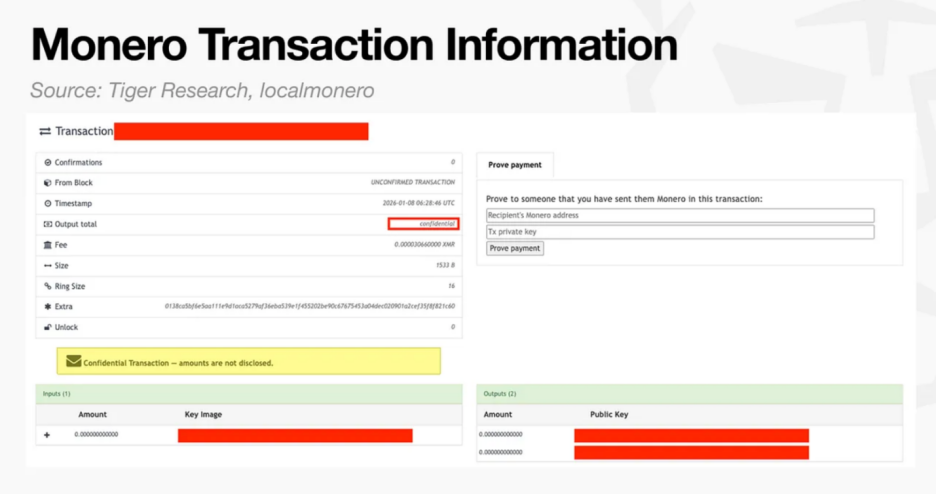
The external manifestation of this conflict is the systematic exclusion of strongly anonymous assets from mainstream financial infrastructure: exchange delistings, lack of support from payment and custody providers, and the inability of compliant capital to integrate into the infrastructure. Importantly, this does not mean that genuine demand for anonymity disappears. Instead, demand often migrates to more opaque, higher-friction channels, fostering “compliance vacuums” and the proliferation of gray intermediaries. In Monero’s case, instant exchange services have, at times, absorbed substantial purchasing and conversion demand. Users pay higher spreads and fees for accessibility, while bearing risks related to fund freezes, counterparty exposure, and lack of transparency. More critically, such intermediaries can introduce persistent structural sell pressure. When service providers rapidly convert collected Monero fees into stablecoins and cash out, the market experiences continuous passive selling unrelated to organic buy demand, suppressing price discovery over the long term. A paradox thus emerges: The more excluded an asset is from compliant channels, the more demand concentrates in high-friction intermediaries; the stronger these intermediaries become, the more distorted price formation becomes; and the more distorted prices are, the harder it is for mainstream assets to assess and enter the market through “normal” channels. This vicious cycle is not evidence that “the market rejects privacy”, but rather the outcome of institutional constraints and channel structures.

Therefore, any assessment of the Monero model should move beyond moralized debate and return to the realities of institutional compatibility. Fully anonymous privacy is “secure by default” in the individual realm, but “unviable by default” in the institutional realm. The more absolute its advantages, the more rigid its constraints. Even if the privacy narrative gains renewed momentum, fully anonymous assets will likely remain concentrated in non-institutional use cases and specific communities. In the institutional era, mainstream finance is far more likely to adopt models of “controlled anonymity” and “selective disclosure”: protecting commercial confidentiality and user privacy while enabling authorized auditability and regulatory evidence when required. In other words, Monero is not a technological failure, but a solution locked into a use case that institutions cannot accommodate. It proves that strong anonymity is technically feasible, while equally demonstrating that, in a compliance-driven financial era, the competitive focus of privacy will shift from “hiding everything” to “proving everything when necessary”.


II. The Rise of Selective Privacy

As fully anonymous privacy approaches its institutional ceiling, the privacy sector is undergoing a directional shift. “Selective privacy” is emerging as a new technological and institutional compromise. Its core objective is not to oppose transparency, but to introduce controllable, authorizable, and disclosable privacy layers on top of a verifiable ledger. The underlying logic of this transition fundamentally lies in that privacy is no longer framed as a tool to evade regulation, but redefined as an infrastructure capability that can be leveraged by institutional systems. Zcash represents the most prominent early implementation of the selective privacy approach. By allowing transparent addresses (t-addresses) and shielded addresses (z-addresses) to coexist, it gives users the freedom to choose between public and private transactions. When shielded addresses are used, the sender, recipient, and amount are encrypted on-chain; when compliance or audit needs arise, users can disclose full transaction details to designated third parties via view keys. Conceptually, this architecture is a milestone. It was among the first mainstream privacy projects to explicitly demonstrate that privacy does not have to come at the expense of verifiability, and that compliance does not necessarily require full transparency.

From an institutional evolution perspective, Zcash’s value lies less in adoption metrics than in its role as a proof of concept. It demonstrates that privacy can be optional rather than a system default, and that cryptographic tools can reserve technical interfaces for regulatory disclosure. This is particularly relevant in today’s regulatory environment where major jurisdictions have not rejected privacy per se, but have firmly opposed “unauditable anonymity”. Zcash’s design directly addresses this core concern. However, as selective privacy moves from “personal transfer tools” to “institutional transaction infrastructure”, Zcash’s structural limitations become apparent. Its privacy model remains fundamentally a transaction-level binary choice: A transaction is either fully public or fully private. For real-world financial scenarios, this binary structure is overly simplistic. Institutional transactions involve not just “two counterparties”, but a variety of participants and responsibility holders. Counterparties need to verify contractual performance, clearing and settlement institutions require visibility into amounts and timing, auditors must validate complete records, and regulators may only be concerned with fund provenance and compliance attributes. These stakeholders have asymmetric and partially overlapping information requirements.

In such contexts, Zcash cannot modularize transaction data or support differentiated authorization. Institutions cannot disclose only “necessary information”, but must choose between full disclosure and full concealment. As a result, once integrated into complex financial workflows, Zcash either exposes excessive commercially sensitive information or fails to meet baseline compliance requirements. Its privacy capabilities therefore struggle to embed into real institutional processes, remaining largely peripheral or experimental. By contrast, the Canton Network represents a fundamentally different selective privacy paradigm. Rather than originating from “anonymous assets”, Canton is designed from the outset around institutional workflows and regulatory constraints. Its core philosophy is not “hiding transactions”, but “managing access to information”. Through the smart contract language Daml, Canton decomposes transactions into multiple logical components, ensuring that each participant can only view the data segments relevant to their authorized role, while all other information is isolated at the protocol level. This design produces a fundamental shift. Privacy is no longer an after-the-fact attribute of transactions, but an embedded feature of contract architecture and permission systems, forming an integral part of compliant processes. 

From a broader perspective, the contrast between Zcash and Canton highlights the divergence within the privacy sector. The former remains rooted in the crypto-native world, seeking a balance between individual privacy and compliance. The latter actively embraces the real financial system, engineering privacy into workflows, processes, and institutions. As institutional capital continues to gain share in the crypto market, the primary battleground of privacy will move accordingly. The future will not be defined by who can conceal the most, but by who can be regulated, audited, and adopted at scale without exposing unnecessary information. Under this standard, selective privacy is no longer merely a technical route, but an inevitable path toward mainstream finance.


III. Privacy 2.0: From Transaction Obfuscation to Privacy-Computing Infrastructure Upgrade

Once privacy is redefined as a prerequisite for institutional blockchain participation, the technical boundaries and value scope of the privacy sector expand accordingly. Privacy is no longer merely understood as “whether a transaction is visible”, but instead evolves toward a deeper question: Whether a system can perform computation, collaboration, and decision-making without exposing the underlying data. This shift marks the transition of the privacy sector from the “privacy assets / private transfers” 1.0 phase to a 2.0 phase centered on privacy computing, upgrading privacy from an optional feature to a general infrastructure capability. In the Privacy 1.0 era, technical focus was primarily on “what to hide” and “how to hide”—that is, how to obscure transaction paths, amounts, and identity linkages. In the Privacy 2.0 era, the focus turns to “what can still be done under conditions of concealment”. This distinction is critical. Institutions do not merely require private transfers; they need to execute complex operations such as trade matching, risk computation, clearing and settlement, strategy execution, and data analytics while preserving privacy. If privacy only covers the payment layer and cannot extend to the business logic layer, its value to institutions remains limited.

The Aztec Network represents one of the earliest manifestations of this shift within the blockchain ecosystem. Aztec does not treat privacy as a tool for resisting transparency, but instead embeds it as a programmable attribute of the smart contract execution environment. Through a rollup architecture built on zero-knowledge proofs, Aztec allows developers to define, at the contract layer, which states should remain private and which should be publicly visible. This enables a hybrid logic of “selective privacy and selective transparency”, allowing privacy to extend beyond simple value transfers to support complex financial structures such as lending, trading, treasury management, and DAO governance. However, Privacy 2.0 does not stop at the blockchain-native world. With the rise of AI, data-intensive finance, and cross-institution collaboration requirements, relying solely on on-chain zero-knowledge proofs is increasingly insufficient to cover the full range of scenarios. Consequently, the privacy sector has begun evolving toward a broader class of “privacy computing networks”. Projects like Nillion and Arcium emerge against this backdrop. Rather than attempting to replace blockchains, these platforms function as privacy collaboration layers between blockchains and real-world applications—a common feature among them. By combining multi-party computation (MPC), fully homomorphic encryption (FHE), and zero-knowledge proofs (ZKP), data can be stored, accessed, and computed while remaining encrypted throughout the process; and participants can jointly complete model inference, risk assessment, or strategy execution without ever accessing the raw data. This approach upgrades privacy from a “transaction-layer attribute” to a "computation-layer capability", expanding its potential market into areas such as AI inference, institutional dark pool trading, RWA data disclosure, and enterprise data collaboration.

Compared with traditional privacy coins, the value logic of privacy-computing projects changes significantly. These projects do not rely on a “privacy premium” as the core narrative. Instead, their value lies in functional indispensability. When certain computations simply cannot be performed in a public environment, or doing so on plaintext would create severe commercial risk or security issues, privacy computing ceases to be a question of “whether it is needed”, and becomes one of “whether operations are even possible without it”.This shift gives the privacy sector, for the first time, the potential for a fundamental moat: Once data, models, and workflows are entrenched in a given privacy computing network, migration costs are significantly higher than with ordinary DeFi protocols. Another notable feature of the Privacy 2.0 stage is the engineering, modularization, and invisibility of privacy. Privacy no longer exists in the explicit forms of “privacy coins” or “privacy protocols”, but is deconstructed into reusable modules embedded into wallets, account abstraction, Layer 2 solutions, bridges, and enterprise systems. End users may not even realize they are “using privacy”, yet their asset balances, trading strategies, identity linkages, and behavioral patterns are protected by default. This kind of “invisible privacy” is paradoxically more aligned with the realistic path to large-scale adoption.

At the same time, regulatory concerns also shift. In the Privacy 1.0 era, the core regulatory question was whether anonymity existed. However, in the Privacy 2.0 era, the question becomes whether compliance can be verified without exposing raw data. Zero-knowledge proofs, verifiable computation, and rule-level compliance thus become the key interfaces between privacy computing projects and institutional environments. Privacy is no longer viewed as a source of risk, but is redefined as a technical means to achieve compliance. Taken together, Privacy 2.0 is not a simple upgrade of privacy coins, but a systematic solution to how blockchains can integrate with the real economy. It signifies that the competitive dimensions of the privacy sector are shifting from asset layer to execution layer, from payment layer to computation layer, and from ideological discourse to engineering capability. In the institutional era, truly valuable long-term privacy projects are not those that are the “most mysterious”, but those that are the "most usable". Privacy computing is the concentrated embodiment of this logic at the technological level.


IV. Conclusion

In summary, the core dividing line in the privacy sector is no longer whether privacy exists, but how privacy can be used under compliant conditions. Fully anonymous models have irreplaceable security value at the individual level, but their institutional non-auditability makes them unsuitable for institutional finance; selective privacy, through designs that enable disclosure and authorization, provides a feasible technical interface between privacy and regulation; and the rise of Privacy 2.0 further upgrades privacy from an asset attribute to an infrastructure capability for computation and collaboration. In the future, privacy will no longer be an explicit feature, but will be embedded as a default system assumption across various financial and data workflows. Privacy projects with long-term value are not necessarily the most “secretive”, but those that are the most usable, verifiable, and compliant. This shift marks a key milestone in the maturation of the privacy sector.


Пов'язані матеріали

Dialogue with a Macro Analyst: AI Drains All Liquidity from U.S. Stocks, $40K Bitcoin is the True Bottom

In a recent discussion, macro strategist Luke Groman, founder of FFT LC, presented a sobering analysis of current markets. He argues that while the S&P 500 hits new highs, this is largely driven by just seven AI stocks, which are "sucking all the oxygen and liquidity out of the room." Bitcoin, which he calls the "last working smoke alarm for liquidity," is signaling trouble, having entered a difficult period. Groman explains that the AI boom is fueled by accounting practices that front-load revenue, creating an illusion of high profits while cash is being depleted. He warns this cycle could reverse sharply when construction slows. His base case is that stocks will rise in dollar terms but fall significantly when measured in gold or Bitcoin, highlighting that long-term US Treasury futures have already lost 90% of their value against gold over the past decade. He points to major structural risks, including China's dominance in rare earths—a small commodity market underpinning trillions in tech stock value—and the prolonged closure of the Strait of Hormuz, which he calls a "Suez Moment" for the US. This, combined with a shift towards a "no ticky, no washy" proof-of-work system for settling trade (using gold, not trust), signals deeper systemic distrust. Regarding US debt, Groman notes that historically, all 58 countries that reached a 130% debt-to-GDP ratio defaulted, primarily through inflation. The US crossed this threshold in 2020. He also highlights a contradiction in the AI narrative: if it's as transformative as claimed, it must destroy white-collar jobs, threatening half of US tax revenue—a reality at odds with the "no job loss" messaging from tech leaders. On Bitcoin, Groman sold most of his position near the top and hasn't fully re-entered. Citing technical analysis from Northstar Bad Charts, he suggests a potential bottom around $40,000 could materialize in Q3 or Q4. He concludes that while he may be labeled a doomsayer, his view is simply realistic, grounded in historical precedents and current macro pressures.

marsbit6 год тому

Dialogue with a Macro Analyst: AI Drains All Liquidity from U.S. Stocks, $40K Bitcoin is the True Bottom

marsbit6 год тому

Торгівля

Спот
Ф'ючерси

Популярні статті

Що таке ETH 2.0

ETH 2.0: Нова ера для Ethereum Вступ ETH 2.0, широко відомий як Ethereum 2.0, є величезним оновленням для блокчейну Ethereum. Ця трансформація не є лише косметичною зміною; вона має на меті фундаментально покращити масштабованість, безпеку та сталий розвиток мережі. З переходом від енергомісткого механізму консенсусу Proof of Work (PoW) до більш ефективного Proof of Stake (PoS), ETH 2.0 обіцяє трансформаційний підхід до екосистеми блокчейнів. Що таке ETH 2.0? ETH 2.0 — це збірка особливих, взаємопов’язаних оновлень, спрямованих на оптимізацію можливостей та продуктивності Ethereum. Це перетворення розроблене для вирішення критичних викликів, з якими стикалося існуюче механізм Ethereum, зокрема щодо швидкості транзакцій та заторів у мережі. Мета ETH 2.0 Основні цілі ETH 2.0 зосереджені на покращенні трьох ключових аспектів: Масштабованість: Мета — значно підвищити кількість транзакцій, які мережа може обробити за секунду; ETH 2.0 прагне вийти за межі поточного обмеження приблизно в 15 транзакцій на секунду, потенційно досягнувши тисяч. Безпека: Підвищені заходи безпеки є невід’ємною частиною ETH 2.0, зокрема через покращену стійкість до кібератак і збереження децентралізованої етики Ethereum. Сталий розвиток: Новий механізм PoS розроблений не тільки для підвищення ефективності, але й для різкого зменшення споживання енергії, що узгоджує операційну структуру Ethereum з екологічними міркуваннями. Хто є творцем ETH 2.0? Створення ETH 2.0 можна віднести до Ethereum Foundation. Ця неприбуткова організація, яка відіграє важливу роль у підтримці розвитку Ethereum, очолюється відомим співавтором Віталіком Бутеріним. Його бачення більш масштабованого та стійкого Ethereum стало рушійною силою цього оновлення, залучаючи внески зі всього світу від розробників і ентузіастів, які прагнуть покращити протокол. Хто є інвесторами ETH 2.0? Хоча подробиці про інвесторів ETH 2.0 не були оприлюднені, відомо, що Ethereum Foundation отримує підтримку від різних організацій та осіб у сфері блокчейну та технологій. Ці партнери включають венчурні капітальні компанії, технологічні компанії та філантропічні організації, які мають спільний інтерес у підтримці розвитку децентралізованих технологій та інфраструктури блокчейну. Як працює ETH 2.0? ETH 2.0 відзначається введенням низки ключових функцій, які відрізняють його від попередника. Proof of Stake (PoS) Перехід до механізму консенсусу PoS є одним із знакових змін ETH 2.0. На відміну від PoW, який покладається на енергомісткий видобуток для перевірки транзакцій, PoS дозволяє користувачам підтверджувати транзакції та створювати нові блоки відповідно до кількості ETH, яку вони ставлять у мережі. Це призводить до підвищення енергоефективності, зменшуючи споживання приблизно на 99,95%, завдяки чому Ethereum 2.0 стає значно більш екологічною альтернативою. Шардові ланцюги Шардові ланцюги є ще одним ключовим нововведенням ETH 2.0. Ці менші ланцюги працюють паралельно з основним ланцюгом Ethereum, що дозволяє обробляти кілька транзакцій одночасно. Це підходи покращує загальну ємність мережі, усуваючи проблеми масштабованості, які переслідували Ethereum. Beacon Chain У центрі ETH 2.0 знаходиться Beacon Chain, яка координує мережу і управляє протоколом PoS. Вона виконує роль організатора: контролює валідаторів, забезпечує з’єднання шард з мережею і моніторить загальний стан екосистеми блокчейнів. Хронологія ETH 2.0 Шлях ETH 2.0 характеризується кількома ключовими етапами, які відображають еволюцію цього значного оновлення: Грудень 2020: Запуск Beacon Chain ознаменував введення PoS, проклавши шлях до міграції на ETH 2.0. Вересень 2022: Завершення "Злиття" є знаковим моментом, коли мережа Ethereum успішно перейшла з PoW на PoS, відкриваючи нову еру для Ethereum. 2023: Очікуване розгортання шардових ланцюгів має на меті подальше покращення масштабованості мережі Ethereum, закріплюючи ETH 2.0 як надійну платформу для децентралізованих додатків і послуг. Ключові особливості та переваги Покращена масштабованість Однією з найзначніших переваг ETH 2.0 є його покращена масштабованість. Поєднання PoS та шардових ланцюгів дозволяє мережі розширити свою ємність, що дозволяє їй обробляти набагато більший обсяг транзакцій в порівнянні з класичною системою. Енергоефективність Запровадження PoS є величезним кроком до енергоефективності в технології блокчейн. Значно зменшуючи споживання енергії, ETH 2.0 не тільки знижує операційні витрати, але також ближче узгоджується з глобальними цілями сталого розвитку. Підвищена безпека Оновлені механізми ETH 2.0 сприяють підвищенню безпеки по всій мережі. Впровадження PoS, поряд з інноваційними контрольними заходами, встановленими через шардові ланцюги та Beacon Chain, забезпечує вищий рівень захисту від потенційних загроз. Зниження витрат для користувачів З покращенням масштабованості вплив на витрати на транзакції також стане очевидним. Збільшена ємність і зменшені затори, як очікується, призведуть до зниження зборів для користувачів, що зробить Ethereum більш доступним для повсякденних транзакцій. Висновок ETH 2.0 є значною еволюцією в екосистемі блокчейну Ethereum. Оскільки він вирішує важливі питання, такі як масштабованість, споживання енергії, ефективність транзакцій і загальна безпека, важливість цього оновлення не можна недооцінювати. Перехід до Proof of Stake, введення шардових ланцюгів і фундаментальна робота Beacon Chain свідчать про майбутнє, в якому Ethereum може задовольнити зростаючі вимоги децентралізованого ринку. В індустрії, що рухається вперед завдяки інноваціям та прогресу, ETH 2.0 є підтвердженням можливостей технології блокчейн у прокладенні шляху до більш сталого та ефективного цифрового економіки.

168 переглядів усьогоОпубліковано 2024.04.04Оновлено 2024.12.03

Що таке ETH 2.0

Що таке ETH 3.0

ETH3.0 та $eth 3.0: Глибоке дослідження майбутнього Ethereum Вступ У швидко змінюваному світі криптовалют та технології блокчейн, ETH3.0, часто позначуваний як $eth 3.0, став темою значного інтересу та спекуляцій. Цей термін охоплює два основні концепти, які потребують уточнення: Ethereum 3.0: Це потенційне майбутнє оновлення, яке має на меті покращення можливостей існуючого блокчейну Ethereum, зокрема, фокусуючись на поліпшенні масштабованості та продуктивності. ETH3.0 Мем Токен: Цей окремий криптовалютний проект прагне використовувати блокчейн Ethereum для створення екосистеми, орієнтованої на меми, сприяючи залученню до криптовалютної громади. Розуміння цих аспектів ETH3.0 є важливим не лише для криптоентузіастів, але й для тих, хто спостерігає за широкими технологічними тенденціями у цифровому просторі. Що таке ETH3.0? Ethereum 3.0 Ethereum 3.0 пропонується як оновлення вже існуючої мережі Ethereum, яка стала основою багатьох децентралізованих додатків (dApps) та смарт-контрактів з моменту свого виникнення. Передбачувані удосконалення зосереджені в основному на масштабованості — інтегруючи передові технології, такі як шардінг та нульові знання (zk-докази). Ці технологічні нововведення націлені на забезпечення безпрецедентної кількості транзакцій на секунду (TPS), потенційно досягаючи мільйонів, тим самим вирішуючи одну з найзначніших обмежень, з якими стикається сучасна технологія блокчейн. Покращення є не лише технічним, а й стратегічним; воно спрямоване на підготовку мережі Ethereum до широкого прийняття та корисності в майбутньому, позначеному збільшеним попитом на децентралізовані рішення. ETH3.0 Мем Токен На відміну від Ethereum 3.0, ETH3.0 Мем Токен пропонує легшу та грайливішу домену, поєднуючи культуру інтернет-мемів із динамікою криптовалют. Цей проект дозволяє користувачам купувати, продавати та обмінювати меми на блокчейні Ethereum, надаючи платформу, яка сприяє залученню громади через креативність та спільні інтереси. ETH3.0 Мем Токен має на меті продемонструвати, як технологія блокчейн може перетинатися з цифровою культурою, створюючи випадки використання, які є водночас розважальними та фінансово життєздатними. Хто є творцем ETH3.0? Ethereum 3.0 Ініціатива щодо Ethereum 3.0 переважно підтримується консорціумом розробників та дослідників у межах громади Ethereum, зокрема, до складу якого входить Джастін Дрейк. Відомий своїми думками та внеском у розвиток Ethereum, Дрейк є помітною особистістю в обговореннях щодо переходу Ethereum на новий рівень консенсусу, який називається «Beam Chain». Цей колабораційний підхід до розробки свідчить про те, що Ethereum 3.0 не є продуктом єдиного творця, а скоріше втіленням колективної винахідливості, спрямованої на просування технології блокчейн. ETH3.0 Мем Токен Деталі про творця ETH3.0 Мем Токена наразі не відстежуються. Природа мем-токенів часто призводить до більш децентралізованої та громартової структури, що може пояснити відсутність специфічної атрибуції. Це узгоджується з етикою ширшої крипто-спільноти, де інновації часто виникають з колективних, а не індивідуальних зусиль. Хто є інвесторами ETH3.0? Ethereum 3.0 Підтримка Ethereum 3.0 переважно надходить від Фонду Ethereum поряд з ентузіастичною спільнотою розробників та інвесторів. Це базове співробітництво надає значний градус легітимності та підвищує ймовірність успішної реалізації, оскільки воно використовує довіру та авторитет, накопичені за роки роботи мережі. У швидко змінюваному кліматі криптовалют підтримка громади займає важливу роль у розвитку та прийнятті, позиціонуючи Ethereum 3.0 як серйозного конкурента для майбутніх блокчейн-інновацій. ETH3.0 Мем Токен Хоча наразі доступні джерела не надають явної інформації щодо інвестиційних фондів або організацій, що підтримують ETH3.0 Мем Токен, це свідчить про типову модель фінансування для мем-токенів, яка часто спирається на підтримку знизу та залучення громади. Інвестори в такі проекти зазвичай складаються з осіб, які мотивовані потенціалом інновацій, що керуються спільнотою, та духом співпраці, притаманним крипто-спільноті. Як працює ETH3.0? Ethereum 3.0 Відмінні риси Ethereum 3.0 полягають у його запропонованій реалізації технології шардінгу та zk-proof. Шардінг — це метод розподілу блокчейну на менші, керовані частини чи «шарди», які можуть обробляти транзакції одночасно, а не послідовно. Це децентралізоване оброблення допомагає запобігти заторам та забезпечити оперативність мережі навіть під великим навантаженням. Технологія нульових доказів (zk-proof) надає ще один рівень складності, дозволяючи валідацію транзакцій без розкриття підпорядкованих даних. Цей аспект не лише підвищує конфіденційність, а й збільшує загальну ефективність мережі. Також обговорюється включення нульової Ефірної віртуальної машини (zkEVM) в це оновлення, що ще більше підвищить можливості та корисність мережі. ETH3.0 Мем Токен ETH3.0 Мем Токен виділяється завдяки використанню популярності культури мемів. Він створює ринок, на якому користувачі можуть брати участь у торгівлі мемами не лише для розваги, але й для потенційного економічного вигоди. Інтегруючи функції, такі як стейкінг, забезпечення ліквідності та механізми управління, проект сприяє створенню середовища, яке заохочує взаємодію та участь громади. Пропонуючи унікальне поєднання розваг та економічних можливостей, ETH3.0 Мем Токен прагне залучити різну аудиторію, яка охоплює від криптоентузіастів до casual-консумерів мемів. Хронологія ETH3.0 Ethereum 3.0 11 листопада 2024: Джастін Дрейк натякає на майбутнє оновлення ETH 3.0, яке зосереджене на поліпшеннях масштабованості. Це оголошення означає початок формальних обговорень щодо майбутньої архітектури Ethereum. 12 листопада 2024: Очікується, що запропоновану пропозицію для Ethereum 3.0 буде представлено на Devcon у Бангкоку, що готує ґрунт для більш широкого зворотного зв'язку від громади та потенційних наступних кроків у розвитку. ETH3.0 Мем Токен 21 березня 2024: ETH3.0 Мем Токен офіційно потрапляє у список на CoinMarketCap, що означає його дебют у публічному крипто-просторі та підвищує видимість для його меморієнтованої екосистеми. Ключові моменти На завершення, Ethereum 3.0 представляє значну еволюцію в межах мережі Ethereum, зосереджуючись на подоланні обмежень щодо масштабованості та продуктивності через передові технології. Його запропоновані оновлення відображають проактивний підхід до майбутніх вимог і корисності. Натомість ETH3.0 Мем Токен втілює суть культури, керованої громадою, у сфері криптовалют, використовуючи культуру мемів для створення привабливих платформ, які заохочують творчість і участь користувачів. Розуміння окремих цілей і функцій ETH3.0 та $eth 3.0 є надзвичайно важливим для кожного, хто цікавиться поточними подіями в крипто-просторі. З обома ініціативами, які прокладають унікальні шляхи, вони разом підкреслюють динамічну та багатогранну природу інновацій у блокчейн-технологіях.

158 переглядів усьогоОпубліковано 2024.04.04Оновлено 2024.12.03

Що таке ETH 3.0

Як купити ETH

Ласкаво просимо до HTX.com! Ми зробили покупку Ethereum (ETH) простою та зручною. Дотримуйтесь нашої покрокової інструкції, щоб розпочати свою криптовалютну подорож.Крок 1: Створіть обліковий запис на HTXВикористовуйте свою електронну пошту або номер телефону, щоб зареєструвати обліковий запис на HTX безплатно. Пройдіть безпроблемну реєстрацію й отримайте доступ до всіх функцій.ЗареєструватисьКрок 2: Перейдіть до розділу Купити крипту і виберіть спосіб оплатиКредитна/дебетова картка: використовуйте вашу картку Visa або Mastercard, щоб миттєво купити Ethereum (ETH).Баланс: використовуйте кошти з балансу вашого рахунку HTX для безперешкодної торгівлі.Треті особи: ми додали популярні способи оплати, такі як Google Pay та Apple Pay, щоб підвищити зручність.P2P: Торгуйте безпосередньо з іншими користувачами на HTX.Позабіржова торгівля (OTC): ми пропонуємо індивідуальні послуги та конкурентні обмінні курси для трейдерів.Крок 3: Зберігайте свої Ethereum (ETH)Після придбання Ethereum (ETH) збережіть його у своєму обліковому записі на HTX. Крім того, ви можете відправити його в інше місце за допомогою блокчейн-переказу або використовувати його для торгівлі іншими криптовалютами.Крок 4: Торгівля Ethereum (ETH)Легко торгуйте Ethereum (ETH) на спотовому ринку HTX. Просто увійдіть до свого облікового запису, виберіть торгову пару, укладайте угоди та спостерігайте за ними в режимі реального часу. Ми пропонуємо зручний досвід як для початківців, так і для досвідчених трейдерів.

3.1k переглядів усьогоОпубліковано 2024.12.10Оновлено 2026.06.02

Як купити ETH

Обговорення

Ласкаво просимо до спільноти HTX. Тут ви можете бути в курсі останніх подій розвитку платформи та отримати доступ до професійної ринкової інформації. Нижче представлені думки користувачів щодо ціни ETH (ETH).

活动图片