MM en Ataque 1: Sistema de Cotización de Inventario del Market Maker

深潮Опубліковано о 2025-12-28Востаннє оновлено о 2025-12-28

Анотація

El artículo "MM 1: El sistema de cotización de inventario de los market makers" explora la aparente manipulación del mercado que experimentan los inversores minoristas al comprar altcoins, donde el precio a menudo se mueve en su contra inmediatamente después. El autor, Dave, explica que esto no es una conspiración, sino el resultado de mecanismos automáticos de protección utilizados por los creadores de mercado (MM). Estos mecanismos se basan en el modelo de Avellaneda-Stoikov para la fijación de precios basada en inventario. Cuando los minoristas compran grandes cantidades, el MM vende y su inventario se vuelve corto (q negativo). Para protegerse, el MM ajusta su "Precio de Reserva" (Reservation Price = Precio Medio − γ⋅q), bajando sus cotizaciones para atraer vendedores, reponer inventario y cubrir su posición corta. Si el inventario empeora, también amplía el spread para reducir el riesgo de ejecución y obtener más beneficio por spread. El comportamiento de los minoristas (órdenes activas, grandes, concentradas y sin cobertura) perturba el equilibrio del MM, especialmente en criptomonedas con baja liquidez. El objetivo del MM es maximizar la captura de spreads minimizando el riesgo de inventario y la selección adversa (toxic flow). Como consejo, el autor sugiere que los minoristas dividan sus órdenes grandes en otras más pequeñas y menos visibles para aprovechar estos ajustes de precios y obtener un coste promedio mejor. La segunda parte del artículo analizará el flujo ...

Autor: Dave

¿Alguna vez has experimentado una situación en la que, después de comprar algunas altcoins, el precio se mueve en la dirección opuesta en poco tiempo, como si los grandes actores del mercado ("dog zhuang") te estuvieran atacando? ¿Por qué pasa esto? ¿Realmente es una conspiración de los grandes actores?

Este post presentará el sistema de cotización de los market makers (MM), desvelando el misterio detrás de la "conspiración de los grandes actores". Conclusión inicial: que el precio a menudo vaya en nuestra contra no es una manipulación subjetiva, sino el sesgo de cotización basado en inventario (Inventory-based pricing quote skew) bajo el modelo de Avellaneda-Stoikov, y un mecanismo de protección para manejar el flujo tóxico (toxic flow) de órdenes. ¿Cómo es esto? Érase una vez...

Primero, entendamos el concepto de inventario. Todos saben que los market makers no son inversores direccionales. Bajo una cobertura rigurosa, los cambios en el precio spot no deberían afectar el P&L total. En este caso, mantener inventario es un comportamiento "pasivo". Los cambios en el inventario conducen a una expansión de la posición; cuanta más posición se mantenga, mayor será la exposición al riesgo de movimientos adversos del precio. En este momento, las órdenes de compra y venta de los minoristas causan cambios en el inventario, y el market maker reaccionará a este riesgo derivado del cambio de inventario.

En pocas palabras: tú rompes su equilibrio, y el MM debe encontrar una manera de protegerse y esforzarse por volver al equilibrio. El medio para protegerse es el sistema de cotización.

1. Sesgo de Cotización (Quote Skew)

Cuando el MM vende en grandes cantidades debido a tus compras, equivale a: el MM vende en gran volumen, y el inventario se convierte en una posición corta expuesta. En este momento, ¿qué espera hacer el MM?: (1) Reponer el inventario lo antes posible. (2) Proteger la posición corta expuesta.

Entonces, la reacción del MM es: bajar el precio, atraer órdenes de venta, evitar seguir comprado, y al mismo tiempo asegurar que su posición neta corta permanezca temporalmente sin pérdidas, teniendo tiempo para cubrirse.

2. Ampliación del Margen de Cotización (Spread Widening)

Cuando el inventario continúa deteriorándose, el MM no solo sesga el precio, sino que también amplía el spread (margen), reduciendo la probabilidad de ejecución.

Su objetivo es reducir el riesgo de ejecución por unidad de tiempo y, al mismo tiempo, proteger las pérdidas de precio obteniendo más ganancias a través del spread.

Al escribir un artículo, cada fórmula matemática adicional reduce un 10% de los lectores, pero por si acaso hay compañeros que quieren ver algo sustancial, presentaré brevemente la formación de la cotización (también el mecanismo matemático detrás de los cambios de cotización mencionados).

El precio al que operamos con el market maker se llama Precio de Reserva (Reservation Price), que proviene del modelo de fijación de precios basado en inventario (Inventory-based pricing model):

Precio de Reserva = Precio Medio − γ⋅q

q: Inventario actual

gamma γ: Coeficiente de aversión al riesgo

En realidad, el Precio de Reserva se ve así, pero no quiero asustarlos, así que con un vistazo es suficiente.

Cuando los minoristas compran o venden en grandes volúmenes, q experimenta grandes cambios, por lo que el Precio de Reserva de la cotización cambia significativamente. La cantidad específica de cambio proviene del modelo de Avellaneda-Stoikov. Pueden adivinar que, dado que las compras y ventas causan pequeños cambios en el inventario, este modelo es una ecuación en derivadas parciales. ¿Adivinen qué? Tampoco tengo interés en derivar esta ecuación, así que solo necesitamos saber la conclusión central:

La cotización óptima se despliega simétricamente alrededor del Precio de Reserva. El inventario inevitablemente revierte a su media hacia 0. El spread óptimo se amplía con el riesgo.

Si no entienden lo anterior, no importa. Solo necesitan comprender aproximadamente que, después de que los minoristas compran, el precio a menudo va en contra de la dirección alcista. Esencialmente, nuestro flujo cambia la fijación de precios de riesgo del mercado. Las razones por las que los minoristas a menudo sufren esta situación son:

• Los minoristas casi siempre son órdenes activas (agresivas).

• Tamaño concentrado, ritmo no discreto.

• Sin cobertura (hedging).

• Sin timing, sin dividir órdenes.

Y en las altcoins pequeñas, esta situación es aún más grave porque la liquidez de las altcoins es muy baja. A menudo, tu orden es una de las pocas órdenes activas en 5 minutos. En los principales pares puede ocurrir una cobertura natural, pero en las monedas pequeñas, tú eres la contraparte del "gran actor".

Por lo tanto, el MM profesional no quiere liquidarte, sino max E[Captura del Spread] - Riesgo de Inventario - Selección Adversa. En realidad, su función objetivo se ve así, donde el riesgo de inventario es penalizado exponencialmente.
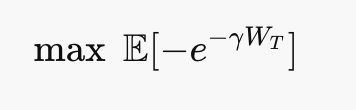
Los lectores que hayan llegado hasta aquí seguramente son espárragos (inversores minoristas) con el sueño de convertirse en grandes actores. Así que, para animar a los valientes, finalmente compartiré un pequeño truco para utilizar el mecanismo de cotización. Decíamos que los minoristas a menudo tienen tamaño concentrado y ritmo no discreto, entonces basta con hacer lo contrario. Supongamos que Dave quiere una posición larga de 1000 USD. En lugar de apostar todo de una vez, utilizando la práctica del "gran actor", primero compraría 100 USD. El sistema de cotización bajaría el precio, y entonces podría construir su posición a un nivel más barato. Luego compraría otros 100 USD, el precio continuaría cayendo, por lo que su costo promedio de tenencia sería mucho más barato que apostar todo de una vez.

La historia de la mala suerte del minorista solo se ha contado hasta la mitad. Además de los factores de cotización por gestión de inventario, el manejo del flujo de órdenes por parte del MM es otro elemento que causa la desviación del precio, es decir, el flujo tóxico de órdenes mencionado al principio. En la próxima entrega, presentaré el libro de órdenes y el flujo de órdenes del market maker, y también especularé sobre las razones microeconómicas del "Desastre 1011".

Para saber cómo continúa la historia, esperen la próxima entrega.

Трендові криптовалюти

Пов'язані питання

Q¿Por qué el precio a menudo se mueve en contra de la dirección esperada después de comprar una altcoin?

ANo se debe a una manipulación subjetiva, sino al sesgo de cotización basado en inventario del modelo Avellaneda-Stoikov y los mecanismos de protección contra el flujo tóxico de órdenes.

Q¿Cómo reacciona el market maker cuando su inventario se vuelve corto debido a grandes compras?

AEl market maker baja los precios para atraer ventas, detener más compras y proteger su posición corta expuesta, mientras se cubre.

Q¿Qué es el 'Quote Skew' en el 'Spread Widening' según el artículo?

AEl 'Quote Skew' es el ajuste de precios para gestionar el riesgo del inventario, y el 'Spread Widening' es la ampliación del diferencial para reducir la probabilidad de ejecución y compensar pérdidas.

Q¿Cuál es la fórmula básica del 'Reservation Price' mencionada?

AReservation Price = Mid price - γ · q, donde q es el inventario actual y γ es el coeficiente de aversión al riesgo.

Q¿Qué estrategia sugiere el autor para minimizar el impacto en el precio al comprar?

ADividir la orden grande en órdenes más pequeñas y ejecutarlas de manera gradual para aprovechar la reducción de precios del sistema de cotización del market maker.

Пов'язані матеріали

After Three Consecutive Quarters of Decline, Can the Crypto Market Find a Window for Stabilization in Q3?

The cryptocurrency market has just concluded its worst-performing quarter since 2022, with total capitalization dropping 12.6% to $2.1 trillion. All core metrics indicate capital is leaving the sector, not just rotating within it. Bitcoin fell 14.2% and Ethereum dropped 25.4% in Q2, breaking their previous correlation with US tech stocks. A key driver is the reversal in US spot Bitcoin ETF flows, which saw a net outflow of approximately $4.67 billion in Q2, including a record monthly outflow near $4.5 billion in June. While recent data suggests long-term holders are accumulating again, sustained ETF outflows mean continued selling pressure. Market focus is now singularly on the Federal Reserve. The upcoming July FOMC meeting is seen as the most critical event for Q3. A dovish signal could support Bitcoin reclaiming a $68,000-$84,000 range, while a hawkish stance might establish a new trading band around $50,000-$56,000. Additionally, regulatory uncertainty persists, with the progress of the crucial *CLARITY Act* stalling in the Senate, reducing its perceived 2026 passage probability to 40-45%. Despite the broad downturn, a few sectors showed growth. Prediction markets saw nominal volume surge 48.7% year-over-year to $113.8 billion, and tokenized collectibles transaction volume rose 143% quarterly to $1.4 billion. The Real-World Asset (RWA) tokenization sector also continued steady growth, now representing ~$28.1 billion in on-chain value. The market's foundation for an extreme crash appears limited, with Bitcoin price hovering near its 200-week moving average. However, the trading paradigm has shifted from narrative-driven speculation to decisions based on price action, policy developments, and interest rate expectations, making a broad sentiment-driven rally unlikely in the near term.

marsbit22 год тому

After Three Consecutive Quarters of Decline, Can the Crypto Market Find a Window for Stabilization in Q3?

marsbit22 год тому

BIT Trading Moment: BTC Still Suppressed by Weekly 200 EMA, Rejection May Restart Decline; Storage and Semiconductors that Surged Last Night Begin Falling in Evening Trading

**Crypto & Stock Market Wrap: Bitcoin Tests Resistance, Stocks Retreat After AI Surge** Bitcoin consolidates around $66,000, facing key resistance near $68,000—an area seen as a major psychological and technical hurdle where previous rallies have failed. Analysts note the cryptocurrency is caught between its 200-week moving average (~$63,333) and 200-week EMA (~$68,328). A clear break above $68k is needed to signal a stronger bullish trend, while a rejection could lead to a retest of $63k support. Market sentiment remains cautious, with low futures open interest pointing to a low-liquidity rebound rather than a full bull market. Bitcoin spot ETFs saw another $203 million inflow. US stock futures pointed lower after a strong Tuesday session led by a massive rebound in semiconductors and memory stocks. The rally was fueled by renewed optimism about AI-driven hardware demand, with Micron, SanDisk, and SK Hynix surging. However, those gains reversed in pre-market trading. Super Micro Computer (SMCI) soared over 20% after hours on strong guidance and a record backlog. Other standouts included Rocket Lab and nuclear energy plays Oklo and X-Energy. Rising oil prices (Brent above $91) and climbing Treasury yields (10-year near 4.64%), however, are reigniting inflation concerns and acting as a headwind for equities. In Asia, markets were mixed. South Korea's KOSPI pared early gains to close slightly higher as semiconductor stocks like SK Hynix gave back initial surges. Japan's Nikkei edged lower as the yen hit a fresh 38-year low against the dollar, raising fears of potential market intervention. Key events to watch include the Samsung Galaxy launch, AMD's AI event, and a slew of major tech earnings from Alphabet, Tesla, and IBM after the close on Wednesday, followed by the ECB meeting and Intel's earnings on Thursday.

marsbit22 год тому

BIT Trading Moment: BTC Still Suppressed by Weekly 200 EMA, Rejection May Restart Decline; Storage and Semiconductors that Surged Last Night Begin Falling in Evening Trading

marsbit22 год тому

Former CFTC Chairman, Circle President Tarbert: Preaching Long-Termism While Cashing Out $30 Million Himself

Former CFTC Chairman and Circle President Heath Tarbert has consistently advocated for a long-term vision in public, urging patience from investors as Circle’s stock price has fallen significantly from its peak. However, it has been revealed that since Circle’s IPO, Tarbert has continuously sold his CRCL shares through pre-arranged trading plans, cashing out approximately $30 million, without making any public market purchases. This contrast between his public messaging and personal actions has drawn criticism. Tarbert joined Circle in July 2023 as Chief Legal Officer, leveraging his regulatory experience to help guide the company through its IPO and expansion. Despite promoting stablecoins as long-term infrastructure, he established a 10b5-1 trading plan just before Circle went public, leading to substantial stock sales over the following year. In March 2026, he initiated another plan to sell more shares. His career trajectory highlights a pattern of moving between high-level regulatory roles and influential positions in the financial sector. After resigning as CFTC Chairman in early 2021, he joined Citadel Securities as Chief Legal Officer just 27 days later, during a period of intense regulatory scrutiny for the firm. He later joined Circle, aiding its efforts to navigate regulatory challenges for its public listing. While Tarbert's expertise in policy and compliance is valuable to companies like Circle, his actions—advocating long-term confidence while personally divesting—raise questions about the alignment between his public statements and his private financial decisions, leaving investors who followed his advice to bear the market risks.

marsbit22 год тому

Former CFTC Chairman, Circle President Tarbert: Preaching Long-Termism While Cashing Out $30 Million Himself

marsbit22 год тому

Gate Research Institute: The 'Wall Street-ization' Wave of Crypto Financial Products – Competition or Integration?

The article titled "Gate Research Institute: Are Crypto Financial Products Sparking a 'Wall Street' Wave—Competition or Convergence?" explores the evolving relationship between the crypto ecosystem and traditional finance (TradFi). The piece begins by reflecting on Bitcoin's original 2009 vision of decentralization, disintermediation, and moving away from banks. It then contrasts this with the 2024 landscape, where key crypto assets like Bitcoin are increasingly held through Wall Street products like ETFs issued by giants like BlackRock. The article questions whether this signifies that TradFi is systematically taking over the rights to issue, price, custody, and distribute crypto financial assets. The core argument is that this is not a zero-sum takeover but rather a bidirectional convergence where each side addresses the other's weaknesses. Crypto offers 24/7 global markets, programmable settlement, and open access but lacks compliant channels, institutional-grade custody, deep fiat liquidity, and mainstream distribution. TradFi possesses these but is constrained by legacy systems, limited operating hours, and slow settlement. Two primary convergence paths are highlighted: * **Path A (CEX to TradFi):** Exemplified by Gate, which has progressed from offering tokenized stocks and CFDs to providing direct, real stock trading (US, Hong Kong, South Korea) within its platform, using USDT. * **Path B (TradFi to Crypto):** Exemplified by Robinhood, which has integrated crypto trading, acquired exchanges like Bitstamp, and is moving traditional assets like stocks onto the blockchain via tokenization and its own Layer 2. Both paths are ultimately competing to become the next-generation, unified financial account—a "super account" where users can seamlessly trade cryptocurrencies, stocks, ETFs, RWA (Real World Assets), and tokenized treasury products in one interface. The growth of RWA and tokenized treasuries (e.g., BlackRock's BUIDL) is presented as the asset-layer fusion, providing stable, yield-bearing assets on-chain and acting as a bridge between the two worlds. In conclusion, the "Wall Street-ization" of crypto is framed as a mutual transformation. Decentralized ideals persist in the protocol layer, while at the application layer, a more efficient, global, and accessible unified capital market is emerging from this convergence. The future competition lies not between crypto exchanges and stockbrokers, but between platforms vying to offer the most comprehensive asset coverage, liquidity, and user experience within a single account.

marsbit22 год тому

Gate Research Institute: The 'Wall Street-ization' Wave of Crypto Financial Products – Competition or Integration?

marsbit22 год тому

Торгівля

Спот

Популярні статті

Як купити O

Ласкаво просимо до HTX.com! Ми зробили покупку O1 exchange (O) простою та зручною. Дотримуйтесь нашої покрокової інструкції, щоб розпочати свою криптовалютну подорож.Крок 1: Створіть обліковий запис на HTXВикористовуйте свою електронну пошту або номер телефону, щоб зареєструвати обліковий запис на HTX безплатно. Пройдіть безпроблемну реєстрацію й отримайте доступ до всіх функцій.ЗареєструватисьКрок 2: Перейдіть до розділу Купити крипту і виберіть спосіб оплатиКредитна/дебетова картка: використовуйте вашу картку Visa або Mastercard, щоб миттєво купити O1 exchange (O).Баланс: використовуйте кошти з балансу вашого рахунку HTX для безперешкодної торгівлі.Треті особи: ми додали популярні способи оплати, такі як Google Pay та Apple Pay, щоб підвищити зручність.P2P: Торгуйте безпосередньо з іншими користувачами на HTX.Позабіржова торгівля (OTC): ми пропонуємо індивідуальні послуги та конкурентні обмінні курси для трейдерів.Крок 3: Зберігайте свої O1 exchange (O)Після придбання O1 exchange (O) збережіть його у своєму обліковому записі на HTX. Крім того, ви можете відправити його в інше місце за допомогою блокчейн-переказу або використовувати його для торгівлі іншими криптовалютами.Крок 4: Торгівля O1 exchange (O)Легко торгуйте O1 exchange (O) на спотовому ринку HTX. Просто увійдіть до свого облікового запису, виберіть торгову пару, укладайте угоди та спостерігайте за ними в режимі реального часу. Ми пропонуємо зручний досвід як для початківців, так і для досвідчених трейдерів.

159 переглядів усьогоОпубліковано 2026.06.19Оновлено 2026.06.19

Як купити O

Як купити PROS

Ласкаво просимо до HTX.com! Ми зробили покупку Pharos (PROS) простою та зручною. Дотримуйтесь нашої покрокової інструкції, щоб розпочати свою криптовалютну подорож.Крок 1: Створіть обліковий запис на HTXВикористовуйте свою електронну пошту або номер телефону, щоб зареєструвати обліковий запис на HTX безплатно. Пройдіть безпроблемну реєстрацію й отримайте доступ до всіх функцій.ЗареєструватисьКрок 2: Перейдіть до розділу Купити крипту і виберіть спосіб оплатиКредитна/дебетова картка: використовуйте вашу картку Visa або Mastercard, щоб миттєво купити Pharos (PROS).Баланс: використовуйте кошти з балансу вашого рахунку HTX для безперешкодної торгівлі.Треті особи: ми додали популярні способи оплати, такі як Google Pay та Apple Pay, щоб підвищити зручність.P2P: Торгуйте безпосередньо з іншими користувачами на HTX.Позабіржова торгівля (OTC): ми пропонуємо індивідуальні послуги та конкурентні обмінні курси для трейдерів.Крок 3: Зберігайте свої Pharos (PROS)Після придбання Pharos (PROS) збережіть його у своєму обліковому записі на HTX. Крім того, ви можете відправити його в інше місце за допомогою блокчейн-переказу або використовувати його для торгівлі іншими криптовалютами.Крок 4: Торгівля Pharos (PROS)Легко торгуйте Pharos (PROS) на спотовому ринку HTX. Просто увійдіть до свого облікового запису, виберіть торгову пару, укладайте угоди та спостерігайте за ними в режимі реального часу. Ми пропонуємо зручний досвід як для початківців, так і для досвідчених трейдерів.

210 переглядів усьогоОпубліковано 2026.06.22Оновлено 2026.06.22

Як купити PROS

Що таке VERONA

I. Вступ до проекту VERONA - це блокчейн, створений для всіх, скрізь, через абстракцію ланцюга. Використовуючи свій загальний шар абстракції, VERONA вирізняється інтеграцією складних функцій блокчейну, таких як рахунки, підписи та взаємодія, безпосередньо на рівні протоколу. Цей підхід дозволяє взаємодіяти з блокчейн-додатками без необхідності розуміти основні технології.1) Основна інформація Назва: VERONA (VERONA)III. Пов'язані посилання Офіційне посилання на сайт: https://xion.burnt.com/ Біла книга: https://xion.burnt.com/whitepaper.pdf Експлорери: https://explorer.burnt.com/ Соціальні мережі: https://x.com/burnt_xion Примітка: Вступ до проекту взято з матеріалів, опублікованих або наданих офіційною командою проекту, які є лише для довідки і не є інвестиційною порадою. HTX не несе відповідальності за будь-які прямі або непрямі збитки, що виникають внаслідок цього.

138 переглядів усьогоОпубліковано 2026.06.22Оновлено 2026.06.22

Що таке VERONA

Обговорення

Ласкаво просимо до спільноти HTX. Тут ви можете бути в курсі останніх подій розвитку платформи та отримати доступ до професійної ринкової інформації. Нижче представлені думки користувачів щодо ціни A (A).

活动图片