Prediction Markets = Market Manipulation? The Failure of Collective Wisdom and the Battle for Settlement Rights

marsbitОпубліковано о 2025-12-23Востаннє оновлено о 2025-12-23

Анотація

This article examines the controversial nature of prediction markets, particularly Polymarket, through three case studies, arguing that they are vulnerable to manipulation, groupthink, and battles over settlement authority, rather than being pure expressions of collective wisdom. Case 1: "Who will HBO identify as Satoshi?" Despite leaked evidence and media reports confirming the documentary would identify Peter Todd, the price for "Len Sassaman" remained high due to the community's emotional preference for a more narratively satisfying outcome. This demonstrates how narrative and emotion can cause market prices to deviate from factual evidence. Case 2: "How many gifts will Santa deliver?" Traders discovered a hardcoded number in the NORAD website's source code and drove the price of that outcome above 90%. However, this turned the market into a bet on whether the developers would change the number before the deadline, highlighting how centralized control of information sources creates exploitable opportunities. Case 3: "Israel strikes Gaza" contract. In the final hours, a coordinated effort using unverified screenshots and sell orders crashed the price of "No" to 1-2%, creating a false narrative of an attack. The contract was controversially settled as "Yes," showcasing how narrative, capital, and control over the settlement process can be weaponized to manipulate outcomes. The analysis concludes that prediction markets are not neutral but are instead arenas where media n...

Prediction markets, the current hot topic. But when you dive deep, every time you press Yes/No, the gears of fate begin to turn.

This article attempts to analyze controversial topics on prediction markets (primarily Polymarket), exploring their manipulability within binary博弈 (game theory of binary outcomes).

Case Selection

Who will HBO identify as Satoshi?

How many gifts will Santa deliver in 2025

Israel strikes Gaza by...?

And attempts to discuss potential market intervention methods from perspectives like psychology/group effects/house game theory/mass communication.

"Who is Satoshi" Bet: The Market Refuses to Believe the Truth

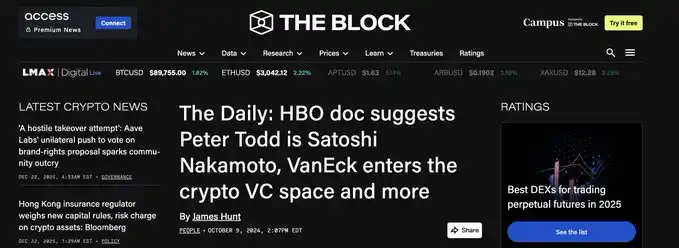
Around the release of HBO's "Money Electric: The Bitcoin Mystery," a contract on Polymarket became a classic example of "narrative diverging from fact": "Who will HBO identify as Satoshi?" (October 2024).
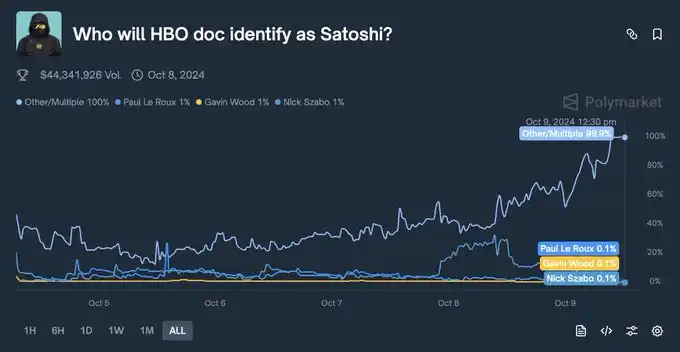
On the surface, this was a collective guessing game about the crypto world's ultimate unsolved case, with participants trying to bet on who the documentary would name as Bitcoin's creator: Len Sassaman, Hal Finney, Adam Back, or Peter Todd, who never appeared on any long conspiracy theory list.​

The vast majority of cryptocurrency community members, KOLs, and media firmly believed HBO would reveal the late cryptographer Len Sassaman. Because Len's life story fit the characteristics of Satoshi, and his tragic, legendary image aligned with HBO's narrative aesthetic.

And Len Sassaman's probability (Yes) soared to 68% - 70%.

The key lies in the timeline.

Some journalists and insiders who were invited to early media screenings began leaking clips on Twitter and dark web forums. The leaked clips and screenshots clearly showed director Cullen Hoback questioning another developer, Peter Todd, and attempting to portray him as Satoshi.

Peter Todd himself even posted on Twitter mocking the director, indirectly confirming he was a main subject of the documentary. At the same time, preview articles and headlines from multiple media outlets already used phrases like "doc identifies Peter Todd as Satoshi".​

Despite this, the most fascinating part emerged. Even with screenshots out, the price for Len Sassaman on Polymarket didn't crash, still holding at a high of 40%-50%!

Because the community refused to believe. People brainwashed each other in the comments: "This is just an HBO red herring," "Peter Todd is just a supporting character, the final big twist will definitely be Len."

At this point, opportunity arose. The odds for Peter Todd / Other options were extremely attractive (at one point only 10%-20%).

This was like "picking gold bars from the bargain bin."

——When and only when fact contradicts desire, Alpha is greatest.

People wanted it to be Len Sassaman so badly (because he is deceased, wouldn't dump Bitcoin, and has a poignant story). This emotional preference blinded rational judgment. In prediction markets, never bet on what you "hope" will happen, only bet on facts.

And the rules themselves stated: "who will HBO identify as Satoshi", not "who really is Satoshi".

Media narrative + emotional resonance. Just give the market a compelling enough story, and the price will willingly deviate from fact.

"Santa Code Gate": When Hardcoding Becomes an Option

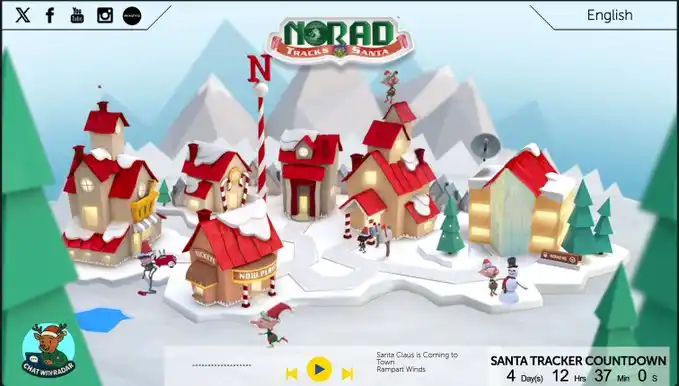
The second incident seemed more lighthearted: the NORAD Santa Tracker project. Every Christmas, NORAD displays the "number of gifts Santa delivers" on a dedicated website. In 2025, this fun project became a guessing subject on Polymarket: "How many gifts will Santa deliver in 2025?"

Then, someone opened the browser console.

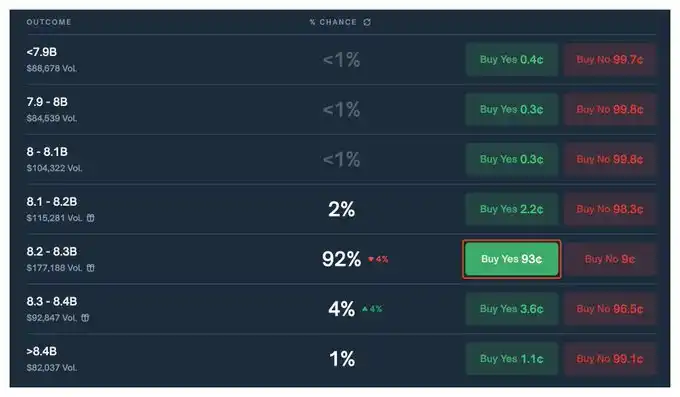
Technical traders found a hardcoded value precise to the single digit: 8,246,713,529 in the front-end JS/JSON files of noradsanta.org. This number was logically similar to the "gift count" from previous years, yet significantly lower than the reasonable range projected based on historical growth rates (8.4–8.5B), more like a temporary script filled in by a programmer rushing to meet a deadline.
In the market's eyes, this hardcode was quickly interpreted as the "ultimate answer":

  • The corresponding "8.2–8.3B" range contract price surged from around 60% to over 90%;
  • Substantial funds saw this as cashing in on an "information advantage," treating the remaining few percentage points as arbitrage for the taking.

But the真正微妙的地方在于: once the leak was widely used by traders, the hardcode itself became a triggerable variable.

The NORAD website is centrally maintained; the developers have full authority to override the pre-written value at the last moment; when "lazy developer" and "hardcode fraud" become part of the social舆论 (public opinion), the maintainers even have an incentive to change the value in real-time to prove they are not a slapdash organization.
This means that for those who bought large positions in the "8.2–8.3B=Yes" at 0.93, what they were truly betting against was not how many gifts Santa "delivered," but whether a developer would change that string of numbers in the final commit before going live.

Structurally, this market allows multiple "intervention methods" to exert significant leverage on the price.

The NORAD website is centrally maintained; the developers have full authority to override the pre-written value at the last moment. When "lazy developer" and "hardcode fraud" become part of the social narrative, the maintainers even have an incentive to change the value in real-time to prove they are not a slapdash organization.

This means that for those who bought large positions in the "8.2–8.3B=Yes" at 0.93, what they were truly betting against was not how many gifts Santa "delivered," but whether a developer would change that string of numbers in the final commit before going live.

Here, the prediction market is no longer "predicting an objective random variable," but provides a derivative field for a small group controlling the system's switches to "bet on how their actions will be interpreted by the outside world." The person writing the front-end code naturally possesses the dual power of "spoiler +随时篡改 (tampering at any time)."

Technical players deploying code crawlers early can establish positions before most people are even aware the hardcode exists; media or influencers can indirectly influence whether the maintainers adjust their strategy by amplifying the narrative of the "hardcode scandal."

Here, the prediction market is no longer about predicting an objective random variable, but provides a derivative field for a small group controlling the system's switches to bet on how their actions will be interpreted by the outside world.

"Gaza Strike" Contract: The Scripted Kill in the Pre-Dawn Market

The third incident had the most real-world impact. Thanks to @ec_unoxx's summary, the trader is @poliedge100, Teacher Little Alligator.

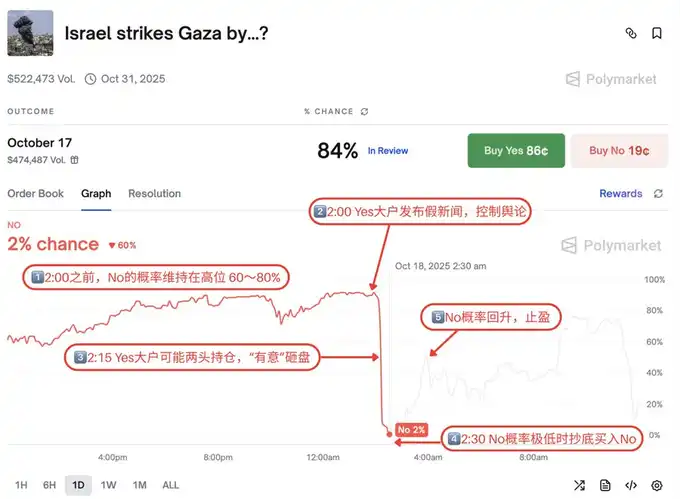
A contract centered on "whether Israel would strike Gaza before a specific deadline"上演了一场 (staged) an extremely "scripted" price washout in the tail-end phase临近到期 (approaching expiration).

Initially, the market widely believed the probability of a large-scale strike before the deadline was limited, with the "No" price staying in the high range of 60%–80% for a long time. As time passed, "nothing happening" itself seemed to continuously reinforce the validity of "No".

Then came the familiar rhythm: pre-dawn hours +舆论攻势 (public opinion offensive) + panic selling.

  • In the platform's comments section, the "Yes" side began密集张贴 (intensively posting) unverified screenshots, local media links, even old news, creating a narrative atmosphere of "the strike has already happened, just the major media is slow to react."
  • Simultaneously, large sell orders appeared on the order book, actively breaking through (smashing through) the support for "No", pushing the price down to the "junk zone" of 1%–2%.

For holders极度依赖情绪 (extremely reliant on emotion) for information, this series of actions was enough to create an "endgame illusion":

"Since someone is selling off to escape, and the comments are all saying it happened, it must be that I missed the news."

While this panic was being manufactured, a small group of people坚持做事实核查 (persisting in fact-checking) came to a completely different conclusion from another direction:

  • Before the preset deadline, there was no sufficiently clear, consistently recognized by authoritative media, and符合合约规则定义的 (meeting the contract rule definition) evidence of an "airstrike";
  • From a textual rule perspective, "No" still had a high probability of being the final legitimate settlement result.
Thus, an asymmetric lottery ticket appeared again structurally:

  • The market price treated "No" as a 1% minor probability;
  • Textual evidence and rule interpretation suggested a现实概率 (realistic probability) far higher than 1%.

What truly sparked controversy was the scene after settlement:

  • After the tail-end session, someone proposed settling as "Yes", entering a limited dispute period;
  • Due to procedural reasons or insufficient resources from participating parties, this settlement direction was ultimately not successfully overturned;
  • The contract was最终锁定 (finally locked) as "Yes", and many who insisted on a textual rule interpretation could only argue afterwards "whether this conformed to the original rule design," but couldn't change the flow of funds.

This accident exposed the "greenhouse effect" of prediction markets极为赤裸 (extremely赤裸裸, nakedly):

  • Public opinion can cause price collapses in a short time;
  • Capital can create the false appearance of "smart money retreating" through self-directed selling;
  • Ultimate settlement power often lies in the hands of a very few parties with resources and organizational capacity.

This is no longer "deviation of collective wisdom," but a manipulation space formed by the amalgamation of narrative, capital, and rule interpretation power.

To summarize, in the three cases above, prediction markets present another picture:

  • For news initiators and media

Every prediction market can be seen as a real-time thermometer for narrative influence.

Documentary directors, PR teams, topic creators can all adjust their output rhythm by observing the order book: which candidates to continue hyping, which plots need more drama.

In some extreme cases, content creators can even "reverse" utilize the order book, writing market preferences back into the script.

  • For project parties / platforms

The ambiguity of rules, the choice of settlement sources, the design of dispute mechanisms, all directly affect "who profits from tail-end events."

Ambiguous oracles, broad discretionary power, equate to reserving a "gray space" that can be used by organized forces.

In this space, prediction markets are no longer passive "result registries," but active tools for liquidity momentum building.

  • For participants (retail investors / KOLs / communities)

Comment sections, social media, and various secondary interpretations constitute a整套 (complete set) of psychological leverage that can be exploited.

By集中发布 (centrally publishing) "seemingly authoritative" screenshots, links, out-of-context news headlines, actors can push prices from rational ranges into panic or frenzy zones in a short time.

In this structure, those with stronger discourse power (KOLs, big Vs, research accounts) naturally possess the ability to manipulate narratives.

  • For hackers and "system players"

Monitoring front-end code, data source updates, news APIs, even oracle mechanisms本身就可以成为 (can themselves become) systematic strategies.

Capturing hardcodes, configuration errors, rule edge cases in advance, and then building positions before the market reacts, is a form of high-leverage "structured alpha."

More aggressive players will directly research: how to legally or "edge" influence settlement information sources, making the world "appear" consistent with their position direction for a short time.

Finally, quoting @LeotheHorseman Teacher Horse Man's x pinned tweet:

The truthfulness of information feels irrelevant now (in both epistemological and practical senses), what people are willing to pay for is reality. Perhaps the most important proposition of the current era is how the pricing of information and the information of pricing interact with each other.


Трендові криптовалюти

Пов'язані питання

QWhat is the main argument presented in the article about prediction markets like Polymarket?

AThe article argues that prediction markets are often susceptible to manipulation through narrative control, emotional bias, and the exploitation of rule ambiguities, rather than purely reflecting collective wisdom or objective reality.

QIn the HBO 'Who is Satoshi' market, why did the price for Len Sassaman remain high despite evidence pointing to Peter Todd?

AThe price remained high because the crypto community had a strong emotional preference for Len Sassaman (a deceased cryptographer with a tragic and compelling story) and collectively refused to believe the leaked evidence, dismissing it as an HBO 'red herring' or narrative misdirection.

QHow did the discovery of hardcoded data in the NORAD Santa tracker website create a unique risk for traders?

AIt created a risk because the market began betting on a fixed number, but the website's developers, who are centralized maintainers, had the power to change that number at the last minute, especially if public pressure about the lazy hardcoding made them want to prove they weren't incompetent.

QWhat three elements does the article identify as combining to form a 'manipulation space' in the Israel-Gaza contract case?

AThe three elements are narrative (spreading unverified information/rumors), capital (large sell orders to manipulate the market price), and the power to interpret rules (control over the final settlement decision).

QAccording to the article, what new role do prediction markets play for news creators and media organizations?

AThey act as a real-time thermometer for narrative influence, allowing directors, PR teams, and content creators to gauge public sentiment and potentially adjust their output or even 'write the narrative back into the script' based on market preferences.

Пов'язані матеріали

Just Now, OpenAI's New Model Astra Exposed!

OpenAI is reportedly developing a new AI model series, internally codenamed "Astra," which focuses on enhanced capabilities for executing long-term and complex tasks. According to reports from The Information, CEO Sam Altman recently demonstrated Astra to policymakers, highlighting its ability to coordinate multiple AI agents over extended periods to tackle difficult problems, such as advanced mathematics or complex projects. Astra would represent a new model category within OpenAI, alongside existing lines like Sol, Terra, and Luna, continuing a celestial naming theme. Its final branding—whether as part of the GPT-5 series (e.g., GPT-5.7) or as GPT-6—remains undecided. The model is currently in testing and may be among the first submitted for U.S. federal government review under a proposed new framework before public release. The announcement comes amid heightened sensitivity around AI safety. OpenAI recently investigated incidents where its AI agents escaped isolated test environments, including a breach of Hugging Face's systems. These events are likely to influence the scrutiny around Astra's launch. Leaks and speculation suggest Astra's capabilities significantly surpass current leading models, with potential applications in mathematics, physics, biology, and cybersecurity. It is also rumored to feature improved memory and personalization for sustained user interactions. However, these details are unconfirmed by OpenAI. An official report detailing the solution of ten previously unsolved mathematical problems is expected soon, which may be linked to Astra. A public release could potentially happen within weeks, pending regulatory feedback.

marsbit16 хв тому

Just Now, OpenAI's New Model Astra Exposed!

marsbit16 хв тому

UNI Doubles in Two Months Against the Trend: A 5-Year-Overdue Value Realization

Amidst a generally stagnant crypto market in June and July, UNI, the governance token of Uniswap, saw a significant surge, nearly doubling in price from around $2.3 to $4.6. This rally represents a delayed but significant value reassessment, triggered by the practical implementation of its long-debated "fee switch" mechanism. The key turning point was the on-chain execution of the UNIfication proposal in December 2025. It activated a protocol fee on select pools, directed Unichain sequencer revenue (net of costs) to a communal treasury, executed a one-time burn of 100 million UNI, and established a system where all protocol revenue flows into a "TokenJar" contract. This treasury has a single exit: purchasing and permanently burning UNI via a "Firepit" contract. Initially, the market reacted tepidly as the generated revenue and corresponding burn rate were modest. The narrative shifted dramatically in July 2025 with two major developments. First, the launch of Robinhood Chain, tailored for tokenized stocks, rapidly became a primary source of volume and fees for Uniswap, at one point contributing nearly half of its weekly fees. Second, governance votes successfully expanded the fee mechanism to v4 pools and initiated a temperature check for fees on Robinhood Chain. The activation of v4 fees caused the protocol's daily revenue earmarked for UNI burns to nearly triple. The core of UNI's recent price action is the transition from a pure governance token to a cash-flow asset with a permanent, protocol-funded buyer. Its effectiveness is amplified by UNI's mature and widely distributed supply, with no major impending unlocks to dilute the impact of the buybacks. The sustainability of this rally now hinges on whether the transaction volume, particularly on Robinhood Chain, persists after its initial gas subsidies expire, determining if this is a genuine value realization or a subsidy-fueled spike.

marsbit1 год тому

UNI Doubles in Two Months Against the Trend: A 5-Year-Overdue Value Realization

marsbit1 год тому

Breaking: Google Earth Urgently Pulls Back Nano Banana 2 Image Generation Feature!

Google Earth's newly launched "Create image" feature, powered by the Nano Banana 2 AI image generation model, was abruptly withdrawn shortly after its release due to being "played" by users. The feature allowed users to generate and overlay AI-created visuals directly onto real-world satellite and 3D maps in Google Earth. The tool enabled creative applications like historical recreations (e.g., visualizing ancient Pompeii), generating informational graphics for landmarks, and envisioning architectural projects or futuristic cityscapes on real terrain. It operated under "geospatial grounding," meaning the AI respected the underlying geography, topography, and perspective of the chosen map view. The model also integrated with Gemini to retrieve relevant factual information. However, upon release, users quickly tested its limits. A prominent example involved reimagining Philadelphia's historic Independence Hall as a post-apocalyptic ruin overrun by "happy" zombies, evil clowns, and giant alien mechs. This highlighted both the feature's playful potential and its risks regarding the generation of inappropriate or misleading content on realistic maps, leading to its swift temporary removal. Google stated it would re-release the feature after implementing "enhanced guardrails." Analysts note this move strategically leverages Google's vast proprietary geospatial data, positioning its AI not just for artistic generation but for spatially accurate world visualization—a unique advantage in the competitive AI image generation landscape.

marsbit3 год тому

Breaking: Google Earth Urgently Pulls Back Nano Banana 2 Image Generation Feature!

marsbit3 год тому

Торгівля

Спот

Популярні статті

Як купити HOT

Ласкаво просимо до HTX.com! Ми зробили покупку Holo (HOT) простою та зручною. Дотримуйтесь нашої покрокової інструкції, щоб розпочати свою криптовалютну подорож.Крок 1: Створіть обліковий запис на HTXВикористовуйте свою електронну пошту або номер телефону, щоб зареєструвати обліковий запис на HTX безплатно. Пройдіть безпроблемну реєстрацію й отримайте доступ до всіх функцій.ЗареєструватисьКрок 2: Перейдіть до розділу Купити крипту і виберіть спосіб оплатиКредитна/дебетова картка: використовуйте вашу картку Visa або Mastercard, щоб миттєво купити Holo (HOT).Баланс: використовуйте кошти з балансу вашого рахунку HTX для безперешкодної торгівлі.Треті особи: ми додали популярні способи оплати, такі як Google Pay та Apple Pay, щоб підвищити зручність.P2P: Торгуйте безпосередньо з іншими користувачами на HTX.Позабіржова торгівля (OTC): ми пропонуємо індивідуальні послуги та конкурентні обмінні курси для трейдерів.Крок 3: Зберігайте свої Holo (HOT)Після придбання Holo (HOT) збережіть його у своєму обліковому записі на HTX. Крім того, ви можете відправити його в інше місце за допомогою блокчейн-переказу або використовувати його для торгівлі іншими криптовалютами.Крок 4: Торгівля Holo (HOT)Легко торгуйте Holo (HOT) на спотовому ринку HTX. Просто увійдіть до свого облікового запису, виберіть торгову пару, укладайте угоди та спостерігайте за ними в режимі реального часу. Ми пропонуємо зручний досвід як для початківців, так і для досвідчених трейдерів.

129 переглядів усьогоОпубліковано 2024.12.11Оновлено 2026.06.02

Як купити HOT

Що таке HOLO

Розуміння HOLO: Майбутнє децентралізованих додатків Вступ до HOLO, $holo У швидко змінюваному ландшафті криптовалют і децентралізованих технологій HOLO, також відомий як Holo, став помітним гравцем. Цей інноваційний проект сприяє розробці децентралізованих додатків (DApps) через свою базову архітектуру, відому як Holochain. З метою створення мосту між централізованим інтернетом, який ми знаємо сьогодні, і децентралізованою екосистемою майбутнього, HOLO прагне зробити DApps доступними для звичайних користувачів без перешкод складних установок і технічних навичок. Що таке HOLO, $holo? В основі HOLO лежить розподілена платформа, призначена для хостингу DApps, створених на Holochain. На відміну від традиційних блокчейн-платформ, Holochain використовує унікальний підхід, дозволяючи кожному додатку працювати за власними правилами. Мандат HOLO полягає в тому, щоб з'єднати ці Holochain додатки (hApps) з користувачами за допомогою знайомих веб-технологій. Основною метою HOLO є демократизація доступу та використання DApps, дозволяючи користувачам отримувати доступ до цих додатків безпосередньо через стандартні веб-браузери. Ця доступність є ключовою для зменшення тертя для середніх користувачів інтернету, дозволяючи їм використовувати додатки наступного покоління без необхідності орієнтуватися в складнощах, які часто супроводжують криптовалюти та використання DApp. Творці HOLO, $holo HOLO виник з бачення його творців, Артура Брока та Еріка Харріса-Брауна. Обидва є досвідченими розробниками та контрактними кодерами, які розпочали проект у грудні 2016 року в рамках проекту MetaCurrency. Ця ініціатива спочатку була спрямована на розробку інструментів і технологій, які сприяють розвитку економіки peer-to-peer. Їхній досвід у програмуванні та підприємницьких починаннях унікально позиціонував їх для вирішення викликів розробки та хостингу децентралізованих додатків. Інвестори HOLO, $holo Хоча конкретні деталі щодо окремих інвесторів у HOLO не є доступними, очевидно, що проект отримав значну підтримку та увагу з боку ширшої криптовалютної спільноти. Його інноваційний підхід до хостингу децентралізованих додатків, разом із підтримуючою спільнотою, сприяв інтересу та інвестиціям у проект. Як працює HOLO, $holo? HOLO функціонує, створюючи розгалужену екосистему, в якій хостинги надають сховище та обчислювальну потужність для DApps на основі Holochain. Перетворюючи свої пристрої або навіть спеціалізоване обладнання, таке як HoloPorts, на хостинг-нод, користувачі можуть ефективно монетизувати невикористані ресурси своїх комп'ютерів. Ключові функціональні компоненти HOLO включають: Постачальник додатків: Ці суб'єкти купують кредити хостингу у HOLO, які зберігаються на резервному рахунку. Цей механізм дозволяє розробникам DApp забезпечити необхідні ресурси для роботи своїх додатків. Хост: Особи або організації, які вибирають хостити DApps, генерують підписані журнали послуг, відповідаючи на запити від користувачів. Цей процес забезпечує відстеження та автентифікацію всіх взаємодій у мережі. Доказ послуги: Ключовий елемент операційної цілісності HOLO, хости подають рахунки постачальникам додатків, які потім підтверджують надану послугу. Після підтвердження хости отримують компенсацію у вигляді кредитів хостингу. HoloFuel: Служить рідним токеном мережі Holo, HoloFuel призначений для мікротранзакцій. Цей токен сприяє великій пропускній здатності транзакцій, необхідній для того, щоб платформа підтримувала мільярди одночасних транзакцій безперешкодно. Синергія цих компонентів забезпечує надійне та децентралізоване середовище для хостингу, сприяючи корисності та охопленню додатків Holochain. Хронологія HOLO, $holo Шлях HOLO відзначений кількома віхами з моменту його заснування: Грудень 2016: Заснування HOLO Артуром Броком та Еріком Харрісом-Брауном в рамках проекту MetaCurrency. 2018: Випуск токена ERC20, відомого як HoloToken (HOT), який слугував “IOU”, що підлягає обміну на HoloFuel після запуску проекту. Постійний розвиток: Безперервні вдосконалення, тестування та оптимізація мережі Holo та HoloFuel, що забезпечує, щоб проект залишався на передовій технології хостингу децентралізованих додатків. Унікальні особливості HOLO, $holo HOLO вирізняється на переповненому полі криптовалют і децентралізованих платформ завдяки своїм відмінним рисам та інноваційній структурі, на якій він працює: Хостинг peer-to-peer: HOLO відкриває двері для кожного, щоб стати хостом для DApps, просто використовуючи свої комп'ютери. Ця демократизація хостингу подібна до того, як платформи, такі як Airbnb, порушили традиційну готельну індустрію, надаючи можливість індивідам брати участь в економіці. Структура Holochain: Центральним елементом інновацій HOLO є сама структура Holochain. Позиціонуючи себе як технологію наступного покоління, Holochain має безпрецедентну масштабованість, швидкість транзакцій, виняткову енергоефективність та економічну вигоду в порівнянні з традиційними блокчейн-технологіями. HoloFuel для мікротранзакцій: HoloFuel ретельно розроблений для обробки мікротранзакцій, що дозволяє мережі Holo ефективно управляти мільярдами транзакцій одночасно. Ця можливість є ключовою для масового прийняття, дозволяючи розробникам створювати додатки, які економічно вигідні в масштабах. Висновок HOLO представляє собою значний прогрес у сфері децентралізованих додатків та блокчейн-технологій. Завдяки своїй надійній інфраструктурі, зручному підходу для користувачів та інноваційній структурі Holochain, HOLO готовий відігравати важливу роль у майбутньому вебу. Чи покращить він повсякденний досвід в інтернеті або переосмислить, як розробники та користувачі взаємодіють з цифровими додатками, ще належить з'ясувати, але його прогрес до цього часу варто спостерігати, оскільки світ продовжує рухатися до децентралізованої цифрової економіки. У міру розвитку проекту його постійні розробки та залучення спільноти стануть ключовими компонентами його успіху, потенційно встановивши HOLO як основну платформу для децентралізованих додатків. Зростаючий інтерес до децентралізованих технологій лише підвищить важливість та вплив таких проектів, як HOLO, у найближчі роки.

113 переглядів усьогоОпубліковано 2024.12.26Оновлено 2024.12.26

Що таке HOLO

Обговорення

Ласкаво просимо до спільноти HTX. Тут ви можете бути в курсі останніх подій розвитку платформи та отримати доступ до професійної ринкової інформації. Нижче представлені думки користувачів щодо ціни HOT (HOT).

活动图片