Ủy viên SEC cho rằng tiền điện tử đang 'góp phần thúc đẩy đánh giá lại' về quyền riêng tư

cointelegraphОпубліковано о 2025-12-15Востаннє оновлено о 2025-12-15

Анотація

Ủy viên Ủy ban Chứng khoán Mỹ (SEC) Hester Peirce cho rằng tiền mã hóa đang thúc đẩy đánh giá lại về quyền riêng tư tài chính, trong bối cảnh cơ quan này tổ chức hội thảo bàn tròn về giám sát tài chính và quyền riêng tư người dùng. Peirce nhấn mạnh hệ thống hiện tại đã lỗi thời và công nghệ blockchain tạo ra nhu cầu về các công cụ bảo vệ quyền riêng tư. Sự kiện có sự tham gia của đại diện Zcash, Hiệp hội Blockchain và Hội đồng Đổi mới Crypto. Đồng thời, Thượng viện Mỹ đang gấp rút xem xét dự luật cấu trúc thị trường tài sản kỹ thuật số trước thời điểm nghỉ lễ và sự ra đi của ủy viên SEC Caroline Crenshaw. Dự luật dự kiến tăng quyền lực cho CFTC và điều chỉnh ưu tiên quản lý của SEC.

Các nhà quản lý tại Ủy ban Chứng khoán và Giao dịch Hoa Kỳ (SEC) đã gặp gỡ các nhà lãnh đạo ngành công nghiệp tiền điện tử vào thứ Hai để thảo luận về giám sát tài chính và quyền riêng tư của người dùng, như một phần trong nỗ lực liên tục của cơ quan nhằm định hình công tác giám sát tài sản kỹ thuật số.

Trong phần phát biểu khai mạc tại buổi hội thảo bàn tròn, Ủy viên SEC Hester Peirce, người cũng đứng đầu lực lượng đặc nhiệm về tiền điện tử của cơ quan, cùng Chủ tịch Paul Atkins và Ủy viên Mark Uyeda đã phác thảo cách các nhà quản lý có thể cân bằng giữa bảo vệ nhà đầu tư và các cân nhắc về quyền riêng tư khi hoạt động tài chính dựa trên blockchain mở rộng.

Atkins cho biết tiền điện tử có tiềm năng trở thành "kiến trúc giám sát tài chính mạnh mẽ nhất từng được phát minh", tùy thuộc vào cách chính phủ Hoa Kỳ xử lý quy định. Ông trích dẫn cách tiếp cận trước đây của SEC, "coi mọi ví như một nhà môi giới", yêu cầu báo cáo nhiều giao dịch hơn.
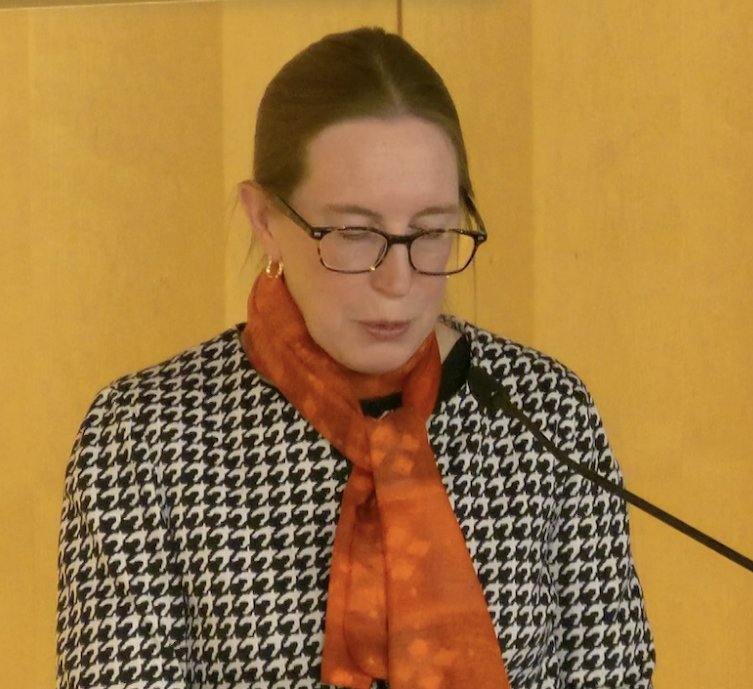
Ủy viên SEC Hester Peirce phát biểu tại hội thảo bàn tròn vào thứ Hai. Nguồn: SEC

Peirce lặp lại quan điểm của Atkins trong tuyên bố của mình, gợi ý rằng các nhà quản lý cần "suy nghĩ lại về thời điểm và cách thức các giao dịch tài chính được giám sát" khi thị trường tiền điện tử phát triển.

"Sự suy giảm quyền riêng tư tài chính quốc gia của chúng ta và các quy tắc thể hiện nó đã quá hạn cần thay đổi, và tiền điện tử đang góp phần thúc đẩy một cuộc đánh giá lại," Peirce nói, đồng thời cho biết thêm rằng tiền điện tử "mở ra những khả năng mới cho các giao dịch không có trung gian tài chính, vốn là trung tâm của mô hình giám sát tài chính hiện có của chúng ta [...]." Bà tiếp tục:

"Mặt khác, như đã được đề cập, các blockchain công cộng nơi nhiều giao dịch tiền điện tử diễn ra có thể được mọi người xem xét, điều này tạo ra nhu cầu về các công cụ bảo vệ quyền riêng tư."

Hội thảo bàn tròn về giám sát và quyền riêng tư, có sự tham gia của đại diện từ token quyền riêng tư Zcash (ZEC), Hiệp hội Blockchain và Hội đồng Đổi mới Crypto, là sự kiện thứ sáu của lực lượng đặc nhiệm thảo luận về các khía cạnh khác nhau của quy định và chính sách tài sản kỹ thuật số kể từ khi Peirce thành lập nhóm vào tháng Một.

Nhiều người trong ngành công nghiệp tiền điện tử đã lên tiếng báo động về quyền riêng tư khi thị trường tiếp tục phát triển và các nhà quản lý, nhà lập pháp và tòa án đang nỗ lực giải quyết các mối quan ngại.

Liên quan: Ủy viên SEC Hoa Kỳ Crenshaw nhắm mục tiêu vào tiền điện tử trong những tuần cuối tại cơ quan

Cơ cấu thị trường để cải tổ thẩm quyền của SEC đối với tài sản kỹ thuật số

Giữa lúc diễn ra cuộc thảo luận bàn tròn và sự ra đi sắp tới của Ủy viên SEC Caroline Crenshaw, các nhà lập pháp tại Thượng viện Hoa Kỳ đang không còn nhiều thời gian để giải quyết luật nhằm thiết lập một cơ cấu thị trường tài sản kỹ thuật số toàn diện trước năm 2026.

Các bản dự thảo đầu tiên của dự luật cho thấy nó có thể trao cho Ủy ban Giao dịch Hàng hóa Tương lai (CFTC) thẩm quyền lớn hơn đối với tiền điện tử và thay đổi các ưu tiên quản lý của SEC.

Sau khi một dự luật về cơ cấu thị trường, có tên là Đạo luật CLARITY, được Hạ viện thông qua vào tháng Bảy, các thành viên của Thượng viện Hoa Kỳ đã tham gia đàm phán để đưa dự luật ra trình để bỏ phiếu trước khi kết thúc năm. Tính đến thứ Hai, mục tiêu này của các nhà lãnh đạo Đảng Cộng hòa dường như khó có thể đạt được.

Ủy ban Ngân hàng Thượng viện và Ủy ban Nông nghiệp Thượng viện đều đã công bố các bản thảo thảo luận về các phiên bản dự luật tương ứng của họ. Tuy nhiên, tính đến thời điểm công bố, không có phiên họp đánh dấu nào xuất hiện trong lịch trình của ủy ban ngân hàng, khi viện này sắp nghỉ lễ trong vài ngày tới.

Tạp chí: Khi luật quyền riêng tư và AML xung đột: Lựa chọn bất khả thi của các dự án Crypto

Пов'язані питання

QỦy viên Ủy ban Chứng khoán và Giao dịch Hoa Kỳ (SEC) nào đã phát biểu rằng tiền điện tử đang giúp thúc đẩy đánh giá lại quyền riêng tư?

AỦy viên Hester Peirce, người đứng đầu lực lượng đặc nhiệm về tiền điện tử của SEC, đã tuyên bố rằng tiền điện tử 'đang giúp thúc đẩy đánh giá lại' về quyền riêng tư tài chính.

QCuộc họp bàn tròn do SEC tổ chức bàn về những chủ đề chính?

ACuộc họp bàn tròn thảo luận về giám sát tài chính và quyền riêng tư của người dùng, nhằm cân bằng giữa bảo vệ nhà đầu tư và các cân nhắc về quyền riêng tư trong hoạt động tài chính dựa trên blockchain.

QTheo bài viết, tại sao các blockchain công khai lại tạo ra nhu cầu về các công cụ bảo vệ quyền riêng tư?

ABởi vì các blockchain công khai, nơi nhiều giao dịch tiền điện tử diễn ra, có thể được mọi người xem xét, điều này làm dấy lên nhu cầu cần có các công cụ bảo vệ sự riêng tư.

QDự luật cấu trúc thị trường nào đã được Hạ viện Hoa Kỳ thông qua và đang chờ xem xét tại Thượng viện?

AĐó là Dự luật CLARITY Act, đã được Hạ viện thông qua vào tháng 7 và hiện đang được đàm phán để đưa ra bỏ phiếu tại Thượng viện trước cuối năm.

QDự luật cấu trúc thị trường được đề xuất có thể tác động thế nào đến cơ quan quản lý?

ACác bản dự thảo ban đầu cho thấy dự luật có thể trao cho Ủy ban Giao dịch Hàng hóa Tương lai (CFTC) thẩm quyền lớn hơn đối với tiền điện tử và thay đổi các ưu tiên quản lý của SEC.

Пов'язані матеріали

Sharplink CEO: One Million Ethereum Developers, Who Can Compete?

Etherean Ecosystem: One Million Developers and a Formidable Moat The Ethereum network has surpassed a significant milestone: over one million unique lifetime developers, with approximately 232,000 active in the past year. This vast and growing talent pool is Ethereum's core advantage, far more critical than transient metrics like speed or transaction fees. The central question is not which blockchain is fastest, but where the best builders choose to build long-term. Ethereum's answer lies in a decade-long accumulation of infrastructure, standards, tools, liquidity, and collaborative culture that is exceptionally difficult to replicate. It has become the default operating system for programmable finance. This massive developer base is actively working on complex, high-risk challenges that deepen Ethereum's strategic moat: * **Glamsterdam Upgrade (2026):** Focused on core protocol scalability (ePBS, parallel execution) while preserving core values like credible neutrality. * **Synchronous Composability:** Aims to make numerous Rollups interoperate like a single chain, directly addressing fragmentation concerns. * **Quantum Resistance:** Ethereum leads mainstream ecosystems in coordinated preparation for post-quantum cryptography, with a targeted migration plan around 2029. This developer advantage is self-reinforcing, fueled by: * **Deep Composability:** Applications interact like interoperable financial Lego bricks via shared standards (e.g., EVM, Solidity). * **Credible Neutrality:** Secured by over 900,000 validators, making it trusted by major institutions. * **Modularity:** Rollups (Base, Arbitrium, etc.) expand, rather than fracture, the ecosystem into a tightly connected modular internet economy. * **Culture:** Attracts top-tier researchers and standard-setters who guide the entire industry. In essence, while other chains generate activity, Ethereum is consolidating as the trusted, long-term coordination layer for internet-native finance. Its future is being built now by the architects of the next-generation financial infrastructure.

Odaily星球日报27 хв тому

Sharplink CEO: One Million Ethereum Developers, Who Can Compete?

Odaily星球日报27 хв тому

Ethereum Reaches the Milestone of One Million Developers, Sharplink CEO Delves Deep into Ethereum's Future Possibilities

Ethereum Surpasses One Million Developers Milestone: A Look at Its Unshakeable Dominance and Future Joseph Chalom, CEO of Sharplink, reflects on his recent Asia trip where he engaged deeply with Ethereum developers and ecosystem leaders. The most striking takeaway was not just the industry's vibrancy, but the rigorous, long-term vision of local builders. This context brings to life a pivotal statistic: Ethereum has now surpassed one million cumulative developers (1,012,824), with approximately 232,000 remaining active in the past year—a talent pool unmatched by any other crypto ecosystem. The critical question isn't which blockchain is fastest, but where top developers choose to build long-term. Ethereum's answer is unequivocal. Its decade-long lead stems from a unique convergence of technology, institutional culture, economic systems, and composability, cementing its role as the foundational operating system for programmable finance. This massive developer base is tackling the industry's hardest problems, continuously strengthening Ethereum's moat. Key initiatives include: * **The Glamsterdam Upgrade (planned 2026):** Introducing ePBS and Block-level Access Lists for parallel execution and higher throughput while preserving core values like credible neutrality and fair MEV distribution. * **Synchronous Composability:** Projects are working to enable atomic transactions across dozens of Rollups, making them function as one unified chain and eliminating ecosystem fragmentation. * **Post-Quantum Security:** Ethereum is far ahead in preparing for quantum computing threats, with a dedicated foundation working group and testnets targeting a full migration by ~2029—a crucial factor for institutional adoption. Beyond developers, Ethereum's core network effects are its unparalleled composability and unified standards (like EVM and Solidity), which create a powerful flywheel: more developers → better tools → greater liquidity → more institutional participation. Its other decisive advantages include credible neutrality (over 900k validators), a secure modular architecture with interconnected Rollups, and a deeply entrenched culture shaped by top-tier researchers. Ultimately, there's a vast difference between generating short-term activity and becoming the trusted, long-term coordination layer for global native finance. Major institutions prioritize security, trust, and liquidity—areas where Ethereum holds dominant mindshare. The industry's trajectory shows resources consolidating around unified standards, deep liquidity, and developer consensus. After meeting the builders in Seoul and Hong Kong, Chalom is more convinced than ever: Ethereum's unshakeable future is being built right now.

Foresight News38 хв тому

Ethereum Reaches the Milestone of One Million Developers, Sharplink CEO Delves Deep into Ethereum's Future Possibilities

Foresight News38 хв тому

Saylor's Latest Long Read: Bitcoin is Not Money, It's Digital Capital, and Money is Built Upon It

Michael Saylor presents his "Digital Asset Stack" theory, positioning Bitcoin as the foundational layer of digital capital. He argues Bitcoin itself should remain unchanged—no staking, inflation, or protocol alterations. Instead, a five-layer financial architecture should be built atop it: Digital Capital (BTC), Digital Credit (e.g., yield instruments like STRC), Digital Currency (stable, yield-bearing instruments pegged to fiat), Digital Yield (leveraged/structured products), and Digital Equity (e.g., MSTR stock, absorbing residual volatility). Saylor asserts this stack transforms Bitcoin's high-volatility, high-energy capital into tailored products: stable currencies for payments/savings, yield instruments for income seekers, and equity for growth investors. This approach meets diverse needs—corporate treasuries, banks, retirees, emerging market users—without compromising Bitcoin's core properties (scarcity, decentralization). The "killer use case" is rebuilding global money, credit, and capital markets on Bitcoin, bridging the fiat world with a superior digital asset foundation. The system leverages traditional finance principles (risk layering, structured products) while using Bitcoin as the ultimate collateral. This expands Bitcoin's utility, drives adoption, and offers a better monetary experience: digital, yield-bearing, stable-value tools for everyday use.

marsbit50 хв тому

Saylor's Latest Long Read: Bitcoin is Not Money, It's Digital Capital, and Money is Built Upon It

marsbit50 хв тому

Can SK Hynix's Stock Double Again in This Rally?

The article discusses the highly optimistic price target of approximately $3,500 for SK Hynix stock, set by Aletheia Capital. This target is significantly above the consensus range of $2,000-$2,520 from major brokerages. The core debate is whether SK Hynix deserves a fundamental re-rating beyond its traditional cyclical discount, based on the long-term impact of AI-driven demand. The $3,500 target hinges on three key assumptions holding simultaneously until at least 2027: 1) Continued shortage and high pricing for HBM (High Bandwidth Memory), a critical component for AI chips; 2) Sustained high prices for standard DRAM, as HBM production consumes capacity and constrains general supply; and 3) Strong AI server demand generating substantial, above-expectation free cash flow. SK Hynix's leading ~58% market share in HBM and its early certification with key clients like Nvidia provide a competitive advantage, allowing it to capture significant supply chain premiums. The HBM shortage is seen not just as a niche growth driver but as a catalyst that amplifies profitability across the entire memory business by tightening overall DRAM supply. However, the article cautions that this target represents an optimistic "tail scenario." Key risks include potential supply increases from competitors (Samsung, Micron) by 2027, a possible slowdown in HBM price growth, and high capital expenditures that could erode the projected free cash flow. The divergence in analyst targets reflects the market's uncertainty over whether the current AI-driven boom will temporarily elevate earnings or permanently raise the memory industry's profit baseline.

marsbit54 хв тому

Can SK Hynix's Stock Double Again in This Rally?

marsbit54 хв тому

Торгівля

Спот
Ф'ючерси

Популярні статті

Як купити MET

Ласкаво просимо до HTX.com! Ми зробили покупку Meteora (MET) простою та зручною. Дотримуйтесь нашої покрокової інструкції, щоб розпочати свою криптовалютну подорож.Крок 1: Створіть обліковий запис на HTXВикористовуйте свою електронну пошту або номер телефону, щоб зареєструвати обліковий запис на HTX безплатно. Пройдіть безпроблемну реєстрацію й отримайте доступ до всіх функцій.ЗареєструватисьКрок 2: Перейдіть до розділу Купити крипту і виберіть спосіб оплатиКредитна/дебетова картка: використовуйте вашу картку Visa або Mastercard, щоб миттєво купити Meteora (MET).Баланс: використовуйте кошти з балансу вашого рахунку HTX для безперешкодної торгівлі.Треті особи: ми додали популярні способи оплати, такі як Google Pay та Apple Pay, щоб підвищити зручність.P2P: Торгуйте безпосередньо з іншими користувачами на HTX.Позабіржова торгівля (OTC): ми пропонуємо індивідуальні послуги та конкурентні обмінні курси для трейдерів.Крок 3: Зберігайте свої Meteora (MET)Після придбання Meteora (MET) збережіть його у своєму обліковому записі на HTX. Крім того, ви можете відправити його в інше місце за допомогою блокчейн-переказу або використовувати його для торгівлі іншими криптовалютами.Крок 4: Торгівля Meteora (MET)Легко торгуйте Meteora (MET) на спотовому ринку HTX. Просто увійдіть до свого облікового запису, виберіть торгову пару, укладайте угоди та спостерігайте за ними в режимі реального часу. Ми пропонуємо зручний досвід як для початківців, так і для досвідчених трейдерів.

346 переглядів усьогоОпубліковано 2025.10.24Оновлено 2026.06.02

Як купити MET

Обговорення

Ласкаво просимо до спільноти HTX. Тут ви можете бути в курсі останніх подій розвитку платформи та отримати доступ до професійної ринкової інформації. Нижче представлені думки користувачів щодо ціни MET (MET).

活动图片













