Grass 持币者会议结束,哪些信息藏着财富密码?

深潮Опубліковано о 2025-11-24Востаннє оновлено о 2025-11-25

省流:第二轮代币空投,暂定明年上半年。

撰文:深潮 TechFlow

还记得上一轮 DePIN 叙事中的明星项目 Grass 吗?

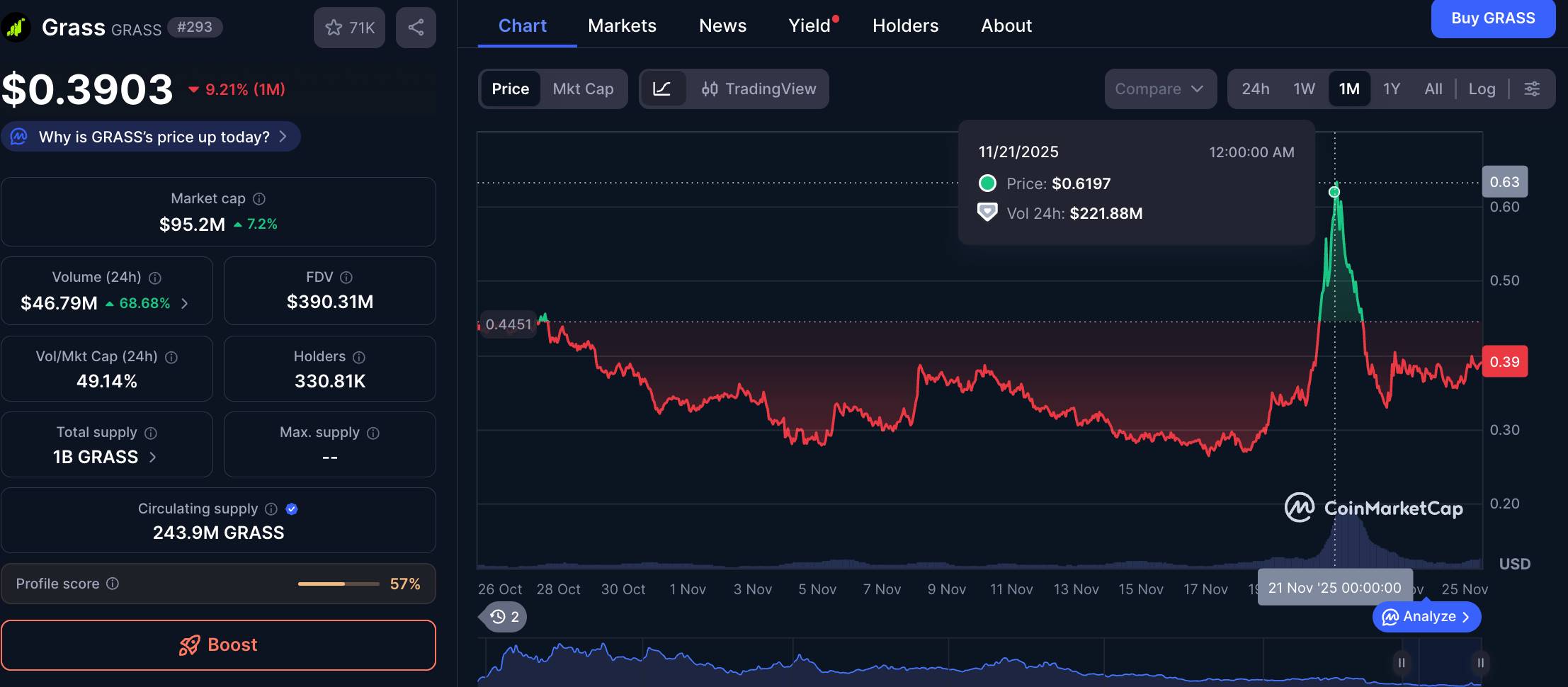
11月16日,GRASS 刚刚跌至$0.26的历史新低。不过一周后,代币反弹超过45%,同期跑赢大盘。

社区有一种声音认为,之前 GRASS 代币价格的剧烈变化,是在炒作项目首次 Token Holder Call(持币者会议) 的预期,期待这个面向所有持币者的会议里,官方能够透露出更为强劲的基本面信息。
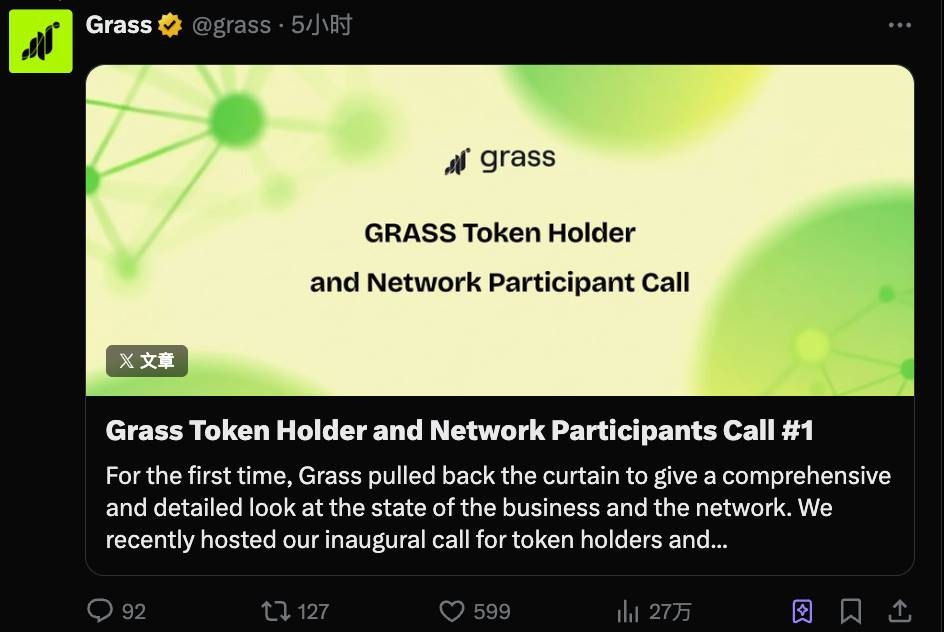
今天 Grass 也开完了这次 Token Holder Call,笔者在听完内容后发现这不太像是加密项目常见的那种“如听一席话”的 AMA ,而是一次接近财报性质的信息披露;

Grass 的收入数据、客户构成、回购计划、空投时间线,全部都是首次公开。

如果你错过了这场会议,我们也快速针对会议视频和官方回顾,对这次会议中透露的数据和关键信息做了总结,帮助你判断哪些信号值得关注。

会议回放链接:点击此处
收入从0干到千万美金,只用了3个季度?

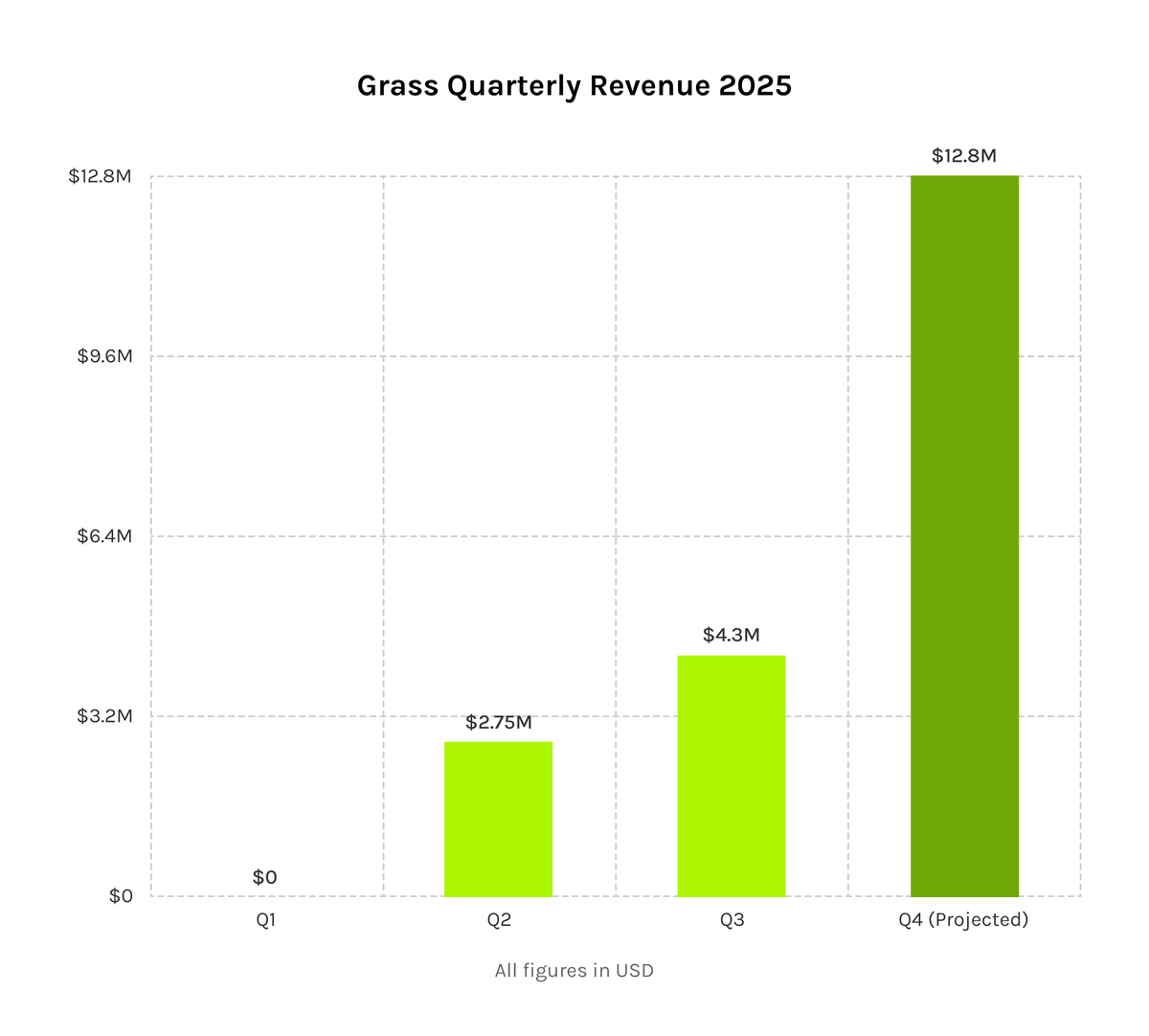
这是Grass首次公开披露收入数据:

  • Q1 2025:接近零

  • Q2 2025:约275万美元

  • Q3 2025:约430万美元

  • Q4 2025(预测):约1280万美元

官方表示,仅10月和11月两个月,预计收入就达到1000万美元。需要指出的是,Q4数据目前仍是预测值,实际情况有待验证。
Grass怎么赚钱?

在谈收入时,你得搞清楚Grass的生意是什么。

Grass是一个分布式带宽网络。用户安装插件或App后,Grass会借用你的闲置网络带宽去抓取公开网页上的内容,文字、图片、视频都有可能。

因为请求来自全球各地的普通家庭IP,不容易被网站屏蔽,这对需要大规模采集数据的客户来说很有价值。

谁是客户?主要是AI公司。训练大模型需要海量数据,而Grass能帮它们以较低成本获取这些素材。简单说,Grass向用户“借”带宽,打包成数据采集服务卖给AI公司,赚的是中间的差价。

收入从哪来?

会上提到,90%的收入来自"多模态数据":也就是视频、音频、图像这类非文本内容的采集服务;98%的收入与AI模型训练相关。

这说明Grass目前的客户群体非常集中:基本都是AI公司,买的基本都是训练素材

业务聚焦是一方面,但反过来也意味着,如果AI训练数据市场出现变化,Grass的收入会直接受到影响。

关于客户

Grass不公开客户名单,理由是AI公司将训练数据视为商业机密。会议中提到的信息包括:

  • Q4新签了一家 hyperscaler ,这个词你可以理解成大型云计算厂商;和一家视频生成领域的头部实验室

  • 几乎所有合作过的AI客户都有复购

不过这些表述均来自官方,外部几乎不太能验证数据的真实性。

代币回购了,但不多

会上披露,Grass已经动用业务收入从公开市场买入GRASS代币,其中上周完成约10万美元的回购,本周正在执行约25万美元的回购。

而回购的资金,来自今年前三季度的收入。为了防止大家不相信回购正在执行,官方表示之后会公布存放这些代币的钱包地址。
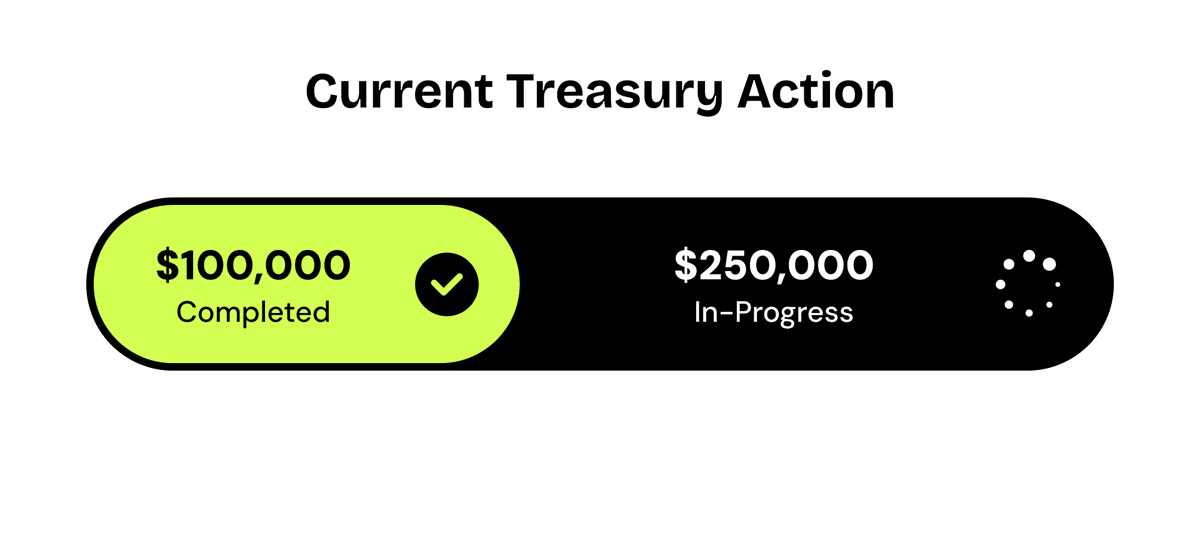
目前回购金额合计约35万美元。对比Q2和Q3合计约700万美元的收入,也就是说这笔回购的钱,占比约5%,不算特别大的数目,更像是一种态度的体现。

官方提到,未来回购会从人工决定转向程序化执行,但没有给出具体规则。

不过需要注意的是,回购并不是百试百灵的催化剂,HYPE 和 PUMP 都有回购,也有真实收入,但阶段性的代币价格仍有可能出现大跌。

官方同时说了两件事:一是会回购代币,二是会把大部分收入投入增长。这两者怎么分,目前没有明确比例。回购能持续多久、规模能不能放大,最终还是要看收入能不能继续涨。

第二轮空投,定在明年上半年

Grass在去年进行过一次空投,向早期参与者发放了GRASS代币。这次会议确认了第二轮空投的时间窗口:

2026年上半年。

领取方式会变

和第一次空投不同,Airdrop 2不会通过外部钱包领取,而是通过Grass官方即将上线的内置钱包发放。这个钱包基于账户抽象技术,会嵌入Grass的产品界面中。

翻译一下:以后领空投不用连MetaMask之类的第三方钱包,直接在Grass后台就能收到。

规则会变

官方说法是,新一轮空投会"更强调长期网络贡献"。但具体怎么算贡献、跑了多久才算长期、不同设备和行为怎么加权,这些细节都没有公布,要等钱包上线后才会明确。

对现有用户意味着什么

如果你现在在跑Grass节点,这次会议没有给出明确的行动指引。唯一确定的是:规则会变,时间在明年上半年,届时会有新的计算方式。至于现在的积分、等级、设备数量能不能延续权重,目前不知道。

当前的市场处于熊市,明年上半年整体加密情况是否好转仍存在不确定性,GRASS 目前给的空投计划时间点很模糊,笔者认为某种程度上也是应对当前熊市的一种缓兵之计。

月活从300万涨到850万,下一步想做AI的实时数据源

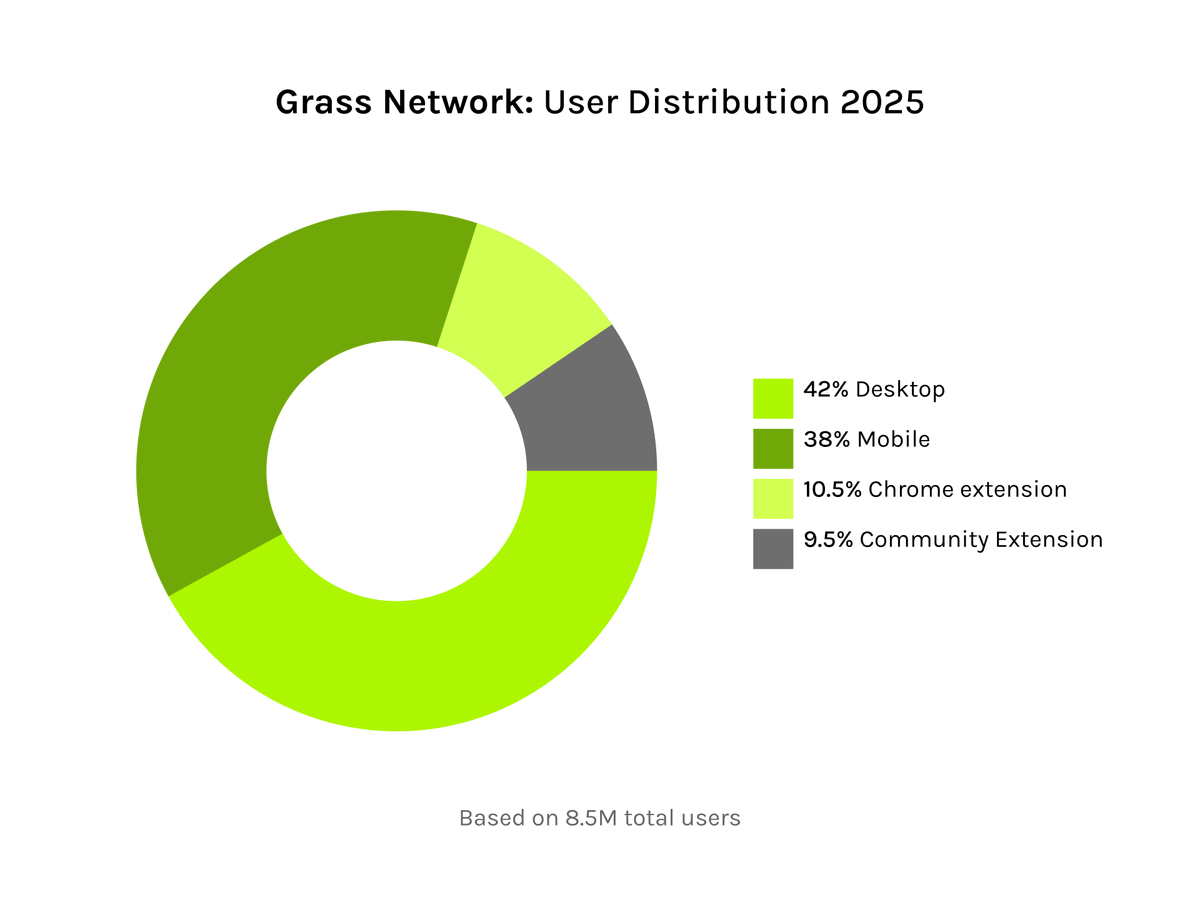
Grass的网络规模在过去一年增长明显。官方数据显示,月活跃参与者从第一次空投时的约300万增长到现在的约850万。移动端用户占比约38%,超过三分之一的人是通过手机App而不是电脑插件来贡献带宽。
官方称,Grass积累的多模态数据(视频、音频、图像)总量超过250PB。1PB大约等于100万GB。按官方说法,这个量级“足够训练一个前沿级别的视频生成模型”。

新方向:从卖训练数据到提供实时查询

Grass正在开发一个叫Live Context Retrieval(LCR)的新产品线,直译是“实时上下文检索”。

现有业务是帮AI公司采集数据用于训练模型,一次性、大批量。LCR的定位不同,是为AI模型运行过程中提供实时数据。比如模型需要查询某个网页的当前内容,Grass可以即时抓取并返回。

目前LCR还在早期,官方把它叫"V0版本",正在和三家SEO公司以及一家AI实验室测试。

官方的解释是:训练数据是大单生意,金额高但频次低,不太适合链上结算。LCR是高频小额场景,每次查询可以对应一笔小额支付,更适合用代币完成。

如果LCR能跑通,GRASS代币在实际业务中会有更多用武之地。但这目前还是规划,LCR本身还没产生收入。

同时,原计划今年发布的硬件设备Grasshopper,因为关税引发的供应链问题推迟了,具体时间另行公布。

一句被官方纪要删掉的话

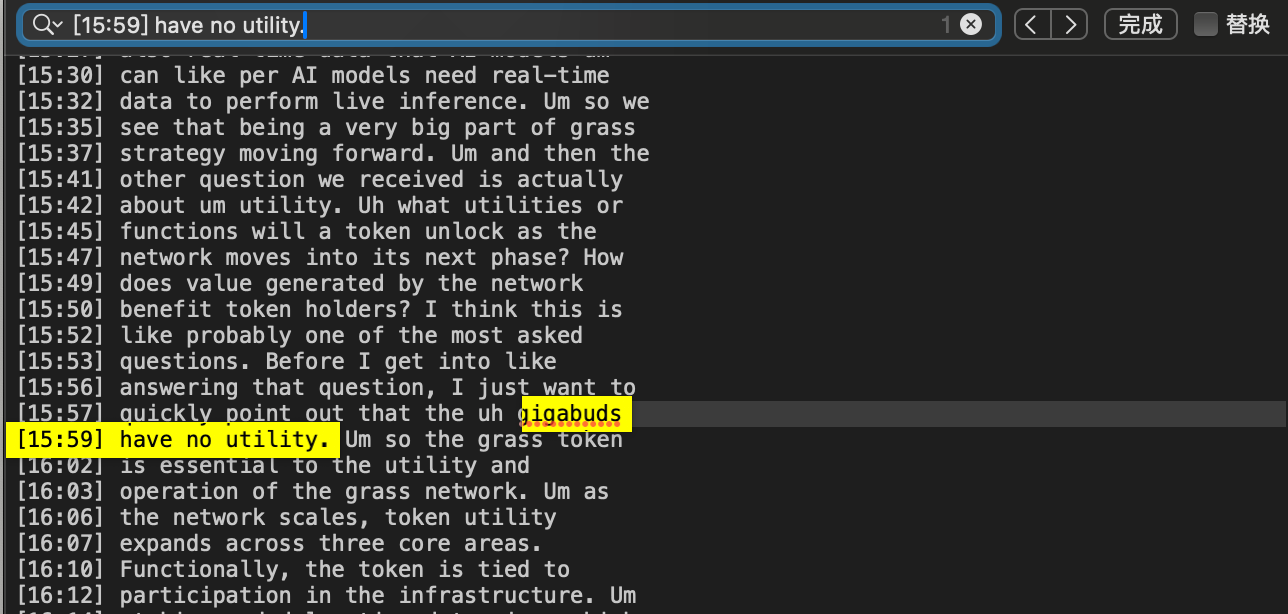
在会议进行到代币功能部分时,Grass CEO Andre说了一句:「Gigabuds have no utility」,意思是 Gigabuds没有任何功能性用途。

但在会后官方发布的书面纪要里,这句话没有出现。

Gigabuds是什么

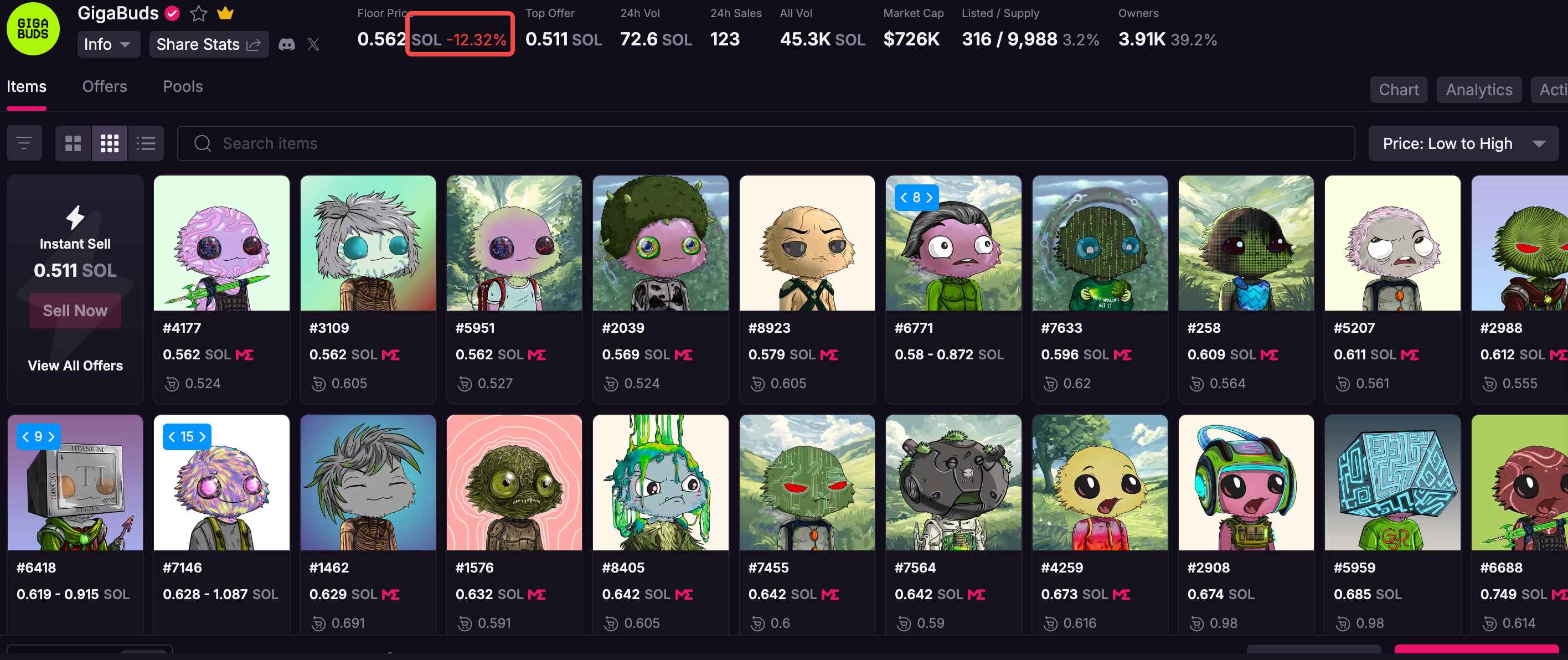
Gigabuds是Grass推出的NFT系列。一些持有者可能期待它在未来的空投或网络权益中有加成作用,但这次会议上官方明确否定了这个预期。

地板价的下跌或许也是对这个表态的回应。
至于官方纪要里为何没出现,官方没有解释。可能的原因不外乎避免引发NFT持有者的负面情绪,或者认为这不属于核心业务信息。

这句话确实在会上说过,字幕记录里有。

如果你持有Gigabuds并且是基于「未来可能有用」的预期买入的,这句话是一个明确的官方表态。至于NFT本身是否还有收藏价值或二级市场价值,那是另一回事,但功能性用途这条路,官方已经堵死了。
收入归基金会,开发团队拿服务费

很多加密项目的公司架构不透明,用户搞不清楚收入归谁、代币归谁管、开发团队和项目方是什么关系。这次会议上,Grass把自己的架构讲得比较清楚。
三个实体,各管一摊

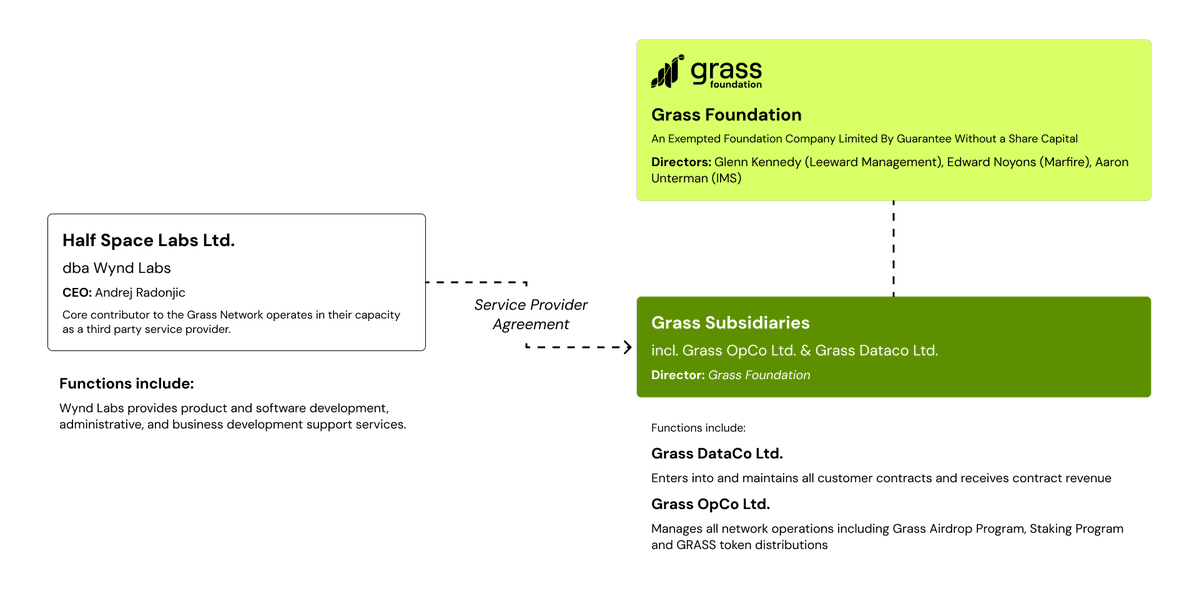
Grass Foundation是一个注册在开曼群岛的基金会,没有股东。它下面有两家子公司:

  • Grass OpCo:负责网络运营,管空投和质押这些事

  • Grass DataCo:负责B2B业务,所有客户合同都是这家公司签的,收入也进这家公司

开发团队是外包的

负责产品开发的团队叫Wynd Labs,它不是Grass的子公司,而是第三方服务商。Wynd Labs按服务费收钱,不参与Grass的收入分成。

会上特别强调了一点:就算客户是Wynd Labs谈下来的,合同也是Grass DataCo签,收入也归Grass DataCo。

服务费具体多少?

官方没有披露。所以开发团队实际拿走多少钱,外界无从判断。

总结一下:

这场会议讲了收入数据、回购进展、空投时间线、产品方向、公司架构。对于一个DePIN项目,这个信息密度不常见。

再说没讲什么:客户具体是谁、回购会持续多大规模、Airdrop 2的具体规则、新业务什么时候能产生收入。这些问题官方要么说不能透露,要么说等后续公布。

这是Grass第一次开这种会,官方说以后还会有。对持币者来说,比起价格波动,这些业务层面的进展可能更值得跟踪。

也希望更多加密项目能够像这样公开自己的业务收入情况;在比谁烂的市场里,这已经很难得了。

Трендові криптовалюти

Пов'язані матеріали

Low Investment Isn't Apple's Immunity Pass

While Meta and Google face investor scrutiny over ballooning AI capital expenditures, Apple's minimal AI investment has paradoxically become a strength. Its market cap recently reclaimed the global top spot, surpassing $5 trillion. The irony is deep: Apple's own AI efforts have lagged, with "Apple Intelligence" delayed and core talent lost, forcing reliance on partners like Google Gemini and Alibaba's Qianwen. Its Q3 FY2026 (Q2 CY) earnings initially seemed stellar. Revenue hit $109.4B (up 16% YoY), with iPhone and Mac sales, growing 22% and 29% respectively, driving most of the growth. However, the stock fell over 8% post-earnings. The primary concern was a weaker Q4 revenue growth forecast of 9-11%, below expectations, due to looming supply chain constraints. Apple is feeling the indirect cost of the AI boom. Soaring memory and chip prices, fueled by massive data center investments from Microsoft, Amazon, and others, are forcing Apple to raise Mac and iPad prices significantly. The upcoming iPhone launch is also expected to see substantial price hikes. Despite avoiding heavy AI infrastructure spending—its capital expenditures are actually down 28%—Apple cannot escape the industry-wide supply and cost pressures. While Apple's operating cash flow remains robust, its substantial R&D spending (up 32% YoY) has yet to yield major AI breakthroughs. As Tim Cook prepares to step down as CEO, Apple faces a challenging transition: balancing its premium hardware success against the strategic and cost pressures of the AI era it has so far cautiously navigated.

marsbit34 хв тому

Low Investment Isn't Apple's Immunity Pass

marsbit34 хв тому

PA Graphics Explanation | One Chart to Understand the Major Web3 Events in August 2026

**PANews Crypto Calendar: Key Web3 Events in August 2026** PANews introduces its revamped crypto calendar, featuring comprehensive coverage, flexible filtering, and easy export options. The market in August will be shaped by multiple key events across macroeconomics, regulation, tokenomics, and project developments: * **Macro & Policy:** Key US economic data releases (July Non-Farm Payrolls, CPI), the Federal Reserve meeting minutes, and the Jackson Hole Economic Symposium will be in focus. On the regulatory front, the US Senate plans to release a new draft of the *CLARITY Act*, while the EU's expanded crypto ban against Belarus comes into effect. * **Token Unlocks:** Significant token unlocks are scheduled for assets including ENA, AVAX, CONX, ZRO, and KAITO, which may influence market volatility. * **Project Updates & Shutdowns:** Several services, including Exchange Art, Ctrl Wallet, Zapper, NFTfi, and Summer.fi, are set to cease operations or undergo major adjustments. Users are advised to manage their assets accordingly. * **Corporate Activity:** Q2 earnings reports from companies like SpaceX, Circle, and Nvidia are due. Unitree Robotics will initiate its IPO subscription on the STAR Market, and Moonshot AI plans to begin a Pre-IPO financing round. * **Industry Events:** Major conferences such as Bitcoin Asia 2026 and the 2026 Digital Expo will take place. The overarching market narrative for August will revolve around macroeconomic expectations, regulatory developments, token unlock schedules, and ongoing industry consolidation.

marsbit44 хв тому

PA Graphics Explanation | One Chart to Understand the Major Web3 Events in August 2026

marsbit44 хв тому

Wall Street's Most Famous 'Cassandra' Now Has His Sights Set on Nvidia

Michael Burry, the famed "Big Short" investor, has once again captured Wall Street's attention with a series of short positions against major tech and semiconductor stocks, most notably Nvidia. In late June and July, through his "Cassandra Unchained" newsletter, Burry disclosed short bets against Nvidia, Tesla, Applied Materials, Caterpillar, the SOXX semiconductor ETF, and later, Micron Technology. His core thesis revolves around potential distortions in the AI infrastructure boom, specifically questioning whether extended depreciation schedules (e.g., 6 years vs. a realistic 2-3 years for AI chips) by cloud giants like Microsoft and Google artificially inflate profits. He also raises concerns about possible "off-balance-sheet circular financing," where chip demand might be propped up by vendor-backed funding to clients. Nvidia's stock experienced volatility following these disclosures, briefly dipping but largely holding near Burry's reported entry points, leaving his positions roughly flat or slightly underwater as of late July. This move is part of a pattern for Burry, whose track record since his legendary 2008 bet is mixed. He has faced notable losses, such as on Tesla in 2021, while scoring on broader market turns like the 2020 pandemic crash. His methodology focuses intensely on free cash flow and scrutinizing original financial documents to spot overvaluation and structural risks, but it often struggles with timing the market. The article contrasts Burry's stance with other prominent investors. Steve Eisman, another "Big Short" figure, is not shorting Nvidia, citing strong fundamentals but expressing nervousness about sustainability. Jim Chanos agrees with the broad "accounting mismatch" concern—comparing it to the dot-com bubble—but targets financial leverage in private equity firms rather than the chip stocks themselves. While Nvidia's short interest remains relatively low at 1.3-1.4% of float, the massive stock size means absolute short losses have been significant, exceeding $5 billion earlier this year. The piece concludes that for ordinary investors, the key takeaway is not replicating specific short bets but learning from the critical frameworks these investors use: questioning rosy accounting, identifying structural vulnerabilities, and maintaining skepticism during market euphoria, even if pinpointing the exact catalyst for a downturn remains elusive.

marsbit1 год тому

Wall Street's Most Famous 'Cassandra' Now Has His Sights Set on Nvidia

marsbit1 год тому

Weekly Selection丨Epic Stock Market Volatility, Changxin Tech's IPO Reshapes Storage Landscape, Saylor Aims to Re-Anchor STRC Around September 8th

PANews Weekly Digest: Market Turmoil, Tech Breakthroughs, and Crypto Developments. The week saw significant volatility across global markets. South Korea's KOSPI index experienced extreme turbulence, including multiple trading halts, largely driven by sharp declines in AI hardware stocks like SK Hynix. In contrast, China's Changxin Xinqiao (CXC) achieved a landmark IPO with a market cap surpassing 4 trillion yuan, marking a major success for the domestic DRAM industry after a decade of losses. In the crypto and Web3 space, several key narratives emerged. AI is driving demand for new infrastructure, with projects like AI agent wallets and programmable payments gaining traction, attracting interest from firms like Coinbase. The Bitcoin mining sector is pivoting, with companies like MARA focusing on energy management as electricity becomes a core AI-era asset. Meanwhile, the RWA (Real World Assets) sector faces a "utilization puzzle," with hundreds of billions in on-chain assets remaining dormant. Notable market movements included a historic single-day surge of over 17% for the KOSPI index and a significant migration of $16.5 billion in staked ETH within the Lido ecosystem. Michael Saylor announced a target to re-peg the STRC stablecoin around September 8th. Other highlights include discussions on Ethereum's ambitious 2030 roadmap for scaling and privacy, analysis showing high protocol revenues not always translating to token price gains, and warnings from Citi about potential extreme commodity price shocks by late 2026.

marsbit1 год тому

Weekly Selection丨Epic Stock Market Volatility, Changxin Tech's IPO Reshapes Storage Landscape, Saylor Aims to Re-Anchor STRC Around September 8th

marsbit1 год тому

When the Market Begins to Question AI Capex: A Full Analysis of Q2 Earnings Reports from Five Tech Giants

In late July 2026, five major US tech giants—Alphabet, Intel, Microsoft, Meta, and Apple—released their Q2 earnings reports. While all companies exceeded revenue and profit expectations, driven by strong AI-related business growth, investor reactions diverged sharply due to concerns over escalating AI capital expenditures (capex) and their impact on free cash flow. Alphabet reported strong revenue growth and a surging cloud business, but its stock fell after announcing a doubled year-on-year capex and negative quarterly free cash flow for the first time. Intel posted its strongest revenue growth in over 15 years, but its stock experienced volatile trading after significantly raising its full-year capex guidance. Microsoft saw its stock surge after beating estimates and, crucially, lowering its capex forecast while projecting positive free cash flow. Meta faced the most severe sell-off as its profits declined despite revenue beats, with free cash flow plunging over 90% and its capex guidance raised. Apple reported record June-quarter results, but its stock plummeted after providing Q4 revenue guidance that fell short of expectations, citing supply chain constraints and forex headwinds. The overall takeaway is that the market's focus has shifted from validating AI demand to scrutinizing the timeline for returns on massive AI investments. Companies demonstrating a clearer path to managing capex and preserving free cash flow, like Microsoft, were rewarded, while those signaling continued aggressive spending faced investor skepticism.

Odaily星球日报1 год тому

When the Market Begins to Question AI Capex: A Full Analysis of Q2 Earnings Reports from Five Tech Giants

Odaily星球日报1 год тому

Торгівля

Спот

Популярні статті

Як купити GRASS

Ласкаво просимо до HTX.com! Ми зробили покупку Grass (GRASS) простою та зручною. Дотримуйтесь нашої покрокової інструкції, щоб розпочати свою криптовалютну подорож.Крок 1: Створіть обліковий запис на HTXВикористовуйте свою електронну пошту або номер телефону, щоб зареєструвати обліковий запис на HTX безплатно. Пройдіть безпроблемну реєстрацію й отримайте доступ до всіх функцій.ЗареєструватисьКрок 2: Перейдіть до розділу Купити крипту і виберіть спосіб оплатиКредитна/дебетова картка: використовуйте вашу картку Visa або Mastercard, щоб миттєво купити Grass (GRASS).Баланс: використовуйте кошти з балансу вашого рахунку HTX для безперешкодної торгівлі.Треті особи: ми додали популярні способи оплати, такі як Google Pay та Apple Pay, щоб підвищити зручність.P2P: Торгуйте безпосередньо з іншими користувачами на HTX.Позабіржова торгівля (OTC): ми пропонуємо індивідуальні послуги та конкурентні обмінні курси для трейдерів.Крок 3: Зберігайте свої Grass (GRASS)Після придбання Grass (GRASS) збережіть його у своєму обліковому записі на HTX. Крім того, ви можете відправити його в інше місце за допомогою блокчейн-переказу або використовувати його для торгівлі іншими криптовалютами.Крок 4: Торгівля Grass (GRASS)Легко торгуйте Grass (GRASS) на спотовому ринку HTX. Просто увійдіть до свого облікового запису, виберіть торгову пару, укладайте угоди та спостерігайте за ними в режимі реального часу. Ми пропонуємо зручний досвід як для початківців, так і для досвідчених трейдерів.

359 переглядів усьогоОпубліковано 2024.12.11Оновлено 2026.06.02

Як купити GRASS

Обговорення

Ласкаво просимо до спільноти HTX. Тут ви можете бути в курсі останніх подій розвитку платформи та отримати доступ до професійної ринкової інформації. Нижче представлені думки користувачів щодо ціни GRASS (GRASS).

活动图片