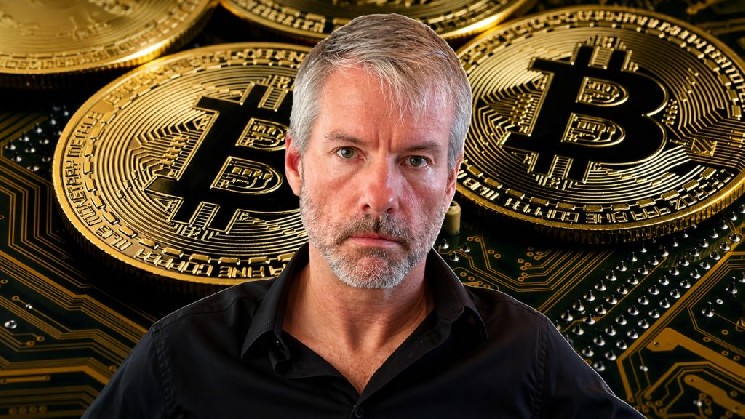
Bitwise CIO Anticipates Crypto ‘ETF Palooza’: Over 100 New Funds Expected To Launch In 2026

bitcoinistОпубліковано о 2025-11-20Востаннє оновлено о 2025-11-20

Анотація

The recent reopening of the government may signal the beginning of an unprecedented surge in cryptocurrency exchange-traded funds (ETFs) in...

Trusted Editorial content, reviewed by leading industry experts and seasoned editors. Ad Disclosure

The recent reopening of the government may signal the beginning of an unprecedented surge in cryptocurrency exchange-traded funds (ETFs) in the United States, as noted by Bitwise’s Chief Investment Officer, Matt Hougan. 

This anticipated growth aligns with the emergence of pro-crypto regulations from the Trump administration and crypto-friendly regulators, led by the US Securities and Exchange Commission (SEC), the agency responsible for approving these funds. 

Crypto ETFs In Flux

Bitwise’s Matt Hougan is optimistic about the potential for new investment products in the sector. “We’re going to witness an ETF Palooza in Cryptoland,” he remarked during an appearance on CNBC’s “ETF Edge.”

He predicts that more than 100 new ETFs and exchange-traded products (ETPs) will launch in the coming year, emphasizing a focus on single-asset crypto ETPs. Most exciting for him, however, is the expected growth of index-based crypto ETPs.

Despite the challenges seen over the past month, with the overall crypto market decline led by Bitcoin’s crash below $90,000 on Wednesday, Hougan believes that index ETPs could emerge as one of the biggest stories in the crypto space next year.

“This industry will be 10 times bigger than it is today,” asserted Hougan, whose firm recently launched the Solana Staking ETF on October 28, designed to track Solana’s (SOL) price. 

Although Bitwise’s Solana fund has seen a 27% decline since its launch, it experienced a 9% increase on Tuesday, suggesting some resilience amid the broader market turmoil. 

The broader Solana ETF sector has seen a continuous 16-day inflow streak amounting to nearly $26 million. Meanwhile, Bitcoin ETFs have seen almost $2 billion in outflows since October, according to SoSoValue data

Tom Lee Believes Trump’s Support Will Spark New Opportunities

Bitwise’s passive fund stakes nearly all of its SOL tokens on-chain, contributing to transaction validation and network security while earning ongoing rewards that are reinvested back into the portfolio.

According to Hougan, these types of products target a new demographic of crypto investors—individuals looking to acquire smaller portions of digital assets for their portfolios. 

“They don’t necessarily have an opinion on Ethereum versus Solana or Bitcoin versus another asset; they just want to buy a broad swath of the crypto market and hold it for the long term,” he explained.

Echoing this sentiment, Tom Lee from Fundstrat Global Advisors also foresees a favorable shift in the market. A long-time proponent of Bitcoin, Lee cites increased openness from the Trump administration as a catalyst. 

“Experimentation and innovation are being encouraged by this administration,” he noted during the same interview with CNBC.

Crypto
The daily chart shows BTC’s downtrend further intensifying on Wednesday. Source: BTCUSDT on TradingView.com

At the time of writing, Bitcoin is trading at $88,926, down nearly 30% from its all-time high. Solana has also retraced to the $131 mark, representing a 55% gap from current trading levels and record highs. 

Featured image from DALL-E, chart from TradingView.com 

Editorial Process for bitcoinist is centered on delivering thoroughly researched, accurate, and unbiased content. We uphold strict sourcing standards, and each page undergoes diligent review by our team of top technology experts and seasoned editors. This process ensures the integrity, relevance, and value of our content for our readers.

Ronaldo is a seasoned crypto enthusiast with over four years of experience in the field. He is passionate about exploring the vast and dynamic world of decentralized finance (DeFi) and its practical applications for achieving economic sovereignty. Ronaldo is constantly seeking to expand his knowledge and expertise in the DeFi space, as he believes it holds tremendous potential for transforming the traditional financial landscape.

Пов'язані матеріали

Upbit is Anxious: A Hasty Counterattack Aimed at Regaining Stablecoin Market Share

Title: Upbit's Rushed Counterattack to Reclaim Stablecoin Market Share Facing a dramatic shift in South Korea's stablecoin market, leading exchange Upbit launched a promotional campaign from July 26 to August 9, waiving the 0.05% trading fee for stablecoins paired with the Korean Won (KRW) and rapidly listing new stablecoins like RLUSD and USDG. This move is a direct response to its plummeting market share in this sector. Historically a duopoly with Bithumb, the market has been reshaped since October 2025 when Coinone permanently removed fees for USDC trading. By June 2026, Coinone led with 34.8% of stablecoin volume, followed by Bithumb (31.1%) and Upbit (30.1%). This contrasts sharply with the overall crypto market, where Upbit commands 60%. The data shows stablecoin demand is highly sensitive to fees, as users primarily buy them to transfer capital overseas for derivatives trading or forex arbitrage. South Korean exchanges have seen a net outflow of stablecoins for 18 consecutive months, totaling approximately 14.9 trillion KRW, underscoring their role as a cross-border capital conduit. Upbit's limited-time promotion initially boosted its daily stablecoin volume by 162%, but the surge was almost entirely in USDT (98.1% of volume). The newly listed stablecoins saw negligible, fleeting interest. Furthermore, the promotional effect quickly waned in the second week, with volume dropping 33% on weekdays. A concurrent weakening of the KRW also contributed to the trading spike, independent of the fee waiver. The analysis suggests that once the promotion ends, Upbit is unlikely to retain its temporary gains unless it matches Coinone's permanent zero-fee policy, forcing a choice between market share and fee revenue. Upbit's strategic push may be less about immediate profit and more about preparing for future regulatory shifts. With South Korea's *Digital Asset Basic Act* on the horizon, which will regulate KRW-backed stablecoins, and following Dunamu's (Upbit's parent) integration into Naver Financial to build a payment ecosystem, securing a dominant position in the dollar stablecoin distribution channel holds long-term strategic value. However, potential regulatory conflicts could prevent Upbit from listing a future Naver-issued KRW stablecoin, making the current fight for dollar stablecoin flow even more critical.

marsbit2 год тому

Upbit is Anxious: A Hasty Counterattack Aimed at Regaining Stablecoin Market Share

marsbit2 год тому

Michael Saylor Compares Bitcoin and Gold!

Michael Saylor, founder of MicroStrategy, argues that Bitcoin fundamentally changes how wealth is stored and transferred by transforming digital scarcity into economic value. He describes Bitcoin as the first digital monetary network, combining computers, digital networks, and cryptography. It digitizes monetary assets, allowing their supply to be controlled by public protocols rather than institutions, thus converting economic value into information transmissible over global networks. Comparing Bitcoin to gold, Saylor states that while increasing Bitcoin's supply is harder, its integration with software and transfer is easier. He highlights Bitcoin's proof-of-work mechanism, which ties it to the physical world by consuming real energy to secure the ledger, making past transactions immutable. This creates a shared security system involving miners, energy companies, and investors. Saylor suggests "digital monetary energy" is a more accurate term than "digital gold." He emphasizes that the Bitcoin network is an adaptive ecosystem of miners, nodes, developers, and users. Its core design is intentionally simple, focused on maintaining a secure ledger for scarce digital assets, with complex functionalities built in higher-layer applications. This architecture allows Bitcoin to serve as a foundation for transmitting value and fostering innovation in payments and financial services. Saylor notes Bitcoin's deeper impact lies in creating digital sovereignty, where private keys give individuals permissionless control over their economic power, with ownership verified mathematically, not by institutions. He concludes that while gold's physical scarcity makes it money, Bitcoin's digital scarcity does the same, characterizing Bitcoin as the monetary energy of the digital age.

cryptonews.ru3 год тому

Michael Saylor Compares Bitcoin and Gold!

cryptonews.ru3 год тому

Торгівля

Спот
活动图片