Mastercard and Polygon Roll Out Email-Like Wallet IDs for Easier Crypto Transfers

bitcoinistОпубліковано о 2025-11-20Востаннє оновлено о 2025-11-20

Анотація

Mastercard is taking a major step toward simplifying how everyday users interact with digital assets by leveraging the Ethereum and...

Trusted Editorial content, reviewed by leading industry experts and seasoned editors. Ad Disclosure

Mastercard is taking a major step toward simplifying how everyday users interact with digital assets by leveraging the Ethereum and Polygon network.

Related Reading: Hoskinson Vs. Cardano Foundation: From Berlin Parties To ‘Useful Idiots’

Through a new collaboration with Polygon Labs and payments infrastructure firm Mercuryo, the global payments giant is rolling out email-style wallet aliases designed to make crypto transfers feel as intuitive as sending a message online.

The upgrade expands Mastercard’s Crypto Credential program to self-custody wallets, replacing long, technical wallet addresses with human-readable IDs. For millions of users intimidated by complex hexadecimal strings, this shift could mark a turning point in mainstream crypto adoption.
Ethereum ETH Polygon Mastercard

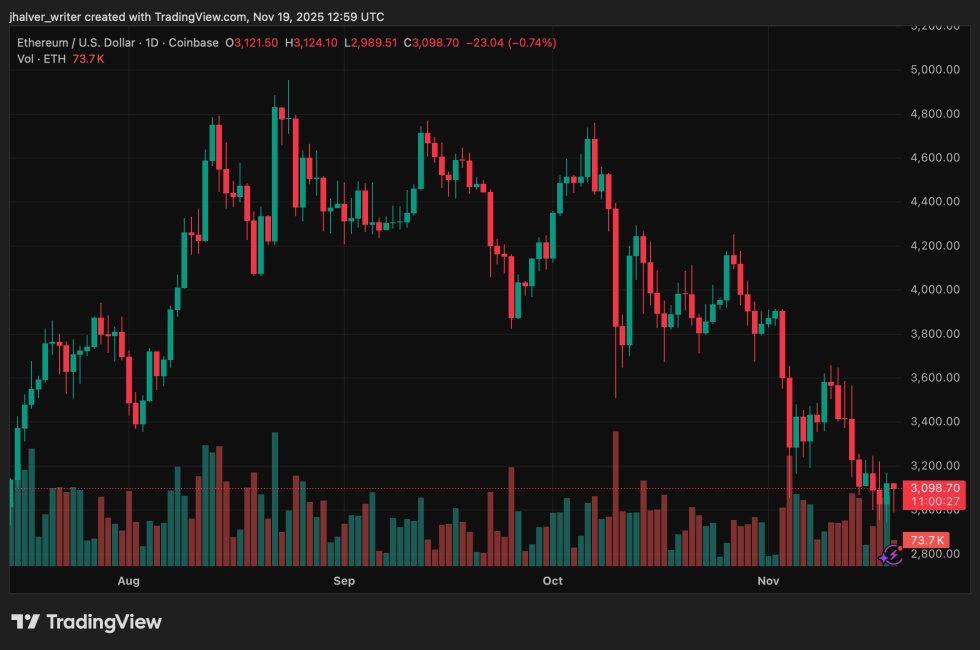
ETH's price trends to the downside on the daily chart. Source: ETHUSD on Tradingview

A New Identity Layer for Self-Custody Wallets

Under the new system, users can link wallets such as MetaMask to a verified alias issued through Mercuryo. After completing standard KYC checks, the user receives a simple username, similar to an email handle, that directs crypto to their self-custody wallet.

Polygon powers the underlying infrastructure, offering low-cost transactions and rapid settlement. Wallets can also mint a non-transferable “soulbound” credential on Polygon, publicly confirming that they belong to a verified user.

Mastercard states that this structure supports regulatory compliance, including Travel Rule requirements, without requiring users to relinquish control of their private keys.

Early access focuses on receiving funds through aliases, with outbound sending expected later. Mastercard notes that this framework is designed as a portable verification layer that can be moved across apps, wallets, and blockchains within the broader Crypto Credential network.

Why Mastercard Picked Polygon for the Rollout

Polygon’s selection as the first supported network reflects its growing reputation as a consumer-grade blockchain built for global-scale payments. Its upgrades, including the Rio and Heimdall v2 updates, have boosted throughput, improved finality, and reduced the risk of chain reorganizations.

With billions of dollars in stablecoin activity flowing through Polygon every month, analysts say the network offers the reliability and low operating costs that large institutions demand.

Polygon Labs CEO Marc Boiron called the initiative “the moment when self-custody becomes simple,” noting that alias-based transfers make blockchain interactions resemble familiar fintech experiences rather than technical workflows.

Shaping the Future of Identity-Driven Web3 Payments

For Mastercard, this rollout aligns with its broader strategy to bridge traditional finance and decentralized networks. The company has been expanding crypto services across 2024 and 2025, from debit card programs to on-chain settlement pilots.

By embedding identity, verification, and user-friendly interfaces into self-custody systems, Mastercard and Polygon are helping shape the next generation of digital payments.

Related Reading: What Happens To The Ethereum Price If It Replicates Bitcoin Supercycle?

If adopted widely, alias-based transfers could redefine how users engage with Web3, lowering barriers and accelerating mainstream participation in blockchain-based finance.

Cover image from ChatGPT, ETHUSD chart from Tradingview

Editorial Process for bitcoinist is centered on delivering thoroughly researched, accurate, and unbiased content. We uphold strict sourcing standards, and each page undergoes diligent review by our team of top technology experts and seasoned editors. This process ensures the integrity, relevance, and value of our content for our readers.

Пов'язані матеріали

Upbit is Anxious: A Hasty Counterattack Aimed at Regaining Stablecoin Market Share

Title: Upbit's Rushed Counterattack to Reclaim Stablecoin Market Share Facing a dramatic shift in South Korea's stablecoin market, leading exchange Upbit launched a promotional campaign from July 26 to August 9, waiving the 0.05% trading fee for stablecoins paired with the Korean Won (KRW) and rapidly listing new stablecoins like RLUSD and USDG. This move is a direct response to its plummeting market share in this sector. Historically a duopoly with Bithumb, the market has been reshaped since October 2025 when Coinone permanently removed fees for USDC trading. By June 2026, Coinone led with 34.8% of stablecoin volume, followed by Bithumb (31.1%) and Upbit (30.1%). This contrasts sharply with the overall crypto market, where Upbit commands 60%. The data shows stablecoin demand is highly sensitive to fees, as users primarily buy them to transfer capital overseas for derivatives trading or forex arbitrage. South Korean exchanges have seen a net outflow of stablecoins for 18 consecutive months, totaling approximately 14.9 trillion KRW, underscoring their role as a cross-border capital conduit. Upbit's limited-time promotion initially boosted its daily stablecoin volume by 162%, but the surge was almost entirely in USDT (98.1% of volume). The newly listed stablecoins saw negligible, fleeting interest. Furthermore, the promotional effect quickly waned in the second week, with volume dropping 33% on weekdays. A concurrent weakening of the KRW also contributed to the trading spike, independent of the fee waiver. The analysis suggests that once the promotion ends, Upbit is unlikely to retain its temporary gains unless it matches Coinone's permanent zero-fee policy, forcing a choice between market share and fee revenue. Upbit's strategic push may be less about immediate profit and more about preparing for future regulatory shifts. With South Korea's *Digital Asset Basic Act* on the horizon, which will regulate KRW-backed stablecoins, and following Dunamu's (Upbit's parent) integration into Naver Financial to build a payment ecosystem, securing a dominant position in the dollar stablecoin distribution channel holds long-term strategic value. However, potential regulatory conflicts could prevent Upbit from listing a future Naver-issued KRW stablecoin, making the current fight for dollar stablecoin flow even more critical.

marsbit3 год тому

Upbit is Anxious: A Hasty Counterattack Aimed at Regaining Stablecoin Market Share

marsbit3 год тому

Michael Saylor Compares Bitcoin and Gold!

Michael Saylor, founder of MicroStrategy, argues that Bitcoin fundamentally changes how wealth is stored and transferred by transforming digital scarcity into economic value. He describes Bitcoin as the first digital monetary network, combining computers, digital networks, and cryptography. It digitizes monetary assets, allowing their supply to be controlled by public protocols rather than institutions, thus converting economic value into information transmissible over global networks. Comparing Bitcoin to gold, Saylor states that while increasing Bitcoin's supply is harder, its integration with software and transfer is easier. He highlights Bitcoin's proof-of-work mechanism, which ties it to the physical world by consuming real energy to secure the ledger, making past transactions immutable. This creates a shared security system involving miners, energy companies, and investors. Saylor suggests "digital monetary energy" is a more accurate term than "digital gold." He emphasizes that the Bitcoin network is an adaptive ecosystem of miners, nodes, developers, and users. Its core design is intentionally simple, focused on maintaining a secure ledger for scarce digital assets, with complex functionalities built in higher-layer applications. This architecture allows Bitcoin to serve as a foundation for transmitting value and fostering innovation in payments and financial services. Saylor notes Bitcoin's deeper impact lies in creating digital sovereignty, where private keys give individuals permissionless control over their economic power, with ownership verified mathematically, not by institutions. He concludes that while gold's physical scarcity makes it money, Bitcoin's digital scarcity does the same, characterizing Bitcoin as the monetary energy of the digital age.

cryptonews.ru4 год тому

Michael Saylor Compares Bitcoin and Gold!

cryptonews.ru4 год тому

Торгівля

Спот
活动图片