Ripple Partners With Mastercard to Test RLUSD Fiat Payments

TheCryptoTimesОпубліковано о 2025-11-05Востаннє оновлено о 2025-11-05

Ripple has announced a new collaboration with Mastercard, WebBank, and Gemini to introduce stablecoin-based settlement for fiat payments using its Ripple USD (RLUSD) on the XRP Ledger (XRPL). The initiative, unveiled at Ripple Swell 2025 in New York, aims to demonstrate how blockchain can enhance the back-end of traditional payment systems by speeding up settlement, lowering costs, and improving transparency.

A new model for fiat payment settlement

The partnership bridges two worlds: traditional banking and blockchain-based finance. Mastercard and WebBank, the issuer of Gemini’s credit card, will test RLUSD for settlement between card transactions. Instead of clearing through conventional intermediaries, funds could be moved and reconciled on XRPL, a public ledger designed for secure, near-instant payments.

Sherri Haymond, Mastercard’s Global Head of Digital Commercialization, said the partnership reflects the company’s “principled approach to stablecoins,” noting that Mastercard is committed to consumer protection and compliance while exploring the next evolution of digital settlement.

If fully implemented, this would be one of the first cases of a regulated U.S. bank settling card transactions with a regulated stablecoin on a public blockchain, a potential blueprint for future financial infrastructure.

Bridge between blockchain innovation and banking stability

Stablecoins like RLUSD are digital assets pegged to fiat currencies, in this case, the U.S. dollar, allowing real-time settlement without price volatility. For banks and payment networks, this reduces counterparty risk and settlement delays, common issues in traditional clearing systems.

RLUSD is fully backed by cash and cash-equivalent reserves and regulated under the New York Department of Financial Services (NYDFS). Since its 2024 launch, it has surpassed $1 billion in circulation, signaling early institutional trust in Ripple’s stablecoin model.

Jason Lloyd, CEO of WebBank, called the effort “a bridge between blockchain innovation and banking stability,” while Gemini CFO Dan Chen added that this pilot “connects blockchain innovation directly to real-world payments.”

Mastercard’s growing role in blockchain finance

The collaboration also reflects Mastercard’s expanding footprint in crypto. Last month, it advanced its partnership with Chainlink to pilot cross-chain payment data transfers using Chainlink’s Cross-Chain Interoperability Protocol (CCIP). 

This project connected Mastercard’s traditional card network to decentralized systems, aiming to make blockchain settlements “invisible” to end users while preserving regulatory compliance.

With over 3.5 billion cardholders globally, Mastercard’s blockchain initiatives are now viewed as an attempt to integrate tokenized payments into everyday commerce without disrupting user experience, effectively making Web3 run behind the scenes of mainstream finance.

Ripple’s institutional expansion

For Ripple, the move is another milestone in its ongoing institutional expansion strategy following the end of its legal dispute with the U.S. SEC earlier this year. The company has spent nearly $4 billion acquiring custody, stablecoin, and treasury management firms (including Palisade, Hidden Road, and GTreasury) as part of its push to offer end-to-end digital asset infrastructure for banks and corporations.

Monica Long, Ripple’s President, said the collaboration “shows how regulated digital assets like RLUSD can enhance settlement and pave the way for faster, compliant payments.” She emphasized that the XRP Ledger, long known for its reliability and speed, will serve as the technical backbone for this and other institutional experiments.

What’s next

Ripple and its partners plan to begin onboarding RLUSD for settlement in the coming months, pending regulatory clearance. 

If successful, the pilot could set a precedent for using stablecoins in mainstream card payments, positioning Ripple and Mastercard at the forefront of the next phase of digital finance, where crypto infrastructure powers traditional money movement.

Also read: Ripple Launches Digital Asset Spot Brokerage for US Market


Mobile Only ImageMobile Only Image

Трендові криптовалюти

Пов'язані матеріали

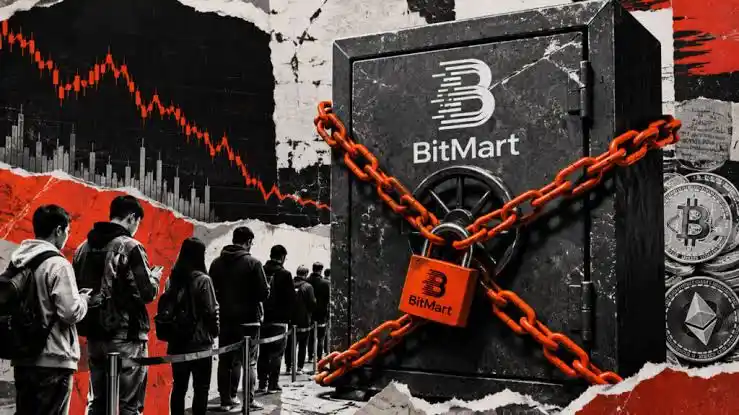
BitMart's Final 9 Days: A True Exchange Crisis Is Never About Shutting Down

BitMart's Final 9 Days: A True Exchange Crisis Is Not About Shutting Down On August 17, 2026, with just 9 days until BitMart's scheduled cessation of trading, the focus shifted from the platform's orderly closure to serious questions about user withdrawals, platform solvency, employee payments, and reserve transparency. Stakeholders, claiming to represent users and staff, publicly demanded asset/liability disclosures, explanations for withdrawal delays, a user repayment plan, and an independent audit, setting an August 19 deadline. While BitMart CEO Sheldon Lee denied allegations of insolvency or wrongdoing, the controversy highlighted a core vulnerability of centralized exchanges (CEXs). When an exchange announces its shutdown, normal user behavior changes dramatically, triggering a mass withdrawal event—the ultimate stress test for its liquidity and custodial integrity. The key question becomes not whether the platform has assets, but whether it holds sufficient *liquid* assets to cover all user liabilities on demand. The article argues that the trust placed in CEXs is based on the convenience they provide, abstracting users from direct control of their private keys. This trust is rarely questioned during normal operations but becomes critically exposed during a wind-down. The situation underscores the limitations of simple Proof of Reserves, which shows "what we have" but not the crucial "what we owe." True financial credibility requires transparent, auditable data on assets, liabilities, and segregated user funds. BitMart's situation reflects a broader, often overlooked issue in the crypto industry: while there is extensive focus on growth mechanisms for exchanges, there is little discussion or established protocol for a safe and transparent "exit mechanism." The final measure of an exchange's integrity, the article concludes, is not its user count or trading volume during a bull market, but its ability to ensure every last user can successfully withdraw their assets when the doors are closing. The outcome will be determined not by statements, but by whether the final user's funds securely leave the platform.

marsbit28 хв тому

BitMart's Final 9 Days: A True Exchange Crisis Is Never About Shutting Down

marsbit28 хв тому

Don't Speculate on 100x Coins, Just Bet on 'Cash Cows': Which Projects Are Worth Dollar-Cost Averaging in the Bear Market?

In a bearish crypto market, finding sustainable investments is more prudent than chasing speculative meme coins. This article analyzes projects generating consistent revenue, highlighting them as potential "cash cows" for long-term dollar-cost averaging (DCA). The top performers are "picks-and-shovels" plays. **Pump.fun**, a Solana-based meme coin launchpad, leads with $415.3M in monthly revenue, profiting from a 1.25% fee on token transactions. Despite market volatility, it has averaged tens of millions in monthly income in 2024. Perpetual DEX **Hyperliquid** stands out as a "bear market star," accumulating ~$352M in revenue over seven months. Its model funnels ~99% of fees into buying back and permanently burning its HYPE token. Established giants are also adapting. **Uniswap**, after enabling its fee switch, now earns protocol revenue (e.g., $5.6M recently), which is used to buy back and burn UNI, giving the token direct value accrual. Similarly, oracle provider **Chainlink** generates stable monthly revenue (~$4.57M recently) from its essential data, cross-chain, and automation services. Its new Payment Abstraction feature automatically converts service fees into LINK, accruing value in its treasury. The core thesis is clear: in a downturn, focus on projects with proven, resilient business models—those acting as essential infrastructure or capturing consistent transaction fees—rather than speculative narratives.

marsbit43 хв тому

Don't Speculate on 100x Coins, Just Bet on 'Cash Cows': Which Projects Are Worth Dollar-Cost Averaging in the Bear Market?

marsbit43 хв тому

Just Now, Anthropic's Annualized Revenue Breaks Through $65 Billion, Sprinting Towards the Largest IPO in History

According to a Bloomberg report, Anthropic has disclosed to investors that as of the end of July, its annualized revenue run-rate (ARR) has reached $65 billion. This marks a dramatic acceleration from late 2025, when the ARR exceeded $9 billion, representing a more than seven-fold increase in just a few months. Preliminary revenue for the latest completed quarter (Q2) surpassed $11.5 billion, approximately 14.6 times the $787 million reported for the same period last year. Notably, the company also achieved positive adjusted operating profit for the quarter. A key driver behind this explosive growth is the enterprise market, particularly the adoption of products like Claude Code for software engineering and complex knowledge work. The shift from occasional conversational queries to continuous, high-token-consumption workflows within enterprises has significantly boosted revenue. This financial update comes as Anthropic is reportedly preparing for a potential IPO as early as October, with an expected valuation of $2 trillion or higher, which could make it the largest IPO in history. The surging revenue run-rate provides a crucial metric for investors, shifting the narrative from being an OpenAI challenger to demonstrating rapid scaling, enterprise penetration, and a path toward profitability amidst high compute investments.

marsbit48 хв тому

Just Now, Anthropic's Annualized Revenue Breaks Through $65 Billion, Sprinting Towards the Largest IPO in History

marsbit48 хв тому

Trends in U.S. Stocks (August 18): U.S.-Iran Deal Prospects Dim, Major Indices See Two Consecutive Down Days, Chip Stocks Defy Market Decline

**Market Overview:** On August 18th, U.S. stock indices declined for a second consecutive day. The S&P 500 fell 0.52%, the Dow dropped 0.51% to a two-week low, and the Nasdaq slipped 0.32%. The decline was driven by heightened geopolitical risk as U.S.-Iran negotiations reached a key deadline without an extension, dimming the prospect of a long-term agreement. **Key Drivers:** * **Geopolitics & Oil:** The failure to extend the U.S.-Iran memorandum led to a surge in oil prices, with Brent crude closing above $90/barrel for the first time in three weeks. * **Treasury Yields:** The 30-year U.S. Treasury yield hit a high not seen since 2007, driven by heavy corporate issuance (notably for AI investments) and ongoing fiscal deficits. * **Sector Performance:** While the "Magnificent Seven" tech giants all closed lower, semiconductor stocks bucked the trend. The Philadelphia Semiconductor Index rose 1.6%, led by memory chipmakers (e.g., SanDisk, Micron) and optical communication companies, as investors focused on the strong demand outlook for AI-related hardware. * **Currency & Safe Havens:** The U.S. Dollar Index fell for a third day, while the offshore Chinese Yuan hit a three-year high. Gold prices rose to a two-month peak, supported by safe-haven demand outweighing pressure from rising yields. Bitcoin also gained. **Outlook:** Market focus remains on potential escalation in the Middle East and its impact on oil, alongside continued scrutiny of AI-related earnings and demand signals.

marsbit49 хв тому

Trends in U.S. Stocks (August 18): U.S.-Iran Deal Prospects Dim, Major Indices See Two Consecutive Down Days, Chip Stocks Defy Market Decline

marsbit49 хв тому

Торгівля

Спот

Популярні статті

Як купити NAVER

Ласкаво просимо до HTX.com! Ми зробили покупку NAVER Corp (NAVER) простою та зручною. Дотримуйтесь нашої покрокової інструкції, щоб розпочати свою криптовалютну подорож.Крок 1: Створіть обліковий запис на HTXВикористовуйте свою електронну пошту або номер телефону, щоб зареєструвати обліковий запис на HTX безплатно. Пройдіть безпроблемну реєстрацію й отримайте доступ до всіх функцій.ЗареєструватисьКрок 2: Перейдіть до розділу Купити крипту і виберіть спосіб оплатиКредитна/дебетова картка: використовуйте вашу картку Visa або Mastercard, щоб миттєво купити NAVER Corp (NAVER).Баланс: використовуйте кошти з балансу вашого рахунку HTX для безперешкодної торгівлі.Треті особи: ми додали популярні способи оплати, такі як Google Pay та Apple Pay, щоб підвищити зручність.P2P: Торгуйте безпосередньо з іншими користувачами на HTX.Позабіржова торгівля (OTC): ми пропонуємо індивідуальні послуги та конкурентні обмінні курси для трейдерів.Крок 3: Зберігайте свої NAVER Corp (NAVER)Після придбання NAVER Corp (NAVER) збережіть його у своєму обліковому записі на HTX. Крім того, ви можете відправити його в інше місце за допомогою блокчейн-переказу або використовувати його для торгівлі іншими криптовалютами.Крок 4: Торгівля NAVER Corp (NAVER)Легко торгуйте NAVER Corp (NAVER) на спотовому ринку HTX. Просто увійдіть до свого облікового запису, виберіть торгову пару, укладайте угоди та спостерігайте за ними в режимі реального часу. Ми пропонуємо зручний досвід як для початківців, так і для досвідчених трейдерів.

75 переглядів усьогоОпубліковано 2026.08.14Оновлено 2026.08.14

Як купити NAVER

Що таке KODEX200

KODEX200USDT Перпетуальний контракт відстежує ціну ETF Samsung KODEX 200. Він відстежує динаміку індексу KOSPI 200, пропонуючи широкий доступ до провідних південно-корейських компаній з великим капіталом.

99 переглядів усьогоОпубліковано 2026.08.14Оновлено 2026.08.14

Що таке KODEX200

Як купити KODEX200

Ласкаво просимо до HTX.com! Ми зробили покупку Samsung KODEX 200 ETF (KODEX200) простою та зручною. Дотримуйтесь нашої покрокової інструкції, щоб розпочати свою криптовалютну подорож.Крок 1: Створіть обліковий запис на HTXВикористовуйте свою електронну пошту або номер телефону, щоб зареєструвати обліковий запис на HTX безплатно. Пройдіть безпроблемну реєстрацію й отримайте доступ до всіх функцій.ЗареєструватисьКрок 2: Перейдіть до розділу Купити крипту і виберіть спосіб оплатиКредитна/дебетова картка: використовуйте вашу картку Visa або Mastercard, щоб миттєво купити Samsung KODEX 200 ETF (KODEX200).Баланс: використовуйте кошти з балансу вашого рахунку HTX для безперешкодної торгівлі.Треті особи: ми додали популярні способи оплати, такі як Google Pay та Apple Pay, щоб підвищити зручність.P2P: Торгуйте безпосередньо з іншими користувачами на HTX.Позабіржова торгівля (OTC): ми пропонуємо індивідуальні послуги та конкурентні обмінні курси для трейдерів.Крок 3: Зберігайте свої Samsung KODEX 200 ETF (KODEX200)Після придбання Samsung KODEX 200 ETF (KODEX200) збережіть його у своєму обліковому записі на HTX. Крім того, ви можете відправити його в інше місце за допомогою блокчейн-переказу або використовувати його для торгівлі іншими криптовалютами.Крок 4: Торгівля Samsung KODEX 200 ETF (KODEX200)Легко торгуйте Samsung KODEX 200 ETF (KODEX200) на спотовому ринку HTX. Просто увійдіть до свого облікового запису, виберіть торгову пару, укладайте угоди та спостерігайте за ними в режимі реального часу. Ми пропонуємо зручний досвід як для початківців, так і для досвідчених трейдерів.

68 переглядів усьогоОпубліковано 2026.08.14Оновлено 2026.08.14

Як купити KODEX200

Обговорення

Ласкаво просимо до спільноти HTX. Тут ви можете бути в курсі останніх подій розвитку платформи та отримати доступ до професійної ринкової інформації. Нижче представлені думки користувачів щодо ціни A (A).

活动图片