DeFi Security Crisis: Bunni DEX Folds After Major Exploit, Leaving Users Empty-Handed

bitcoinistОпубліковано о 2025-10-24Востаннє оновлено о 2025-10-24

Анотація

In another blow to the decentralized finance (DeFi) sector, Bunni DEX, a Uniswap V4-based decentralized exchange, has announced its permanent...

Trusted Editorial content, reviewed by leading industry experts and seasoned editors. Ad Disclosure

In another blow to the decentralized finance (DeFi) sector, Bunni DEX, a Uniswap V4-based decentralized exchange, has announced its permanent shutdown following an $8.4 million exploit that crippled its operations. The team cited an inability to cover relaunch and audit costs, marking one of the most significant DeFi collapses of 2025.

The exploit, which occurred on September 2, targeted Bunni’s Liquidity Distribution Function (LDF), a custom mechanism designed to optimize liquidity for traders.

Hackers used flash loans to manipulate internal calculations, triggering rounding errors that allowed them to drain funds across Ethereum and Unichain networks. Despite prior audits by Trail of Bits and Cyfrin, the logic-level flaw went undetected.

Users Allowed Withdrawals, But Recovery Looks Grim

Before the attack, Bunni had rapidly grown from $2.2 million to nearly $80 million in total value locked (TVL), according to DeFiLlama data. However, the breach erased months of progress in a matter of seconds.

Following the hack, Bunni’s team halted operations, paused all smart contracts, and urged users to withdraw their remaining assets “until further notice.” Remaining treasury funds will be redistributed to BUNNI, LIT, and veBUNNI tokenholders, with the team pledging to exclude themselves from the compensation process.

“The recent exploit has forced Bunni’s growth to a halt,” the team posted on X. “To securely relaunch, we’d need six to seven figures for audits and monitoring, capital that we simply don’t have.”

In a final act before winding down, Bunni relicensed its v2 smart contracts from Business Source License (BUSL) to MIT, opening its technology, including liquidity distribution functions, surge fees, and autonomous rebalancing, to other developers in the DeFi ecosystem.
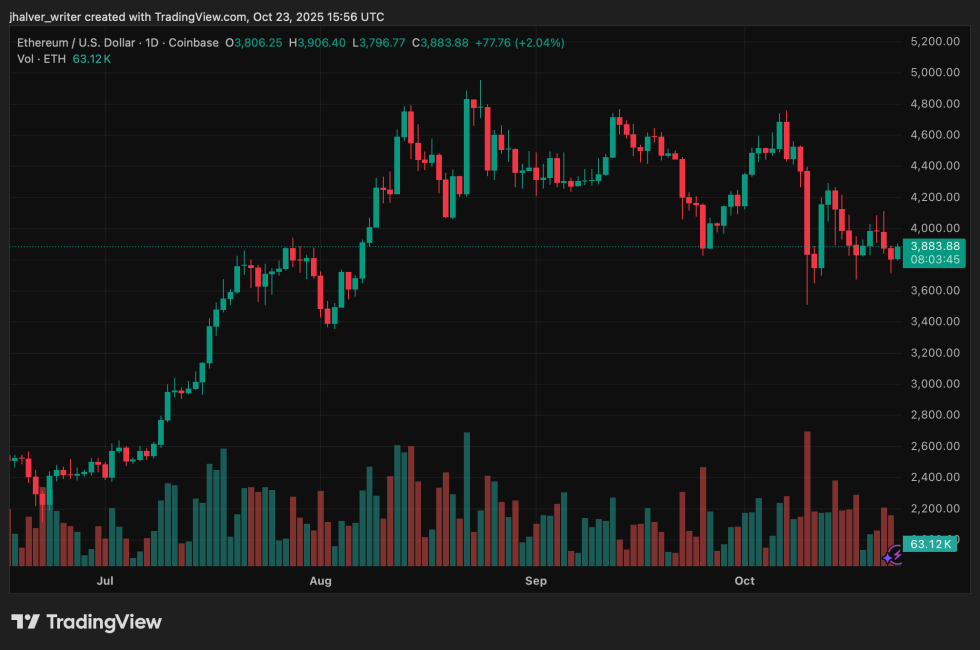
Ethereum ETH ETHUSD

ETH's price trends sideways on the daily chart. Source: ETHUSD on Tradingview

The Broader Impact on DeFi Security

Bunni’s collapse spotlights a growing security crisis in DeFi, which has already seen over $3.1 billion lost to exploits in 2025 alone, according to Hacken’s report. The incident highlights the dangers of deploying custom smart contract logic without sufficient financial and technical safeguards.

Industry experts warn that the event could usher in a new era of cautious innovation, where developers prioritize comprehensive audits, real-time monitoring, and stricter bug bounty programs.

For users, the Bunni exploit serves as a stark reminder: in the high-yield world of decentralized finance, trust and transparency remain as valuable as the tokens themselves.

Cover image from ChatGPT, ETHUSD chart from Tradingview

Editorial Process for bitcoinist is centered on delivering thoroughly researched, accurate, and unbiased content. We uphold strict sourcing standards, and each page undergoes diligent review by our team of top technology experts and seasoned editors. This process ensures the integrity, relevance, and value of our content for our readers.

Пов'язані матеріали

Is Venture Capital Dead? An 'Exit Letter' to All Soon-to-Be-Obsolete Fund Managers

This open letter, addressed to outdated fund managers, delivers a sharp, satirical critique of the modern venture capital landscape. It argues that the game is fundamentally over for small and midsize funds. The core issue is the downward expansion of massive multi-billion dollar funds into seed-stage investing. These giants, with their powerful brands and resources, consistently outcompete smaller funds for deals, even for stakes in two-person startups. Founders naturally gravitate toward established names. The letter states that relevance now hinges entirely on investing in the handful of "globally important" companies each year, like leading AI labs. If a fund misses these, it is irrelevant. It mockingly suggests that struggling funds should simply advise their portfolio companies to seek acquisition by these winners and invest through SPVs instead. The proposed "solution" of moving up to growth-stage investing is presented with equal irony. While seemingly simpler than seed investing, it means paying the same high prices once complained about. Furthermore, competition at this level involves extravagant perks (high-production podcasts, media companies, political connections) that smaller funds cannot match. The author cynically prescribes that the only remaining path is to go "all-in" on AI, as any other sector will be obliterated by imminent Artificial General Intelligence (AGI). The letter concludes by reversing its own nihilism, ironically pointing out that the tech industry's real lesson is that innovation and competition, however difficult, are essential. The final signature, "A soon-to-be-obsolete fund manager," underscores the piece's satirical warning about consolidation, herd mentality, and the existential threat facing traditional VC models.

marsbit47 хв тому

Is Venture Capital Dead? An 'Exit Letter' to All Soon-to-Be-Obsolete Fund Managers

marsbit47 хв тому

Торгівля

Спот
活动图片