Ripple, Wall Street, and the Dawn of Pro-Crypto America

TheCryptoTimesОпубліковано о 2025-10-17Востаннє оновлено о 2025-10-17

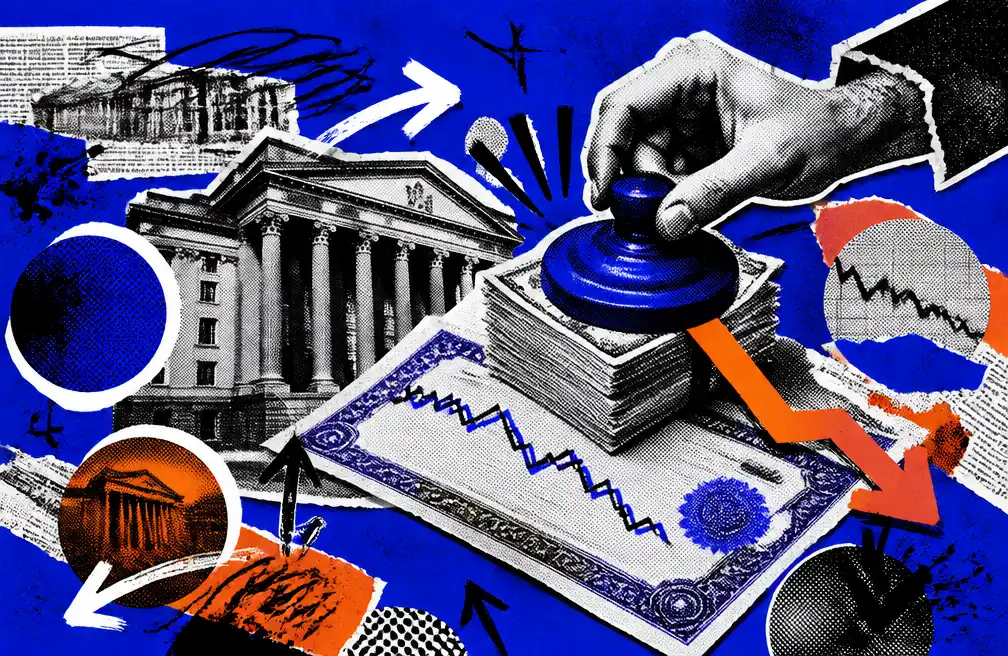
In a gilded White House ballroom lit by chandeliers and expectation, U.S. President Donald Trump’s return to power was marked not just by political spectacle but by a quiet financial revolution. At a long dinner table sat an unexpected coalition — Wall Street executives, Silicon Valley investors, and crypto visionaries. 

Between the silverware and policy talk, one message rang clear: the Trump administration is preparing to make the United States the most crypto-friendly nation on earth.

This wasn’t just another White House dinner. Those who attended described it as part celebration, part quiet strategy — an evening where the giants of old Wall Street rubbed shoulders with the new builders of digital finance. 

At one end of the table sat Ripple’s senior executives, alongside figures from Coinbase, Fidelity, and BlackRock. Their presence told its own story. Crypto, once brushed off as a fringe experiment, now had a seat at one of the most powerful tables in America. What was once dismissed as a speculative fad had now found its place at America’s most powerful table.

The return of a Market Maker

Trump’s enthusiasm for crypto has never been subtle. During his campaign, he positioned himself as a champion for innovation and deregulation, promising to “make America the crypto capital of the world.” Now, that rhetoric seems to be transforming into policy direction.

The dinner signaled the beginning of a financial realignment. For Wall Street, it was an invitation to adapt. For the crypto community, it was validation. And for Ripple, the company that fought a bruising battle with the U.S. Securities and Exchange Commission, it was something more—a return to legitimacy.

Ripple’s representatives attended the event fresh from a string of strategic moves. The company recently acquired GTreasury for $1 billion, raised another billion for its institutional digital asset arm, and announced partnerships with Absa Bank in Africa and Bahrain FinTech Bay

These weren’t mere expansion plays; they were signals that Ripple was quietly positioning itself as the connective tissue between blockchain and global banking.

When Wall Street meets the Blockchain

For decades, Wall Street has thrived on predictability, regulation, and the slow churn of traditional markets. Crypto, by contrast, built its reputation on disruption. The two worlds rarely met on equal terms. But under Trump’s second presidency, that distance appears to be shrinking.

The presence of major banks and asset managers at the White House dinner underscored a new reality: traditional finance no longer wants to fight crypto—it wants to own it. 

Executives from major firms reportedly discussed the potential for tokenized assets, blockchain-based settlement systems, and stablecoin regulation that could favor U.S. firms over global competitors.

Ripple’s growing influence fits neatly into this narrative. Its partnerships with central banks, fintech hubs, and digital payment networks make it one of the few blockchain firms already embedded within the institutional ecosystem. 

If Trump’s administration moves toward friendlier regulatory frameworks, perhaps even revisiting parts of the SEC’s enforcement record—companies like Ripple stand to gain the most.

Crypto’s second wind

Market analysts have already started calling this moment “Crypto’s Second Wind.” The optimism surrounding a pro-crypto White House, coupled with Wall Street’s open embrace, has revived market sentiment after two years of volatility. Bitcoin and XRP both saw brief surges following reports from the event, and investor confidence has trickled back into blockchain-focused equities.

But this moment isn’t just about market moves or token prices. It’s about perception and power. When a sitting U.S. president seats crypto executives beside Wall Street titans and tech giants, the symbolism is hard to ignore.

What was once brushed off as a passing trend has now become part of the financial mainstream. Crypto isn’t looking in from the outside anymore. It’s sharing space with the institutions that once kept their distance. The lines between traditional finance and digital assets are starting to blur, and the shift feels historic.

Ripple’s rise tells that story better than most. A few years ago, it was the outlier, battling lawsuits, skeptical regulators, and a system reluctant to change. Now, it’s part of that very system, shaping how money moves across borders. 

Through collaborations with the Gates Foundation and leading global banks, Ripple has positioned itself not as a challenger, but as the bridge connecting old-world finance with the new digital economy. XRP’s underlying infrastructure is quietly becoming part of the plumbing that could move money across borders faster, cheaper, and at a scale the legacy system can’t match.

What it means for America

Trump’s embrace of crypto could reshape more than just the industry—it could redefine America’s role in financial innovation. A friendlier policy climate would likely draw back the capital, companies, and talent that left during years of regulatory uncertainty. It could also spur new investment, fresh jobs, and a wave of blockchain-based enterprises rooted once again in U.S. soil.

For Wall Street, this is a clear signal. Tokenization—the process of turning real-world assets like bonds, property, or commodities into digital tokens—could finally move from concept to reality. For the crypto industry, it is validation: the White House is no longer keeping its distance. 

And for the broader economy, it’s a strategic opening. By bringing blockchain under its wing, America could reclaim leadership over a sector that has flourished everywhere but home.

Of course, optimism doesn’t erase complexity. The administration will still have to confront hard questions about investor protection, stablecoin oversight, and the environmental cost of mining. But the tone has shifted. 

Washington has shifted its perspective: crypto is no longer seen as something to control or suppress. Instead, it’s increasingly recognized as a technology to embrace, and potentially a sector where the U.S. can lead globally.

The Ripple effect

For Ripple, being part of that White House dinner carries weight far beyond appearances. It marks a turning point—a hard-earned place at the table it once struggled to reach. 

After navigating regulatory challenges, market doubts, and global uncertainties, the company is now in a position to help shape how America approaches the future of digital finance.

Ripple’s CEO has made it clear: the firm’s goal is to make the XRP Ledger the institutional standard for cross-border payments. With global banking partnerships multiplying and U.S. regulatory winds changing, that ambition suddenly feels less like corporate optimism and more like a national opportunity.

A new financial consensus

As the evening drew to a close and champagne glasses clinked, what lingered wasn’t the opulence of the White House, it was the quiet acknowledgment of a shift in power. Crypto is no longer knocking on the door of Washington or Wall Street. It’s sitting beside them, shaping the next phase of global finance.

In Donald Trump’s pro-crypto America, blockchain has found not just legitimacy but political gravity. The White House dinner was more than a celebration, it was a declaration: the age of digital finance has officially entered the halls of power.

Also Read: Ripple Labs to Raise $1B to Build New Digital Asset Treasury


Mobile Only Image

Пов'язані матеріали

In the Era of Agent Users, Where Does Crypto Value Flow?

Title: Who Makes Money from Agents? The rise of AI Agents as potential blockchain users raises a crucial question: if they become the next billion users, who will capture the value? Traditional crypto value capture theories—like "fat protocols" (where value accrues to the base layer) and "fat applications" (where value accrues to user-facing apps)—assume human users who value UX, brand, and convenience. Agents, however, operate differently: they interact via APIs, have no brand loyalty, and can switch services with near-zero cost. This shift could disrupt existing value flows. Applications might become "headless," offering their routing and infrastructure as APIs to Agents. Alternatively, Agents might bypass intermediaries entirely, allowing protocols to regain value capture ("fat protocols" reborn). A more extreme scenario is that Agents, being purely rational and cost-sensitive, could commoditize the entire stack, compressing margins toward marginal cost and turning crypto into a low-margin utility. However, Agents may not just amplify existing activities; they could enable entirely new ones—like continuous, sub-penny portfolio rebalancing, machine-to-machine commerce, and new market types only viable at automated speeds. This expands the economic pie rather than just redistributing it. Ultimately, the key question for builders is: what will make an Agent return to your service instead of a cheaper alternative? The answer may not be UX but factors like liquidity, latency, settlement guarantees, or a yet-unnamed business model. As humans and Agents will coexist as users, value capture may split: "fat apps" for human-facing services, and a new, evolving model for the Agent-dominated layer.

marsbitЩойно

In the Era of Agent Users, Where Does Crypto Value Flow?

marsbitЩойно

Base MCP, The Next Step for x402

Base has officially launched Base MCP, allowing users to connect their Base Account to AI Agents to perform actions like swaps, transfers, portfolio tracking, and transaction history queries through conversational commands. This move aligns with Base's strategic focus on AI, driven by the broader competition in the emerging Agent-to-Agent payment sector. The evolution of Agent payments has accelerated. In late 2024, the primary method involved insecure browser automation. By 2025, solutions like Coinbase's x402 (providing crypto wallets for Agents), Google's AP2, and Visa's token-based system emerged. x402 has since processed 176 million transactions totaling over $70 million, with a median value between $0.01 and $0.10. Stablecoins, particularly USDC, dominate these settlements due to their negligible transaction costs compared to traditional payment fees, which are prohibitive for micro-payments. Coinbase faces competition from Stripe, which has built a comparable infrastructure for Agent payments with its Tempo blockchain, Privy wallets, Bridge routing (acquired for $1.1B), and the recently launched MPP protocol. Both companies are now competing at the application layer. The core reason AI is central to Base's strategy is to expand the scenarios for Agent payments, ensuring more transactions occur on its network. By securing a dominant position and scale advantage in this nascent field, Coinbase aims to capture the future commercial potential of Agent-driven payments. The launch of Base MCP is thus a strategic step in this larger ambition.

marsbit6 хв тому

Base MCP, The Next Step for x402

marsbit6 хв тому

Reframing Ethereum's Valuation: Why the Fee Model is Wrong, and the 'Treasury Logic' is the Future?

"Rethinking Ethereum's Value: The 'Vault Logic' Framework" Traditional valuation models incorrectly treat Ethereum as a company, valuing ETH based on transaction fees ("revenue"). This is flawed. Fees are network friction; a successful network aims to reduce them to zero. Ethereum's average fee has dropped from over $50 in 2021 to around $0.20 today, while transaction volume has tripled. Instead, view Ethereum as a digital vault securing ~$250 billion in on-chain assets (stablecoins, RWAs, L2 bridged funds, wBTC, etc.). Post-merge, Ethereum's security is directly purchased with its own asset: ETH. To attack the network, an attacker must acquire and control staked ETH. Therefore, the vault's security level is intrinsically tied to ETH's market value. Currently, the value of all staked ETH is only ~$72B, protecting ~$250B in assets—a dangerous imbalance. For robust security, the staked ETH securing the network should be valued significantly *higher* than the total value it protects. Applying a conservative security multiplier suggests ETH's fair value should be closer to ~$6,900 (vs. ~$2,070 currently). As on-chain asset value grows into the trillions, ETH's price must rise proportionally to maintain this security budget. Comparisons to free infrastructure like Linux or low-margin utilities like the DTCC are misguided. Their security is provided externally (community, law, banks). Ethereum's security is internal and must be purchased in the open market using ETH. ETH is not the clearinghouse; it is the collateral backing it. The model is not a short-term price predictor but a structural framework. The economic force for ETH appreciation grows monotonically with the adoption of Ethereum for settling value. The narrative that high fees are good is backwards; low fees enable more activity, which increases the value needing protection, thus demanding a more valuable ETH.

marsbit12 хв тому

Reframing Ethereum's Valuation: Why the Fee Model is Wrong, and the 'Treasury Logic' is the Future?

marsbit12 хв тому

Justin Sun’s Interview with Hurun Report: A New Order and Certainty for Value Flow in the Era of Transformation

In an interview with *Hurun Report*, Justin Sun, founder of TRON, discussed the evolution of the Web3 industry as it moves from initial exploration to large-scale adoption. He emphasized that the core value of blockchain lies in building an open and inclusive internet of value, enabling anyone globally to transfer and use funds efficiently and at low cost, regardless of location or access to banking. Sun highlighted that projects with lasting impact are those built on genuine demand and real-world usage. He pointed to the stablecoin payment ecosystem as the most mature and scalable application currently, noting that TRON has rapidly become one of the world's largest stablecoin networks. The circulation of USDT on TRON has surpassed $86.3 billion, driven by actual use cases such as cross-border transfers and daily payments, demonstrating strong network effects. Regarding strategy, Sun outlined a methodology combining data-driven iteration, rapid execution, and user-centric focus. He cited the decision to partner with Tether to launch TRC-20 USDT as a key strategic move, based on an assessment of market trends and long-term potential, which has become a significant growth engine for the TRON ecosystem. On globalization, Sun stressed the importance of local compliance and cultural adaptation, noting that success in different markets depends on deep understanding and local partnerships. He also addressed the convergence of AI and blockchain, describing it as a transformative direction where blockchain provides decentralized infrastructure for AI, while AI enhances the intelligence and user experience of blockchain systems. For industry participants and young entrepreneurs, Sun advised continuous learning and adaptability in a fast-changing environment, focusing on building irreplaceable core strengths rather than spreading resources too thinly. Through infrastructure development, global strategy, and technological foresight, TRON aims to advance the practical implementation and evolution of the value internet.

marsbit45 хв тому

Justin Sun’s Interview with Hurun Report: A New Order and Certainty for Value Flow in the Era of Transformation

marsbit45 хв тому

Samsung Leverages Technology Cycles, SK Hynix Relies on HBM, What Enabled Micron to Win a Trillion-Dollar Market Cap?

Micron Technology, the Idaho-based memory chip maker, recently saw its market cap surpass $1 trillion, securing its position as one of the top three DRAM manufacturers alongside Samsung and SK Hynix. Its survival and growth story is marked by a unique combination of political maneuvering and hard-won manufacturing efficiency, but also strategic missteps that now challenge its future. Founded in 1978 in Boise without significant government or capital backing, Micron repeatedly turned to Washington for survival during critical junctures. In the 1980s, it filed anti-dumping complaints against Japanese firms, leading to the U.S.-Japan Semiconductor Agreement. Ironically, this created an opening for Samsung, which Micron had earlier licensed its 64K DRAM technology to. In 2002, Micron avoided heavy fines in a price-fixing investigation by acting as a whistleblower against its competitors, cementing its reputation as a "political opportunist." A major strategic error occurred in 2013 with its $2.5 billion acquisition of bankrupt Japanese firm Elpida. This deal burdened Micron with integrating incompatible manufacturing processes just as the industry was pivoting toward HBM (High Bandwidth Memory), a critical technology for AI. SK Hynix had launched its first HBM chip that same year. By the time AI demand exploded with ChatGPT in 2022, SK Hynix commanded about 85% of the HBM3 market, while Micron, playing catch-up, held only around 3%. In 2017, Micron employed similar tactics against a new competitor, Chinese startup Fujian Jinhua, by alleging intellectual property theft, which led to U.S. sanctions effectively crippling the firm. However, this strategy backfired in 2023 when China banned Micron's products from its critical infrastructure, causing its revenue share from China to plummet from 14% in FY2023 to just 7.1% by FY2025. Today, Micron faces a triple squeeze: it lags in the high-margin HBM race, faces pricing pressure in low-end DRAM from Chinese manufacturers like CXMT, and has lost crucial access to the booming Chinese AI server market. Despite its political strategies, Micron's core strength is its exceptional manufacturing cost control, achieved through decades of engineering. Its DRAM chips have a smaller cell area than its rivals, yielding more chips per wafer. This efficiency has been vital for weathering industry downturns. However, this advantage cannot compensate for the decade lost in HBM development. Micron is now racing to ramp up production of its HBM3E, certified by NVIDIA, and develop HBM4. Its future hinges on whether it can close this technological "time debt" through relentless R&D and execution, in a marathon where its competitors, having started earlier, are not slowing down.

marsbit1 год тому

Samsung Leverages Technology Cycles, SK Hynix Relies on HBM, What Enabled Micron to Win a Trillion-Dollar Market Cap?

marsbit1 год тому

Торгівля

Спот
Ф'ючерси

Популярні статті

Як купити HOUSE

Ласкаво просимо до HTX.com! Ми зробили покупку Housecoin (HOUSE) простою та зручною. Дотримуйтесь нашої покрокової інструкції, щоб розпочати свою криптовалютну подорож.Крок 1: Створіть обліковий запис на HTXВикористовуйте свою електронну пошту або номер телефону, щоб зареєструвати обліковий запис на HTX безплатно. Пройдіть безпроблемну реєстрацію й отримайте доступ до всіх функцій.ЗареєструватисьКрок 2: Перейдіть до розділу Купити крипту і виберіть спосіб оплатиКредитна/дебетова картка: використовуйте вашу картку Visa або Mastercard, щоб миттєво купити Housecoin (HOUSE).Баланс: використовуйте кошти з балансу вашого рахунку HTX для безперешкодної торгівлі.Треті особи: ми додали популярні способи оплати, такі як Google Pay та Apple Pay, щоб підвищити зручність.P2P: Торгуйте безпосередньо з іншими користувачами на HTX.Позабіржова торгівля (OTC): ми пропонуємо індивідуальні послуги та конкурентні обмінні курси для трейдерів.Крок 3: Зберігайте свої Housecoin (HOUSE)Після придбання Housecoin (HOUSE) збережіть його у своєму обліковому записі на HTX. Крім того, ви можете відправити його в інше місце за допомогою блокчейн-переказу або використовувати його для торгівлі іншими криптовалютами.Крок 4: Торгівля Housecoin (HOUSE)Легко торгуйте Housecoin (HOUSE) на спотовому ринку HTX. Просто увійдіть до свого облікового запису, виберіть торгову пару, укладайте угоди та спостерігайте за ними в режимі реального часу. Ми пропонуємо зручний досвід як для початківців, так і для досвідчених трейдерів.

356 переглядів усьогоОпубліковано 2025.04.27Оновлено 2026.05.19

Як купити HOUSE

Обговорення

Ласкаво просимо до спільноти HTX. Тут ви можете бути в курсі останніх подій розвитку платформи та отримати доступ до професійної ринкової інформації. Нижче представлені думки користувачів щодо ціни HOUSE (HOUSE).

活动图片