Curve 团队再创业,YieldBasis 会成为下一个现象级 DeFi 应用吗?

深潮Опубліковано о 2025-10-13Востаннє оновлено о 2025-10-14

如果该模型能够安全地扩展,它可能为 DeFi 流动性提供者开启一个全新的收益前沿。

撰文:Saint

编译:AididiaoJP,Foresight News

加密市场每隔一段时间,就会出现一款 DeFi 爆款产品。

Pumpfun 让代币发行变得轻松,而 Kaito 则改变了内容分发。

现在,YieldBasis 将重新定义流动性提供者的获利方式:通过将波动性转化为收益,并消除无常损失。

在本文中,我们将探讨基础知识,解析 YieldBasis 的工作原理,并重点介绍相关投资机会。

概述

如果你曾经向双资产池提供过流动性,那么可能亲身体验过无常损失。

但对于不熟悉这个概念的人来说,快速回顾:

无常损失是一种暂时的价值损失,当向包含两种资产的资金池提供流动性时就会发生。

随着用户在这些资产之间进行交易,资金池会自动重新平衡,这通常导致流动性提供者持有更多被卖出的资产。

例如,在 BTC/USDT 资金池中,如果 BTC 价格上涨,交易者将向资金池出售 BTC 以获取利润,而流动性提供者最终会持有更多 USDT 和更少的 BTC。

当提取资金时,头寸总价值通常低于单纯持有 BTC 的情况。
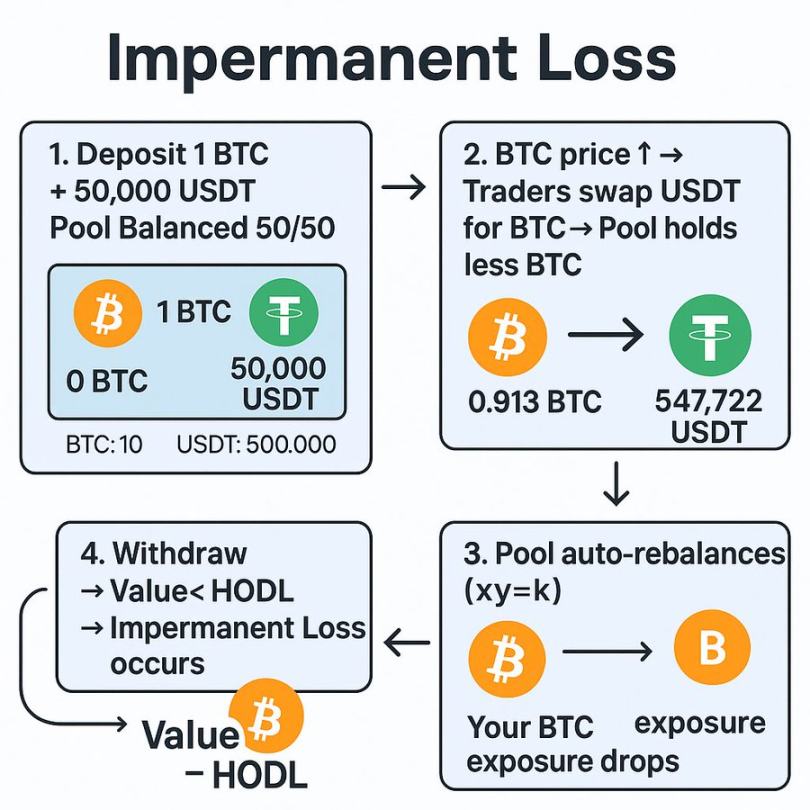
早在 2021 年,高年化百分比收益率和流动性激励足以抵消这一点。

但随着 DeFi 的成熟,无常损失成了一个真正的缺陷。

各种协议引入了修复措施,如集中流动性、Delta 中性流动性提供者和单边资金池,但每种方法都有其自身的权衡取舍。

YieldBasis 采用了一种新方法,旨在通过从波动性中捕获收益,同时完全消除无常损失,使流动性提供再次盈利。

什么是 YieldBasis?

简单来说,YieldBasis 是一个构建在 Curve 之上的平台,它使用 Curve 资金池从价格波动中产生收益,同时保护流动性提供者头寸免受无常损失。

在启动时,比特币是主要资产。用户将 BTC 存入 YieldBasis,YieldBasis 将其分配到 Curve 的 BTC 资金池中,并利用独特的链上结构应用杠杆,从而中和无常损失。

由包括 @newmichwill 在内的 Curve 背后同一团队创立。

YieldBasis 已经取得了重大里程碑:

• 从顶级创始人和投资者处筹集超过 5000 万美元

• 在 Legion 销售中录得超过 1.5 亿美元的承诺金额

• 在启动后几分钟内填满了其 BTC 资金池

那么,这个机制实际上是如何工作的呢?

理解 YieldBasis 工作流程
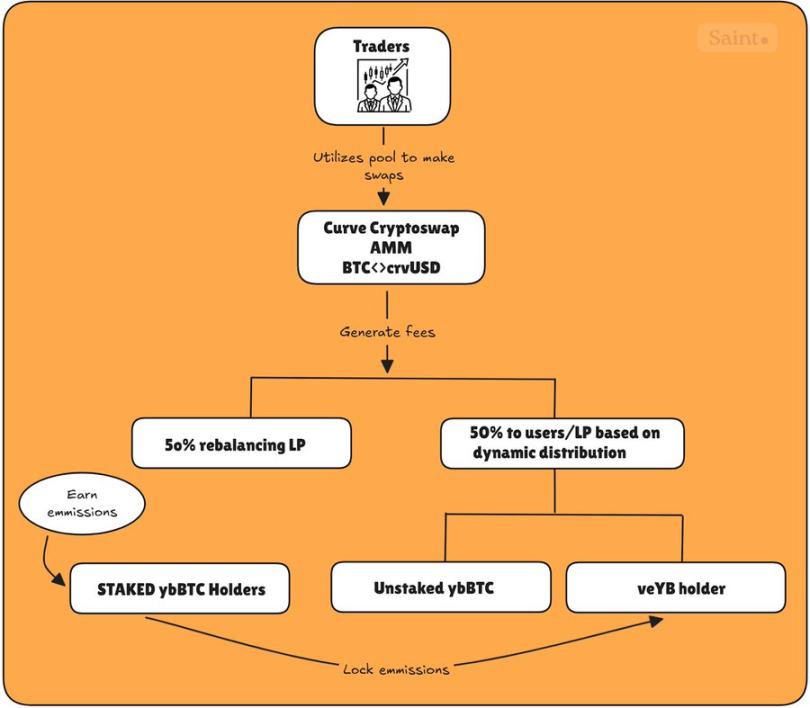
YieldBasis 通过一个三步流程运作,旨在维持 2 倍杠杆头寸,同时保护流动性提供者免受下行风险。

存入

用户的第一步是将 BTC 存入 YieldBasis 以铸造 ybBTC,这是一种代表其在资金池中份额的收据代币。当前支持的资产包括 cbBTC、tBTC 和 WBTC。

闪电贷和杠杆设置

协议闪电贷出与存入的 BTC 美元价值相等的 crvUSD。

BTC 和借来的 crvUSD 被配对,并作为流动性提供给 BTC/crvUSD Curve 资金池。

由此产生的 LP 代币作为抵押品存入 Curve CDP(抵押债务头寸)以获取另一笔 crvUSD 贷款,用于偿还闪电贷,使头寸完全杠杆化。

这就创建了一个具有恒定 50% 债务比率的 2 倍杠杆头寸。

杠杆再平衡

随着 BTC 价格变动,系统自动重新平衡以维持 50% 的负债权益比率:

  • 如果 BTC 上涨:LP 价值增加 → 协议借入更多 crvUSD → 风险敞口重置为 2 倍

  • 如果 BTC 下跌:LP 价值下降 → 赎回部分 LP → 偿还债务 → 比率恢复至 50%

这使 BTC 风险敞口保持恒定,即使价格波动,您也不会损失 BTC。

再平衡通过两个关键组件处理:再平衡自动化做市商和虚拟资金池。

再平衡自动化做市商跟踪 LP 代币和 crvUSD 债务,调整价格以鼓励套利者恢复平衡。

同时,虚拟资金池将所有步骤闪电贷、LP 代币铸造 / 销毁和 CDP 还款包装成一个单一的原子交易。

这种机制通过保持杠杆稳定来防止清算事件,同时给予套利者小的利润激励以维持均衡。

其结果是一个自我平衡的系统,持续对冲无常损失。

费用和代币分配
YieldBasis 有四个主要代币,定义了其激励系统:

  • ybBTC:对 2 倍杠杆的 BTC/crvUSD LP 的索取权

  • 质押的 ybBTC:赚取代币排放的质押版本

  • YB:原生协议代币

  • veYB:投票锁定的 YB,授予治理权和增强奖励

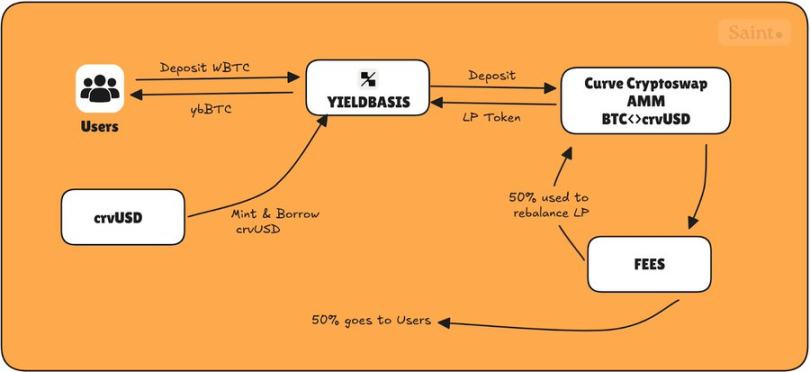
从 BTC/crvUSD 资金池产生的所有交易费用均分:

  • 50% 归用户(在未质押的 ybBTC 和 veYB 持有者之间共享)

  • 50% 返回协议,为再平衡机制提供资金

返回再平衡资金池的 50% 确保了不会因为缺乏套利者来平衡资金池而出现清算调用;因此协议使用 50% 的协议费用自行完成。

而分配给用户的剩余 50% 则在未质押的 ybBTC 和 veYB 治理之间共享,遵循动态分配。

简而言之,协议跟踪已质押的 ybBTC 数量,并使用以下公式调整每个持有者(未质押的 ybBTC 和 veYB)可能赚取的费用:
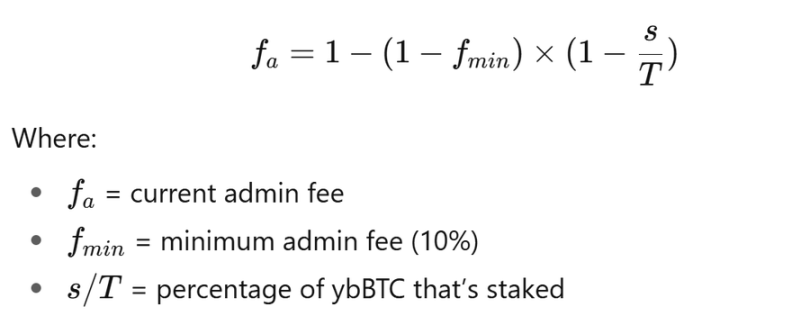
当无人质押时 (s = 0)

因此,𝑓ₐ = 𝑓𝑚𝑖𝑛 = 10%,veYB 持有者仅获得一小部分(10%),未质押的 ybBTC 持有者获得其余部分(90%)。

当所有人都质押时 (s = T)

因此,𝑓ₐ = 100%,veYB 持有者获得全部用户侧费用,因为没有人留下来赚取交易费用。

当一半供应量被质押时 (s = 0.5T),管理费上升(≈ 36.4%),veYB 获得 36.4%,未质押持有者分享 63.6%。

对于质押的 ybBTC 持有者,他们接收 YB 排放,这些排放可以锁定为 veYB,最短 1 周,最长 4 年。

质押的 ybBTC 持有者可以锁定他们收到的排放,以同时享受作为 veYB 持有者的费用和排放,创造一个飞轮效应,使他们能够从协议中赚取最大费用,如下图所示。

自启动以来,yieldbasis 已有一些有趣的统计数据:

  • 总交易量达 2890 万美元

  • 超过 600 万美元用于再平衡

  • 产生超过 20 万美元的费用。

个人想法

YieldBasis 代表了自 Curve 原始稳定互换模型以来流动性提供中最具创新性的设计之一。

它结合了经过验证的机制;投票托管代币经济学、自动再平衡和杠杆化流动性提供,融入一个新的框架,这可能为资本高效的收益策略设定下一个标准。

鉴于它是由 Curve 背后的同一批人构建的,市场的乐观情绪并不令人意外。随着超过 5000 万美元的融资和资金池的瞬间填满,投资者显然是在押注其未来的代币发行。

尽管如此,该产品仍处于早期阶段。BTC 相对稳定的性质使其成为理想的测试资产,但如果过早引入高波动性交易对,可能会挑战再平衡机制。

话虽如此,基础看起来是坚实的,如果该模型能够安全地扩展,它可能为 DeFi 流动性提供者开启一个全新的收益前沿。

Пов'язані матеріали

Upbit is Anxious: A Hasty Counterattack Aimed at Regaining Stablecoin Market Share

Title: Upbit's Rushed Counterattack to Reclaim Stablecoin Market Share Facing a dramatic shift in South Korea's stablecoin market, leading exchange Upbit launched a promotional campaign from July 26 to August 9, waiving the 0.05% trading fee for stablecoins paired with the Korean Won (KRW) and rapidly listing new stablecoins like RLUSD and USDG. This move is a direct response to its plummeting market share in this sector. Historically a duopoly with Bithumb, the market has been reshaped since October 2025 when Coinone permanently removed fees for USDC trading. By June 2026, Coinone led with 34.8% of stablecoin volume, followed by Bithumb (31.1%) and Upbit (30.1%). This contrasts sharply with the overall crypto market, where Upbit commands 60%. The data shows stablecoin demand is highly sensitive to fees, as users primarily buy them to transfer capital overseas for derivatives trading or forex arbitrage. South Korean exchanges have seen a net outflow of stablecoins for 18 consecutive months, totaling approximately 14.9 trillion KRW, underscoring their role as a cross-border capital conduit. Upbit's limited-time promotion initially boosted its daily stablecoin volume by 162%, but the surge was almost entirely in USDT (98.1% of volume). The newly listed stablecoins saw negligible, fleeting interest. Furthermore, the promotional effect quickly waned in the second week, with volume dropping 33% on weekdays. A concurrent weakening of the KRW also contributed to the trading spike, independent of the fee waiver. The analysis suggests that once the promotion ends, Upbit is unlikely to retain its temporary gains unless it matches Coinone's permanent zero-fee policy, forcing a choice between market share and fee revenue. Upbit's strategic push may be less about immediate profit and more about preparing for future regulatory shifts. With South Korea's *Digital Asset Basic Act* on the horizon, which will regulate KRW-backed stablecoins, and following Dunamu's (Upbit's parent) integration into Naver Financial to build a payment ecosystem, securing a dominant position in the dollar stablecoin distribution channel holds long-term strategic value. However, potential regulatory conflicts could prevent Upbit from listing a future Naver-issued KRW stablecoin, making the current fight for dollar stablecoin flow even more critical.

marsbit5 год тому

Upbit is Anxious: A Hasty Counterattack Aimed at Regaining Stablecoin Market Share

marsbit5 год тому

Michael Saylor Compares Bitcoin and Gold!

Michael Saylor, founder of MicroStrategy, argues that Bitcoin fundamentally changes how wealth is stored and transferred by transforming digital scarcity into economic value. He describes Bitcoin as the first digital monetary network, combining computers, digital networks, and cryptography. It digitizes monetary assets, allowing their supply to be controlled by public protocols rather than institutions, thus converting economic value into information transmissible over global networks. Comparing Bitcoin to gold, Saylor states that while increasing Bitcoin's supply is harder, its integration with software and transfer is easier. He highlights Bitcoin's proof-of-work mechanism, which ties it to the physical world by consuming real energy to secure the ledger, making past transactions immutable. This creates a shared security system involving miners, energy companies, and investors. Saylor suggests "digital monetary energy" is a more accurate term than "digital gold." He emphasizes that the Bitcoin network is an adaptive ecosystem of miners, nodes, developers, and users. Its core design is intentionally simple, focused on maintaining a secure ledger for scarce digital assets, with complex functionalities built in higher-layer applications. This architecture allows Bitcoin to serve as a foundation for transmitting value and fostering innovation in payments and financial services. Saylor notes Bitcoin's deeper impact lies in creating digital sovereignty, where private keys give individuals permissionless control over their economic power, with ownership verified mathematically, not by institutions. He concludes that while gold's physical scarcity makes it money, Bitcoin's digital scarcity does the same, characterizing Bitcoin as the monetary energy of the digital age.

cryptonews.ru6 год тому

Michael Saylor Compares Bitcoin and Gold!

cryptonews.ru6 год тому

Торгівля

Спот
活动图片




