Stock Exchange Expert Highlights What Will Spark An XRP Price Explosion

bitcoinistОпубліковано о 2025-09-12Востаннє оновлено о 2025-09-13

Анотація

The XRP price could be on the verge of a significant move, according to stock exchange expert Oliver Michel. Michel...

Trusted Editorial content, reviewed by leading industry experts and seasoned editors. Ad Disclosure

The XRP price could be on the verge of a significant move, according to stock exchange expert Oliver Michel. Michel points out that XRP is waiting for a catalyst, and the right event could push it much higher. Demand for the digital asset is already building, and if market conditions align, Michel believes the token could reach a new peak in the near term.

Price Could See Key Trigger From Spot XRP ETFs In October

According to his market study, Oliver Michel, CEO of Tokentus, highlights that the most significant spark for the XRP price could be the approval of spot XRP ETFs. He notes that more than seven applications are now waiting for SEC decisions, with deadlines falling between October 18 and 25. If the SEC approves these ETFs, Michel believes they would bring real demand into the market and set the XRP price up for an intense climb.

He recalls that the rollout of Bitcoin and Ethereum ETFs in the past brought a surge of activity and greater attention to the market. In his view, similar approval for XRP would not only confirm rising demand but also draw in a new wave of investors. Current signs already indicate growing interest, as XRP futures at the CME Group reached $1 billion in open interest in just over three months, making it the fastest crypto contract on CME to reach that milestone.

Beyond futures, funds tied to XRP are also seeing heavy inflows. Michel emphasizes that futures-based XRP ETFs have already attracted over $800 million in assets. For him, the next step is Spot ETFs, which bring stronger direct demand. If XRP begins to rally in October, Michel believes these ETFs could quickly fuel the move and lift prices even higher.

XRP Price Consolidation Signals A Decisive Breakout Ahead

From the Frankfurt Stock Exchange floor, Michel observes that XRP is trading around $2.97, consolidating below its recent swing high of $3.66. He explains that the token will need the broader market to build momentum as it is unlikely to climb on its own. Michel notes that while Bitcoin still has potential, altcoins like XRP and Ethereum could see much larger gains. He believes altcoins could rise as much as 300%, while Bitcoin might only see increases of around 30%.

Michel emphasizes that XRP is approaching a decisive moment. If spot ETFs are approved, the token could experience a strong upside move. He joins other analysts predicting a new peak for the XRP price, with popular year-end expectations above $10. Michel says growing demand and shifting market momentum could push the altcoin higher. He explains that XRP’s current consolidation shows it is waiting for a catalyst to break higher. He says October could be the time when the XRP price finally makes a strong rally.

XRP price chart from TradingView.com
Price struggles against bearish headwinds | Source: XRPUSDT on TradingView.com
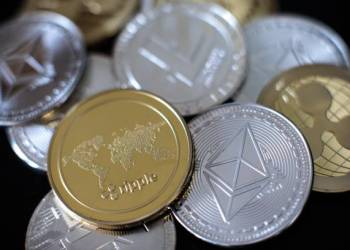
Featured image from DALL.E, chart from TradingView.com
Editorial Process for bitcoinist is centered on delivering thoroughly researched, accurate, and unbiased content. We uphold strict sourcing standards, and each page undergoes diligent review by our team of top technology experts and seasoned editors. This process ensures the integrity, relevance, and value of our content for our readers.

I'm Sandra White, a writer at Bitcoinist, and I provide the latest updates on the world of cryptocurrencies. I believe crypto a gateway to a new order and I have made it my life's mission to help educate as much people as possible. When I'm not at work, I love listening to music, learning new things, and dream of traveling around the world.

Пов'язані матеріали

The Creators of ChatGPT No Longer Use ChatGPT for Work

The creators of ChatGPT are increasingly moving away from using it themselves, shifting their primary AI tool to AI agents like Codex. As of June 2026, Codex handles 99.8% of OpenAI's weekly output tokens—a dramatic rise from less than 10% just ten months prior. This transition, which accelerated around September, marks a fundamental change: from single-turn chatbot queries to delegating entire, long-running tasks to autonomous agents. The shift began with engineers but quickly spread company-wide. By April 2026, non-technical departments like legal, finance, and HR had adopted Codex as their primary tool, with personnel in these roles now generating over 85% of their output tokens through it. Notably, growth among non-developer users has far outpaced that of developers. Codex has evolved from a coding assistant into a general workflow agent. It can autonomously manage complex, multi-step processes—from implementation and debugging to testing—running for hours without human intervention. Heavy users at OpenAI can now delegate over 60 hours of agent runtime per day. The model underpinning Codex, GPT-5.5, not only executes tasks but also optimizes its own infrastructure, demonstrating improved efficiency. This report signals a broader shift in knowledge work: the key differentiator is becoming the scale and complexity of tasks users are willing to fully delegate to AI agents.

marsbit20 хв тому

The Creators of ChatGPT No Longer Use ChatGPT for Work

marsbit20 хв тому

The Rise of Stablecoins in Latin America Is Not, in Essence, a 'Victory for Crypto Technology'

The Rise of Stablecoins in Latin America: Not a Victory for Crypto, But for Remittance Infrastructure Stablecoin adoption in Latin America isn't primarily driven by belief in crypto technology. It's a pragmatic solution to a centuries-old problem: getting money home. The article draws parallels to the traditional "silver letters" (银信) system used by Chinese diaspora, where trust and execution relied on tight-knit community networks. The core pain point is remittances—the lifeblood for millions of families. Existing systems are often slow, expensive, and opaque. Stablecoins like USDT and USDC are not seen as speculative crypto assets but as "digital dollars in your phone." They address critical local needs: Argentinians use them as a hedge against hyperinflation, Venezuelans as a lifeline for essential goods, while in Brazil and Mexico, they facilitate cross-border payments and freelance payouts. The real challenge isn't the blockchain transfer itself, but the "on-ramps" and "off-ramps"—how to convert local currency into stablecoins and, crucially, how recipients can access the funds as spendable local currency via systems like Pix (Brazil) or SPEI (Mexico). The battlefield is building the infrastructure that seamlessly connects these ends. Regulators are less focused on "crypto adoption" and more on controlling what becomes a parallel foreign exchange system, concerned with AML, consumer protection, and capital flows. The future lies in stablecoins becoming an invisible, efficient middle layer in a new remittance stack, where the user only cares about one thing: the money arrived.

marsbit1 год тому

The Rise of Stablecoins in Latin America Is Not, in Essence, a 'Victory for Crypto Technology'

marsbit1 год тому

Торгівля

Спот
活动图片