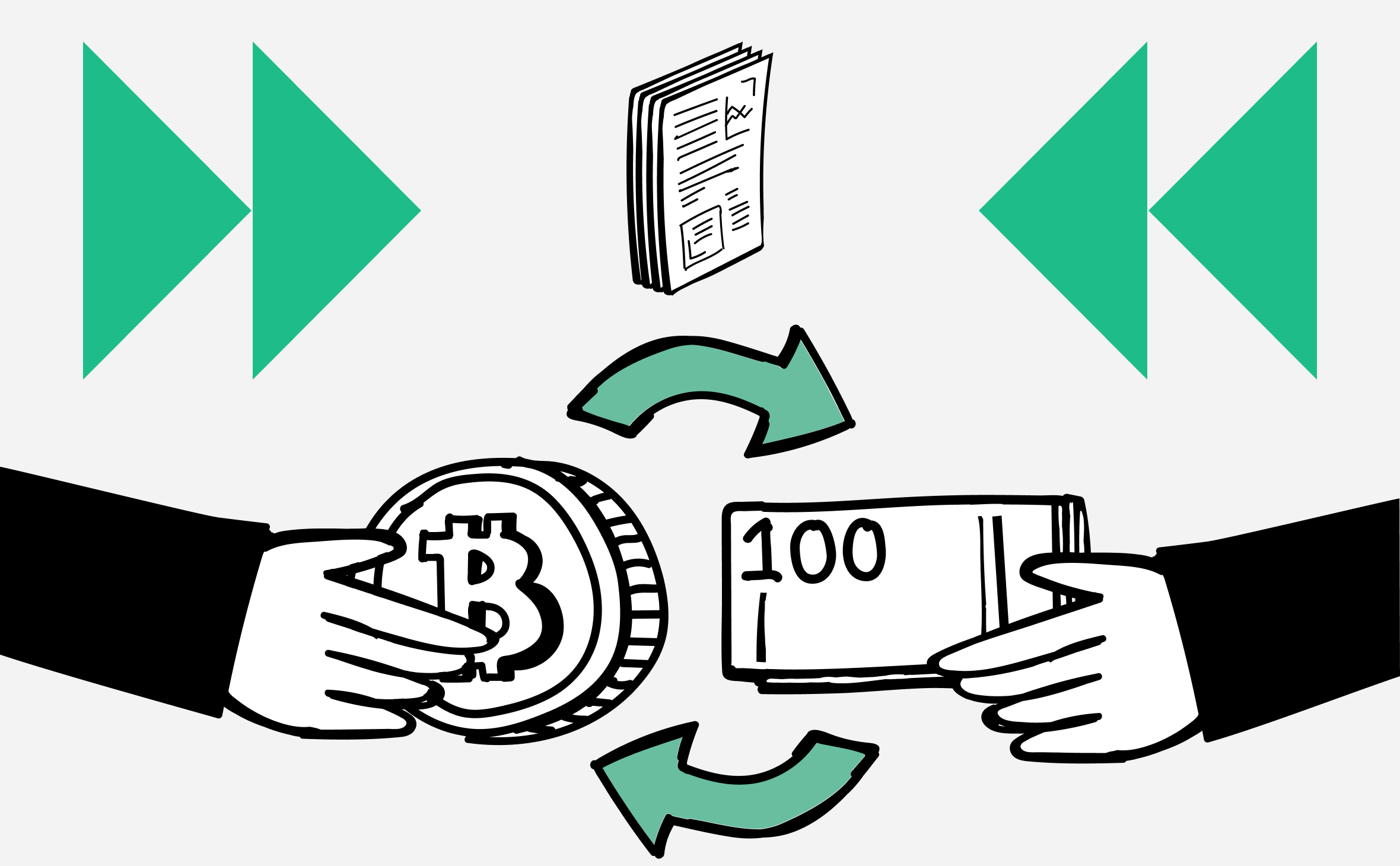
Белорусский сервис добавил услугу прямого обмена криптовалюты для россиян

cryptonews.ruОпубліковано о 2025-03-21Востаннє оновлено о 2025-08-22

Компания WhiteBird запустила услугу, позволяющую пополнять криптовалютный счет в рублях и выводить средства на российские карты

Белорусская компания WhiteBird объявила о запуске услуги, позволяющей гражданам России напрямую покупать и продавать криптовалюту. Покупка токенов и пополнение электронного криптовалютного счета возможны с помощью банковских переводов, сервиса SberPay или криптокарты, которую можно выпустить на той же платформе. Вывод средств в рублях — на любую карту МИР. Функция уже доступна зарегистрированным и верифицированным пользователям.

Услуга выглядит крайне актуальной на фоне борьбы с p2p переводами на крипторынке и введенных в мае ограничений на переводы между физлицами — до 100 тыс. рублей в месяц при попадании в базу ЦБ о подозрительных операциях. По словам опрошенных «РБК-Крипто» юристов, эта база уже затронула большую часть российского P2P-обмена. Пользователи не всегда могут проверить происхождение поступающих переводов. Если человек продает, например, USDT через P2P, он не знает, кто переводит ему деньги. Это может быть карта, оформленная на подставное лицо, счет жертвы мошенников или участника незаконной схемы. Даже если сам продавец действовал добросовестно, он может оказаться участником расследования.

В условиях роста преступных схем и, как следствие, усиления банковского контроля в отношении p2p-переводов, действительно отмечается возросший интерес к сервисам, работающим в прозрачной и регулируемой юрисдикции, где существуют жесткие требования к KYC, источникам происхождения денежных средств и чистоты крипты. Они становятся безопасной альтернативой для российских пользователей криптовалют, а также позволяют избежать посредников и сохранять прямой контроль над собственными средствами.

Белорусский рынок криптовалюты действует в рамках юрисдикции Парка высоких технологий (ПВТ), который выдает лицензии и контролирует участников. Легальные площадки в стране предлагают инструменты хранения, обмена и торговые сервисы с интеграцией банковских систем.

WhiteBird подчеркивает, что работает в Белоруссии с 2020 года и является резидентом ПВТ. Сервис предоставляет криптокошелек, платежные карты, платформу для биржевой торговли и другие инструменты, в том числе для юридических лиц.
rbc.group

Пов'язані матеріали

The Biggest Political Economy Question in the AI Era: As Robots Become More Capable, How Do Humans Share the Value?

In the AI era, the most pressing political economy question is: as machines become increasingly capable, how can humanity share in the value they create? An article originally critiquing China's tech focus has sparked a deeper debate on this global challenge. Historically, industrial progress improved efficiency but still relied on human labor for wealth creation and distribution. AI is fundamentally different—it is now replacing cognitive and knowledge work. As AI and robots take over more tasks, economic growth may continue while direct human participation in value creation shrinks, creating a core tension between productivity gains and widespread income generation. The issue is not unique to China. While leading tech companies amass enormous wealth, labor's share of income is declining globally. The core problem is a broken link: technological innovation and corporate profits are not translating into sufficient consumer income and demand. Three potential paths forward are outlined: a traditional capitalist model where profits primarily go to capital owners; a state-capitalist approach with public investment in AI; and more innovative models like digital sovereign wealth funds, universal shareholding, or AI-era basic income schemes to directly distribute AI-generated value. The future competitive advantage may lie not just in technological supremacy, but in which society can build a new, inclusive distribution system for the intelligent economy. The ultimate challenge is ensuring that as AI creates value, humans have a means to obtain income and share in the resulting widespread social benefits.

marsbit1 хв тому

The Biggest Political Economy Question in the AI Era: As Robots Become More Capable, How Do Humans Share the Value?

marsbit1 хв тому

Generating Profits for Seven Consecutive Quarters, Emerging Markets Carry Trade Outperforms Everything

For the seventh consecutive quarter, dollar-funded emerging market carry trades have delivered positive returns, marking the longest winning streak since 2008. According to Bloomberg's index, this strategy has gained approximately 22% since late 2024, outperforming U.S. Treasuries, emerging market sovereign, and corporate dollar debt. The core of the trade involves borrowing low-interest currencies like the U.S. dollar, euro, or yen to invest in high-yielding emerging market assets, such as Turkish lira bonds offering over 40% returns. Returns were amplified by favorable currency moves, with the dollar weakening against most emerging market currencies and other traditional funding currencies. For instance, the trade gained 48% on the Colombian peso in the past year. A key test came in August 2024 with a historic joint U.S.-Japan currency intervention, which caused only a modest 1% dip in the carry trade risk premium as investors shifted funding from the yen to the euro and Swiss franc. Looking ahead, the primary risk is the timing of Federal Reserve policy changes. While persistent inflation allows the Fed to hold rates, a rapid rise in long-term U.S. yields could threaten the trade. Another concern is crowding, as massive inflows increase vulnerability to a sudden reversal. High interest rates in regions like Latin America and Eastern Europe, supported by external factors like Middle East tensions and energy prices, continue to sustain the opportunity. Major investors remain engaged, favoring currencies like the Mexican peso, South African rand, and Turkish lira.

marsbit16 хв тому

Generating Profits for Seven Consecutive Quarters, Emerging Markets Carry Trade Outperforms Everything

marsbit16 хв тому

Unpacking the Truth Behind On-chain Assets: Leverage, Liquidity, and Risk

The article analyzes the concept of "real-world asset" (RWA) tokenization, arguing that while tokenizing assets on-chain is a useful step, it is far from transformative on its own. The author compares it to placing a barcode on a shipping container—it enables identification but does not build the necessary market infrastructure. The core argument is that true value emerges not from tokenization, but from integrating these tokens into DeFi systems where they can be valued, financed, hedged, traded, and liquidated under stress. Key challenges identified include: 1. **Multiple Time Clocks**: A fundamental tension exists between blockchain's 24/7 settlement and the slower, business-hour-dependent processes of traditional markets, custody, and redemption. This "duration mismatch" can create dangerous liquidity gaps during crises. 2. **Liquidity Misconceptions**: True liquidity is not measured by Total Value Locked (TVL) or trading pairs, but by the ability to exit a position within a required timeframe at an acceptable price. It requires analyzing multiple exit paths and stress-testing scenarios. 3. **Leverage and Risk**: Leverage unlocks economic utility (e.g., using tokenized assets as collateral) but also introduces fragility. Risk models must account for more than asset volatility, incorporating factors like legal enforceability, oracle freshness, and market structure. Paradoxically, a "safer" asset like tokenized Treasury bonds could require a higher collateral discount than ETH due to slower, less-proven liquidation mechanisms. 4. **A Risk Graph**: RWA risk should be modeled as a network of interconnected dependencies (e.g., issuers, custodians, oracles, stablecoin pools), not a single score. Failures can propagate through this graph, turning operational issues into systemic liquidity crises. The article states that tokenized government bonds are merely an entry point, while more complex frontiers like computing power and energy assets present greater challenges and opportunities. It also examines the interplay and risks between tokenized stocks and perpetual futures contracts. The conclusion is that the future lies not in "tokenizing everything," but in building robust market layers where tokenized rights become resilient financial primitives within a programmable capital system. The token is just the barcode; the market is the machine.

marsbit41 хв тому

Unpacking the Truth Behind On-chain Assets: Leverage, Liquidity, and Risk

marsbit41 хв тому

Торгівля

Спот
活动图片