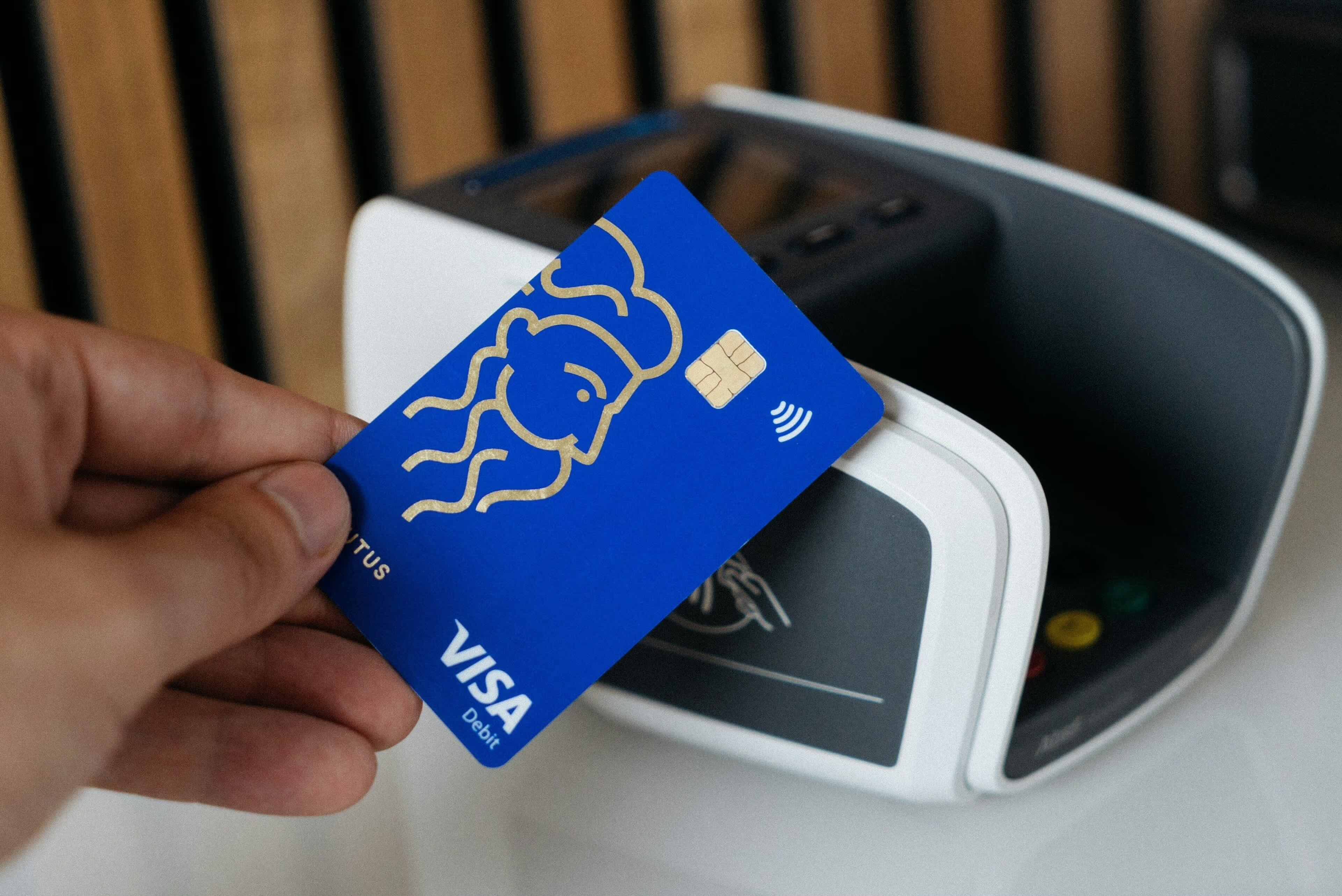
Запущена виртуальная карта StablePay для международных расчетов

cryptonews.ruОпубліковано о 2025-01-20Востаннє оновлено о 2025-08-21

Виртуальная карта StablePay на базе Mastercard с бесплатным обслуживанием позволяет оплачивать онлайн-покупки, подписки на различные сервисы, а также снимать наличные в разных точках мира.

Получить виртуальную карту StablePay могут физические лица — для этого нужно пройти верификацию с предоставлением паспорта и селфи.

Виртуальная карта выпускается мгновенно, а пополнение карты осуществляется через стейблкоин A7A5, который переводится напрямую из криптокошелька. Средства автоматически конвертируются в евро, после чего ими можно оплачивать покупки. Карту StablePay можно добавить в Apple Pay и Google Pay.

Транзакции по виртуальной карте не ограничены, а лимит на пополнение составляет 6 000 евро в сутки. Управлять картой и ее балансом можно через веб-приложение, на странице выпущенной карты можно посмотреть реквизиты и выполненные операции. В приложении есть встроенный чат, в котором можно обратиться к команде поддержки при возникновении вопросов.

Ранее стало возможным покупать стейблкоины A7A5 с российских банковских карт, а сам стейблкоин появился в феврале этого года.


Пов'язані матеріали

Crypto Payment Cards with $1.5 Billion Monthly Transaction Volume, Stuck in the 1990s

Monthly crypto payment card transaction volume has reached $15 billion, but the industry's development stage is comparable to debit cards in the 1990s, before they became a mainstream financial staple. A key limitation is the lack of established daily financial relationships, such as direct salary deposits and recurring bill payments, with crypto wallets. Despite annualized transaction volumes of approximately $18 billion, the market is concentrated and immature. The leading provider, RedotPay, commands over half the market share. User adoption is heavily skewed towards emerging markets like Bangladesh, India, and Nigeria, where access to USD and stable financial services is limited, rather than developed economies. The sector features four primary business models: 1) Card-issuing infrastructure providers, 2) Exchange-affiliated cards for user retention, 3) Decentralized wallet/DeFi cards with self-custody but high complexity, and 4) Stablecoin-focused digital banks, which dominate transaction volume by offering integrated financial services. The article argues that a pure payment functionality is insufficient for long-term success, mirroring the historical trajectory of traditional debit cards. Future winners will need to: 1) Control the upstream flow of funds, 2) Secure defensible niches in underserved markets, and 3) Most crucially, build core account relationships that integrate into users' daily financial lives. Without this evolution, crypto cards risk remaining niche prepaid tools rather than becoming universal financial infrastructure.

Foresight News15 хв тому

Crypto Payment Cards with $1.5 Billion Monthly Transaction Volume, Stuck in the 1990s

Foresight News15 хв тому

$7.8 Billion in Theft and Losses Reveals the Truth: Security Costs Have Become an Unavoidable Liquidity Tax for DeFi

"7.8 Billion in Thefts Reveals the Truth: Security Costs Have Become DeFi's Unavoidable 'Liquidity Tax'" A summary of Q2 2026 data reveals that security risks are now a fundamental capital cost in DeFi, directly impacting user returns and liquidity decisions. DeFiLlama recorded 88 hacking incidents with quantified losses totaling $780.3 million in Q2. April was the worst month with $644.8 million lost. DeFi protocol attacks accounted for $735.8 million, while cross-chain bridge exploits resulted in $354.4 million in losses (note: some event categorizations overlap). Cumulatively, DeFi hacks have reached $7.85 billion, with bridge losses at $3.26 billion. The quarter highlighted two primary risk categories: high-value infrastructure vulnerabilities (e.g., bridges, oracles, admin keys) causing massive single losses, and more frequent contract logic bugs. This signals a critical market shift: from post-incident analysis to preemptive pricing of risk. Users and liquidity providers now implicitly factor in the security of the entire asset pathway—not just pool APY—into their decisions. This hidden "risk premium" manifests through wider spreads, higher liquidity incentives, and capital migration towards perceived safer routes. Cross-chain bridge risks, responsible for over $353 million in Q2 losses, exemplify this change. Asset routing credibility is now part of the transaction. Following incidents like KelpDAO and THORChain, markets are demanding safer bridges, asset insurance, and clearer risk disclosure, increasing the cost of capital for riskier pathways. Consequently, security spending is transforming from a defensive cost into a core distribution cost for attracting liquidity. Protocols must invest more in audits, bug bounties, real-time monitoring, and insurance to remain competitive. Users are increasingly demanding transparency about fund flow paths, associated risks, and contingency plans. The key indicators for the industry's direction will be whether capital continues consolidating in trusted channels, if projects delay launches for enhanced audits, if insurance premiums rise, and if aggregators start displaying security risk metrics. Q2 2026 may be remembered not just as a bad period, but as the point when DeFi underwent a fundamental asset risk repricing, where security became a persistent,隐性 tax on all on-chain activity.

Foresight News44 хв тому

$7.8 Billion in Theft and Losses Reveals the Truth: Security Costs Have Become an Unavoidable Liquidity Tax for DeFi

Foresight News44 хв тому

Breaking News: The "Worker's Edition" Claude 5 Is Here, Everyone Can Use It

BREAKING: Claude Sonnet 5, dubbed "Fennec," is now the default model for all Free and Pro users. This mid-tier model boasts the strongest Agent capabilities in the Sonnet line yet, with performance rivaling the flagship Opus 4.8. It features autonomous planning and can utilize browser and terminal tools—capabilities previously exclusive to costly, large models. Key benchmarks highlight significant gains over its predecessor, Sonnet 4.6, in reasoning, tool use, coding, and knowledge work. Sonnet 5 scores 63.2% on SWE-bench Pro (surpassing GPT-5.5's 58.6%), 80.4% on Terminal-Bench 2.1, and 57.4% on Humanity's Last Exam (just 0.5% behind Opus 4.8). It even slightly outperforms Opus 4.8 in some knowledge tasks. Anthropic positions it as delivering ~90% of Opus's capability at a fraction of the cost. Pricing is aggressive: a limited-time promotional rate of $2 per million input tokens and $10 per million output tokens (reverting to $3/$15 after August 31). This undercuts Opus 4.8 ($5/$25) and GPT-5.5 ($5/$30). However, a new tokenizer may increase token counts by 1.0-1.35x, affecting final costs post-promotion. Notably, Sonnet 5 excels in security, with a mere 0.93% browser injection attack success rate, outperforming Mythos 5 and Opus 4.8. Its prompt injection defense matches Opus 4.8 at 0.19%. Launching amid uncertainty around the region-restricted Fable 5, Sonnet 5 is globally available. It targets the mid-market, offering near-flagship performance at a competitive price, effectively lowering the barrier for multi-Agent development and presenting a compelling alternative for cost-conscious developers.

marsbit59 хв тому

Breaking News: The "Worker's Edition" Claude 5 Is Here, Everyone Can Use It

marsbit59 хв тому

Торгівля

Спот
活动图片