从 Mystonks 说起:揭秘加密平台的“美国合规”宣传陷阱

深潮Опубліковано о 2025-08-13Востаннє оновлено о 2025-08-14

这些所谓的“合规”资质,真相究竟如何?

近期,一家名为Mystonks的“美股上链”平台因冻结用户资金而引发广泛争议。据了解,该平台以“用户资金来源不合规”为由扣留了大量资产。

从金融合规的角度看,这种处理方式是极不寻常的。一家规范的金融机构在识别到可疑资金时,标准做法是拒绝接收并原路退回,同时向监管部门提交报告。平台方直接“扣留”资产,本身就对其声称的“合规性”打上了一个巨大的问号。

而Mystonks平台,一直以持有美国MSB牌照和合规发行STO作为其核心宣传点。那么,这些所谓的“合规”资质,真相究竟如何?笔者进行了一番调查。

一、 “合规STO”的真相:备案不等于许可,私募不等于公开

在探究过程中,笔者发现Mystonks的宣传并非毫无根据。在美国证券交易委员会(SEC)的公开数据库中,确实能查到 Mystonks Holding LLC这家公司的备案信息。

这份文件(Form D)的核心要点如下:

●备案类型:基于Regulation D 506(c)规则的私募豁免。

●发行对象:仅限“经认可的投资者”(Accredited Investors)。

●发行规模:57.5万美元,且最小投资门槛为5万美元。
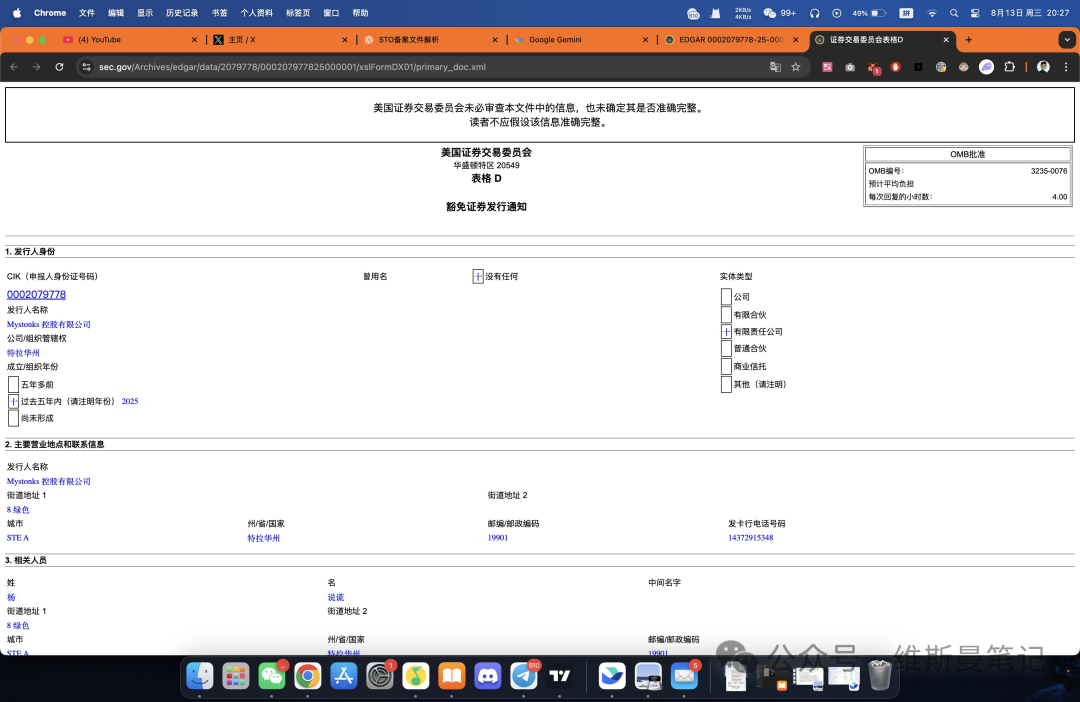
这份文件恰恰是问题的关键所在,也是平台宣传中误导性最强的地方。

首先,Form D是一份通知性备案,而非经营许可。它只代表公司向SEC告知了有一次私募的发行行为,SEC仅作存档,不代表对该公司资质、项目真实性的任何审核或背书。

其次,也是最重要的一点,该备案严格限定了发行对象。Regulation D是为私募设计的豁免条款,其目标是少数符合资格的富人或机构投资者(即“经认可的投资者”)。而Mystonks作为一个向公众开放的交易平台,其绝大多数用户显然不符合此标准。

因此,Mystonks的行为可以理解为:拿着一份仅限于向少数富人小范围募资的备案文件,去公开从事需要严格牌照的证券交易业务。

这种做法,本质上是利用普通投资者对美国证券法规的陌生,进行的概念混淆。要合法地向公众提供证券代币交易服务,平台需要的是**ATS(另类交易系统)或Broker-Dealer(经纪自营商)**等高阶牌照,而这与一份简单的Form D备案有着天壤之别。

二、 被滥用的MSB牌照:与资金安全无关的“反洗钱”备案

谈完相对复杂的STO,我们再来看那个更为普遍的宣传工具——美国MSB牌照。

关于MSB牌照,投资者需要认清一个核心事实:它的价值和意义被市场上的许多项目方严重夸大了。

MSB(货币服务业务)的监管机构是美国财政部下属的FinCEN,其核心职责是反洗钱(AML)。也就是说,FinCEN只关心平台是否按规定上报可疑交易,以打击金融犯罪,但它完全不负责保障用户的资金安全、审查平台的商业模式或技术能力。

更重要的是,MSB的申请门槛极低,通过中介机构,在海外即可轻松完成注册,甚至无需在美国设立实体办公室。这使其成为许多项目低成本、快速“包装”自身合规形象的首选道具。

当一个主要服务于非美国用户的平台,反复强调其MSB牌照时,投资者需要明白,这更多是一种营销策略,而非其具备强大金融实力的证明。

结语:从Mystonks看懂一类平台的“合规”套路

Mystonks的案例并非孤例,它为我们清晰地揭示了一类平台在灰色地带惯用的“合规”包装手法。放眼市场,大量交易所和金融平台都在复用着类似的剧本,投资者需要对此建立清醒的认知。

这类平台的典型套路可以归纳为:

1. 第一步:用MSB牌照作为营销的“敲门砖”。利用其“美国官方”的背景和极低的获取成本,快速建立基础的、看似可靠的形象。

2. 第二步:用“偷换概念”的方式解读证券备案。将一份有限的、有严格限制条件的备案文件(如私募备案),包装成全面的、可向公众提供服务的经营许可,利用信息不对称进行深度误导。

3. 第三步:利用地域和法律差异进行“精准营销”。它们深知其业务无法在美国本土落地,便专攻对美国法规不熟悉的海外用户,形成“墙内开花墙外香”的局面。

作为投资者,我们应当从这些套路中吸取教训。在判断一个平台是否真正合规时,请记住两个基本原则:

●真正的合规是昂贵的、有形的。它意味着高昂的牌照申请费、保证金、实体办公室租金和本地法务团队开销。那些轻易获得的、看不见摸不着的“合规”,其价值也必然是廉价的。

●真正的合规是透明的、具体的。它敢于清晰地公示其牌照类型、编号、监管范围和限制条款。凡是模糊的、大而化之的“合规”说辞,背后往往都经不起推敲。

在投资决策中,请将“合规”二字从一个营销词汇,还原成一个需要被严格审视的法律事实。守住这条底线,才能最大程度地保护我们的资产安全。

Пов'язані матеріали

US Government Lifts Ban on Crypto Perpetual Contracts for the First Time: What Does It Mean for the Market?

The U.S. Commodity Futures Trading Commission (CFTC) has issued guidance permitting 24/7 trading and clearing for crypto asset derivatives, effectively opening the U.S. market to crypto perpetual contracts for the first time. This move ends the previous ban and allows American individuals and institutions to trade these instruments around the clock. Direct beneficiaries include Kalshi, which received approval to list a Bitcoin perpetual contract; Coinbase, now the first CFTC-regulated futures commission merchant for U.S. clients to access global crypto derivatives; and CME, which will transition its Bitcoin futures and options to 24/7 trading. The CFTC emphasized this is a specific allowance for crypto assets, noting that traditional commodities like agriculture may not be suitable for non-stop trading. It also requires platforms to undergo case-by-case reviews for compliance and risk management. Industry leaders like Michael Saylor and Brian Armstrong praised the decision for integrating Bitcoin into capital markets and granting U.S. users access to a major global market segment. However, consumer advocacy group Better Markets criticized the CFTC for allegedly neglecting investor protection and favoring the industry it regulates. Other platforms like Kraken have announced plans to launch regulated perpetual futures for the U.S. market. The policy shift is expected to redirect significant liquidity and institutional participation to the newly accessible U.S. crypto derivatives landscape.

Odaily星球日报5 год тому

US Government Lifts Ban on Crypto Perpetual Contracts for the First Time: What Does It Mean for the Market?

Odaily星球日报5 год тому

How the CLARITY Act Reshapes the Stablecoin Yield Economy

The CLARITY Act, recently advanced by the U.S. Senate Banking Committee, fundamentally reshapes the stablecoin yield economy by closing loopholes left by the earlier GENIUS Act. Its Section 404 expands the ban on "hold-to-earn" rewards to all Digital Asset Service Providers (DASPs) and their affiliates, prohibiting any passive, interest-like yield. Crucially, it introduces a legal distinction, permitting "use-to-earn" rewards based on actual activities like spending, trading, or staking. In anticipation of this regulatory shift, major Wall Street asset managers—Morgan Stanley, BlackRock, and JPMorgan—have launched a series of tokenized money market funds (e.g., BlackRock's BRSRV, JPMorgan's JLTXX) designed explicitly for stablecoin reserve assets. These products represent a new, compliant yield layer: the stablecoin issuer earns interest from the underlying tokenized fund, which can then be passed to users through redesigned activity-based rewards. This marks a paradigm shift from a "hold-to-earn" to a "use-to-earn" market. While pathways remain for exchanges to redesign rewards (Path A) and for DeFi protocols to offer yield (Path B), the tokenized reserve asset layer (Path C) emerges as the most robust and strategically positioned infrastructure. However, this concentration—exemplified by BlackRock's BUIDL fund backing over 90% of USDtb's reserves—introduces new systemic risks. The final outcome hinges on regulatory decisions, particularly the OCC's proposed 20% cap on tokenized assets in reserves, which will determine the scalability of this new financial infrastructure layer.

marsbit7 год тому

How the CLARITY Act Reshapes the Stablecoin Yield Economy

marsbit7 год тому

Торгівля

Спот
Ф'ючерси
活动图片