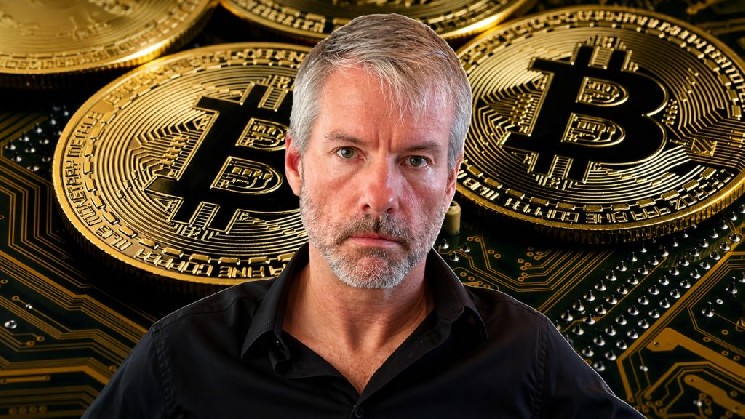
Pantera вложила $300 млн в компании с резервами криптовалют

cryptonews.ruОпубліковано о 2025-08-24Востаннє оновлено о 2025-08-24

Pantera Capital вложила $300 млн в компании с криптовалютными резервами, рассчитывая на доходность выше, чем у ETF. Венчурный фонд считает, что такие фирмы могут генерировать прибыль для увеличения стоимости чистых активов на акцию.

Генеральный партнер Pantera Космо Цзян (Cosmo Jiang) и топ-менеджер Эрик Лоу (Erik Lowe) заявили во вторник, что компании с цифровыми активами на балансе «способны приносить доход, который увеличивает стоимость чистых активов на акцию и позволяет со временем накапливать больше базовых токенов, чем при обычном держании активов».

По их словам, владение акциями таких компаний может предложить более высокий потенциал доходности по сравнению с простым владением токенами или через ETF.

Pantera инвестировала свыше $300 млн в американские, британские и израильские компании, которые держат на балансе различные токены — биткоин, Ethereum, Solana и ряд других альткоинов.

BitMine как образцовый пример

Компания BitMine Immersion Technologies с Ethereum-резервами под председательством Тома Ли (Tom Lee) стала первой инвестицией из фонда Pantera DAT Fund. Компания «представляет собой пример фирмы с четкой стратегической дорожной картой и руководством для ее исполнения».

За два с половиной месяца BitMine стала крупнейшей компанией, владеющей Ethereum, и может похвастаться третьими по величине запасами криптовалют среди публичных компаний в мире. Она владеет почти 1,2 млн ETH стоимостью около $5,3 млрд и нацелена на приобретение 5% от общего предложения токена.

Модель компании увеличивает количество токенов на акцию через выпуск акций с премией к стоимости чистых активов, использование конвертируемых облигаций для монетизации волатильности и генерирование наград за стейкинг и доходности в децентрализованных финансах.

Результаты в цифрах

Акции BitMine (BMNR) выросли более чем на 1 300% с момента запуска стратегии покупки ETH в конце июня. За тот же период Ethereum вырос почти на 90%.

Pantera отметила, что BitMine уже привлекла внимание и поддержку институциональных тяжеловесов традиционных финансов, включая Стэна Дракенмиллера (Stan Druckenmiller), Билла Миллера (Bill Miller) и фонда ARK Invest.

Фонд ожидает, что «история роста компаний с криптовалютными резервами высочайшего качества будет оценена большим числом институциональных инвесторов».

Критика и риски

Не все согласны с тем, что компании с криптовалютными резервами обречены на успех. В начале месяца сооснователь Ethereum Виталик Бутерин (Vitalik Buterin) предупредил, что чрезмерное использование заемных средств может привести к краху таких компаний при безответственном управлении.

Аналитики Standard Chartered предупреждали в июне, что новая волна компаний с биткоин-резервами может оказаться в опасности из-за возможных убытков при резком падении цены биткоина.
Пов'язані матеріали

Upbit is Anxious: A Hasty Counterattack Aimed at Regaining Stablecoin Market Share

Title: Upbit's Rushed Counterattack to Reclaim Stablecoin Market Share Facing a dramatic shift in South Korea's stablecoin market, leading exchange Upbit launched a promotional campaign from July 26 to August 9, waiving the 0.05% trading fee for stablecoins paired with the Korean Won (KRW) and rapidly listing new stablecoins like RLUSD and USDG. This move is a direct response to its plummeting market share in this sector. Historically a duopoly with Bithumb, the market has been reshaped since October 2025 when Coinone permanently removed fees for USDC trading. By June 2026, Coinone led with 34.8% of stablecoin volume, followed by Bithumb (31.1%) and Upbit (30.1%). This contrasts sharply with the overall crypto market, where Upbit commands 60%. The data shows stablecoin demand is highly sensitive to fees, as users primarily buy them to transfer capital overseas for derivatives trading or forex arbitrage. South Korean exchanges have seen a net outflow of stablecoins for 18 consecutive months, totaling approximately 14.9 trillion KRW, underscoring their role as a cross-border capital conduit. Upbit's limited-time promotion initially boosted its daily stablecoin volume by 162%, but the surge was almost entirely in USDT (98.1% of volume). The newly listed stablecoins saw negligible, fleeting interest. Furthermore, the promotional effect quickly waned in the second week, with volume dropping 33% on weekdays. A concurrent weakening of the KRW also contributed to the trading spike, independent of the fee waiver. The analysis suggests that once the promotion ends, Upbit is unlikely to retain its temporary gains unless it matches Coinone's permanent zero-fee policy, forcing a choice between market share and fee revenue. Upbit's strategic push may be less about immediate profit and more about preparing for future regulatory shifts. With South Korea's *Digital Asset Basic Act* on the horizon, which will regulate KRW-backed stablecoins, and following Dunamu's (Upbit's parent) integration into Naver Financial to build a payment ecosystem, securing a dominant position in the dollar stablecoin distribution channel holds long-term strategic value. However, potential regulatory conflicts could prevent Upbit from listing a future Naver-issued KRW stablecoin, making the current fight for dollar stablecoin flow even more critical.

marsbit4 год тому

Upbit is Anxious: A Hasty Counterattack Aimed at Regaining Stablecoin Market Share

marsbit4 год тому

Michael Saylor Compares Bitcoin and Gold!

Michael Saylor, founder of MicroStrategy, argues that Bitcoin fundamentally changes how wealth is stored and transferred by transforming digital scarcity into economic value. He describes Bitcoin as the first digital monetary network, combining computers, digital networks, and cryptography. It digitizes monetary assets, allowing their supply to be controlled by public protocols rather than institutions, thus converting economic value into information transmissible over global networks. Comparing Bitcoin to gold, Saylor states that while increasing Bitcoin's supply is harder, its integration with software and transfer is easier. He highlights Bitcoin's proof-of-work mechanism, which ties it to the physical world by consuming real energy to secure the ledger, making past transactions immutable. This creates a shared security system involving miners, energy companies, and investors. Saylor suggests "digital monetary energy" is a more accurate term than "digital gold." He emphasizes that the Bitcoin network is an adaptive ecosystem of miners, nodes, developers, and users. Its core design is intentionally simple, focused on maintaining a secure ledger for scarce digital assets, with complex functionalities built in higher-layer applications. This architecture allows Bitcoin to serve as a foundation for transmitting value and fostering innovation in payments and financial services. Saylor notes Bitcoin's deeper impact lies in creating digital sovereignty, where private keys give individuals permissionless control over their economic power, with ownership verified mathematically, not by institutions. He concludes that while gold's physical scarcity makes it money, Bitcoin's digital scarcity does the same, characterizing Bitcoin as the monetary energy of the digital age.

cryptonews.ru5 год тому

Michael Saylor Compares Bitcoin and Gold!

cryptonews.ru5 год тому

Торгівля

Спот
活动图片