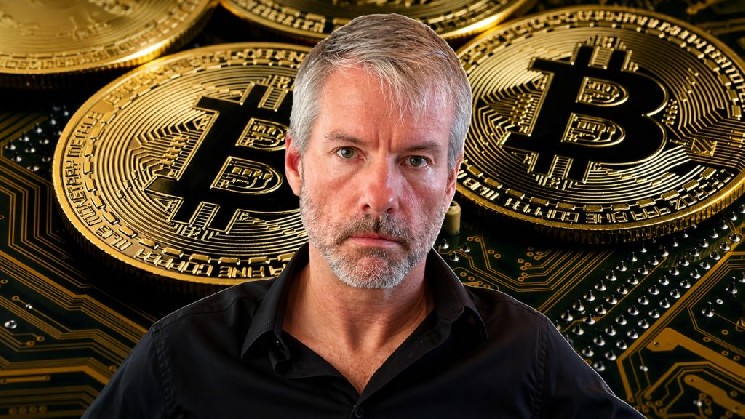
Достигнет ли цена биткоина $1 млн долларов

cryptonews.ruОпубліковано о 2025-08-29Востаннє оновлено о 2025-08-29

Текущий 2025 год может стать решающим для биткоина. При этом некоторые аналитики предполагают, что цифровая валюта способна достичь отметки в $1 млн. Влияние на цену окажут несколько значимых тенденций. Запуск спотовых биткоин-ETF в 2024 году уже продемонстрировал огромный потенциал для привлечения институциональных инвестиций.

Эти продукты упрощают доступ к главной цифровой монете для традиционных инвесторов, что способствует массовому притоку капитала. Также потенциальное создание Стратегического резерва Биткоина в США легитимизировало бы цифровую валюту на государственном уровне. Это создаст постоянный спрос и даст явный сигнал другим странам.

Биткоин все чаще используется как средство платежа и хранения. Расширение инфраструктуры и рост числа компаний, принимающих криптовалюту, способствуют ее повсеместному распространению. Чем шире база пользователей, тем больше людей будут стремиться приобрести BTC. Психологический фактор FOMO (страх упущенной выгоды) также может привести к массовым покупкам, подталкивая цену к новым максимумам.

По мнению экспертов, для достижения $ 1 млн биткоину потребуется значительно больше институциональных инвестиций от пенсионных фондов, страховых компаний и суверенных фондов. Необходимо глобальное внедрение ведущей криптовалюты в качестве платежного средства и средства сохранения. Это подразумевает развитие простой и доступной инфраструктуры.

Крайне важны четкие и благоприятные регуляторные рамки, которые защитят интересы инвесторов. Также необходимо непрерывное технологическое развитие, включая улучшение масштабируемости, безопасности и удобства использования, а также развитие решений 2-го уровня по типу Lightning Network.

Несмотря на оптимизм, существуют серьезные риски. Угроза квантовых вычислений и алгоритма Шора может позволить быстро взломать сеть, поставив под угрозу ее безопасность. Уязвимость криптографии также является риском. Для противостояния этим угрозам необходимо разработать и внедрить новые алгоритмы. А это весьма сложный и длительный процесс.


Пов'язані матеріали

Upbit is Anxious: A Hasty Counterattack Aimed at Regaining Stablecoin Market Share

Title: Upbit's Rushed Counterattack to Reclaim Stablecoin Market Share Facing a dramatic shift in South Korea's stablecoin market, leading exchange Upbit launched a promotional campaign from July 26 to August 9, waiving the 0.05% trading fee for stablecoins paired with the Korean Won (KRW) and rapidly listing new stablecoins like RLUSD and USDG. This move is a direct response to its plummeting market share in this sector. Historically a duopoly with Bithumb, the market has been reshaped since October 2025 when Coinone permanently removed fees for USDC trading. By June 2026, Coinone led with 34.8% of stablecoin volume, followed by Bithumb (31.1%) and Upbit (30.1%). This contrasts sharply with the overall crypto market, where Upbit commands 60%. The data shows stablecoin demand is highly sensitive to fees, as users primarily buy them to transfer capital overseas for derivatives trading or forex arbitrage. South Korean exchanges have seen a net outflow of stablecoins for 18 consecutive months, totaling approximately 14.9 trillion KRW, underscoring their role as a cross-border capital conduit. Upbit's limited-time promotion initially boosted its daily stablecoin volume by 162%, but the surge was almost entirely in USDT (98.1% of volume). The newly listed stablecoins saw negligible, fleeting interest. Furthermore, the promotional effect quickly waned in the second week, with volume dropping 33% on weekdays. A concurrent weakening of the KRW also contributed to the trading spike, independent of the fee waiver. The analysis suggests that once the promotion ends, Upbit is unlikely to retain its temporary gains unless it matches Coinone's permanent zero-fee policy, forcing a choice between market share and fee revenue. Upbit's strategic push may be less about immediate profit and more about preparing for future regulatory shifts. With South Korea's *Digital Asset Basic Act* on the horizon, which will regulate KRW-backed stablecoins, and following Dunamu's (Upbit's parent) integration into Naver Financial to build a payment ecosystem, securing a dominant position in the dollar stablecoin distribution channel holds long-term strategic value. However, potential regulatory conflicts could prevent Upbit from listing a future Naver-issued KRW stablecoin, making the current fight for dollar stablecoin flow even more critical.

marsbit2 год тому

Upbit is Anxious: A Hasty Counterattack Aimed at Regaining Stablecoin Market Share

marsbit2 год тому

Michael Saylor Compares Bitcoin and Gold!

Michael Saylor, founder of MicroStrategy, argues that Bitcoin fundamentally changes how wealth is stored and transferred by transforming digital scarcity into economic value. He describes Bitcoin as the first digital monetary network, combining computers, digital networks, and cryptography. It digitizes monetary assets, allowing their supply to be controlled by public protocols rather than institutions, thus converting economic value into information transmissible over global networks. Comparing Bitcoin to gold, Saylor states that while increasing Bitcoin's supply is harder, its integration with software and transfer is easier. He highlights Bitcoin's proof-of-work mechanism, which ties it to the physical world by consuming real energy to secure the ledger, making past transactions immutable. This creates a shared security system involving miners, energy companies, and investors. Saylor suggests "digital monetary energy" is a more accurate term than "digital gold." He emphasizes that the Bitcoin network is an adaptive ecosystem of miners, nodes, developers, and users. Its core design is intentionally simple, focused on maintaining a secure ledger for scarce digital assets, with complex functionalities built in higher-layer applications. This architecture allows Bitcoin to serve as a foundation for transmitting value and fostering innovation in payments and financial services. Saylor notes Bitcoin's deeper impact lies in creating digital sovereignty, where private keys give individuals permissionless control over their economic power, with ownership verified mathematically, not by institutions. He concludes that while gold's physical scarcity makes it money, Bitcoin's digital scarcity does the same, characterizing Bitcoin as the monetary energy of the digital age.

cryptonews.ru3 год тому

Michael Saylor Compares Bitcoin and Gold!

cryptonews.ru3 год тому

Торгівля

Спот
活动图片