Скотт Мелкер паникует: ранние инвесторы биткоина фиксируют прибыль

cryptonews.ruОпубліковано о 2025-07-27Востаннє оновлено о 2025-07-27

Аналитик Скотт Мелкер (Scott Melker), более известный под псевдонимом The Wolf of All Street, заявил, что многие ранние инвесторы биткоина теряют веру в криптовалюту и активно закрывают свои позиции по текущим ценам. Его слова в соцсети X вызвали бурную дискуссию в криптосообществе.

«Многие из самых ярых ранних китов продемонстрировали, что их вера поколебалась, и продают по рынку», — написал Мелкер в соцсети X. По его мнению, биткоин «захвачен теми самыми людьми, от которых он должен был защищать».

Несколько известных ранних инвесторов биткоина публично признались в закрытии своих позиций. Вилли Ву (Willy Woo) недавно рассказал, что продал значительную часть биткоинов. А знаменитый аналитик PlanB сообщил в феврале, что продал основную часть своих биткоинов и перешел на спотовые биткоин-ETF для более простого управления активами.

Реакция сообщества

Заявление Мелкер касается растущего интереса институционалов к биткоину. Хотя аналитик подчеркнул, что всего лишь констатирует то, что видит, его комментарии спровоцировали жаркие споры о том, что означает для изначальной философии биткоина его массовое принятие крупными игроками.

Майк Альфред (Mike Alfred), основатель и управляющий партнер Alpine Fox, не согласился с коллегой: «Люди принимают личное решение продать часть или все свои монеты по множеству причин, которые не связаны с активом или протоколом».

Дэйв Вайсбергер (Dave Weisberger) указал на парадокс ситуации: «Ирония в том, что нет пути к стандарту биткоина без его принятия обществом через традиционные институты, контролирующие фиатную систему, и передачи биткоинов от первых держателей этим организациям».

Аналитик Crypto Mags напомнил о том, что биткоин не является эксклюзивным: «Биткоин предназначен для всех. Всех — включая врагов, правительства и Уолл-стрит».

Мэтт Хоуган (Matt Hougan), главный инвестиционный директор Bitwise Invest, заявил, что понимает позицию Мелкера, однако считает биткоин «все еще довольно революционным». «Это первые глобальные деньги, которые обеспечены не государством и угрозой насилия, а логикой и сообществом», — подчеркнул он.

Дискуссия разгорелась после того, как ранний инвестор биткоина продал 80 000 BTC через Galaxy Digital, что является одной из крупнейших сделок в истории криптовалют.

Споры вокруг заявлений Мелкера отражают главную дилемму биткоина: может ли криптовалюта сохранить свою революционную суть при массовом принятии институтами. Пока что ответ на этот вопрос дает только практика — и она показывает, что идеалы и прибыль нередко идут рука об руку.


Пов'язані матеріали

South Korean Retail Investors 'Move from Seoul to Wall Street': Buying SK Hynix ADR, Betting on Triple-Leverage ETF

A surge of Korean retail investors is shifting funds from the volatile Seoul market to Wall Street, intensifying their bets on the AI theme through unconventional and high-risk instruments. Data shows Korean investors were net buyers of about $4.5 billion in US stocks in July, nearing a yearly peak. A notable trend is their purchase of approximately $840 million worth of SK Hynix American Depositary Receipts (ADRs), despite a significant 10% premium over the company's domestic shares, leading analysts to label the move as speculative and irrational. Simultaneously, Korean traders are heavily favoring leveraged ETFs. The triple-leveraged semiconductor ETF SOXL was the most-bought US product in July, with leveraged products occupying four of the top ten spots. Experts note that this shift in geography does not represent a diversification of risk; instead, investors are merely expressing the same concentrated bet on AI hardware through different, often riskier, US-listed vehicles. Analysts warn that while this capital inflow is unlikely to systemically impact the vast US institutional market, it risks creating localized distortions and amplifying volatility, particularly in the targeted sectors and instruments. The move follows a sharp correction in the Korean market, where high leverage in semiconductor stocks and related ETFs had previously led to significant losses, prompting this search for alternative avenues to chase the AI narrative.

marsbit18 хв тому

South Korean Retail Investors 'Move from Seoul to Wall Street': Buying SK Hynix ADR, Betting on Triple-Leverage ETF

marsbit18 хв тому

Bithumb's First Half Report: Net Loss Exceeds $76 Million, Where Did the Profits Go?

**Title: Bithumb H1 2026 Report: Net Loss Exceeds $76M – Where Did the Profits Go?** Despite a headline net loss of approximately 108.7 billion KRW (~$76.44 million) for the first half of 2026, a detailed breakdown reveals Bithumb's core exchange business remained profitable. The significant loss was primarily driven by two major non-operating items: substantial losses on the disposal and valuation of the company's own cryptocurrency holdings (net loss ~$48.21 million) and a sharp increase in litigation provisions (~$25.93 million), largely linked to a regulatory fine. Operating revenue fell 48.7% year-on-year to ~$119 million, almost entirely from transaction fees, as market activity cooled. While the company drastically cut marketing and subsidy expenses by ~70% to protect margins, more rigid costs like payment processing and salaries declined only modestly. This highlights the vulnerability of its highly fee-dependent revenue model in a down market. Total assets decreased by ~$584 million, but this was largely attributable to an ~86% drop in client KRW deposits. The market value of client crypto assets under custody also fell (~32.7%), partly influenced by declining cryptocurrency prices rather than solely client withdrawals. In summary, the report indicates underlying exchange profitability was eroded by significant crypto asset losses and mounting regulatory/legal costs, against a backdrop of declining trading revenue. Future focus should be on revenue recovery, managing crypto-related损益, and the ongoing impact of regulatory challenges.

marsbit37 хв тому

Bithumb's First Half Report: Net Loss Exceeds $76 Million, Where Did the Profits Go?

marsbit37 хв тому

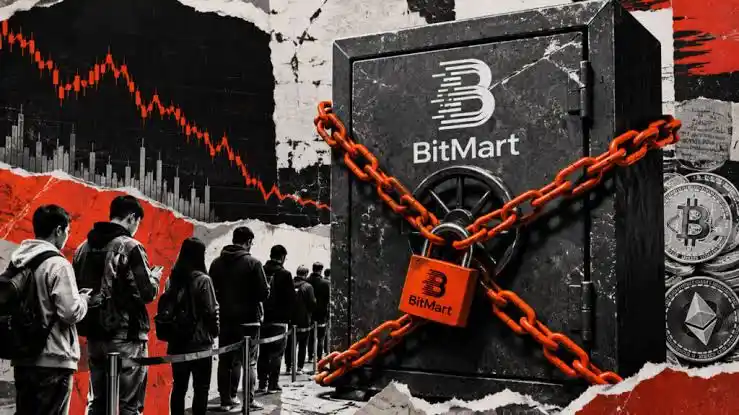
BitMart's Final 9 Days: A True Exchange Crisis Is Never About Shutting Down

BitMart's Final 9 Days: A True Exchange Crisis Is Not About Shutting Down On August 17, 2026, with just 9 days until BitMart's scheduled cessation of trading, the focus shifted from the platform's orderly closure to serious questions about user withdrawals, platform solvency, employee payments, and reserve transparency. Stakeholders, claiming to represent users and staff, publicly demanded asset/liability disclosures, explanations for withdrawal delays, a user repayment plan, and an independent audit, setting an August 19 deadline. While BitMart CEO Sheldon Lee denied allegations of insolvency or wrongdoing, the controversy highlighted a core vulnerability of centralized exchanges (CEXs). When an exchange announces its shutdown, normal user behavior changes dramatically, triggering a mass withdrawal event—the ultimate stress test for its liquidity and custodial integrity. The key question becomes not whether the platform has assets, but whether it holds sufficient *liquid* assets to cover all user liabilities on demand. The article argues that the trust placed in CEXs is based on the convenience they provide, abstracting users from direct control of their private keys. This trust is rarely questioned during normal operations but becomes critically exposed during a wind-down. The situation underscores the limitations of simple Proof of Reserves, which shows "what we have" but not the crucial "what we owe." True financial credibility requires transparent, auditable data on assets, liabilities, and segregated user funds. BitMart's situation reflects a broader, often overlooked issue in the crypto industry: while there is extensive focus on growth mechanisms for exchanges, there is little discussion or established protocol for a safe and transparent "exit mechanism." The final measure of an exchange's integrity, the article concludes, is not its user count or trading volume during a bull market, but its ability to ensure every last user can successfully withdraw their assets when the doors are closing. The outcome will be determined not by statements, but by whether the final user's funds securely leave the platform.

marsbit1 год тому

BitMart's Final 9 Days: A True Exchange Crisis Is Never About Shutting Down

marsbit1 год тому

Don't Speculate on 100x Coins, Just Bet on 'Cash Cows': Which Projects Are Worth Dollar-Cost Averaging in the Bear Market?

In a bearish crypto market, finding sustainable investments is more prudent than chasing speculative meme coins. This article analyzes projects generating consistent revenue, highlighting them as potential "cash cows" for long-term dollar-cost averaging (DCA). The top performers are "picks-and-shovels" plays. **Pump.fun**, a Solana-based meme coin launchpad, leads with $415.3M in monthly revenue, profiting from a 1.25% fee on token transactions. Despite market volatility, it has averaged tens of millions in monthly income in 2024. Perpetual DEX **Hyperliquid** stands out as a "bear market star," accumulating ~$352M in revenue over seven months. Its model funnels ~99% of fees into buying back and permanently burning its HYPE token. Established giants are also adapting. **Uniswap**, after enabling its fee switch, now earns protocol revenue (e.g., $5.6M recently), which is used to buy back and burn UNI, giving the token direct value accrual. Similarly, oracle provider **Chainlink** generates stable monthly revenue (~$4.57M recently) from its essential data, cross-chain, and automation services. Its new Payment Abstraction feature automatically converts service fees into LINK, accruing value in its treasury. The core thesis is clear: in a downturn, focus on projects with proven, resilient business models—those acting as essential infrastructure or capturing consistent transaction fees—rather than speculative narratives.

marsbit1 год тому

Don't Speculate on 100x Coins, Just Bet on 'Cash Cows': Which Projects Are Worth Dollar-Cost Averaging in the Bear Market?

marsbit1 год тому

Just Now, Anthropic's Annualized Revenue Breaks Through $65 Billion, Sprinting Towards the Largest IPO in History

According to a Bloomberg report, Anthropic has disclosed to investors that as of the end of July, its annualized revenue run-rate (ARR) has reached $65 billion. This marks a dramatic acceleration from late 2025, when the ARR exceeded $9 billion, representing a more than seven-fold increase in just a few months. Preliminary revenue for the latest completed quarter (Q2) surpassed $11.5 billion, approximately 14.6 times the $787 million reported for the same period last year. Notably, the company also achieved positive adjusted operating profit for the quarter. A key driver behind this explosive growth is the enterprise market, particularly the adoption of products like Claude Code for software engineering and complex knowledge work. The shift from occasional conversational queries to continuous, high-token-consumption workflows within enterprises has significantly boosted revenue. This financial update comes as Anthropic is reportedly preparing for a potential IPO as early as October, with an expected valuation of $2 trillion or higher, which could make it the largest IPO in history. The surging revenue run-rate provides a crucial metric for investors, shifting the narrative from being an OpenAI challenger to demonstrating rapid scaling, enterprise penetration, and a path toward profitability amidst high compute investments.

marsbit1 год тому

Just Now, Anthropic's Annualized Revenue Breaks Through $65 Billion, Sprinting Towards the Largest IPO in History

marsbit1 год тому

Торгівля

Спот
活动图片