GENIUS, CLARITY Act Fail in US Procedural Vote Amid Crypto Week

TheCryptoTimesОпубліковано о 2025-07-15Востаннє оновлено о 2025-07-15

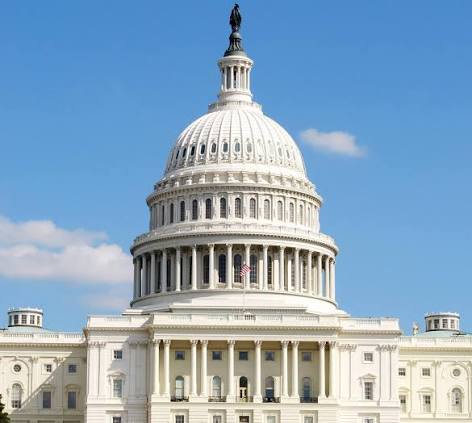
Several major crypto bills supported by President Donald Trump failed to pass a key vote in the U.S. House of Representatives on Tuesday. These bills were part of what’s being called “Crypto Week” – a push by lawmakers to bring clearer rules to the digital asset space.

The vote count was 196 in favor and 223 against, with 13 Republicans joining Democrats to block the bills. This was seen as a rare moment of disagreement within the Republican Party, even after Trump publicly urged his party to support the bills earlier that day.

The three bills were the GENIUS Act (a bill focused on stablecoins), the CLARITY Act, and the Anti-CBDC Act to prevent a government-issued digital dollar.

Although the bills were anticipated to proceed, they were surprisingly shut out through a procedural vote. The reason for the failure remains unrevealed, and people in the crypto space and the industry are left in the dark.

Even though the setback occurred, House leaders are to vote on it again later, although it’s not known if the same bills will be utilized or if modifications will be made in an attempt to regain support. Meanwhile, Bitcoin (BTC) reacted slightly, with the price sitting at $117,083, down 2.23% over the last 24 hours.

Also Read: US Crypto Week is Here—Will Congress Make or Break Bitcoin?


Пов'язані матеріали

ARK Invest Heavily Buys Crypto-Related Stocks: Lower Risk, or Double Pressure?

During Bitcoin's worst monthly performance in four years, ARK Invest, led by Cathie Wood, purchased $77 million worth of stock in crypto-related public companies in June, including Coinbase, Circle, and Bullish. The investment thesis suggests these stocks offer compliant exposure to the crypto sector without directly holding Bitcoin. However, analysis reveals significant drawbacks: these stocks exhibit nearly double the volatility of Bitcoin itself (68%-90% vs. 37.6% over 30 days) and only moderate correlation with Bitcoin prices (0.55-0.58 for several firms). This indicates investors are exposed to both partial crypto price movements and a full suite of company-specific business risks like earnings, competition, and financing. MicroStrategy (MSTR) is the closest to a pure Bitcoin proxy with high correlation and leverage (beta of 1.59). In contrast, Circle's price is heavily influenced by stablecoin competition, while Robinhood's diversified business buffers crypto downturns but also limits upside. Notably, some mining stocks (RIOT, MARA) have risen sharply in 2024 due to AI-related ventures, decoupling from Bitcoin's decline. The case of MicroStrategy highlights additional equity-specific risks like potential shareholder dilution and the breakdown of its premium valuation model (mNAV), which recently forced it to consider selling Bitcoin for liquidity. While some stocks like Coinbase have outperformed Bitcoin year-to-date, the data suggests investing in crypto equities generally amplifies volatility or layers on independent business risks compared to direct Bitcoin ownership.

marsbit32 хв тому

ARK Invest Heavily Buys Crypto-Related Stocks: Lower Risk, or Double Pressure?

marsbit32 хв тому

DeepMind's Classic Masterpiece Crowned Again, ICML 2026 Awards Announced

ICML 2026 has announced its annual awards, with diffusion models and AI safety ethics taking center stage. The Outstanding Paper Award was shared by two diffusion model studies. One challenges a core assumption of diffusion language models (DLMs), arguing that their touted "arbitrary order generation" is a "flexibility trap" that harms performance. The other provides a high-accuracy sampling method, pushing the technical ceiling for diffusion models and log-concave distributions. A position paper winning the Outstanding Award raises a critical ethical concern: AI alignment research is unintentionally building a "censor's toolkit," where safety tools like RLHF can be repurposed for content control. Several papers received Honorable Mentions, spanning key areas: mapping where honesty emerges in RLHF-trained models, motion attribution in video generation, quantifying how much language models memorize, analyzing diffusion model consistency via random matrix theory, and providing a mathematical proof for the "grokking" phenomenon in a simple model. The Test of Time Award was given to DeepMind's 2016 seminal work "Asynchronous Methods for Deep Reinforcement Learning," recognizing the enduring impact of the A3C algorithm. Overall, the awards signal a shift in AI research from rapid expansion to deeper scrutiny—validating diffusion models as a major architectural contender while prompting serious ethical reflection within the safety community.

marsbit48 хв тому

DeepMind's Classic Masterpiece Crowned Again, ICML 2026 Awards Announced

marsbit48 хв тому

Торгівля

Спот
活动图片