交互教程 | 两天破千万美元市值的挖矿链游BIGCOIN

Odaily星球日报Опубліковано о 2025-04-11Востаннє оновлено о 2025-04-11

Анотація

早挖早收益,提倡“挖卖提”。

原创 | Odaily星球日报(@OdailyChina

作者 | Ethan(@ethanzhang_web3

交互教程 | 两天破千万美元市值的挖矿链游BIGCOIN

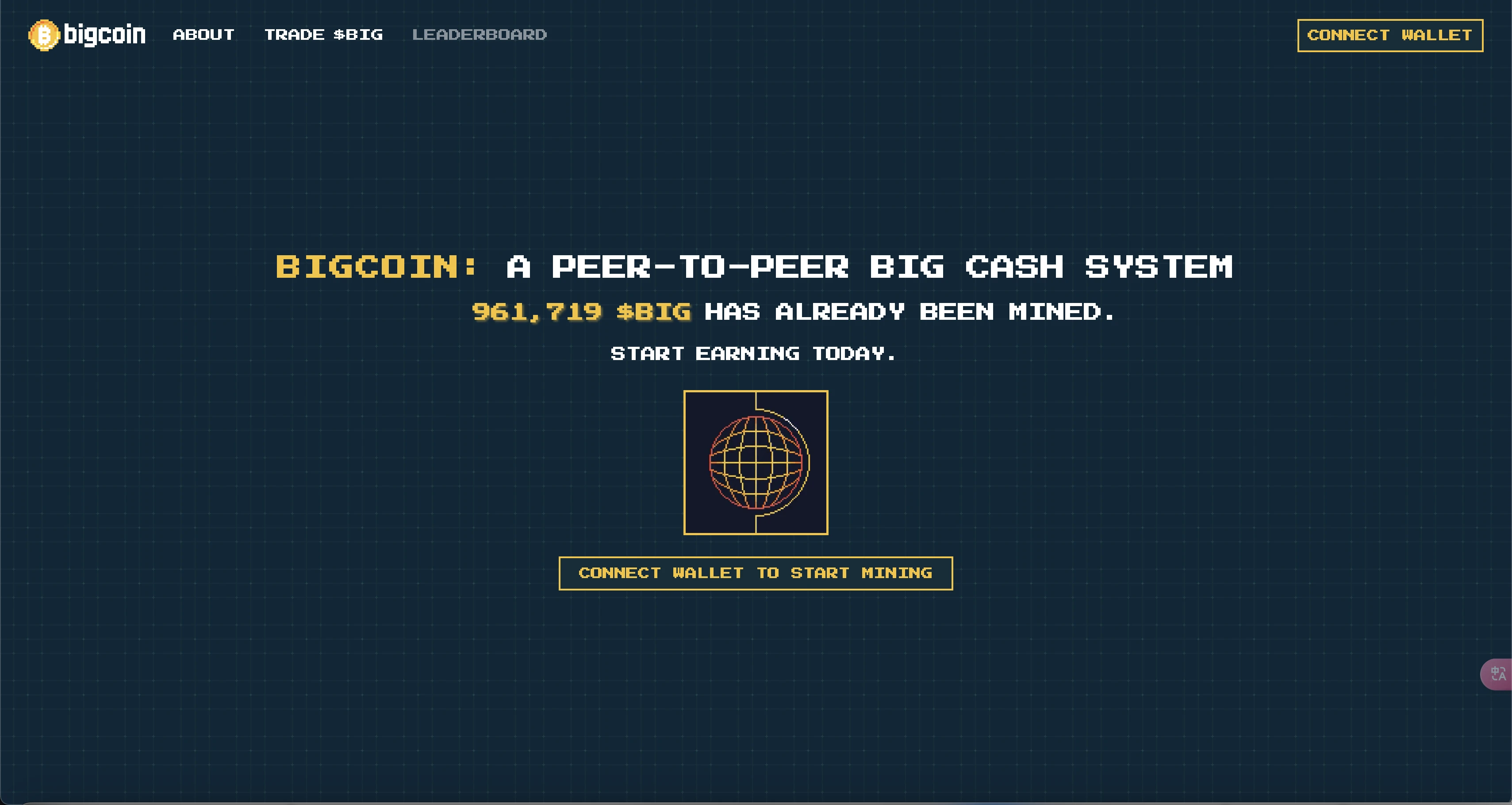
4 月 9 日,Abstract 连续转载关于 Bigcoin 挖矿链游的文章,引发了中外社区的大量关注。项目于当天开启挖矿,据项目官网数据,截至 4 月 11 日,全网已开采约 96 万 BIG(占总供应量 2100 万的 4.57% ),算力达到 6110 万 GH/s,目前处于早期挖矿热潮,预计 2025 年 5 月 18-20 日将迎来首次减半。

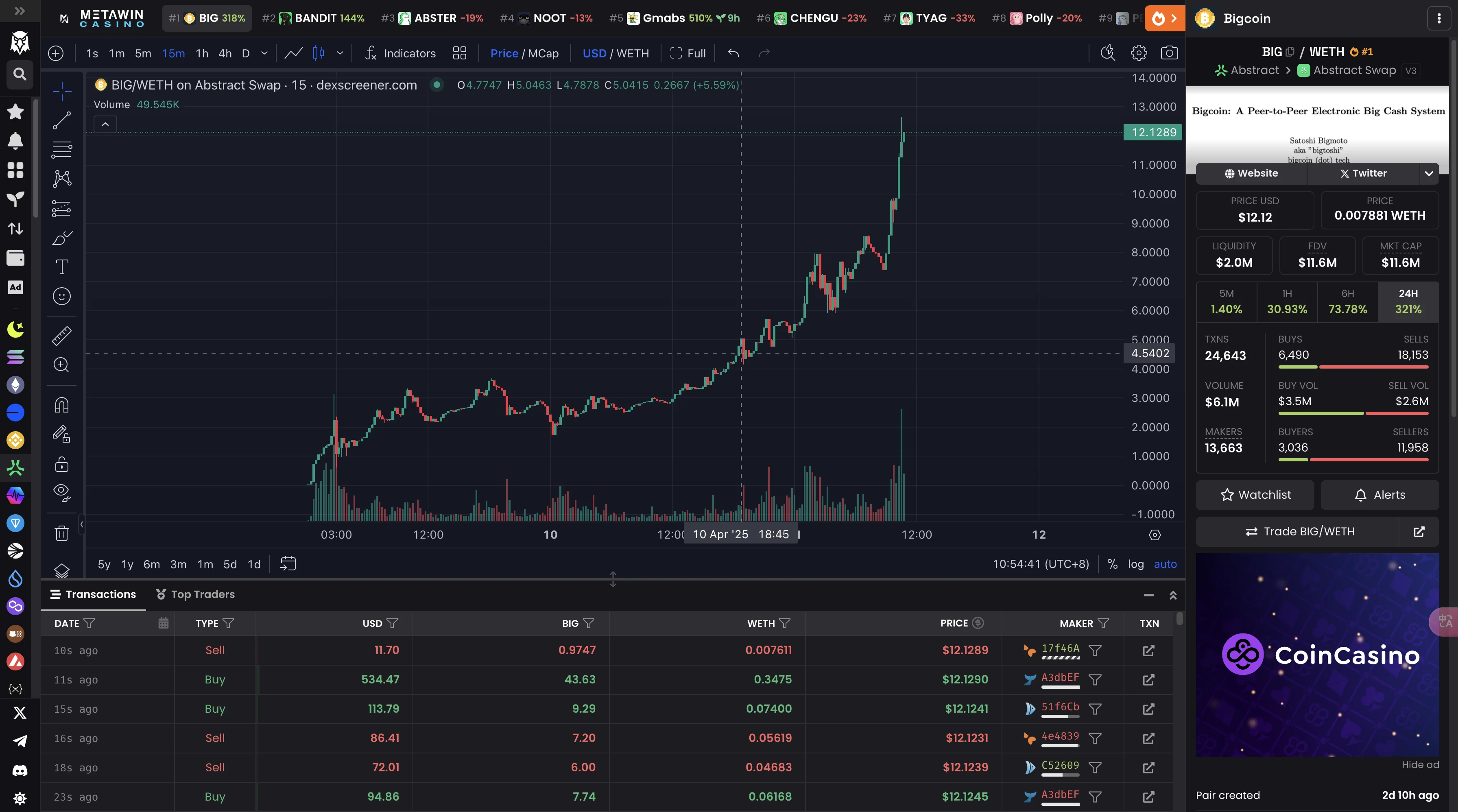
据 Dexscreener 最新数据,目前 BIG 代币市值已突破 1160 万美元,热度还在持续,挖矿利润客观。
交互教程 | 两天破千万美元市值的挖矿链游BIGCOIN

项目介绍

交互教程 | 两天破千万美元市值的挖矿链游BIGCOIN

Bigcoin 是一个基于 Abstract 链的区块链挖矿游戏项目,据白皮书,其灵感来源于比特币的标志性机制。Bigcoin 将比特币的固定供应量、减半机制和去中心化挖矿模型与链上游戏化设计相结合,旨在为新一代用户(玩家、创作者、投资者)提供一个易于参与、社区驱动且充满潜力的交互项目;通过可访问的链上挖矿和病毒式激励机制,重现比特币的成功,同时解决比特币高成本、缓慢交易和硬件壁垒等问题(画外音:我也没懂基于 Abstract 链搭游戏和发行 ERC 代币如何解决了比特币的问题)

核心亮点(基于项目白皮书):

1. 比特币经典机制的现代化再现

  • 固定供应量:Bigcoin(BIG)总供应量为 2100 万枚,遵循比特币的稀缺性设计,确保长期价值潜力。

  • 减半机制:初始区块奖励为 2.3 BIG,每 420 万个区块(约 53.5 天,假设平均区块时间 1.1 秒)减半一次,模拟比特币的通缩模型。

  • 链上挖矿:无需昂贵的物理硬件,玩家通过购买虚拟“矿机”和“设施”参与挖矿,降低准入门槛,任何人都可以通过链上交互赚取 BIG。

2. 游戏化挖矿系统

  • 矿机与设施:玩家购买矿机以获得算力(hashrate),并通过设施管理矿机运行。矿机有算力、能耗和购买成本三个属性;设施则有容纳矿机数量、电力输出和升级成本的限制,玩家需平衡算力与能耗以优化收益。

  • 奖励分配:每个区块的 BIG 奖励根据玩家算力占全网算力的比例分配,公式为:

交互教程 | 两天破千万美元市值的挖矿链游BIGCOIN

  • 动态策略:设施升级有 24 小时冷却时间,玩家需在购买矿机、升级设施和优化能耗间寻找最佳策略。

3. 通缩与激励机制

  • 销毁机制: 75% 的矿机购买和设施升级费用将永久销毁,持续减少流通中的 BIG 供应量,推动代币通缩。

  • 推荐奖励: 2.5% 的挖矿奖励分配给推荐人,激励社区传播和用户增长,形成病毒式推广效应。

  • 低成本进入:玩家仅需少量 ETH 购买初始设施(附赠可选免费矿机),后续所有升级均使用 BIG 代币,降低新手参与门槛。

4. 技术与透明度

  • 部署在 Abstract 链:Abstract 链的高吞吐量和低成本使其成为理想的游戏化区块链平台,Bigcoin 充分利用其优势实现快速、经济的链上交互。

  • 合约地址:

    • Bigcoin 代币:0xDf70075737E9F96B078ab4461EeE3e055E061223

    • 主程序:0x09Ee83D8fA0f3F03f2aefad6a82353c1e5DE5705

交互教程

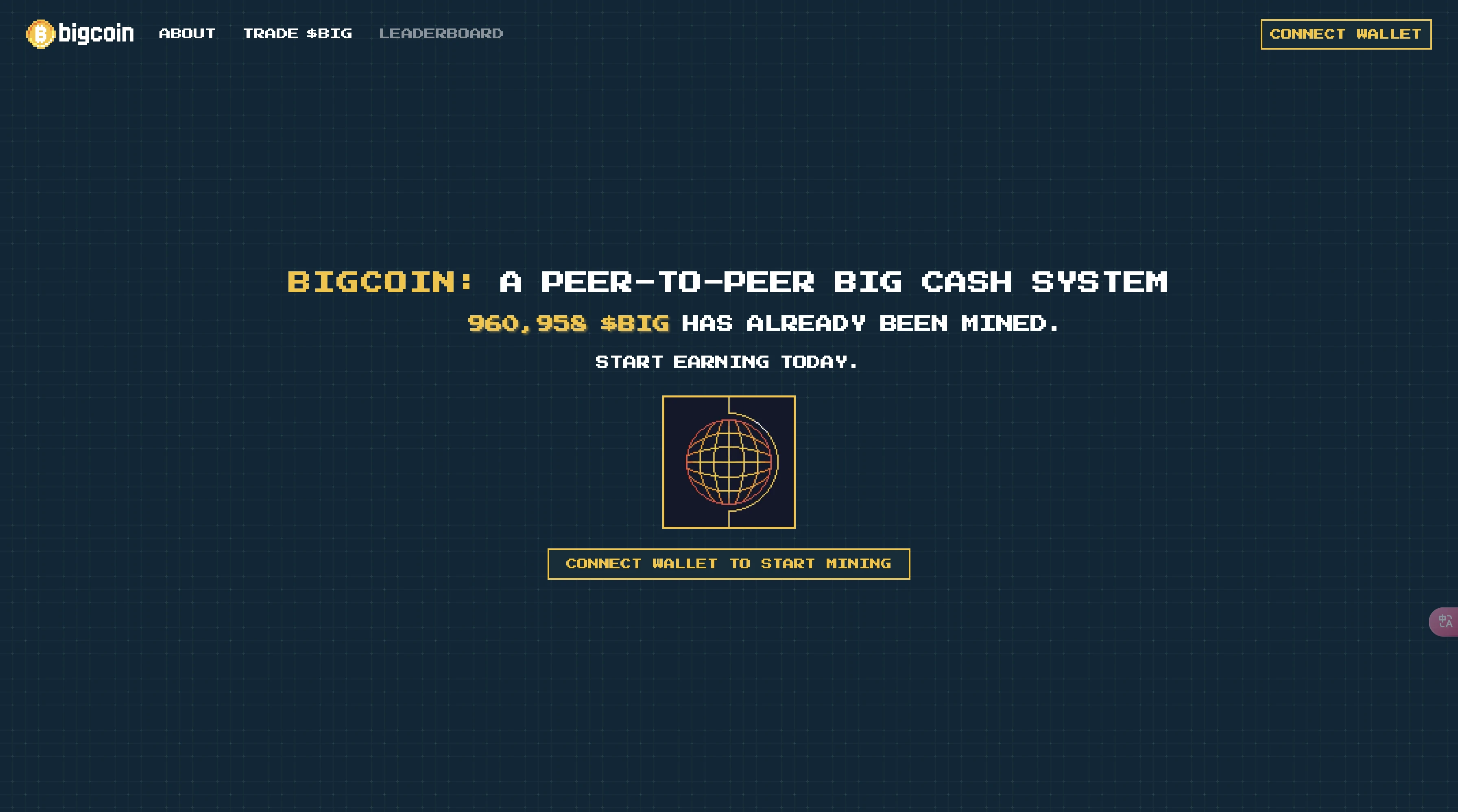
STEP 1. 进入交互网站(官网),绑定 Abstract 账户:
交互教程 | 两天破千万美元市值的挖矿链游BIGCOIN

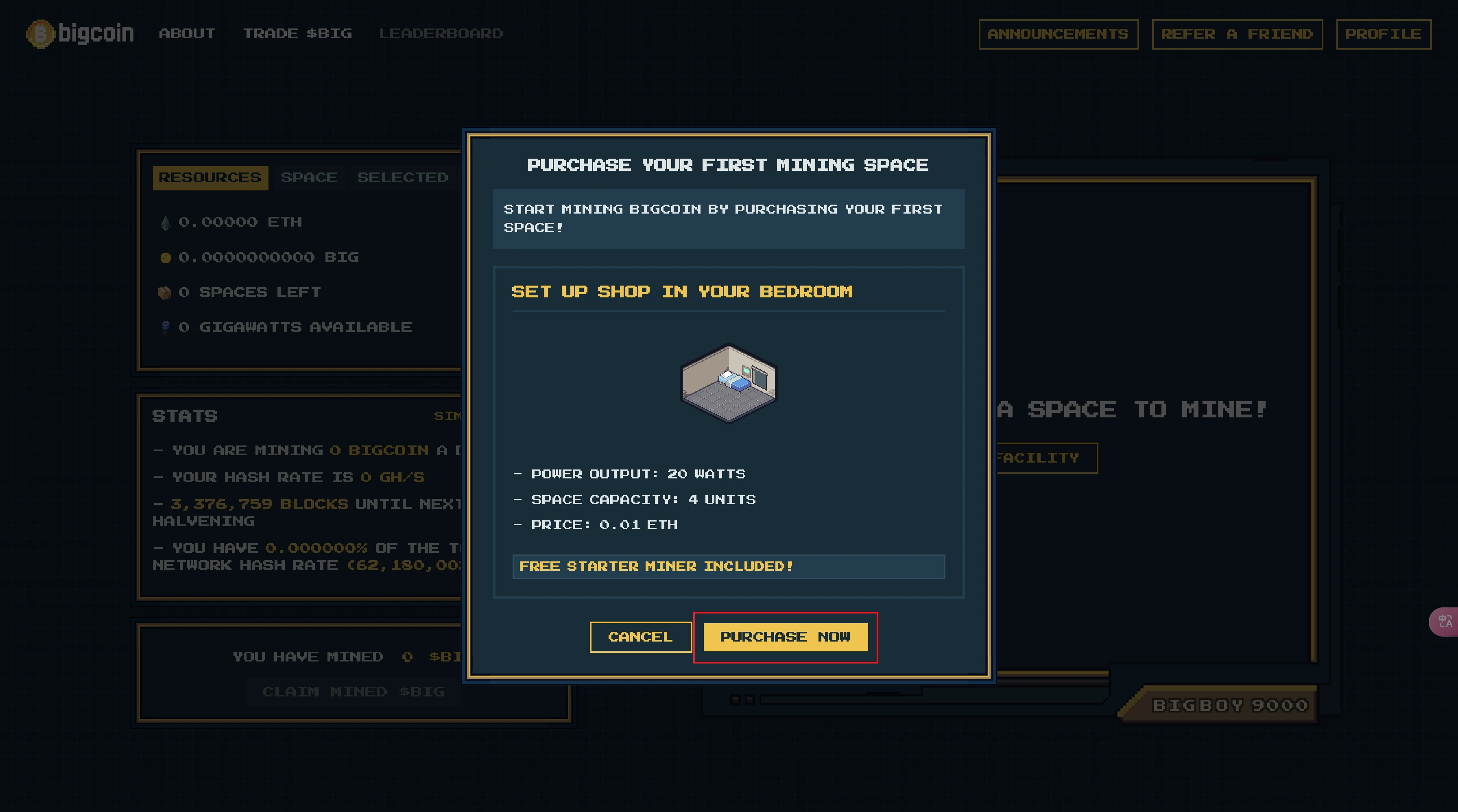
STEP 2. 点击页面右侧的“BUY FACILITY”,花 0.01 E 购买一个房间。
交互教程 | 两天破千万美元市值的挖矿链游BIGCOIN

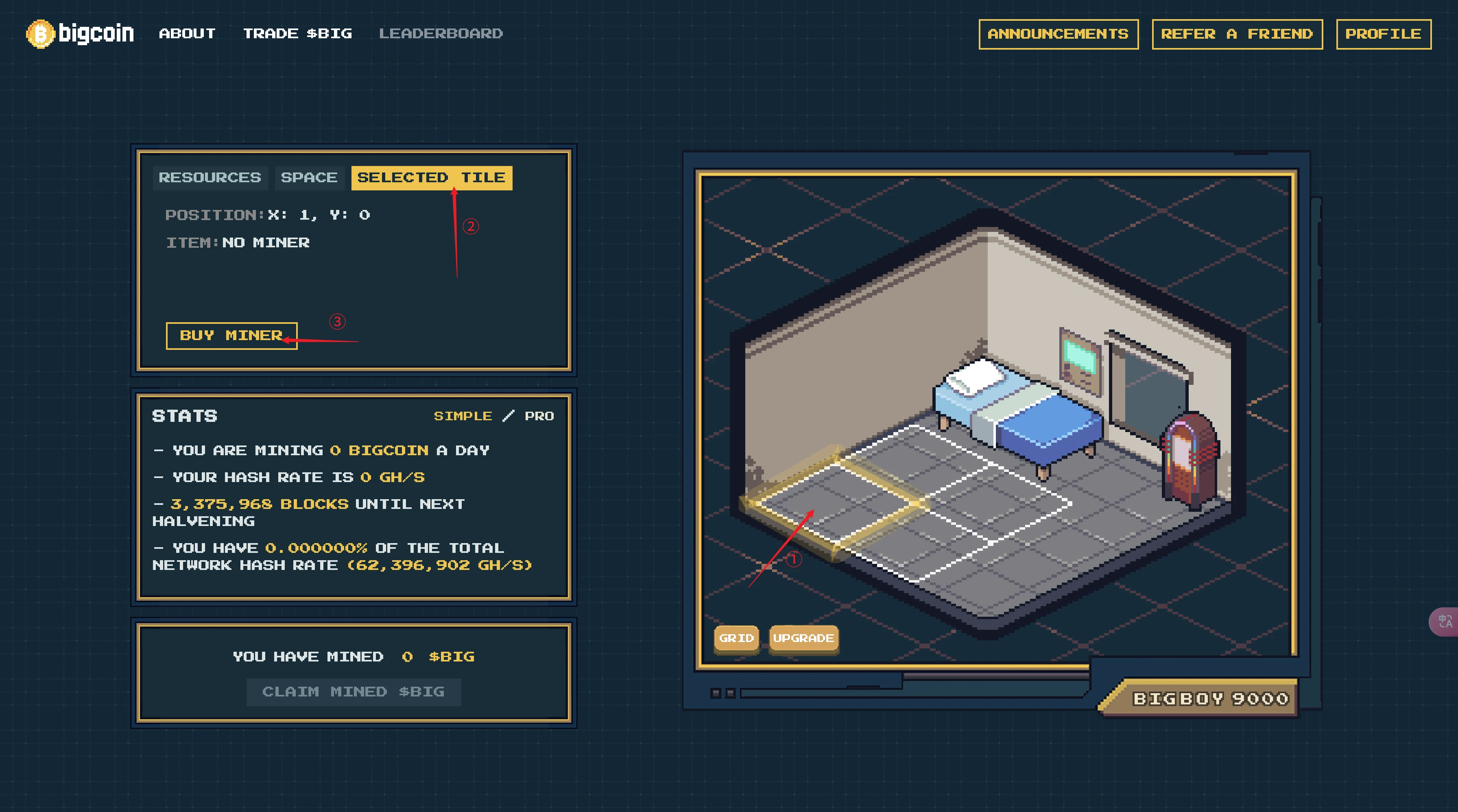
STEP 3. 点击房间中的任一格子,并在左侧点击“BUY MINER”,即可开始挖矿。
交互教程 | 两天破千万美元市值的挖矿链游BIGCOIN

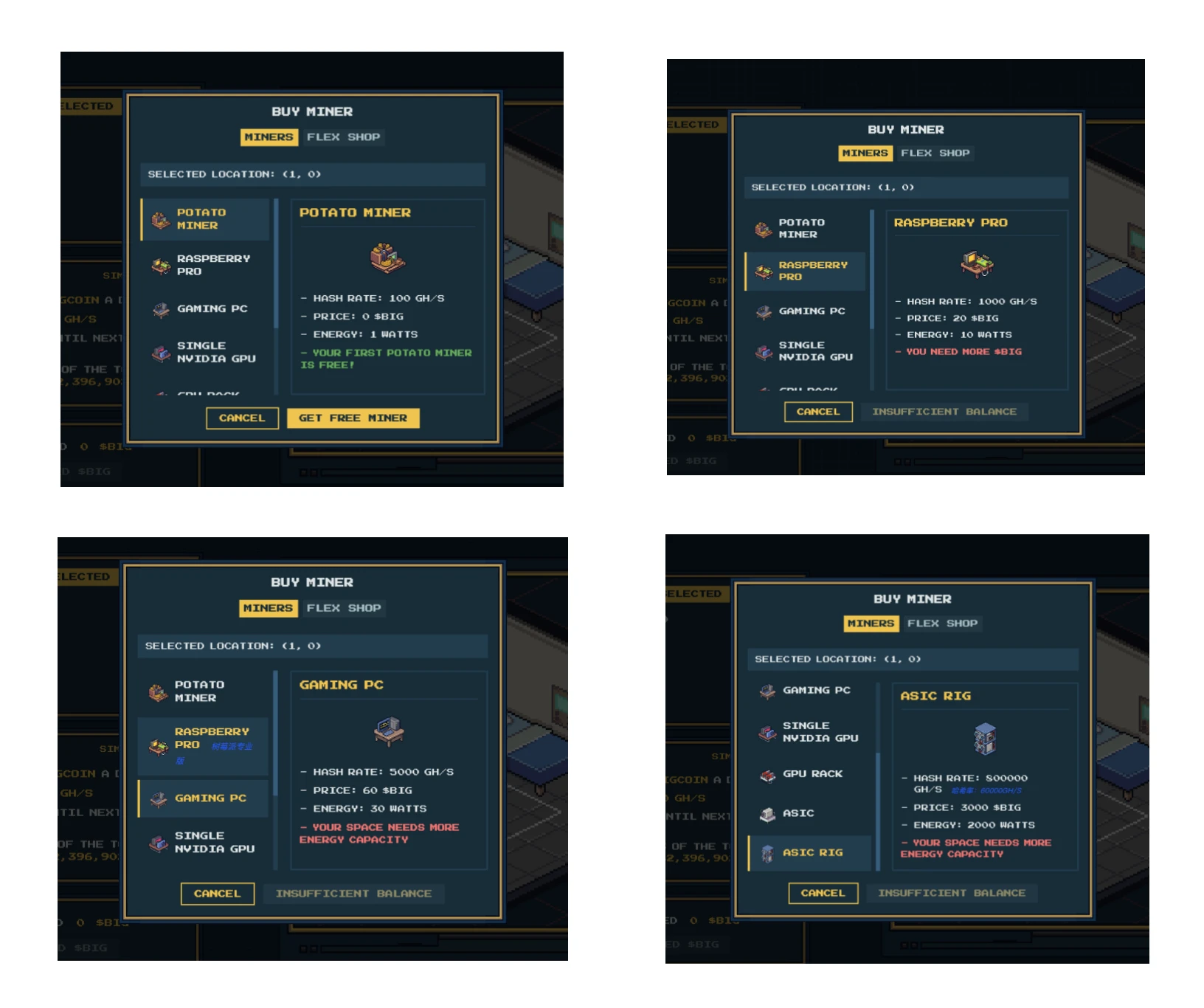
参与方式有两种:

方式一:选择免费矿工“POTATO MINER”,铸造之后即可挖矿,可边挖边卖(平民版)

方式二:选择高级矿工(有多种选择组合),可能需要根据情况升级房间,满足房间能量≥矿机能量之和,挖矿速度更快(氪金版)。
交互教程 | 两天破千万美元市值的挖矿链游BIGCOIN

一些经验:

  • 早参与早受益,参与较晚可能崩盘概率大。

  • 不建议新手直接买矿工,原因: 1、空间不足,房间不升级,最多只能放下 3 个高级矿工;2、升级成本昂贵,BIG 价格较高,回本周期短,风险大。

  • 目前没有账号数量限制,可进行多开挖矿,另外较为理想的氪金组合: 1 个高级矿工 + 1 个免费矿工。

  • 提倡“挖卖提”策略,防崩盘风险。

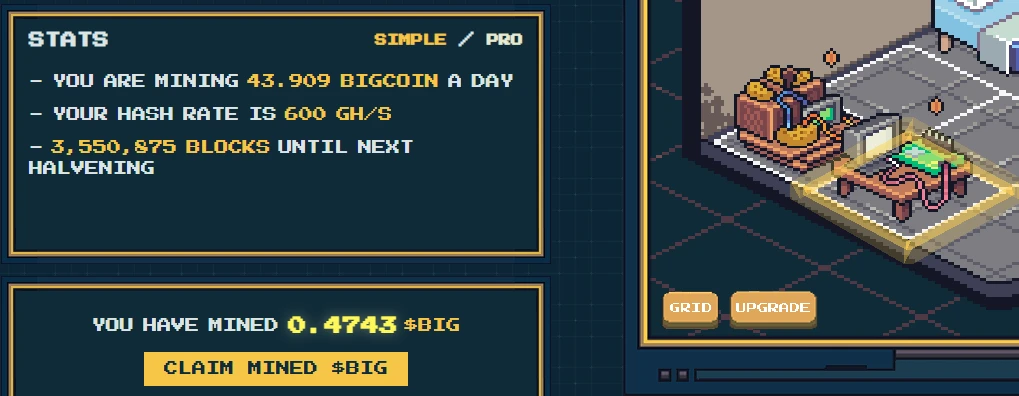
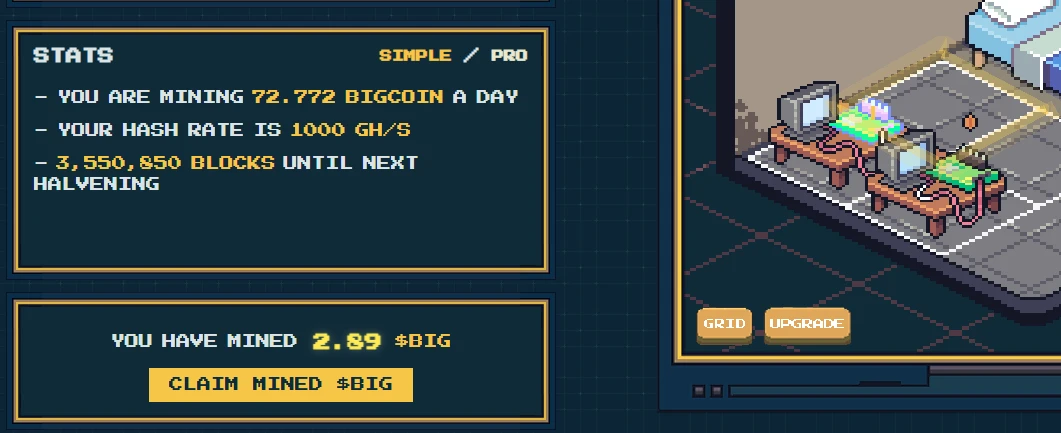
以下是不同组合的收益情况截图,供参考(以下为 4 月 9 日历史数据)

1 个免费矿工
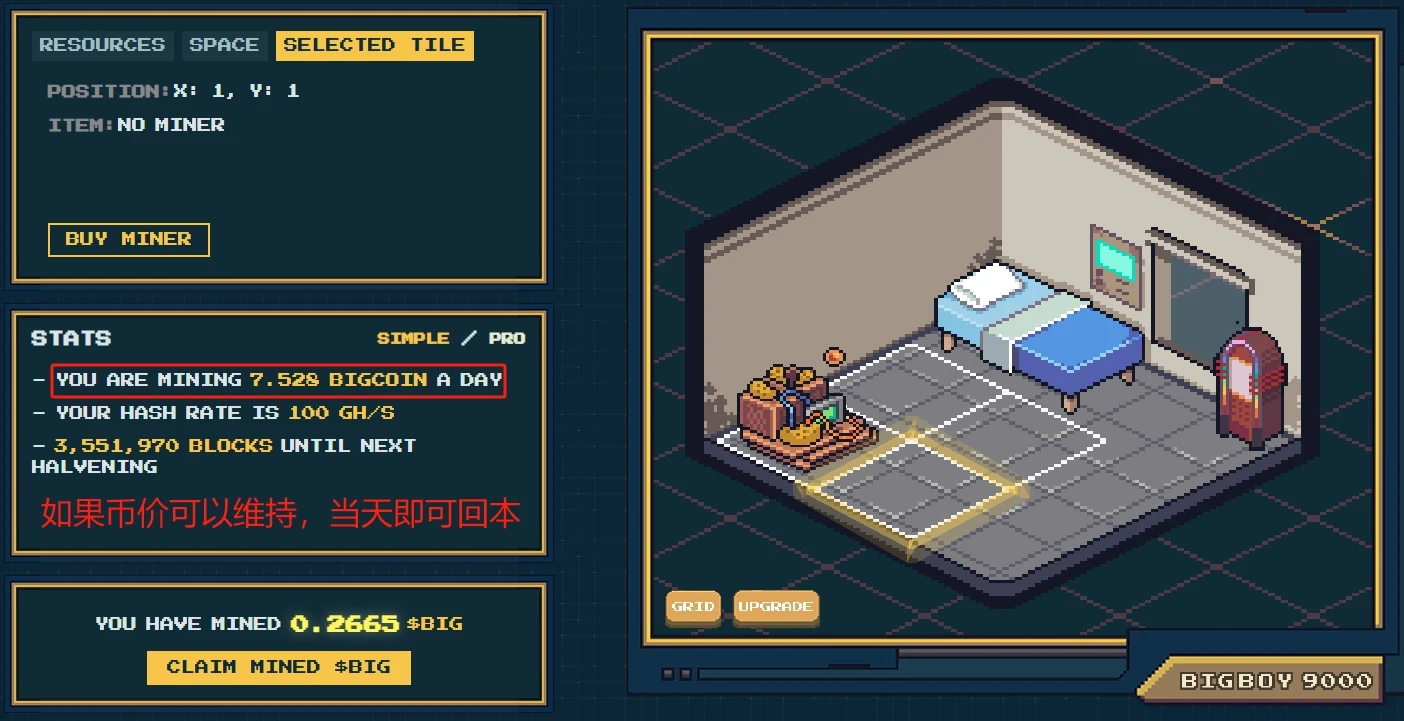
交互教程 | 两天破千万美元市值的挖矿链游BIGCOIN

1 个免费矿工 + 1 个高级矿工(20 BIG)

交互教程 | 两天破千万美元市值的挖矿链游BIGCOIN

2 个高级矿工(20 BIG)

交互教程 | 两天破千万美元市值的挖矿链游BIGCOIN

Пов'язані матеріали

BIS Report Compliance Observations: The True Risks of Stablecoins Go Beyond 'De-pegging'

The BIS report, "Anchoring trust in money: innovation beyond stablecoins," highlights that the primary risks of stablecoins extend beyond potential de-pegging. It argues that the core challenge is whether stablecoins can be integrated into a financial system that is identifiable, monitorable, accountable, and regulatable. While acknowledging efficiency gains like faster payments and programmability, BIS emphasizes that money requires an institutional framework—including legal certainty, liquidity support, and financial integrity controls—which many stablecoins currently lack. The report details compliance risks, noting that while blockchain transactions are transparent, address visibility does not equate to identity or purpose clarity. This creates a systemic risk as pseudonymity, non-custodial wallets, and cross-chain bridges can undermine AML/CFT controls. Furthermore, these risks can spill over into the traditional financial system through on- and off-ramps. The future direction, per BIS, is not to prohibit innovation but to embed regulatory rules—such as identity verification and transaction screening—directly into the technological infrastructure of tokenized finance. The key takeaway for compliance is that any new financial instrument must clearly address questions of customer identification, transaction monitoring, accountability, and cross-border rule consistency to be viable as a mainstream payment tool.

marsbit55 хв тому

BIS Report Compliance Observations: The True Risks of Stablecoins Go Beyond 'De-pegging'

marsbit55 хв тому

When US Giants Collectively "Defect" to Chinese AI Models

When Silicon Valley Giants Turn to Chinese AI Models to Cut Costs A surprising trend is emerging: major U.S. tech companies are significantly reducing AI costs by switching to Chinese models. Coinbase, the largest U.S. cryptocurrency exchange, reportedly halved its AI spending after migrating to China's GLM-5.2 and Kimi 2.7 models, despite increasing usage. They achieved this through a sophisticated three-part strategy: implementing an automatic routing system to select the most cost-effective model per task, boosting cache hit rates from 5% to 60% to reuse computations, and employing "context engineering" to provide AI with more precise, less cluttered information. They are not alone. AI startup Lindy switched from Claude to DeepSeek, saving millions, while Snowflake's tests found GLM-5.2 solved 66% of coding tasks compared to Claude Opus's 67%—but at a fraction of the cost (output pricing is 5-7 times lower). While the top Western models may offer slightly better stability, the massive price differential is leading many businesses to reconsider their value proposition. This shift signals a deeper change in the AI industry, moving beyond pure performance benchmarks to a fierce cost competition. As pressure mounts, even OpenAI and Anthropic have begun slashing prices. For users, this means more choices, lower costs, and a crucial lesson: using multiple models based on task complexity, optimizing with caching, and keeping contexts lean are now key to leveraging AI efficiently and affordably.

marsbit1 год тому

When US Giants Collectively "Defect" to Chinese AI Models

marsbit1 год тому

BIS Report Compliance Watch: The Real Risks of Stablecoins Are Not Just 'De-pegging'

BIS Report Compliance Observations: The real risks of stablecoins go beyond "depegging" The BIS report "Anchoring trust in money: innovation beyond stablecoins" argues that while stablecoins and tokenization offer efficiency gains, their primary risk lies in fitting into an identifiable, monitorable, accountable, and regulatable financial system. Money's trust stems not just from technology but from institutional arrangements: a common unit of account, guaranteed redemption at par, liquidity support, regulatory frameworks, and financial integrity requirements. Stablecoins, operating on permissionless blockchains with pseudo-anonymity and non-custodial wallets, create systemic compliance gaps: unclear customer identity, incomplete fund origins, unexplained transaction purposes, fragmented cross-chain paths, and ambiguous liability. On-chain transparency does not equal compliance transparency. Public addresses don't reveal identity or intent. While blockchain analytics aid law enforcement, they cannot replace routine, large-scale AML/CFT controls. Effective compliance requires a closed-loop process encompassing customer onboarding, transaction monitoring, investigation, reporting, and audit. Stablecoin risks are not confined to the blockchain; they re-enter the traditional financial system via on/off-ramps, exchanges, and payment institutions. This forces banks to monitor client accounts for activity linked to virtual assets. The future direction is not to prohibit innovation but to embed rules into the technology. Tokenized finance should integrate with the existing two-tier monetary system, embedding compliance—like customer identification, pre-transaction screening, and auditable data trails—directly into the transaction flow. For compliance professionals, the key takeaway is that any new financial instrument must answer core questions: Who identifies the customer? Who monitors transactions? Who handles exceptions? Who is liable? Compliance is not the antithesis of innovation but the essential infrastructure for its sustainable growth.

链捕手1 год тому

BIS Report Compliance Watch: The Real Risks of Stablecoins Are Not Just 'De-pegging'

链捕手1 год тому

When American Giants 'Defect' to Chinese AI Models

Summary: The trend of major U.S. technology firms adopting more cost-effective Chinese AI models is gaining momentum. A prime example is Coinbase, the largest U.S. cryptocurrency exchange, which reportedly halved its AI expenditure by switching to Chinese models GLM-5.2 and Kimi 2.7, while its usage volume increased. This was achieved through a sophisticated cost-saving system featuring intelligent model routing (selecting the most suitable model per task), dramatically improving cache hit rates from 5% to 60%, and implementing "Context Engineering" to streamline prompts. This shift is not isolated. Other companies like the AI startup Lindy and data cloud firm Snowflake are making similar moves, drawn by the significant price disparity. For instance, GLM-5.2 costs $1.40/$4.40 per million tokens (input/output), compared to $5/$25 for Claude Opus 4.7. While top Western models may offer slightly higher stability or speed in complex tasks, the performance gap is narrowing, making the price difference harder to justify for many enterprise use cases. The implications are significant for both businesses and individual users. It highlights the importance of a multi-model strategy based on task requirements, the value of caching and reusing outputs, and the effectiveness of providing concise context. Ultimately, this migration signals a potential reshaping of the AI industry's pricing model, moving competition from pure performance benchmarks to practical cost-effectiveness, with increased choice and downward price pressure benefiting end-users.

链捕手1 год тому

When American Giants 'Defect' to Chinese AI Models

链捕手1 год тому

Торгівля

Спот
活动图片