AB DAO: The Future Path of Decentralized Economy

mediumОпубліковано о 2025-03-21Востаннє оновлено о 2025-03-21

Анотація

Evolving from the Newton Project, AB envisions building a truly decentralized economic system where individuals and enterprises can equally benefit from economic growth.

1. Introduction: AB DAO Leading the Next Wave of Decentralized Economy

In recent years, the rapid advancement of blockchain technology has given rise to major trends such as decentralized finance (DeFi) and real-world asset (RWA) tokenization. Amid this wave of innovation, AB DAO, an established blockchain project, has re-emerged with its cutting-edge technological architecture and decentralized governance model, once again capturing market attention.

AB evolved from the Newton Project, which was launched in 2018 with the mission of building infrastructure for a community-driven economy, advocating the principle that "economic growth should benefit everyone." In 2025, the Newton Project underwent a rebranding to AB, marking a strategic shift toward heterogeneous blockchain infrastructure, real-world asset integration, and optimized tokenomics.

2. AB’s Vision: Bridging the Digital Economy with Real-World Assets

Evolving from the Newton Project, AB envisions building a truly decentralized economic system where individuals and enterprises can equally benefit from economic growth. With the 2025 rebranding, AB’s ecosystem has clarified its core direction: leveraging blockchain technology to facilitate the digitization and liquidity of real-world assets while enhancing overall economic efficiency.

AB’s Long-Term Goals

•Decentralization Empowerment: AB aims to eliminate centralized control in traditional economic models, empowering individuals and communities with fair and transparent economic opportunities.

•Enhanced Liquidity: By accelerating the release of $AB tokens, AB seeks to optimize its economic model, making its token ecosystem more dynamic and efficient.

•Real-World Asset Tokenization (RWA): Utilizing blockchain technology, AB enables the tokenization of real estate, financial assets, and other real-world assets, bridging the gap between traditional industries and blockchain.

•Cross-Chain Interoperability: AB supports seamless communication between multiple blockchains, ensuring greater compatibility and scalability for asset transfers.

Core Functions and Applications of the $AB Token

As the backbone of the AB ecosystem, the $AB token serves multiple essential functions:

•Gas Fees: $AB is the native fuel of the AB network, required for on-chain transactions.

•Smart Contract Execution: Developers must use $AB to deploy and execute smart contracts within the AB ecosystem.

•DAO Governance: $AB holders can participate in AB DAO governance, voting on network upgrades and economic policy adjustments.

•Real-World Asset Tokenization (RWA): $AB enables the trading of real estate, financial instruments, and other RWAs, offering new financial tools for traditional industries.

•Cross-Chain Compatibility: $AB tokens operate across multiple blockchains, enhancing asset usability and increasing market liquidity.

3. AB’s Technical Architecture: The Multi-Layered NewChain Ecosystem

AB’s native blockchain, NewChain, adopts an innovative multi-layered architecture, ensuring high throughput, low transaction costs, and robust security.

NewChain Architecture

Unlike traditional Layer 1 blockchains, NewChain is structured as a multi-tiered decentralized economic system, designed to support complex financial and business applications.

•AB Mainnet: Provides a high-throughput, low-latency infrastructure, ensuring seamless network performance.

•High-Performance Sidechains: Optimized for payments, gaming, and financial services, reducing congestion on the mainnet and enhancing transaction efficiency.

•Blockchain Interoperability: Integrates multi-chain technology, enabling seamless asset transfers across Ethereum, Tron, and Solana.

•Real-World Asset Tokenization (RWA): Digitizes real-world assets using blockchain, creating a transparent, efficient trading environment.

4. AB DAO’s Governance Model: A True Web3 Decentralized Economy

Decentralized Autonomous Organizations (DAOs) represent the future of blockchain governance. AB DAO implements a fully decentralized governance framework, ensuring that all token holders actively participate in decision-making.

Key Features of AB DAO

•Decentralized Governance: $AB token holders can vote on protocol upgrades, fund allocation, and other key governance matters.

•Data Ownership Mechanism: Users have control over their personal data and can monetize it through the on-chain consensus mechanism.

•Multi-Stakeholder Incentives: Developers, liquidity providers, and node operators receive incentives, ensuring long-term ecosystem sustainability.

How AB DAO Differs from Other DAOs

Compared to existing DAOs such as Uniswap DAO and Aave DAO, AB DAO is not just a governance platform—it is a complete decentralized economic system.

•Uniswap DAO primarily governs protocol parameters, but lacks a data ownership mechanism and broader economic incentives.

•Aave DAO is mainly focused on DeFi governance but does not integrate a comprehensive decentralized economic structure.

•AB DAO features full governance, economic cycles, and incentive mechanisms, ensuring a sustainable and self-sufficient ecosystem.

5. Tokenomics:

Current Token Functions

•Transaction Fees: $AB serves as the primary gas fee payment within the NewChain ecosystem.

•Liquidity Incentives: Liquidity providers (LPs) and stakers earn $AB rewards.

•Governance Voting: Token holders influence the development and governance of AB DAO.

Future Growth Potential

•AB Finance DeFi Ecosystem: Expansion into additional DeFi applications, such as lending and liquidity pools.

•RWA + Cross-Chain Liquidity: Strengthening the integration of real-world assets with blockchain technology.

•Tokenomics Optimization: Future adjustments in staking rewards, token buybacks, and burn mechanisms to reduce market sell pressure and enhance long-term value.

6. Conclusion

Looking back at the evolution of AB DAO, it becomes evident that it is more than just a rebranded blockchain project—it represents a profound transformation in decentralized economics. From its origins in the Newton Project, which championed a community-driven economy, to the development of AB's heterogeneous blockchain infrastructure, real-world asset (RWA) tokenization, and decentralized governance system, AB has positioned itself at the forefront of Web3 economic transformation.

The launch of the HTX Launchpool staking event significantly increased AB token’s market visibility. During this period, $AB experienced a 20-30% price surge, with a notable rise in trading volume. This trend indicates growing investor interest and a strengthening market recognition of AB. For short-term investors, this presents an attractive opportunity.

However, short-term price fluctuations are only a fraction of the bigger picture. The real long-term value of AB lies in its technological strength, ecosystem expansion, and strategic positioning.

1. Robust Technological Foundation and Ecosystem Growth

AB is built on NewChain’s multi-layered architecture, which provides high throughput, low costs, and strong security. With cross-chain compatibility supporting Ethereum, Solana, and BNB Chain, AB is well-positioned to integrate with diverse blockchain ecosystems. As AB Finance, DeFi protocols, NFTs, and RWA applications continue to expand, the scalability and use cases of the AB ecosystem will further strengthen.

2. The Rising Potential of Real-World Assets (RWA)

RWA tokenization is emerging as one of the most significant trends in the 2025-2026 Web3 economy. From real estate and supply chain finance to cross-border payments, the adoption of blockchain-based asset tokenization is expanding rapidly. As an early mover in this space, AB has the potential to establish itself as a leading blockchain project in the RWA sector.

3. DAO Governance and Economic Model Innovations

AB DAO employs a truly decentralized governance structure, ensuring that token holders have direct influence over protocol upgrades, economic adjustments, and network decisions. Additionally, AB's incentive mechanisms are designed to reward developers, liquidity providers, and ecosystem contributors, fostering a sustainable and self-sufficient decentralized economy.

4. Institutional Capital and Market Expansion

Institutional interest in AB’s ecosystem is steadily increasing. As AB continues to expand its presence across centralized (CEX) and decentralized exchanges (DEX) and strengthens its RWA applications, it is likely to attract larger institutional investments. This could further accelerate AB’s ecosystem growth and long-term market stability.

Пов'язані матеріали

The Evolution Path of Physical Bitcoin

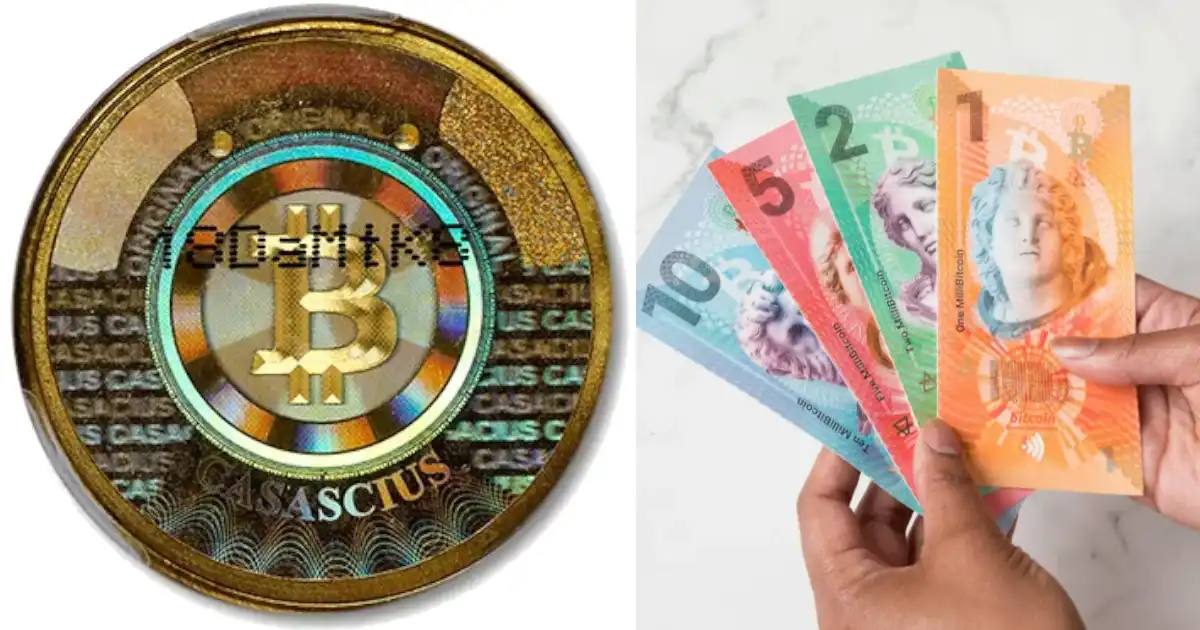
The Evolution of Physical Bitcoin Bitcoin's digital nature is its core strength, enabling self-custody and rapid global transfers. However, its intangibility also hinders mainstream adoption. For over a decade, creators have attempted to materialize Bitcoin while preserving its cash-like properties, yielding notable results. Casascius Coins, launched in 2011, were the first and most iconic physical Bitcoin. Creator Mike Caldwell generated private keys offline, printed them on coins, and sealed them with tamper-evident holograms. This model relied on user trust in the centralized issuer. Production ceased in 2013 due to regulatory pressure from FinCEN. RavenBit Coins emerged in 2014 aiming to decentralize minting by letting users generate and apply their own keys. However, this led to trust issues with numerous untrusted minters and insecure key generation methods. In 2016, Coinkite introduced Opendimes—a breakthrough in bearer asset technology. These USB-shaped devices generate and store keys internally. Funds can be received by checking the public key, but spending requires physically breaking the device to extract the private key. While innovative and open-source, its cost (~$20) and form factor limit its use for small, everyday transactions. Satochip's Satodime, a card-shaped device using similar secure chip technology, followed. It supports NFC interaction and comes in various forms. While potentially cheaper in bulk (~13€), it remains a high-security hardware wallet, not a low-cost cash substitute. A fundamental cost barrier exists. For physical Bitcoin to achieve widespread commercial use, hardware costs must drop below $1 to match the production cost of fiat banknotes. Current secure chips capable of running Bitcoin's cryptographic algorithms (like secp256k1) are too expensive. Chips like NXP's NTAG X DNA (~$3) show cost-reduction potential but lack native Bitcoin curve support. Projects like OfflineCash embed chips in banknote-like paper, but face challenges with durability, the need for custom Bitcoin-enabled chips, and the inherent requirement for users to verify balances online—which conflicts with Bitcoin's trustless ideal. Coinkite's Tapsigner, a ~$20 card with a proprietary Bitcoin NFC chip, is seen as a more practical step forward. It functions as a reloadable hardware wallet for contactless payments, solving the "change" problem and focusing on real-world retail integration, a direction also pursued by companies like Cash App and Square. In summary, the journey to physical Bitcoin has progressed from trusted centralized mints (Casascius) to user-generated keys (RavenBit) and finally to self-contained secure hardware (Opendimes, Satodime, Tapsigner). The core challenge remains developing a sufficiently low-cost, durable, and truly trustless physical bearer asset that can function like cash in daily transactions. Current solutions are either too expensive or introduce new trust assumptions, keeping the ideal of ubiquitous physical Bitcoin just out of reach for now.

marsbit51 хв тому

The Evolution Path of Physical Bitcoin

marsbit51 хв тому

Samsung Relies on Technology Cycles, SK Hynix on HBM, How Did Micron Win a Trillion-Dollar Market Cap?

Micron Technology, the third-largest memory chip maker alongside Samsung and SK Hynix, recently saw its market cap surpass $1 trillion. Founded in 1978 in Boise, Idaho, Micron survived brutal industry cycles while American peers and Japan's memory sector faltered. Its survival is attributed to a dual strategy: leveraging political and legal avenues for critical breathing room, coupled with relentless manufacturing cost control. Historically, Micron sought U.S. government intervention three times. In 1985, it filed an anti-dumping complaint against Japanese firms, leading to the U.S.-Japan Semiconductor Agreement. Ironically, this created an opening for Samsung, which later became its toughest competitor. In 2002, Micron turned "whistleblower" in a DRAM price-fixing investigation, escaping penalties while rivals were fined. In 2017, it sued China's Fujian Jinhua, contributing to its placement on a U.S. entity list, stifling a nascent competitor. However, a major strategic misstep occurred in 2013 with the acquisition of bankrupt Japanese firm Elpida. Integrating Elpida's mobile-DRAM-focused technology diverted resources, causing Micron to miss the critical early decade of development for High Bandwidth Memory (HBM)—the high-performance memory essential for AI chips like NVIDIA GPUs. By the time AI demand exploded in 2022, SK Hynix, which launched the first HBM in 2013, held about 85% of the HBM3 market, leaving Micron with roughly 3%. Micron now faces a triple squeeze. In the high-end HBM market, it lags significantly behind SK Hynix and Samsung. In the mid-to-low end DRAM market, it faces aggressive price competition from China's CXMT. Furthermore, a 2023 Chinese cybersecurity ban on its products slashed its revenue from China, a once-core market, from over 10% to just 7.1% by FY2025, causing it to exit China's data center server business. Beneath its political maneuvering lies Micron's core strength: exceptional manufacturing efficiency and cost control. Decades of engineering have yielded DRAM chips with a smaller cell area than rivals, meaning more chips per wafer and lower unit costs. This efficiency, not subsidies, has allowed it to withstand price wars. While political leverage bought time, Micron is now paying a "time debt" in the HBM race. It is racing to ramp up HBM3E production and develop HBM4, but catching up to competitors who started a decade earlier is a monumental challenge. Its future hinges on whether its expertise in cost control and political strategy can compensate for the lost time in a technology race where early-mover advantage is decisive.

链捕手1 год тому

Samsung Relies on Technology Cycles, SK Hynix on HBM, How Did Micron Win a Trillion-Dollar Market Cap?

链捕手1 год тому

New AMD Paper Overturns Conventional Wisdom: FP4 Training Instability's Cause Is Not Insufficient Randomness

AMD's new research challenges the conventional understanding of FP4 training instability. While reducing precision from FP8 to FP4 promises doubled computational throughput and is supported by new hardware like NVIDIA Blackwell and AMD MI350 series, training large language models natively with FP4 has been notoriously unstable, often attributed to insufficient stochasticity. The paper "Pretraining large language models with MXFP4 on Native FP4 Hardware" demonstrates successful end-to-end FP4 pre-training of Llama 3.1-8B on AMD MI355X GPUs using the MXFP4 format, achieving a 9-10% overall speedup over FP8. Crucially, it identifies the root cause of instability: not randomness, but the accumulation of *structural micro-scaling errors* along the sensitive weight gradient (Wgrad) path. Through controlled experiments, researchers found that quantizing the Wgrad operation to FP4 caused significant convergence degradation. Counterintuitively, common stochasticity-based mitigation techniques like stochastic rounding and randomized Hadamard transforms worsened performance. In contrast, applying a *deterministic* Hadamard transform successfully stabilized training by ensuring consistent error patterns, reducing the extra token cost from 26-27% to just 8-9%. This work has significant implications: 1) It provides a clear diagnostic for low-precision training instability, steering focus towards structural errors. 2) It pushes FP4 from a primarily inference-focused format into the realm of viable training. 3) It leverages the open OCP Microscaling (MX) standard, promoting cross-vendor compatibility. The research marks a critical step towards more economical large model training by further pushing the boundaries of low-precision computation.

marsbit1 год тому

New AMD Paper Overturns Conventional Wisdom: FP4 Training Instability's Cause Is Not Insufficient Randomness

marsbit1 год тому

Торгівля

Спот
Ф'ючерси

Популярні статті

Як купити AB

Ласкаво просимо до HTX.com! Ми зробили покупку AB (AB) простою та зручною. Дотримуйтесь нашої покрокової інструкції, щоб розпочати свою криптовалютну подорож.Крок 1: Створіть обліковий запис на HTXВикористовуйте свою електронну пошту або номер телефону, щоб зареєструвати обліковий запис на HTX безплатно. Пройдіть безпроблемну реєстрацію й отримайте доступ до всіх функцій.ЗареєструватисьКрок 2: Перейдіть до розділу Купити крипту і виберіть спосіб оплатиКредитна/дебетова картка: використовуйте вашу картку Visa або Mastercard, щоб миттєво купити AB (AB).Баланс: використовуйте кошти з балансу вашого рахунку HTX для безперешкодної торгівлі.Треті особи: ми додали популярні способи оплати, такі як Google Pay та Apple Pay, щоб підвищити зручність.P2P: Торгуйте безпосередньо з іншими користувачами на HTX.Позабіржова торгівля (OTC): ми пропонуємо індивідуальні послуги та конкурентні обмінні курси для трейдерів.Крок 3: Зберігайте свої AB (AB)Після придбання AB (AB) збережіть його у своєму обліковому записі на HTX. Крім того, ви можете відправити його в інше місце за допомогою блокчейн-переказу або використовувати його для торгівлі іншими криптовалютами.Крок 4: Торгівля AB (AB)Легко торгуйте AB (AB) на спотовому ринку HTX. Просто увійдіть до свого облікового запису, виберіть торгову пару, укладайте угоди та спостерігайте за ними в режимі реального часу. Ми пропонуємо зручний досвід як для початківців, так і для досвідчених трейдерів.

409 переглядів усьогоОпубліковано 2025.02.18Оновлено 2025.03.21

Як купити AB

Обговорення

Ласкаво просимо до спільноти HTX. Тут ви можете бути в курсі останніх подій розвитку платформи та отримати доступ до професійної ринкової інформації. Нижче представлені думки користувачів щодо ціни AB (AB).

活动图片