Хакеры начали применять ИИ для распространения вредоносного ПО

cryptonews.ruОпубліковано о 2021-09-04Востаннє оновлено о 2024-10-04

Разработчики вредоносного софта начали использовать генеративный искусственный интеллект для внедрения хакерских ПО в компьютеры жертв. Об этом рассказала команда по кибербезопасности Wolf Security компании HP, которая занималась изучением подозрительного электронного письма.

Проводя расследование, эксперты обнаружили новую разновидность троянской программы с асинхронным удалённым доступом (AsyncRAT). Такой вид программного обеспечения хакеры использовали для управления компьютером жертвы на расстоянии.

Несмотря на то, что сам AsyncRAT был создан людьми, эта новая версия содержала изменённый способ внедрения, разработанный, как предполагают эксперты, с помощью генеративного ИИ. Хакеры не в первый раз используют нейросети в своих преступных целях. Однако точных доказательств этому аналитики не находили.

До этого расследования было мало свидетельств того, что злоумышленники использовали технологию ИИ для написания вредоносного кода, — говорится в отчёте Wolf Security.

В этот раз эксперты обнаружили несколько характеристик того, что программу создал искусственный интеллект. К примеру, почти каждая функция вредоносного ПО сопровождалась комментарием о том, как она была создана.
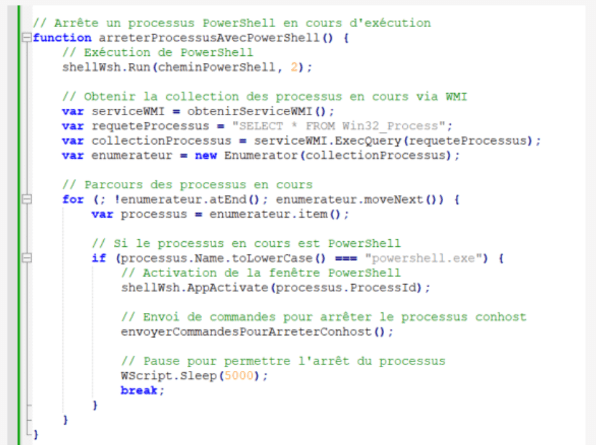
рис 3

Вредоносное ПО, разработанное искусственным интеллектом

Электронное письмо с вредоносным ПО было отправлено подписчику программы по устранению угроз компании HP. Сообщение было на французском языке и выглядело как счёт. Внутри письма эксперты обнаружили скрипты, которые активировали AsyncRAT. После этого хакеры получали контроль над компьютером жертвы, получая таким образом доступ к его личным данным.


Пов'язані матеріали

Opinion: Altcoins Might Still Have a Chance, but VC-Backed Coins Are Truly Hopeless

Author: Haotian. Through deep discussions with experienced on-chain investors, a consensus has emerged on survival strategies for the current market cycle: the focus has decisively shifted from "narratives and speculation" to "cash flow and tangible validation." Several key principles are outlined: 1) Prioritize assets with genuine value capture. In a bear market, sustainable protocol fees and a proven record of using them for token buybacks, burns, or dividends are essential. Examples include launchpad tokens like $UNI, $PUMP, $PONS, and the notable buyback token $HYPE. 2) Choose only projects with proven Product-Market Fit (PMF) and a complete operational loop. The next cycle's narratives, likely around "real-world asset tokenization" and the "Agentic Economy," will favor practical validation over technical roadmaps. Projects must demonstrate real users, transaction volume, and revenue. Examples such as $ONDO, $VVV, and $VIRTUAL will be evaluated on metrics like Assets Under Management (AUM) and fee generation. 3) Opt for assets with strong, organically developed "consensus." True consensus is market-driven and survives multiple cycles, not manufactured through marketing. Examples include enduring meme coins like $DOGE, $PEPE, $PEOPLE, or established sector leaders like $ZEC and $TAO, which benefit from resilient communities and sustained liquidity. 4) Avoid purely venture-capital (VC)-backed tokens. Unlike general altcoins which may cycle back, VC coins are seen as particularly problematic. Their typical high Fully Diluted Valuation (FDV), low circulating supply, and continuous large unlock schedules often lead to post-unlock sell pressure, especially if the project lacks inherent value capture. This dynamic is a key factor in the current cycle's restrained rallies and deep corrections, discouraging retail participation. *Note: This is a summary of personal discussions. Mentioned tokens are examples only, not investment advice.*

marsbit16 хв тому

Opinion: Altcoins Might Still Have a Chance, but VC-Backed Coins Are Truly Hopeless

marsbit16 хв тому

Wall Street Morning Report: Philadelphia Semiconductor Index Falls Nearly 3%, Nvidia's 'Circular Financing' Concerns Trigger Tech Stock Correction, Optical Communication and Chip Stocks Plunge

Wall Street Morning Report: The Philadelphia Semiconductor Index fell nearly 3%, and concerns over Nvidia's "revolving financing" sparked a tech stock pullback, with optical communications and chip stocks declining sharply. U.S. stocks retreated from record highs on Monday amid geopolitical tensions and AI financing doubts. The Dow fell 0.11%, the Nasdaq 0.32%, and the S&P 500 was nearly flat. Hopes for reopening the Strait of Hormuz dimmed after Trump demanded war reparations from Iran, pushing Brent crude above $87 and WTI above $82. Spot gold broke above $4400/oz. Treasury yields rose, with the market pricing in a ~54% chance of a September Fed hike. The semiconductor and AI infrastructure sectors were hit hard. The Philly Semiconductor Index dropped nearly 3%, with the semiconductor ETF down 2.28%. Optical communication was the worst-performing AI sub-sector, with Coherent plunging over 14%. The sell-off centered on Nvidia, which fell 2.86% on reports it is collaborating with major financial institutions to mobilize over $500 billion in third-party capital for AI infrastructure. Market concerns focused on whether this creates a circular financing loop and if future AI facilities can generate sufficient cash flow. Other notable moves: Intel dropped over 4% on a new share offering. Microsoft rose 1.21% on plans for its next-gen Maia 300 chip. The software sector outperformed, with Palantir up 1.85%. Energy stocks rallied nearly 4.7% on geopolitical risks. Key upcoming events include the RBA rate decision on Aug 11 and earnings from Lumentum, CoreWeave, and Super Micro Computer after the close on Aug 12, which will test the real demand for AI infrastructure.

marsbit1 год тому

Wall Street Morning Report: Philadelphia Semiconductor Index Falls Nearly 3%, Nvidia's 'Circular Financing' Concerns Trigger Tech Stock Correction, Optical Communication and Chip Stocks Plunge

marsbit1 год тому

Торгівля

Спот
活动图片