零熵协议惊艳 Web3.0 亚洲机构峰会

币界网Опубліковано о 2024-08-15Востаннє оновлено о 2024-08-15

币界网报道:

2024 年 8 月 13 日,Web3.0 亚洲机构峰会在香港特别行政区丽思卡尔顿大酒店盛大举行。本次峰会云集全球 Web3 行业顶尖的专家、学者、投资机构和投资人,共同就 Web3 行业最热话题、最前沿的投资和未来技术趋势展开深层探讨。

零熵协议作为峰会的钻石伙伴受邀参与此次峰会,向与会嘉宾展示了零熵技术的灵魂特色,点燃了本次盛会技术创新的激情。零熵 CTO Howard Xu博士及 CIO Leon LEE 作为会议的重磅嘉宾发表重要讲演,与行业顶尖学术专家一起畅想了未来区块链发展的前沿趋势,契合 Web3.0 及零熵七大技术创新,定义了未来区块链全球统一账本,布局构建一个高效、安全、灵活的去中心化跨链转账和交易系统。  

当下环境下,区块链技术面临数字资产安全性的挑战。在用户私钥没有泄露和被盗的情况下,每年数亿美元的合约资产被盗走;跨链桥受黑客攻击或跨链桥项目监守自盗,导致用户承受巨大损失;用户托管在交易所的资产,因为交易所挪用、跑路而血本无归。 
Howard Xu博士在本次峰会上剖析当前根本性问题,提出安全性问题的根源在于没有正确地处理账本。自以太坊开始,合约所发行资产的账本由合约管理,矿工只管理区块链本币(build-in currency)的账本。因此用户的本币资产是在用户私钥的直接控制之下,而用户的合约资产是在合约的直接控制之下,而用户通过合约间接控制自己的资产。任何合约都是一个中心化的存在,合约的账本是中心化账本,而非去中心账本。这是在私钥安全的情况下,即便合约的执行是去中心的,用户资产仍然会被盗的根本原因。所有跨链桥都是中心化的,跨链需要在源端将资产转入跨链桥方的钱包,在末端从链桥方的钱包转出资产,一旦二端的钱包受攻击或发生监守自盗,用户即会遭受资产损失。用户在交易所进行交易需要先将资产托管给交易所,因而存在被挪用的风险。 

针对全链资产自由流通中的价值孤岛及安全性问题,Howard Xu博士前瞻性提出,解决这些问题的关键,在于以去中心的方式管理合约资产、跨链资产和交易资产,因此需要提供一个能够覆盖这些资产的去中心账本视角,从而达成 「本币资产与合约资产的统一,本链资产与外链资产的统一,总账本与分账本的统一」 的区块链统一账本。 
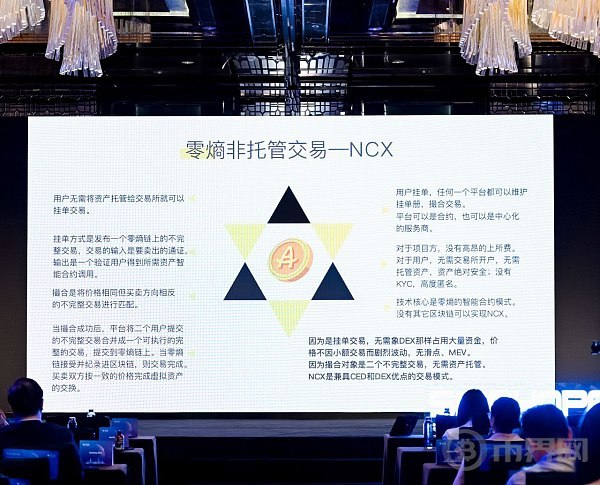
零熵协议跨链有别于以太坊 L2(Polygon,Avalanche),BSC,Nerve Bridge 等传统跨链桥及 Polkadot、Cosmos 传统跨链协议,它遵守 FOC 协议的区块链间跨链,资产可以直接、去中心化、安全地从源链地址转移到目标链地址,无需中间人或合约持有,这种跨链由矿工管理合约资产。目前区块链资产交易主要有 CEX 和 DEX 两种模式。CEX 即中心化交易所,用户需将资产托管给交易所进行交易,存在信任问题和安全隐患,且有 KYC 要求,匿名性和隐私保护不足。DEX 即去中心化交易合约,采用自动做市机制,用户向合约发送资产进行交易,但需提供流动性,存在滑点和 MEV 问题,造成客户损失,本质上也是托管的,是托管风险转嫁而非消除。零熵协议架构了全新交易模式,及非托管交易(NCX),它兼具 CED 和 DEX 优点,用户无需将资产托管给交易所就可以挂单交易。对于项目方,没有高昂的上所费。对于用户,无需交易所开户,无需托管资产,资产绝对安全;没有 KYC,高度匿名。NCX 无需 DEX 模式占用大量资金,价格不因小额交易而剧烈波动,无滑点、MEV。 

零熵 NCX 技术核心是零熵的智能合约模式,没有其它区块链可以实现 NCX。明示合意智能合约是零熵技术的创新,采用 UTXO 模型,允许交易各方明确表达意愿。它强调交易结果需符合各方预期,交易事项矿工可知,节点验证交易结果是否符合各方意愿,最终由矿工记账一切。该合约模式有效避免了智能合约钓鱼、程序错误和误解导致的资产损失,增强了安全性,杜绝了通过合约盗窃的可能。交易结果以 UTXO 输出形式交付,确保资产所有权清晰。明示合意智能合约相较于以太坊在意思表达、执行验证、结果控制及记账方式上均有优势。是其他智能合约技术无法企及的。通过这种模式实现了本币资产与合约资产的统一。 

零熵协议通过引入统一的资产定义(UAD),实现了各类资产的一致化表达,因而矿工可以记录来自其它区块链的资产。在 FOC 网络中,任一区块链上产生的资产都可以被网络中其他区块链上的用户或合约自由使用,这极大地提升了资产的流动性。多个区块链通过 FOC 紧密连接,资产在网络内部实现自由流通。FOC 网络中每个区块链账本都遵循统一资产表达方式,不仅记录本链上的资产,还包括来自其他链的资产,从而实现了本链资产与外链资产的统一。

零熵协议使用链族价值传输协议 (FOC)。链族是一个区块链组成的网络,是在矿工组成的网络之上的一个网络。每个区块链网络以去中心的方式记录各自所管理的资产,而链族网络则协调资产在不同区块链转移,从而保证每个区块链所管理的分账本,与所有区块链账本所合并形成的总账本是统一的。

明示合意智能合约、UAD、FOC 三项技术的结合形成了区块链统一账本。统一账本技术实现了多链资产的互联互通,构建了去中心化价值传输网络,实现了资产的自由流通。

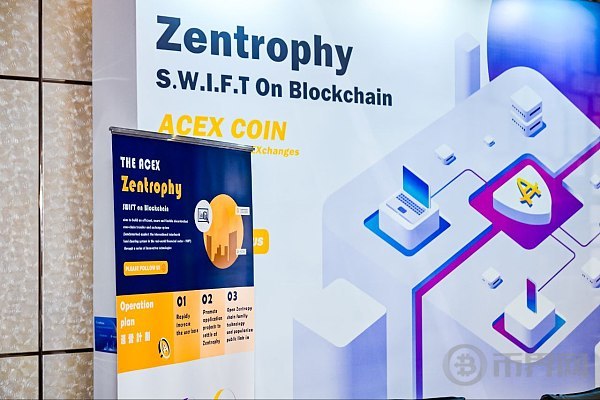
零熵协议已在中国境内、美国及欧盟多地申请专利技术,目前已推出钱包应用。随着公链接入,更多的应用项目落户零熵,用户基数必将大幅增加,零熵协议定会实现其区块链上 S.W.I.F.T 的宏伟布局。
Пов'язані матеріали

Former SpaceX Engineer Reconstructs Financial Execution System Using First Principles

Former SpaceX engineer Lex Li applies "First Principles Thinking" to financial infrastructure with Plan Execution Lab, recently raising angel funding at a $50M post-money valuation. The team argues that the core function of finance is capital allocation, and the critical gap is not in trading but in execution, which remains highly manual and fragmented. While assets, liquidity, and settlement have migrated on-chain, execution workflows (monitoring, risk management, liquidity coordination) are still human-native. In an era of accelerating AI agents, strategy decay is rapid, shifting the competitive edge from having the best strategy to having the most robust execution network. Plan Execution Lab introduces two core components: 1. **PlanX**: A Financial Execution Protocol designed as infrastructure for the migration from CEX to DEX, providing on-chain execution capabilities, liquidity access, risk management, and capital orchestration. 2. **Xgent**: An Autonomous Financial Runtime. Users define investment intents, risk preferences, and constraints; Xgent automatically constructs an execution graph, verifies it, and handles ongoing execution and optimization—streamlining the process from Intent to Autonomous Execution. The long-term vision is to create the "Bloomberg Terminal for Autonomous Finance"—a shared operating environment and execution network built collectively by participants like execution nodes, liquidity providers, and autonomous agents. The future of finance, they contend, belongs not to isolated algorithms but to open, collaborative execution networks.

marsbit22 хв тому

Former SpaceX Engineer Reconstructs Financial Execution System Using First Principles

marsbit22 хв тому

Former SpaceX Engineer Reconstructs Financial Execution System from First Principles

Plan Execution Lab, a financial infrastructure project founded by former SpaceX engineer Lex Li, has raised angel funding at a $50M post-money valuation. The startup is applying "first principles thinking" from Li's SpaceX experience to rethink financial market execution. Their analysis posits that while assets, liquidity, and settlement have moved on-chain, the execution layer remains fundamentally human-dependent and fragmented. In the era of AI Agents, strategy advantages decay rapidly, shifting the competitive edge from isolated algorithms to robust **execution networks**. Plan Execution Lab's solution is a two-part system: **PlanX**, a Financial Execution Protocol designed to facilitate the migration from centralized exchanges (CEX) to on-chain markets by providing core on-chain execution capabilities; and **Xgent**, an Autonomous Financial Runtime. Xgent allows users to define investment goals and constraints, then autonomously constructs and manages the execution logic—moving from **Intent to Execution Graph to Verification to Autonomous Execution**. The long-term vision is to create the "Bloomberg Terminal for Autonomous Finance"—an operating environment not for humans, but for agents and execution nodes. The future financial system, they argue, will be a collaborative network built by diverse participants contributing execution capabilities, not secret strategies. The core competition will shift to who builds the most powerful and adaptive execution network.

链捕手23 хв тому

Former SpaceX Engineer Reconstructs Financial Execution System from First Principles

链捕手23 хв тому

First Long-Horizon Doc2Repo Training Dataset: Code Agents Move Beyond Bug Fixing and Begin Creating Repositories

With the advancement of LLM Code Agents, the research focus is shifting towards long-horizon, real-world tasks, moving beyond simple bug fixes to full repository generation. To address this, researchers from Renmin University of China introduced the DeNovoSWE dataset. This dataset focuses on long-term software engineering tasks, specifically the "document-to-repository" challenge—generating an entire, executable code repository from a task description. The DeNovoSWE construction method employs a Divide & Conquer approach. It breaks down target repositories into core capabilities and uses a multi-agent Draft-Critic-Repair workflow to automatically generate high-quality, evaluation-aligned task documents. The dataset also implements difficulty-aware filtering to balance quality and diversity. The result is a high-quality, anti-leakage dataset of 4,818 instances. Experiments show that models trained on DeNovoSWE achieve significant improvements in long-horizon repository generation. For instance, Qwen3-30B-A3B-Instruct's performance on the BeyondSWE-Doc2Repo benchmark increased from 5.8% to 47.2%, and on NL2RepoBench from 4.3% to 23.0%. Similar gains were observed with stronger backbones, demonstrating that dedicated long-horizon training data is crucial for advancing Code Agents from maintainers to architects capable of planning and building complete software projects from scratch.

marsbit38 хв тому

First Long-Horizon Doc2Repo Training Dataset: Code Agents Move Beyond Bug Fixing and Begin Creating Repositories

marsbit38 хв тому

Even CZ Praised Hyperliquid as 'Awesome', But Its Biggest Moat Might Also Be Its Biggest Risk

In an episode of Galaxy Brains, Binance founder CZ praised Hyperliquid as "awesome" but clarified that while its product is strong, Binance cannot compete in its specific niche due to Hyperliquid's no-KYC, decentralized model. CZ noted he would not personally operate such a model, highlighting the inherent legal and compliance risks tied to its access advantage. The discussion underscores a core market structure conflict: on-chain perp platforms like Hyperliquid thrive on open, low-barrier access, which regulated exchanges like Binance cannot replicate without abandoning their global compliance posture. However, this very advantage makes Hyperliquid a clear target for regulatory scrutiny. The UK FCA has already issued a warning against Hyperliquid for potentially offering unauthorized services to UK users, framing it as a financial services provider rather than neutral infrastructure. Historical cases like the CFTC's action against bZeroX and Ooki DAO further illustrate that regulators may pursue decentralized structures if they facilitate leveraged trading for retail users without proper controls. Meanwhile, regulated venues like Cboe are developing US-compliant "continuous futures" that mimic perpetual exposure, narrowing the product gap. Hyperliquid's long-term edge may increasingly hinge on its access model—the very feature most exposed to regulatory pressure. The key question is whether its "access premium" can withstand escalating legal challenges as on-chain perps gain mainstream attention.

marsbit56 хв тому

Even CZ Praised Hyperliquid as 'Awesome', But Its Biggest Moat Might Also Be Its Biggest Risk

marsbit56 хв тому

Торгівля

Спот
Ф'ючерси
活动图片