DePIN:新的工业革命

币界网Опубліковано о 2024-08-14Востаннє оновлено о 2024-08-14

币界网报道:

作者:Erik Lowe,Pantera内容主管;Cosmo Jiang,Pantera 投资组合Manager;Eric Wallach,Pantera 投资分析师;翻译:xiaozou

工业革命是变革性的时代,通过突破性的大规模机器制造来提高生产率,重塑经济形态。工业革命期间,出现了从主要的地方性农业经济向城市化工业中心的转变,社会中心化是必然产物。

然而,集中式生产虽然提高了效率,但也带来了挑战。工厂很容易受到火灾或其他单点故障(如机械故障)等灾难性事件的影响。

虽然在过去的几个世纪里,受新技术进步的推动,我们经历了一系列的“工业革命”阶段,但现代化公司仍面临诸多资源和人力资本集中等相关核心问题。此外,随着管理越来越庞大,监管流程也越来越繁重,目前建立大规模业务的成本和摩擦也就更高。

然而,现在我们相信,一个新阶段正在形成,那就是:重新设想业务、服务和网络的构成和管理方式。去中心化物理基础设施网络(DePIN)有望引入一个生产力的全新时代,但驱动这一时代发展的不是中心化力量,而是去中心化力量。

1DePIN是什么?

去中心化物理基础设施网络(DePIN)使用代币奖励来激励基于硬件的网络部署以及完成现实世界的任务。”——Messari分类系统

DePIN的核心是去中心化市场,它们将资源供应方与买家联系起来。与典型的传统模式不同(由一家公司负责资源生产),供应方是一个由许多独立运营商共同组成的网络。通过代币或费用等经济奖励,这些运营商受到激励,乐于贡献自己的资源(通常以物理硬件的形式),将他们的利益与DePIN生态系统的成功和发展对齐。

DePIN因其在云计算、无线网络和云存储等一系列行业中彻底改变物理基础设施网络的潜力而备受推崇。例如,Helium Network是一个IoT(物联网)设备的去中心化无线基础设施网络,允许运营商部署无线硬件来赚取Helium代币,这是对扩张网络覆盖范围的奖励。

DePIN与其中心化对手之间的一个关键区别在于利益相关者是谁。DePIN的价值并没有流向寻租的中介机构或公司,而是被分配给共同拥有并运营网络的运营商们。

许多DePIN项目不乏创新做法,非常有趣,但问题也出现了:“如果我现有的服务运行良好,那么DePIN又将为我提供什么附加价值呢?”

2DePIN有什么优势?

DePIN的好处可以归结为以下几大关键优势:

  • 可靠、弹性和安全——足够多的节点运营商呈去中心化分布,能够确保更一致的网络正常运行时间以及对集中式物理系统固有的单点故障具有抵抗力。与封闭系统相关的安全或欺诈风险可以通过透明、不可变和可审计的区块链网络来缓解。

  • 用户的负担能力——由于DePIN项目是由运营商网络运营的,因此物理维护和法律费用等中心化运营公司的运营费用项对价格的影响较小,所以可以将节省下来的费用传递给用户。

  • 社区驱动的决策——少数公司高管的决策可能并不总是符合用户和/或运营商的最佳利益,在一些情况下,他们的决策主要是出于自身利益考虑。在DePIN中,决策由代币持有者社区做出,这可能会促进更健康的生态发展,以更公平的方式让网络参与者受益。

  • 零工经济(gig economy)增长——在过去几年里,工作的性质发生了变化,越来越多的人想要拥有独立工作的自由,或者寻找被动收入来源。DePIN网络经常利用潜在的劳动力供应,以及某人在不影响既定的日常工作的情况下做更多事的能力——比如某人在下班回家的路上可以顺便送几单外卖。

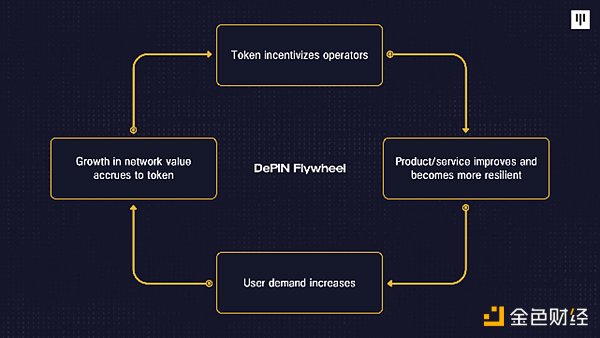
  • 更好的产品和服务——一个强大的DePIN飞轮有可能会创造出比中心化对手更好的产品。随着用户需求的增加,增长被具有强大价值累积机制的代币所捕获。这些代币反过来又激励更多的运营商做出贡献,进一步改进产品并吸引更多用户。这就是DePIN飞轮。
wcYFxSKSjpj4mWAZnKrgM4pB6pU0u8jbRpqCbD7S.png

我们相信DePIN具有光明的前景,但我们也知道它并非没有挑战。诸如监管障碍、潜在安全问题以及对广泛采用的依赖等问题都是潜在的障碍。然而,它的潜在好处使它成为一个值得探索的概念。

3DePIN项目案例研究

下面我们将分享两个对DePIN革命前沿项目的案例研究。

1GEODNET

GEODNET正在构建全球最大的去中心化的Real Time Kinematics(RTK)网络,该网络由卫星矿工社区提供支持,以实现大规模物联网。它正通过建立一个可负担的全球性的去中心化实时数据市场来颠覆现有企业。

以下是我们的总体投资理论:

  • 产品差异化:GEODNET的RTK网络可提供更好的GPS数据(精确度为1厘米,而标准GPS的精确度是2米),而且价格更便宜(便宜10倍以上),其全球范围内的社区网络可以让扩展更快。

  • 巨大的市场:全球卫星导航系统(GNSS)是一个规模超过2000亿美元的市场。Trimble(市值150亿美元)和Hexagon(市值300亿美元)等上市公司的营收为100亿美元,息税折旧摊销前利润(EBITDA)为30亿美元。

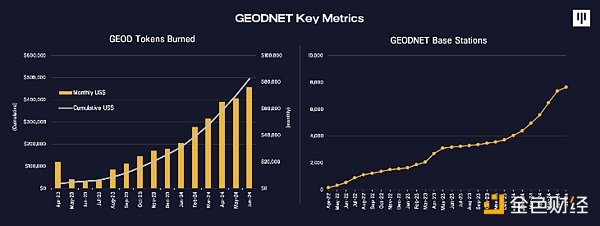
  • 增长飞轮:通过购买和安装GNSS基站为网络做出贡献,矿工可以赚取GEOD代币。这些激励措施已经促使5500台设备被添加到GEODNET网络中,比其任何一家大型上市竞争对手都要多。

  • 发展动力:在不到三年的时间里,GEODNET的经常性收入已经达到约百万美元,网络矿工数量超过7600名,已赶上或超过上市公司的网络规模。

  • 价值累计:80%的GEODNET收入用于购买和燃烧GEOD代币。

UqyCTpT62W0ma6W6mVbW5Js1NhGK3AlejuJymnsc.png

2Hivemapper

Hivemapper是一个去中心化地图网络,它使用加密货币激励措施来众包高质量的最新全球地图数据。Hivemapper旨在利用社区贡献,通过提供更新、更全面、更经济的地图数据,颠覆由中心化技术巨头主导的数字地图市场。

以下是我们的总体投资理论:

  • 长期趋势:由于企业、物流和新兴的高级驾驶辅助系统(ADAS)或自动驾驶领域的需求不断增长,数字地图市场正在迅猛增长,预计到2026年将达到370亿美元。

  • 竞争优势:Hivemapper的众包模式使地图数据更新速度快20-100倍,与竞争对手的传统测绘方法相比,具有显著的成本优势(例如,每个贡献者成本约为300-550美元,而每个谷歌地图工具成本为50万美元)。

  • 基本成果:Hivemapper有近15万名贡献者,已经绘制了超过1438万公里的非重叠道路,占全球非重叠道路的24%,速度比谷歌地图快5-6倍。该网络还获得了多个企业客户,在链上收入上也有所反映。

  • 催化剂:今年推出的Hivemapper Bee行车记录仪显著提高了数据质量和用户体验。ADAS的采用增长,自动驾驶汽车数量越来越多,再加上欧盟新法规要求车辆配备智能速度辅助系统,这些都是对更新、更详细的地图数据需求的长期驱动因素。

  • 主要风险:来自大型老牌企业的竞争、跨司法管辖区数据收集的监管挑战、新兴市场贡献者的前期成本高昂,以及管理复杂的代币奖励系统的执行风险。

Пов'язані матеріали

EF's Epic Reorganization: 20% Layoffs, Budget Halved, Is Ethereum Gearing Up for a Leaner Future?

The Ethereum Foundation (EF) has announced a major organizational restructuring, involving a 20% staff reduction (approx. 54 employees) and a division into functional clusters like Protocol, Access, User, Community, and Institutional layers. Co-founder Vitalik Buterin further revealed plans to cut the EF's budget by around 40% over the coming years, aiming to reduce its annual spending rate from about 15% to roughly 5% by 2030, transitioning to an endowment-driven model. This overhaul is seen as a long-overdue correction to the EF's ambiguous role. As Ethereum grew, the foundation faced persistent criticism over ETH sales, perceived lack of execution, and unclear strategy, often becoming a focal point for community frustration amid ETH's price stagnation. The reform aims to redefine the EF's boundaries, narrowing its focus to core protocol research, public goods funding, and ecosystem coordination, while offloading more applied development work to the broader market. Concurrently, ecosystem forces like the newly formed Ethlabs (founded by ex-EF researchers) and other independent groups are stepping in to fill the space, signaling a shift from a centralized model to a more distributed, collaborative ecosystem structure. The move was notably praised by Solana co-founder toly, who viewed a "leaner" EF as potentially more decisive and agile.

Odaily星球日报35 хв тому

EF's Epic Reorganization: 20% Layoffs, Budget Halved, Is Ethereum Gearing Up for a Leaner Future?

Odaily星球日报35 хв тому

Dragonfly Partner Haseeb: The Fastest-Growing Companies of the Future May All Get Stuck at 149 Employees

Dragonfly partner Haseeb explores the distorted economics of AI model pricing, drawing parallels to tax policy. He notes that startups and small teams (under 150 users) enjoy heavily subsidized, fixed-price AI subscriptions (like Claude Code), where the marginal cost of an additional token is effectively zero. This creates a powerful incentive for them to maximize token usage ("token-maxxing") and innovate aggressively with AI automation. In contrast, large enterprises (over 150 users) are forced onto "Enterprise" plans, paying per-token API fees with high (~75%) markups. This acts like a steep "tax" on AI-powered labor, disincentivizing marginal automation and experimental use, and encouraging them to retain more human workers. Haseeb argues this pricing creates a "150-person cliff," a regulatory notch similar to labor laws in France that discourage firms from growing past 50 employees. He predicts the fastest-growing future companies may deliberately cap their headcount at 149 to avoid the punitive enterprise pricing. This would foster an "AI-first" management philosophy obsessed with automation and outsourcing to stay lean. While not intentionally designed, this bifurcated pricing could become one of the most influential de facto tax policies, shaping how AI replaces labor—not through mass layoffs at big firms, but through agile, AI-native startups outcompeting them.

marsbit47 хв тому

Dragonfly Partner Haseeb: The Fastest-Growing Companies of the Future May All Get Stuck at 149 Employees

marsbit47 хв тому

How xBubble Breaks Through in the VC-Heavily-Backed OPC Economy

xBubble: Addressing the Structural Gap in the VC-Backed OPC Economy The concept of OPC (One Person Company) is evolving from a buzzword to a significant AI-driven market. While AI coding tools like Replit and Lovable have validated demand from non-technical users wanting to build applications, a key gap remains: the leap from creating a demo to running a stable, evolving business. These tools still require users to manage the development process, including technical judgments for integrations, modifications, and deployments—a major hurdle for OPCs. xBubble, by DAPPOS, tackles this by shifting from "Prompt-to-Code" to "SOP-to-Business." Instead of generating code from instructions, its core is a system of pre-organized SOPs (Standard Operating Procedures) that translate business goals—like "sell World Cup merchandise"—into complete, executable workflows. This includes generating cohesive assets, pages, payment systems, and backend logic. The platform is augmented by a network of third-party service providers who handle infrastructure (hosting, domains, payment setup), acting like "on-site service engineers." Users can pay for these services directly with xBubble credits, simplifying onboarding. This ecosystem aims to deliver not just an app, but a complete, modifiable business launch path. xBubble targets a clear OPC segment: small commercial nodes (e.g., creators, merchants) with existing products, customers, or channels, but for whom a full tech team is unjustifiable. Its potential lies in SOPs accumulating expertise from real cases, improving reliability and reducing delivery costs over time. Additionally, its native support for crypto payments caters to global or digital-native OPCs. In summary, as AI democratizes software creation, xBubble's opportunity is to prove that "SOP-to-Business" provides more immediate value for launching a real, operational business than a powerful but unstructured AI coding tool.

链捕手49 хв тому

How xBubble Breaks Through in the VC-Heavily-Backed OPC Economy

链捕手49 хв тому

If It's Not a Clear Yes, It's a No: A Nine-Year Retrospective by a VC Who Survived Four Cycles

**"Invest Only When Certain": A Nine-Year Retrospective from a VC Across Four Cycles** IOSG founder Jocy shares hard-earned lessons from nine years and over a hundred investments in Web3. The core challenge isn't identifying successful founders, but understanding why talented founders with solid ideas still fail. Through building a "failed founder database," IOSG identified six recurring failure patterns. **Founder Trait Red Flags:** 1. **Emotionally Unstable:** Founders who react defensively to criticism or publicly lash out under pressure (e.g., 80% drawdowns) often fail. Resilience is key. 2. **Lacking Hunger / Having a Fallback:** Founders with significant safety nets (family wealth, cushy fallback jobs) may lack the "do-or-die" commitment needed to survive crypto's brutal cycles. 3. **Unchecked Ego:** Includes "polished execution machines" who excel in known frameworks but struggle when paradigms shift, and "professor-types" who are technically brilliant but resistant to commercial feedback or coaching. **Project Structure Red Flags:** 4. **Token-First, Not Product-First:** Treating the token solely as a fundraising tool with no real utility or connection to product value is a major warning sign. The project should have value even if the token goes to zero. 5. **No Day-1 Exit Thesis:** Founders must have a clear, staged capital strategy from the start, understanding what each funding round needs to prove to unlock the next. "Exit before entry" is crucial. 6. **No Full-Cycle Experience:** Founders who haven't lived through a complete crypto bull/bear cycle (e.g., 2018, 2022) often underestimate their vulnerability. IOSG limits initial checks for such teams to $250k, sizing for risk. **The Positive Flipside: Desirable Founder Traits** The ideal candidate exhibits: obsessive problem-depth, being a second-time founder with a non-consensus vision, strong communication skills with *controlled* ego, relentless perseverance, and a global perspective with agency and taste (increasingly vital in the AI era). **Three Survival Tips for Founders:** 1. **Cash Flow Over Narrative:** Real revenue is what sustains projects, not vanity metrics. 2. **Tokens Are a Liability:** Avoid issuing a token unless absolutely necessary. The hidden costs (market making, liquidity, compliance) are immense, often a multi-million-dollar burden. 3. **Respect Liquidity:** Sell during peaks to build treasury, buy back to support the protocol during troughs. Be realistic about valuations and your ability to deliver for the next round. The final principle is simple yet paramount: **"If it's a borderline 'yes' or 'no,' don't invest."** In an industry that reinvents itself every few years, the discipline to consistently say "no" is the ultimate secret to longevity.

Foresight News1 год тому

If It's Not a Clear Yes, It's a No: A Nine-Year Retrospective by a VC Who Survived Four Cycles

Foresight News1 год тому

Торгівля

Спот
Ф'ючерси
活动图片