低调上线慢牛上涨,WXT如何成为用户「金铲子」?

Odaily星球日报Опубліковано о 2024-07-11Востаннє оновлено о 2024-07-11

Анотація

WEEX将继续以提供安全、隐私保护和用户友好的交易服务为使命,构建一个涵盖多元化应用的区块链金融生态系统。

近日,WEEX 交易所的平台币 WEEX Token (WXT) 正式上线。

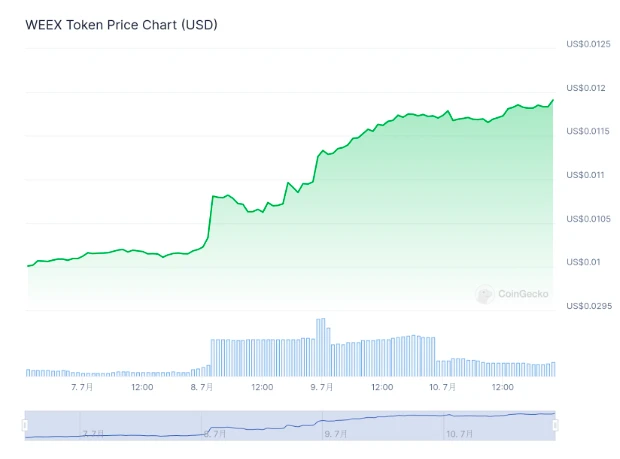
时逢加密市场持续调整,不少山寨币已跌回熊市,市场如惊弓之鸟,WXT 在此时上线似乎有些生不逢时。但 WXT 上线后只经过短暂的洗盘便日拱一卒地稳步攀升,截至目前累计上涨 20% ,在当前一片恐慌的市场氛围中彰显平台币的蓝筹底色和价值支撑。
低调上线慢牛上涨,WXT如何成为用户「金铲子」?

WXT 币的价值支撑是什么?适合长期持有吗?有哪些方式可以获得 WXT 空投?本文将结合白皮书对 WXT 的代币经济模型、持有者权益、通缩机制等进行详细介绍。

价值支撑:WXT 成为「金铲子」

发行 WEEX Token (WXT) 的初衷是为了践行 WEEX 「用户至上,合作共赢」的承诺,将平台发展红利与用户和合作伙伴共享,同时借助 WXT 绑定更多忠实用户和合作伙伴,实现 WEEX 平台持续长远发展。

为此,WXT 被赋予一篮子持币福利,包括:

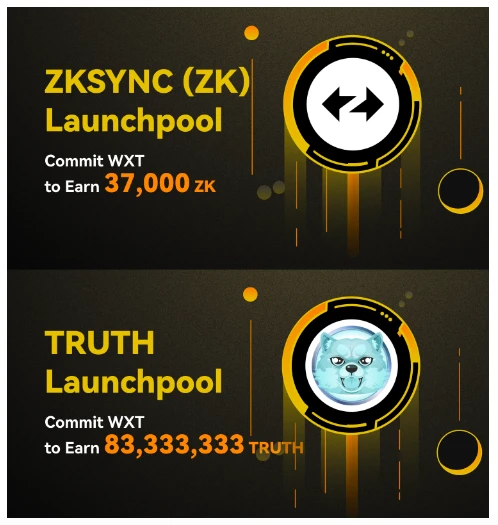
Launchpool:用户质押 WXT 即可参与 WEEX Launchpool 项目挖矿,免费获得热门代币空投。截至目前,WEEX 已举办 2 期 Launchpool 活动,分别送出 83, 333, 333 TRUTH 和 37, 000 ZK。
低调上线慢牛上涨,WXT如何成为用户「金铲子」?

Launchpad:持有 WXT 的用户可优先参与 WEEX Launchpad 新币发行。根据 WEEX 2024 年 Launchpool & Launchpad 计划,持有 WXT 的年化收益率高达 64% 。

费率折扣:使用 WXT 抵扣 WEEX 现货交易手续费,可享 30% 费率折扣;持有一定数量 的 WXT,还可享受专属的梯度合约手续费折扣(当前为 20% )。

邀请奖励升级:持有 100, 000 WXT 超过 30 天,邀请奖励增加 15% 。

VIP 尊享:持仓超过 1, 000, 000 WXT 的用户,专享大额充提币加速服务。

阳光普照:持有 WXT 的用户可参与瓜分热门代币空投,包括各类项目 token、USDT 体验金等。

持币生息:WXT 持有者未来可在特定理财产品上赚取额外的利息奖励。

投票上币:持有一定数量的 WXT 享受上币特权。

这一系列持币权益,使 WXT 成为获取空投、手续费减免、奖励升级的「金铲子」,将为持有者持续带来财富收益,浇筑 WXT 的价值基石。

生态基石: 55% WXT 激励社区

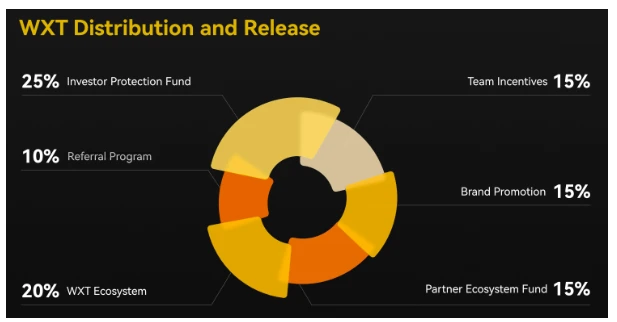
WXT 被设定为全球生态激励通证,用于激励 WEEX 交易所社区的合作伙伴、贡献者、先驱和活跃成员。从代币经济模型来看, 55% 的代币将分配给活跃用户、合作伙伴及团队贡献者,并设置了长达 10 年的锁定期,以确保 WEEX 长期战略和阶段性目标有序实现。

活动拉新:10 亿 WXT(10% ),每年释放 1% ,已释放 0.25% 。用于拉新奖励和激励新用户,确保 WEEX 用户和交易量增长速度。

品牌推广:15 亿 WXT(15% ),每年释放 1.5% , 2024 年 12 月开始释放。用于 WEEX 品牌建设和媒体伙伴联盟计划,旨在吸引行业媒体和 优质 KOL 合作,提升 WEEX 及 WXT 的品牌知名度和透明度。

合作伙伴生态基金:15 亿 WXT(15% ),每年释放 1.5% , 2024 年 8 月开始释放。用于回馈 WEEX 交易所合作伙伴,激励长期合作,共享收益。

团队激励:15 亿 WXT(15% ),每年释放 1.5% , 2025 年 4 月开始释放。用于吸引和留存 Web3 顶尖人才,激励团队成员努力实现关键绩效目标和 WEEX 长期发展战略。

其余 45% 包括 WXT 生态基金 ( 20% ,年释放 2% ) 和 WEEX 投资者保护基金 ( 25% ),前者用于支持 Web3 初创项目,与生态伙伴共同成长;后者用于增厚 WEEX 投资者保护基金,保障用户资产安全,让用户交易安心无忧。
低调上线慢牛上涨,WXT如何成为用户「金铲子」?

从分配机制来看, 50% 以上的 WXT 都将分配给社区和 WEEX 交易所生态伙伴。未来随着 WEEX 用户规模和生态的不断增长,WXT 的持币将不断分散和去中心化、民主化。

从释放周期来看, 75% 的 WXT 锁仓期长达 10 年,超过了至少两轮加密牛熊周期;其余 25% (投资者保护基⾦)虽未设置锁定期,但这部分资金显然也属于长期持有,仅在出现异常情况时用于补偿用户资金的意外损失。

这意味着,WXT 短期内不存在释放压力,有利于维持币价稳定和实现市值管理目标。这样的机制设计也体现了 WEEX 谋求交易平台和生态社区长期繁荣的初衷,坚定团队的「长期主义」信念。

极致通缩: 90% WXT 回购销毁

WXT 最大供应量 100 亿枚,这个数字看着很高,但白皮书承诺,WEEX 将定期拿出平台利润的一部分从二级市场回购 WXT 并永久销毁,直至总供应量最终减少至 10 亿枚,以增强其稀缺性,保证持币者的长期价值回报。回购详情和销毁记录将在区块链上永久公开,确保透明度和市场信任。这将对 WXT 的长期价值产生积极影响,并增强其生态系统。

作为全球 Top 10 衍生品交易所,WEEX 拥有超过 200 万注册用户,市场覆盖全球 30 多个国家和地区,日均交易量超 10 亿美元,平台早在 2022 年「加密寒冬」就开始实现稳定盈利,并保持月均交易量 100% 的高增长。

顶级实力和高速增长为 WXT 的回购销毁提供了坚实保障,而 90% 的通缩目标则意味着 WXT 将在市场合理估值的基础上升值 10 倍,无疑为其币价保持长期坚挺注入了强大信念。

自 2018 年以来,WEEX 团队怀揣「让区块链技术普惠大众」的热忱信念,穿越多轮牛熊,深耕加密货币交易赛道,在加密资产的全周期运营中积累了深厚的市场经验。凭借安全易用、专业合规的服务体验,以及交易深度、一键跟单等产品优势,WEEX 快速成长为一个开放、透明、公正、可信赖的黑马交易平台。

如今,WXT 上线后绑定越来越多的生态合作伙伴,将为 WEEX 的增长飞轮增添新的驱动引擎,实现交易所和平台币相互赋能的协同机制。比如,WEEX 季度总交易量排名前 50 的用户,可以以 20% 的折扣限额认购 WXT,既为 WXT 带来大量优质买盘,又通过激励提升了 WEEX 的整体交易量和用户活跃度。

WXT 当前正在开展合伙人 Presale 和用户「剪彩活动」,合伙人邀请新用户注册赚取积分,根据积分占比解锁 WXT 7 折认购额度;新用户完成注册、KYC、充值、合约交易等任务即可领取 WXT 空投,单人最高可获得 198, 700 WXT。

展望未来,WEEX 将继续以提供安全、隐私保护和用户友好的交易服务为使命,借助平台币 WXT,构建一个涵盖多元化应用的区块链金融生态系统,推动加密货币行业的创新与发展,并与百万用户和合作伙伴共创共享 Web3 发展红利。

WEEX 官网:www.weex.com

WTX 专区:www.weex.com/wxt

WEEX 华语社区:https://t.me/weex_group

WEEX 官方 X:https://twitter.com/WEEX_Official

Пов'язані матеріали

Hackers Steal Nearly $17 Million in 40 Days as 'Zombie Contracts' Become Their ATMs

According to an analysis published by ZeroDrift on June 22, 2026, attackers have stolen approximately $16.9 million over 40 days from five deprecated but still operational smart contracts across various blockchains. The primary issue is not a specific vulnerability but the incomplete decommissioning of legacy contracts. These "zombie contracts" often retain economic value, operational permissions, and callable functions, making them prime targets long after teams cease active development. The most significant loss occurred at DxSale, where an old locker contract lost about $7.3 million due to a forgotten control path becoming accessible again. Other affected projects include TrustedVolumes (~$5.87M), Raydium's legacy AMM pool (~$1.34M), Aztec Connect (~$2.28M), and Huma Finance V1 pool (~$101k). These incidents involved diverse systems—RFQ settlement, credit pools, liquidity lockers, AMMs—demonstrating the widespread nature of the risk. The analysis highlights that automated tools are lowering the cost for attackers to systematically scan for these long-tail targets, which have public code and weaker monitoring. In contrast, defensive practices for contract retirement remain underdeveloped. While the DeFi industry has mature audit processes for new deployments, it lacks strict protocols for securely sunsetting old contracts, which only become truly "retired" after all funds, permissions, authorizations, and trust assumptions are removed.

marsbit5 хв тому

Hackers Steal Nearly $17 Million in 40 Days as 'Zombie Contracts' Become Their ATMs

marsbit5 хв тому

Valuation Rout of Old Titans: The Demise of a Generation's Asset Valuation Framework

"The Old Titans' Valuation Collapse: The Death of an Era's Valuation Framework" Between Alibaba's 2014 NYSE debut at $93.89 and its 2026 price of ~$95, twelve years have passed with zero price appreciation. This stagnation symbolizes a wholesale valuation reset for an entire generation of Chinese internet assets. Companies like Tencent, Pinduoduo, Meituan, Bilibili, and Kuaishou have seen catastrophic declines of 80-98% from their peaks. The core question arises: what framework now prices these companies, or has the framework itself expired? The valuation logic for Chinese internet stocks followed a clear "anchor-setting and anchor-removing" process. From 2014-2017, the dominant narrative was "US comparable discounting" – applying a growth premium and governance discount to US peers' multiples. This anchor loosened with the 2018 US-China trade war and the VIE structure risk, then was violently uprooted by the 2020-2021 regulatory crackdowns (Ant Group, Didi, anti-monopoly fines). The 2022 delisting panic and subsequent 2025-2026 geopolitical shocks (US military lists, AI espionage accusations) completed the demolition. The old "US对标打折" model is dead. However, this is not solely a China story. A structural mirror exists in US "old titan" stocks ("老登股"). In 2026, even Microsoft – with robust fundamentals – saw its PE compress from a 34x median to 22x, its worst performer status among the "Magnificent Seven" driven by a $190 billion annual AI capex crushing free cash flow. The core dilemma is universal: legacy platform giants, whether Alibaba or Microsoft, are spending colossal sums to chase an AI paradigm that may颠覆 their own high-margin, user/subscription-based business models. They have shifted from "companies defining the future" to "companies needing to prove they won't be淘汰ed by the future." This phenomenon of a dying valuation坐标系 has a historical precedent: post-1989 Japan. After its bubble burst, the "Japan premium" narrative ("most efficient manufacturing + perpetual growth") collapsed. A 25-year valuation vacuum ensued until Warren Buffett provided a new language in the 2010s: "low valuation + high dividend + governance reform." China's internet sector is now in a similar vacuum six years into its reset. While different from Japan's deflationary context, the parallel is clear: the old macro assumption of "deep integration with global capital" is falsified, but a new pricing framework is absent. Potential "new languages" for Chinese internet valuations are contradictory. AI transformation requires gutting profitable core businesses (e.g., Alibaba's ad-driven e-commerce) for an unproven consumption-based model, risking a Microsoft-like cash flow crunch. Alternatively, shareholder returns (buybacks/dividends) could build a floor, following Buffett's Japanese playbook, but current scales are insufficient to form a standalone anchor. The current state mirrors mid-1990s Japan: the old framework is dead, the new one unborn. The market waits in a vacuum for a重新定义ing force – a person, event, or proven business model shift – to answer "why buy." This may only be the middle phase of a prolonged re-rating.

marsbit12 хв тому

Valuation Rout of Old Titans: The Demise of a Generation's Asset Valuation Framework

marsbit12 хв тому

STRC Trading at Significant Discount, mNAV Falls Below Break-Even, Strategy's Valuation Logic Has Been Rewritten

Title: STRC Deeply Discounted, mNAV Falls Below Break-even, Strategy's Valuation Logic Redefined The recent volatility in MSTR and STRC highlights the need to reassess the core business model of Bitcoin reserve companies. These entities function more like leveraged, single-asset banks rather than software/tech firms. Consequently, they should be valued using banking metrics, not based on their total Bitcoin holdings. The key valuation metric is mNAV (market net asset value), akin to a price-to-book ratio. It compares the company's market capitalization to the equity value of its Bitcoin holdings after deducting all senior debt and preferred equity (like STRC). As of June 24, Strategy's mNAV was 1.10x. The focus should be on "net Bitcoin per share" (the Bitcoin claim per share after senior claims) and its growth rate, equivalent to a bank's book value and return on assets. Given STRC's 19% discount to its $100 par value (yielding 14.2%), issuing new MSTR equity at the current price to buy more Bitcoin is inefficient. It slightly dilutes the widely watched "total Bitcoin per share" metric while providing minimal improvement to the more critical "net Bitcoin per share." The article analyzes four potential uses for $1 billion in new equity: 1. **Buy Bitcoin:** Least effective. Improves net Bitcoin per share only marginally while diluting total Bitcoin per share. 2. **Repurchase STRC:** Most effective for balance sheet repair. The discount creates immediate value, increasing net Bitcoin per share by 1.0%, reducing debt burden, and lowering future dividend obligations. 3. **Boost Cash Reserves:** Dramatically improves the "cash coverage ratio" for STRC dividends from 9.8 months to 16.8 months, a crucial liquidity metric in a tightening funding environment. 4. **50/50 Split (STRC buyback & cash):** A balanced approach improving all key metrics. Strategy's own Q1 report indicates its internal break-even mNAV for profitable equity issuance to buy Bitcoin is 1.22x. With the current mNAV at 1.10x, such a move would be value-destructive. The core assumptions of its previous expansion model—issuing STRC at par and maintaining ample dividend coverage—have broken down. The recommended path is to use new capital to optimize core financial health: repurchasing discounted STRC and/or bolstering cash reserves. This would repair the balance sheet, signal liquidity strength, support STRC's price, lower its yield, and potentially reopen the par-value issuance channel. The current STRC discount represents a low-cost capital opportunity to restart this positive cycle. Bitcoin reserve companies must be evaluated as banks, focusing on book value, leverage, and liquidity resilience.

Foresight News13 хв тому

STRC Trading at Significant Discount, mNAV Falls Below Break-Even, Strategy's Valuation Logic Has Been Rewritten

Foresight News13 хв тому

Торгівля

Спот
活动图片