175-Year-Old Western Union: Not Just Playing with Stablecoins, but Also Acquired a Digital Wallet

marsbitОпубліковано о 2026-04-07Востаннє оновлено о 2026-04-07

Анотація

At 175 years old, Western Union, the global money transfer giant, is undergoing a significant digital shift. After a failed 2018 experiment with Ripple's XRP due to high costs, the company is now aggressively embracing blockchain and digital assets. In April 2026, Western Union acquired Singapore-based digital wallet Dash from Singtel, marking its first digital wallet asset in the Asia-Pacific region. Dash, with 1.4 million users, offers a full suite of services including payments, remittances, savings, insurance, and investments, deeply integrated into Singapore's local life. This move is part of a broader strategy to modernize its legacy business. While Western Union's vast network of over 500,000 physical agent locations remains its backbone, it is also its biggest cost burden. The company faces intense competition from digital-native rivals like Wise and Remitly, which offer significantly lower fees. To compete, Western Union is building a "Digital Asset Network." A key component is its own USD-pegged stablecoin, USDPT, issued on the Solana blockchain in partnership with Anchorage Digital. It is also piloting a stablecoin-linked Visa card with Rain for users in high-inflation countries like Argentina, allowing them to spend or cash out dollars at its agent locations. The acquisition of Dash represents a fundamental change: moving from being a transient "pipe" for money transfers to building a destination where users stay. Dash provides a trusted, established platform ...

Original author: angelilu, Foresight News

In 2018, Western Union conducted a small experiment. They integrated Ripple's cross-border payment product xRapid, using XRP tokens to settle exchanges between the US dollar and the Mexican peso. A total of 10 transactions were tested. After the test, the then CEO publicly stated: Too expensive, did not save any costs. The experiment was paused.

On April 3, 2026, Western Union announced the completion of the acquisition of the Singaporean digital wallet Dash. Dash was originally under Singapore Telecommunications, with 1.4 million users, supporting payments, remittances, savings, insurance, and investments, making it one of the most widely used all-in-one wallets in Singapore. This is the first digital wallet asset acquired by Western Union in the Asia-Pacific region.

Eight years, from "blockchain is too expensive" to issuing its own stablecoin on Solana and now starting to layout crypto wallets, Western Union is quietly undergoing a rebuild.

Western Union's 175 Years

Domestic users may rarely use Western Union and may not even be sure what the name represents. But in over 200 countries and regions worldwide, especially in immigrant communities in Southeast Asia, Latin America, and South Asia, Western Union is almost synonymous with "sending money."

It was founded in 1851, 20 years earlier than China's first telegraph line. It started as a telegraph business, building the first transcontinental telegraph line in the United States. In 1871, it began offering remittance services, using "telegraph transfers" to allow people, for the first time, to send money to another city without carrying cash or being physically present.

More than 170 years later, the core logic remains unchanged: Western Union maintains over 500,000 physical agent locations worldwide, mostly small supermarkets, convenience stores, and post offices. People walk in, fill out a form, hand cash to the counter, and the recipient can withdraw the money at another location. This network covers areas almost untouched by the banking system—immigrant workers without bank accounts, people without access to credit cards, and families in remote areas relying on remittances from relatives.
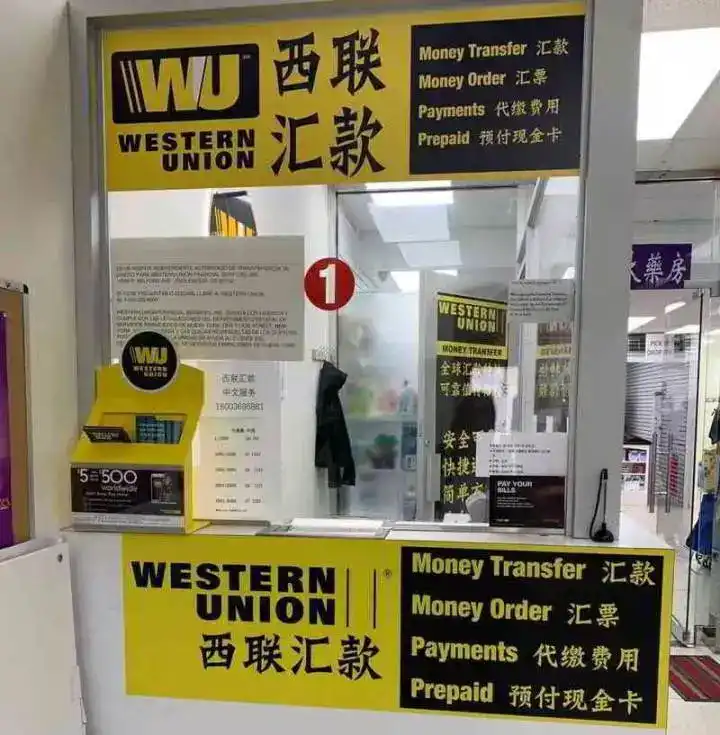
But this network is also Western Union's heaviest burden. The cost of maintaining 500,000 agent points accounts for about 60% of its service costs. Its core customer base—cash-dependent remittance senders—is being eroded by generations of digital-native products. Wise's cross-border transfer fees are 60% to 80% lower than Western Union's; Remitly's revenue reached $1.635 billion in 2025, a 29% year-on-year increase, with 9 million active users. Although Western Union's digital revenue is also growing, it still only accounts for 35% of total C2C revenue, with the vast majority of profits still from users who walk into physical locations and pull out cash.

Western Union is being caught up, and it knows it.

Moving Remittance Paths On-Chain with Stablecoins

In October 2025, Western Union announced it would issue the stablecoin USDPT on Solana, with the issuer being the US-licensed crypto bank Anchorage Digital. As of April 2026, USDPT has entered the actual deployment phase. At the same time, Western Union is building a "Digital Asset Network," connecting multiple on- and off-ramp platforms, aiming to allow users holding any mainstream crypto assets to exchange them for cash through Western Union's network.

A more specific landing scenario is its partnership with Rain to issue a Visa card linked to stablecoins. This card is designed for high-inflation countries, a Visa card tied to a US dollar stablecoin, specifically targeting countries like Argentina and Zimbabwe, where the local currency depreciates by tens or even hundreds of percentage points annually. Western Union CFO Matthew Cagwin mentioned at an industry conference, "Argentina's inflation exceeded 200% last year. After locals obtain US dollar stablecoins, they can directly spend at merchants or walk into Western Union locations to withdraw cash." The final step still relies on that network of 500,000 cash points.

Wallets Are the Real Battlefield

For the past 170-plus years, Western Union has played the role of a "pipeline" in remittances: money flows in from one end and out from the other, used and then gone. Users are not in Western Union's app, nor in Western Union's accounts; they are just passing through. What Wise and Remitly are taking is precisely that time users spend staying—people are getting used to keeping money in digital wallets, where transfers are just one action, not the entirety.

The acquisition of Dash is Western Union's first real attempt to keep users.

Dash was launched by Singapore Telecommunications in 2014 and is deeply embedded in Singapore's local life scenarios: paying utility bills, buying insurance, making small investments, and sending money to family overseas, all within one app. 1.4 million users represent a very high coverage rate for a city-state. More importantly, a large portion of these users are Southeast Asian immigrants working in Singapore, precisely Western Union's core customer group.

Western Union's previous way of reaching these people was to have them walk into convenience store counters. Now, it wants to move directly into their phones.

Dash brings not just users but also a front end for directly testing new products. After the USDPT stablecoin launches, one of the most natural distribution channels will be Dash's wallet interface; the stablecoin card for high-inflation markets also needs a trusted app to support it. Singapore, as a financial hub in Southeast Asia with a relatively mature regulatory environment, is the most suitable place for Western Union to first validate the logic before rolling out this suite of on-chain products across the Asia-Pacific region.


Пов'язані питання

QWhat was Western Union's initial experiment with Ripple's xRapid in 2018, and what was the outcome?

AIn 2018, Western Union conducted a small experiment by integrating Ripple's xRapid product to settle foreign exchange transactions between the US dollar and the Mexican peso using XRP tokens. After testing 10 transactions, the then-CEO stated that it was too expensive and did not save any costs, leading to the suspension of the experiment.

QWhat significant acquisition did Western Union announce on April 3, 2026, and why is it important?

AOn April 3, 2026, Western Union announced the acquisition of Dash, a Singapore-based digital wallet formerly owned by Singapore Telecommunications. With 1.4 million users, Dash supports payments, remittances, savings, insurance, and investments, and is one of the most widely used full-featured wallets in Singapore. This marks Western Union's first digital wallet asset in the Asia-Pacific region.

QHow does Western Union's traditional business model work, and what are its main challenges?

AWestern Union's traditional model relies on a network of over 500,000 physical agent locations, such as small supermarkets, convenience stores, and post offices. Customers fill out a form and hand over cash, and the recipient can collect the money from another agent location. This network serves people without bank accounts or in remote areas. However, maintaining these agent locations accounts for about 60% of service costs, and the core customer base is being eroded by digital-native competitors like Wise and Remitly, which offer lower fees and digital convenience.

QWhat is USDPT, and how does Western Union plan to use it?

AUSDPT is a stablecoin issued by Western Union on the Solana blockchain, with Anchorage Digital as the issuer. It is part of Western Union's 'Digital Asset Network,' which connects multiple on- and off-ramp platforms. The goal is to allow users with any mainstream cryptocurrency to convert it into cash through Western Union's network. Additionally, Western Union partnered with Rain to issue a Visa card linked to the stablecoin, targeting high-inflation countries like Argentina and Zimbabwe, where users can spend the stablecoin at merchants or withdraw cash at Western Union agent locations.

QWhy did Western Union acquire the Dash wallet, and what strategic advantages does it offer?

AWestern Union acquired Dash to move beyond being a mere 'pipeline' for remittances and to retain users within its ecosystem. Dash, with its 1.4 million users in Singapore, is deeply integrated into local life scenarios like bill payments, insurance, investments, and remittances. It particularly serves Southeast Asian immigrants in Singapore, who are part of Western Union's core customer base. The acquisition provides a front-end to test new products, such as distributing the USDPT stablecoin and launching stablecoin Visa cards, making Singapore a strategic hub for expanding these blockchain-based products across the Asia-Pacific region.
Пов'язані матеріали

CPU Makes a Comeback to the Table, A $170 Billion "Power Seizure" Drama Begins

A new era is dawning for the server CPU (Central Processing Unit), driven by the shift from AI model training to large-scale reasoning and the rise of Agentic AI. This article explores how the CPU is reclaiming a central role in the AI data center. For years, the focus has been on the GPU (Graphics Processing Unit) for AI training. However, as AI moves to the inference and Agent phase—where tasks involve complex, multi-step reasoning, tool calls, and data management—the workload balance is flipping. Studies show CPUs now handle over 70% of the workload in Agentic AI, up from 10-30% in training. This is because Agent tasks generate massive intermediate data (KV Cache) that exceeds GPU memory, forcing it to be offloaded to the CPU's larger, more scalable memory pools. This increased importance is translating into market changes. Major players are taking note: NVIDIA launched its first standalone CPU line, Vera, based on ARM architecture and optimized for Agent performance. AMD doubled its server CPU market forecast to over $1200 billion by 2030. Analyst reports project the total server CPU market could reach $1700 billion by 2030, with AI-driven demand being a primary driver. Furthermore, the classic ratio of CPUs to GPUs in AI servers is rapidly changing, converging from 1:8 toward 1:1 for Agent deployments. This surge in demand has led to a rare industry-wide price increase of 10-15% for server CPUs from Intel and AMD, breaking a decade-long trend of "more performance for the same price." Demand is bifurcating into high-core-count CPUs for in-rack GPU support and moderate-core CPUs for standalone Agent task orchestration. In China, this global trend presents an opportunity for domestic CPU manufacturers like Hygon (海光信息) and Huawei Kunpeng, who are bolstered by both growing AI infrastructure needs and national policies promoting technological self-reliance ("xin chuang"). The maturity of their software ecosystems is also accelerating, evidenced by faster adaptation to new AI models. In conclusion, the narrative is shifting from a GPU-centric view to one where CPU-GPU synergy is critical. The CPU is no longer a peripheral component but a performance-defining bottleneck and a key growth driver in the AI hardware stack, opening a massive new market estimated in the hundreds of billions of dollars.

marsbit1 год тому

CPU Makes a Comeback to the Table, A $170 Billion "Power Seizure" Drama Begins

marsbit1 год тому

TechFlow Intelligence: AMD AI Director Publicly Criticizes Claude Code for "Becoming Dumber and Lazier", Trump Claims Full Ceasefire in Hormuz But Strait Still Has 80 Unexploded Mines

TechFlow Intelligence Report: This daily digest covers key developments in AI, crypto, hardware, and geopolitics. In AI, SK Telecom faces US export control scrutiny over its partnership with Anthropic, while a Gemini user reports being misled in a scam scenario, sparking safety debates. China's Z.AI launches the GLM-5.2 model, rivaling Claude Opus without NVIDIA chips. In crypto, Bithumb lists ReProtocol, and Upbit delists KernelDAO. On the hardware front, MIT researchers build a custom OS to study chips, ASML denies US claims its advanced lithography machines are in China, and Amazon considers selling its in-house AI chips. Apple's future A21 Pro chip may use TSMC's latest N2P process. Major tech issues include 10,000 GitHub repositories distributing malware and Apple patching a critical eavesdropping flaw in Beats earbuds. US stocks rise, led by semiconductors, with Intel surging 10.6%, while SpaceX falls 3.5%. Geopolitically, despite a US-Iran deal, the Strait of Hormuz remains risky with ~80 uncleared mines, stalling 80M barrels of oil on standby tankers. Iran postpones Switzerland talks, and Trump calls the agreement an "unconditional surrender." The report highlights a contrast: temporary geopolitical calm versus the ongoing, fundamental restructuring of tech supply chains and chip independence.

marsbit1 год тому

TechFlow Intelligence: AMD AI Director Publicly Criticizes Claude Code for "Becoming Dumber and Lazier", Trump Claims Full Ceasefire in Hormuz But Strait Still Has 80 Unexploded Mines

marsbit1 год тому

Торгівля

Спот
Ф'ючерси
活动图片