In late March/early April, the bitcoin futures basis had mounted an impressive recovery that pushed sentiment back into the positive. This had come after months of a declining futures basis, so this recovery was a welcome development in the market. This would prove to be short-lived, however, as the futures basis had taken a sharp nosedive in mid-April. Now, it is falling towards one-year lows, leaving in its wake a trail of wary investors.
Nearing One-Year Lows
Bitcoin’s drop back into the $30,000 has had a profound impact on the futures basis. As investor sentiment had turned largely negative, the basis had lost the majority of the gains it had made at the end of March. The decline did not stop there though as the basis has now broken towards one-year lows.
In the past year, there have been a total of two times where the basis had touched this low. The first had been on July 20th, 2021, which had been promptly followed by the famous summer short squeeze. It had come after major liquidations had pushed retail traders to try to recover losses by shorting the market.
The futures basis had fallen this low again on February 18th this year. The last time though, it had recovered before reaching the July 20th low, culminating in its recent peak in April. Unlike the July 20th low, a consolidation in the price of bitcoin had followed the February low. Therefore, not giving a clear, consistent picture of what to expect when the futures basis drops this low. It is however far less volatile now than it was last summer.
BTC futures basis close to one-year lows | Source: Arcane Research
The average futures basis now sits at a low of 2.12%, after touching as low as 2.02% on Sunday, in the offshores futures market. This takes into account all of the crypto futures exchanges except the CME. This time around, the decline in the futures basis is also characterized by liquidations, although nothing as significant as those experienced in July.
How Bitcoin Price Is Reacting
Bitcoin has been on a slow but steady recovery trend since falling to the $37,000 level. It is not unheard of that the digital asset quickly lose footing above $40,000 but a recovery with current market conditions is an impressive feat for bitcoin.
Going by previous occurrences of futures basis declining, a recovery from this point could be very good for bitcoin. The short-squeeze that had followed the July decline had effectively pushed the cryptocurrency towards a massive bull trend, ending in a new all-time high above $64,000 in November.
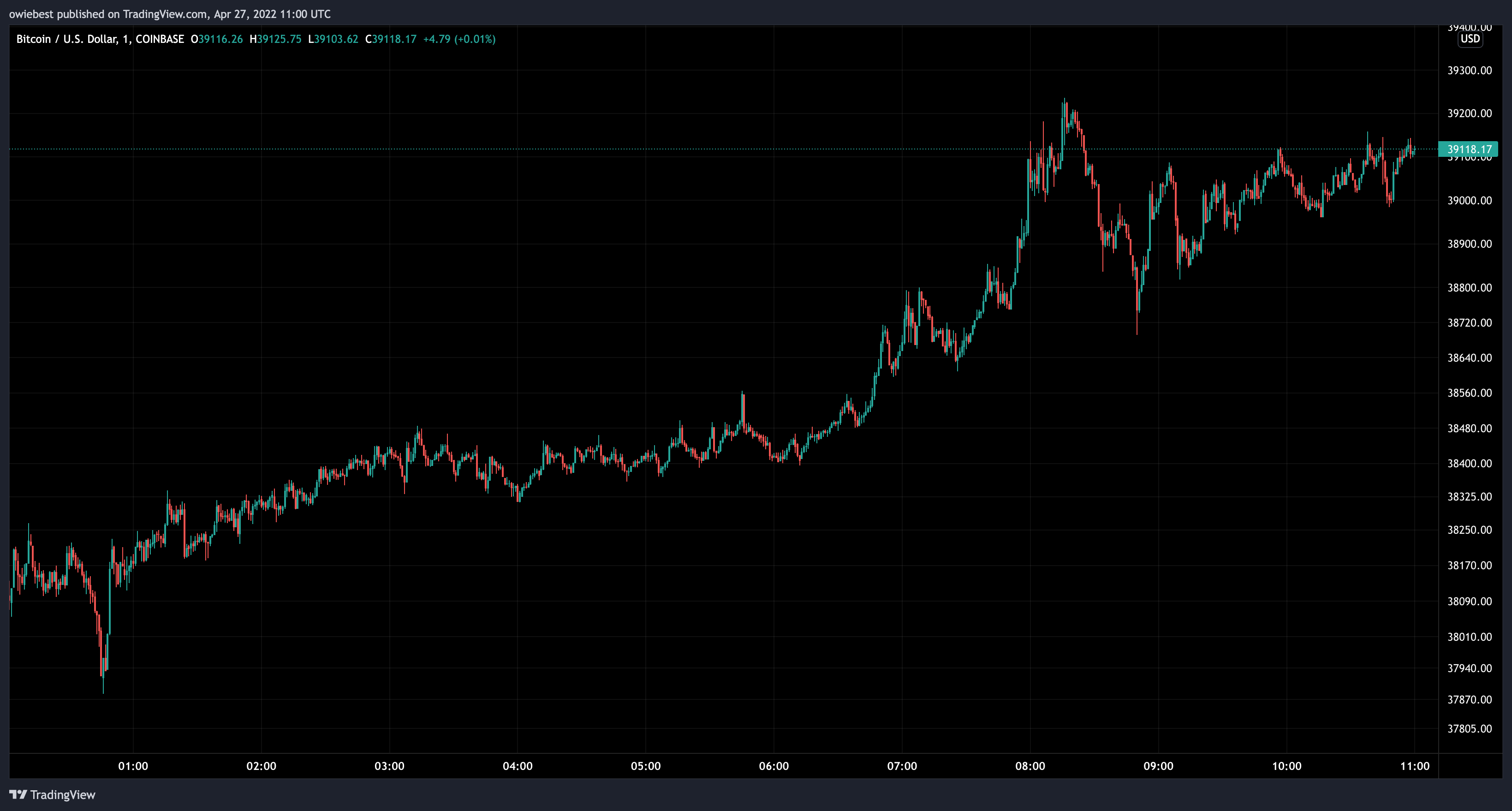
BTC holding against the bears | Source: BTCUSD on TradingView.com
A recovery had also marked the decline in February, albeit to a lesser extent. With the current trend of stagnating momentum, the futures basis may decline further for another week before a recovery towards a bull trend could be in the works.
Bitcoin is trading at $39,002 at the time of this writing. Bulls continue to mount strong opposition causing the $36,000 to $38,000 support level to strengthen.