Capture the Latest Opportunity: How ViaBTC Capital Picks the Promising GameFi Projects

newsbtcОпубліковано о 2022-04-14Востаннє оновлено о 2022-04-14

Анотація

Lately, the crypto market has been hit by certain short-term impacts as a result of Anton Nell and Andre Cronje’s...

Lately, the crypto market has been hit by certain short-term impacts as a result of Anton Nell and Andre Cronje’s departure from crypto. As the market pins its hope on new projects, investors are also in an urgent search for promising projects. ViaBTC Capital, a rising star in crypto investment, has started to invest in new crypto categories starting from late 2022. It has focused on GameFi, a small category that may promise huge returns. Analyzing on-chain/off-chain indicators and the gaming fundamentals, ViaBTC Capital is looking for the next hit in GameFi.
New opportunities amidst current tensions
Although the market now remains sluggish, some promising GameFi projects are still emerging. Turning challenges into opportunities, ViaBTC Capital is exploring a new crypto category with great potential. At ViaBTC Capital, investment strategies are never confined to the immediate interest. Instead, the institution focuses on long-term development. For example, from a long-term perspective, it helps cryptocurrencies capture the spotlight in global finance, which brings both challenges and opportunities.
The same also applies to the GameFi market. Though 2022 is still waiting for the appearance of phenomenal projects with worldwide impact, the GameFi category is merely a start from the viewpoint of the entire gaming market. Along with the progress of technologies such as blockchain, AR/VR, the Internet of Things, and the metaverse, GameFi mechanisms will grow more diversified in the future. This, coupled with the P2E model, allows GameFi to integrate life, entertainment, and work, which will broaden its growth prospect.
Finding the next hit in GameFi
Having noticed the potential of GameFi, ViaBTC Capital has made fast moves and invested in emerging projects, including four new GameFi projects (STEPN, Edenbrawl, Infinite launch, and AAG).

  1. STEPN

Official website: https://stepn.com/
STEPN is a Web3 lifestyle app with inbuilt Game-Fi and Social-Fi elements. Players will first need to purchase or rent NFT sneakers. In STEPN, you can make handsome earnings by walking, jogging, or running outdoors. STEPN is currently under the public beta phase.
With Game-Fi, STEPN aims to nudge millions toward a healthier lifestyle, combat climate change, and connect the public to Web 3.0 while building a SocialFi platform that fosters user-generated Web 3.0 content and promotes the Web 3.0 lifestyle.
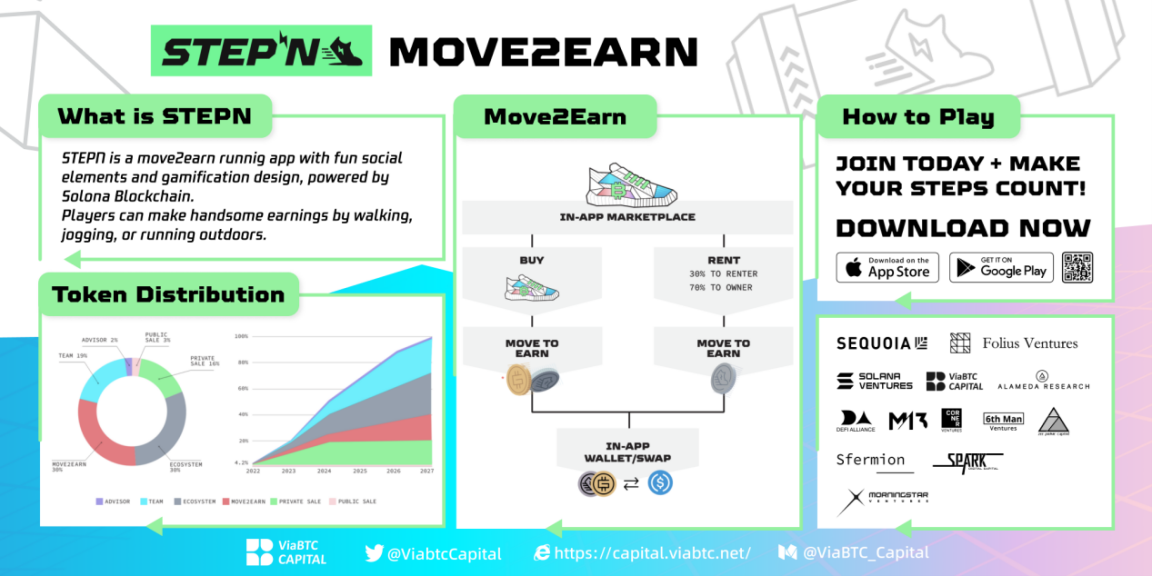
STEPN’s One Page

  1. Infinite launch

Official website: https://infinitelaunch.io/
Focusing on GameFi and NFTs Infinite Launch will be the first launchpad to have its own blockchain games to help new crypto adopters get acquainted with NFTs and Play-to-Earn models. Right now, three GameFi projects plan to go through IDO on Infinite Launch. In addition, the platform has also launched the NFT Whale Club.
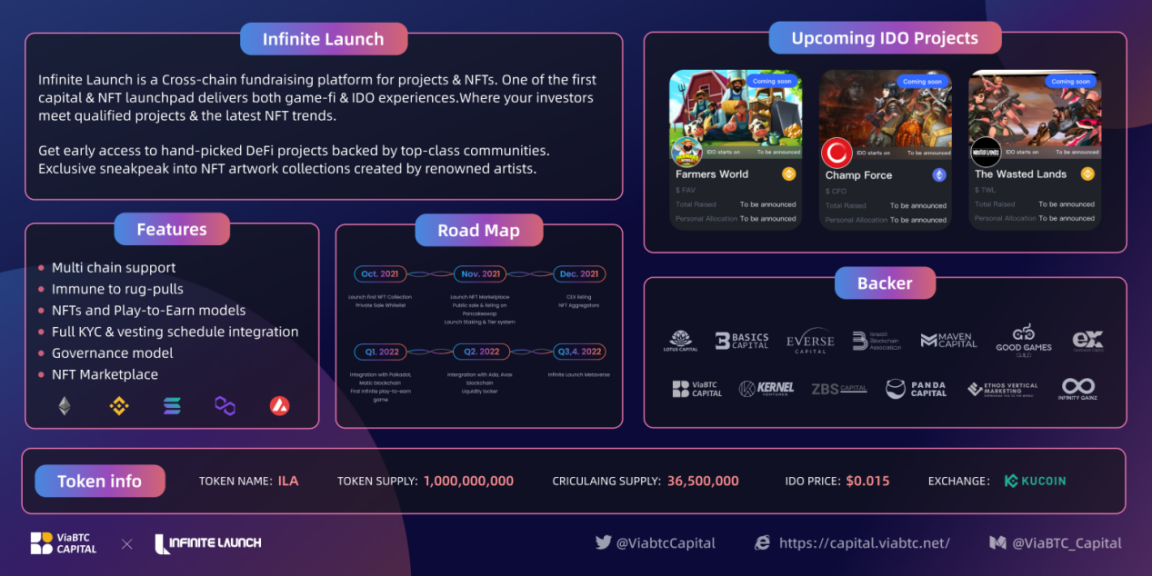
Infinite’s One Page

  1. Edenbrawl

Official website: https://www.edenbrawl.com/
Edenbrawl (formerly “Circuits and Shields”) combines the action combat of a brawler with the endless depth of a MOBA to create a “Mobrawler”. In Edenbrawl, players can kill or block their enemy or land the ball in the enemy’s “endzone” to win the 20-minute MOBA match.
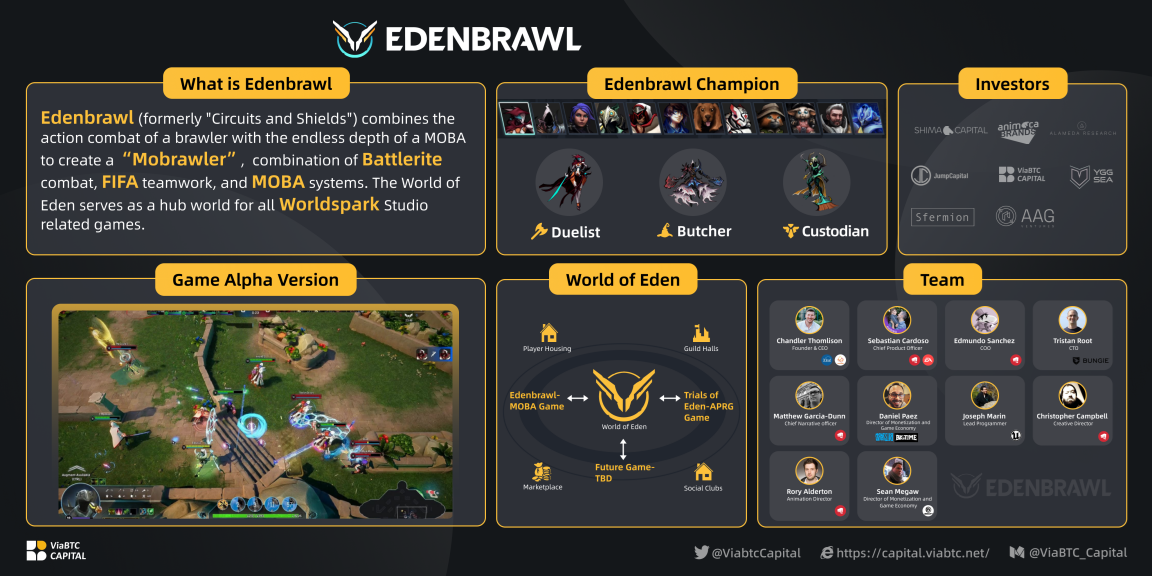
Edenbrawl’s One Page

  1. AAG

Official website: https://aag.ventures/
AAG, a one-stop platform for players, guilds, and investors, aims to create economic freedom for the unemployed worldwide through the metaverse economy. It is also one of the fastest-growing guilds in the P2E industry. As of 2021, AAG covered seven countries and created an environment where players, guilds, and investors could interact seamlessly and make earnings through the services it provides.
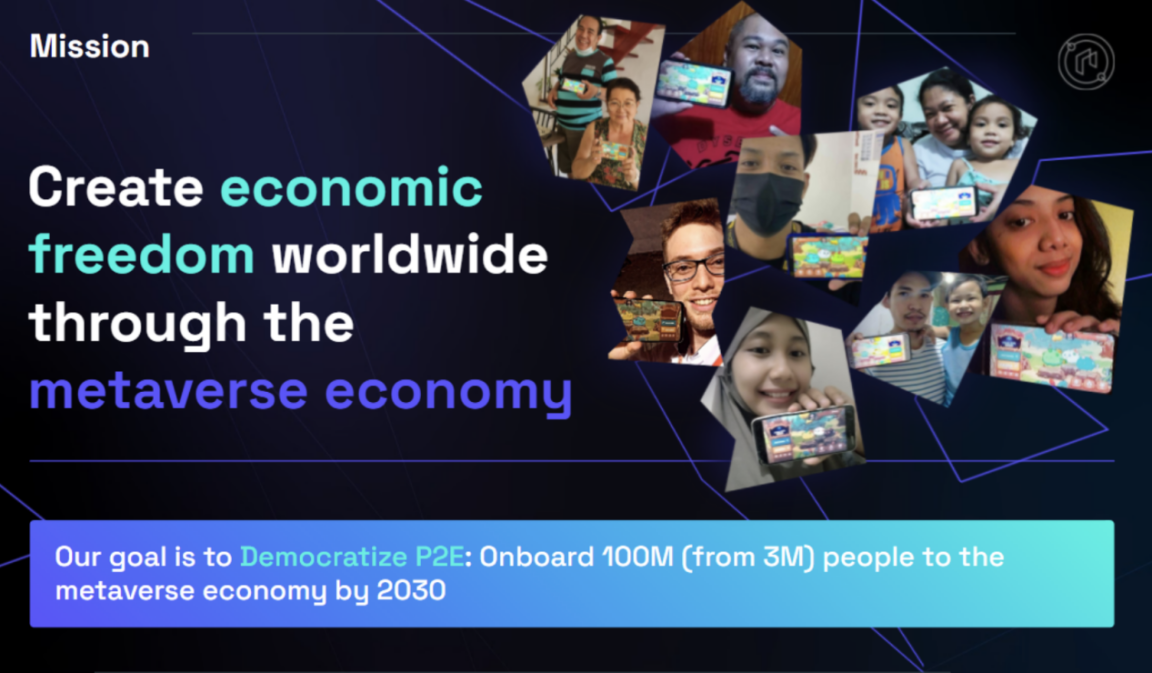
Official website of AGG
AAG is not just a platform. It has built an all-new model. It has partnered up with many guilds, games, and investors, including ViaBTC Capital. Such a powerful investment network provides AAG with a strong business foundation and empowers it in fields that include gaming, blockchain, DeFi, and community building.
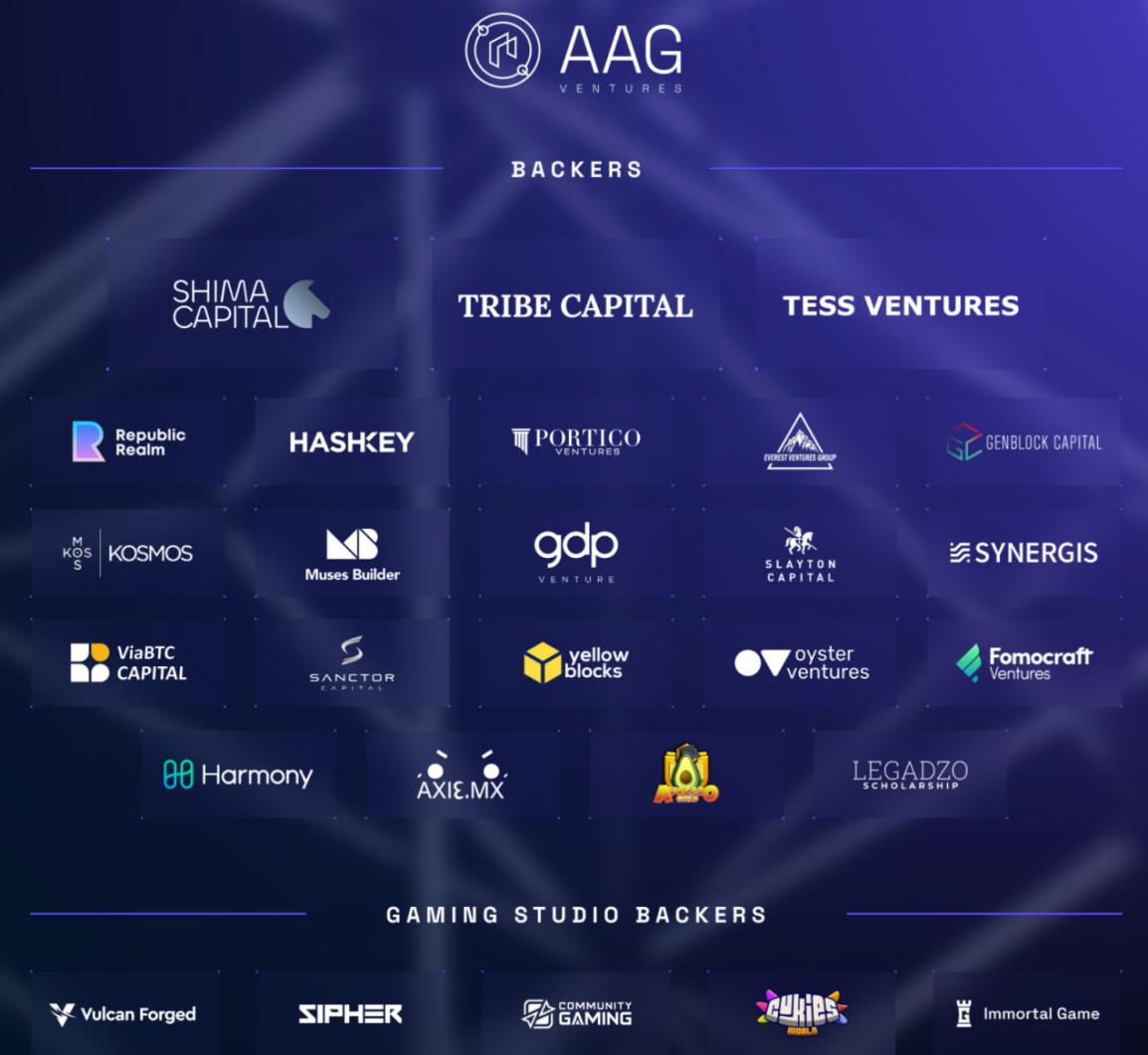
Institutional investors backing AAG
A time of both challenges and opportunities
The GameFi market is shifting to second-generation and third-generation blockchain games. The market landscape of GameFi differs from that of other blockchain categories. Its relationship with the rest of the blockchain space resembles that between the metaverse and the Internet. GameFi successfully duplicates the financial sector, lending/borrowing system, and value-storing framework in the real world through its distributed structure and the confirmation of asset ownership via blockchain, which is also the reason behind its fast growth.
First-generation blockchain NFT games like CryptoKitties diminished due to the lack of long-term players. Second-generation blockchain games (P2E games like Axie Infinity) run the assets on Layer 2 blockchain networks and operate the game itself off-chain, thereby enabling gameplay with few costs and fast results. In such games, players can earn and monetize in-game tokens by playing the game for minutes. However, they still lack the advantages of conventional AAA games in terms of gaming experiences, game designs, and graphics. As such, second-generation blockchain games failed to build a mature market. ViaBTC Capital has captured the exponential growth of the demand for third-generation blockchain games that stimulate users through paid entertainment such as superior gaming experiences and gameplay, rather than P2E alone.
Having inherited all the advantages of blockchain technology, GameFi has brilliant prospects. In the future, ViaBTC Capital will continue to focus on the value-based investment of gaming ecosystems and engage in investment analysis and project empowerment according to the trend of game development. Meanwhile, it will push for the sound growth of GameFi and help build a prosperous ecosystem of third-generation blockchain games.

Пов'язані матеріали

Anthropic Cries Wolf: Is the AGI Threat Real, or Just an IPO Story?

Anthropic has published an article titled "When AI builds itself," discussing the emerging concept of "recursive self-improvement," where AI begins to actively participate in designing, training, testing, and optimizing its own subsequent versions. The company presents internal data showing that by May 2026, over 80% of code merged into its codebase was written by Claude, its AI model. Claude's capabilities have expanded to handling complex, open-ended engineering tasks, achieving a 76% success rate in such areas, and even contributing to research processes, such as optimizing code performance and conducting AI safety experiments. Anthropic outlines an evolution from human-driven development to AI-assisted workflows, culminating in the current stage where AI agents can autonomously write, run, and delegate code. The company cautions that the path toward a "closed loop," where AI continuously improves itself, is becoming visible. It calls for coordinated global mechanisms to potentially slow or pause frontier AI development to allow safety research and societal structures to catch up. However, the timing of this warning coincides with Anthropic's preparations for an IPO, framing the narrative not just as a safety concern but also as a demonstration of Claude's advanced capabilities and its integral role in accelerating Anthropic's own R&D—creating a potential "flywheel" effect for competitive advantage. This contrasts with OpenAI's recent, more policy-oriented discussion of the same risks, highlighting the competitive dynamics in the AI industry as companies position themselves in both the technological and regulatory landscape.

marsbit1 год тому

Anthropic Cries Wolf: Is the AGI Threat Real, or Just an IPO Story?

marsbit1 год тому

BIT Research: ETF Purchases Have Slowed, Strategy (MicroStrategy) Has Slowed, What Else Can Drive Bitcoin's Rise?

Market Refocus on Inflation and Rate Expectations Weighs on Bitcoin Currently, the market is in a phase of macro-repricing dominated by inflation and interest rate expectations. Bitcoin, which previously benefited from easy liquidity and low inflation, is seeing its core bullish drivers weaken. These drivers were market expectations for interest rate cuts and strong inflows from Bitcoin ETFs and institutions like MicroStrategy (referred to as "Strategy" in the text). The logic has shifted. Recent high inflation data (e.g., CPI hitting 3.8% in a May 2026 report) has caused the market to sharply reduce its rate cut expectations for 2025 and even price in potential hikes. This is a key constraint for Bitcoin, as it lacks cash flows and is highly sensitive to rate expectations. Concurrently, institutional capital flows have slowed significantly. Following the hot CPI data, Bitcoin ETFs saw accelerated outflows, with around $4.3 billion leaving over a period. MicroStrategy's ability to keep adding substantial Bitcoin to its balance sheet is also diminishing. Together, ETF and MicroStrategy holdings total roughly $110 billion, but their momentum as growth engines is cooling. In summary, Bitcoin's current pressure stems not from its own fundamentals but from a changing macro environment. As long as inflation stays elevated, Bitcoin is likely to remain in a consolidating phase. However, historically, inflation eventually peaks. Once it recedes and rate cut expectations rebuild, institutional capital could return, potentially fueling a new and more robust recovery phase for Bitcoin.

marsbit1 год тому

BIT Research: ETF Purchases Have Slowed, Strategy (MicroStrategy) Has Slowed, What Else Can Drive Bitcoin's Rise?

marsbit1 год тому

Earning 1000 Trillion in Half a Year, 'Pocketing' 20 Million per Capita: This Round of Wealth Creation in the Korean Stock Market is Unprecedented in Scale

The South Korean stock market is experiencing an unprecedented wealth surge in 2026, with household equity and fund asset values soaring by over 1,000 trillion KRW (~$730bn) year-to-date. This translates to an average per capita wealth increase of roughly 20 million KRW, fueled by a historic 109% rally in the KOSPI index. The boom is driven by three converging forces: an AI-driven semiconductor supercycle boosting giants like Samsung and SK Hynix; the government's "Value-Up" market reforms addressing long-standing corporate governance issues; and aggressive real estate regulations that have locked capital within financial markets, preventing profits from flowing back into property. This has triggered a wealth effect, boosting high-end consumption significantly. However, the gains are highly concentrated. The two semiconductor behemoths account for over half the index's value, but retail investors own relatively low stakes in them, systematically missing the biggest rallies. Wealth and consumption benefits are skewed towards luxury goods and imported cars, bypassing mainstream retail. Further risks stem from excessive leverage, with high trading volume in leveraged ETFs, and a market sentiment heavily reliant on the AI sector's fortunes and speculative rumors. While this cycle marks a potential shift from real estate to equities as a primary wealth generator for Koreans, its sustainability, amid structural imbalances and leverage, remains a critical test.

marsbit1 год тому

Earning 1000 Trillion in Half a Year, 'Pocketing' 20 Million per Capita: This Round of Wealth Creation in the Korean Stock Market is Unprecedented in Scale

marsbit1 год тому

Торгівля

Спот
Ф'ючерси
活动图片