The Hottest DeFi Tokens That You Should Look Into in 2022

BitcoinistОпубліковано о 2022-04-11Востаннє оновлено о 2022-05-09

Анотація

Decentralized Finance, the ability to use crypto coins and tokens in different ways to gain traditional financial services like atmosphere...

Decentralized Finance, the ability to use crypto coins and tokens in different ways to gain traditional financial services like atmosphere (savings, loans and asset exchange) without the need of any intermediary or a middleman has certainly proved its mettle in the last couple of years. With hundreds of projects that are available and a market value above $150 billion, it just goes to show that DeFi is growing and has swiftly become a major contender to the legacy financial systems.
However, this rapid growth and resultant several projects to choose from is a cause of concern for many investors and traders. The sheer number of tokens means that it can be difficult to identify the most viable projects and tokens that have the potential to increase in value.
We are making it easier for you. Here is a list of the top 5 DeFi token projects that are hot and you should check in 2022
1.    EQIFi
EQIFi is a project that intends to change how DeFi and its users interact. Unlike many other well-established projects and platforms, EQIFi believes in simplicity. This extends from its core services to the easy to use mobile app, allowing people with little to no exposure to DeFi to jump the bandwagon and start their crypto financial journey.
EQX, its native token, has several benefits and market-leading offerings. The automatic yield aggregator can offer as high as 70% annual yield, compounded daily. Instant loans have one the lowest interest rates of 0.1% per year.
But what sets EQIFi apart is its seamless on and off ramping. With a regulated and licensed bank at its back, EQIFi users can seamlessly buy and liquidate their crypto holdings, use traditional financial instruments and even get a crypto credit card.
EQX is running around $0.08 and with the range of services offered, it is at a very economical stage to get your hands on.
2.    Uniswap
The simplest form of DeFi, Uniswap is a decentralized crypto exchange that allows users to exchange their crypto assets without a central party. While there are many centralized heavyweights such as Binance, Coinbase and others, Uniswap has made its place, primarily due to its security and non-custodial nature.
The project’s native UNI token is counted amongst the top DeFi tokens Currently at $10, the token has shown immense growth since launch.
3.    SushiSwap
At first glance, SushiSwap looks just like another AMM platform and is similar to Uniswap. Yet it is more complex. While similar to Uniswap and offering a decentralized exchange service that does not require any intermediary, SushiSwap goes a step beyond and offers different DeFi services, such as liquidity yield, staking and lending.
If you want to dabble in the profit-generating DeFi services,  you will need to get your hands on SUSHI, the platform’s token.
4.    Terra
While not offering a typical DeFi service, Terra Network is a complete blockchain network that has multiple DeFi projects. Terra is a digital money network that uses algorithms to maintain different stablecoins. From the popular US Dollar to the Japanese Yen, it has all.
The vast network of different projects offering DeFi services is the reason Terra’s LUNA coin is one of the most successful investments in recent years.
5.    Polkadot
A blockchain to connect all blockchains, Polkadot is an innovative project that uses parachains to allow anyone to create their own network. Since all parachains are connected to Polkadot, assets and tokens between the different chains are transferable without any issues.
Powering the ecosystem is DOT, a token that serves several purposes, including staking, bonding (staking DOT to justify the existence of a parachain) and even governance. Starting with less than $3 when publicly traded, DOT has seen significant appreciation, with an ATH of just short of $54 in less than a year.

Пов'язані матеріали

Anthropic Cries Wolf: Is the AGI Threat Real, or Just an IPO Story?

Anthropic has published an article titled "When AI builds itself," discussing the emerging concept of "recursive self-improvement," where AI begins to actively participate in designing, training, testing, and optimizing its own subsequent versions. The company presents internal data showing that by May 2026, over 80% of code merged into its codebase was written by Claude, its AI model. Claude's capabilities have expanded to handling complex, open-ended engineering tasks, achieving a 76% success rate in such areas, and even contributing to research processes, such as optimizing code performance and conducting AI safety experiments. Anthropic outlines an evolution from human-driven development to AI-assisted workflows, culminating in the current stage where AI agents can autonomously write, run, and delegate code. The company cautions that the path toward a "closed loop," where AI continuously improves itself, is becoming visible. It calls for coordinated global mechanisms to potentially slow or pause frontier AI development to allow safety research and societal structures to catch up. However, the timing of this warning coincides with Anthropic's preparations for an IPO, framing the narrative not just as a safety concern but also as a demonstration of Claude's advanced capabilities and its integral role in accelerating Anthropic's own R&D—creating a potential "flywheel" effect for competitive advantage. This contrasts with OpenAI's recent, more policy-oriented discussion of the same risks, highlighting the competitive dynamics in the AI industry as companies position themselves in both the technological and regulatory landscape.

marsbit59 хв тому

Anthropic Cries Wolf: Is the AGI Threat Real, or Just an IPO Story?

marsbit59 хв тому

BIT Research: ETF Purchases Have Slowed, Strategy (MicroStrategy) Has Slowed, What Else Can Drive Bitcoin's Rise?

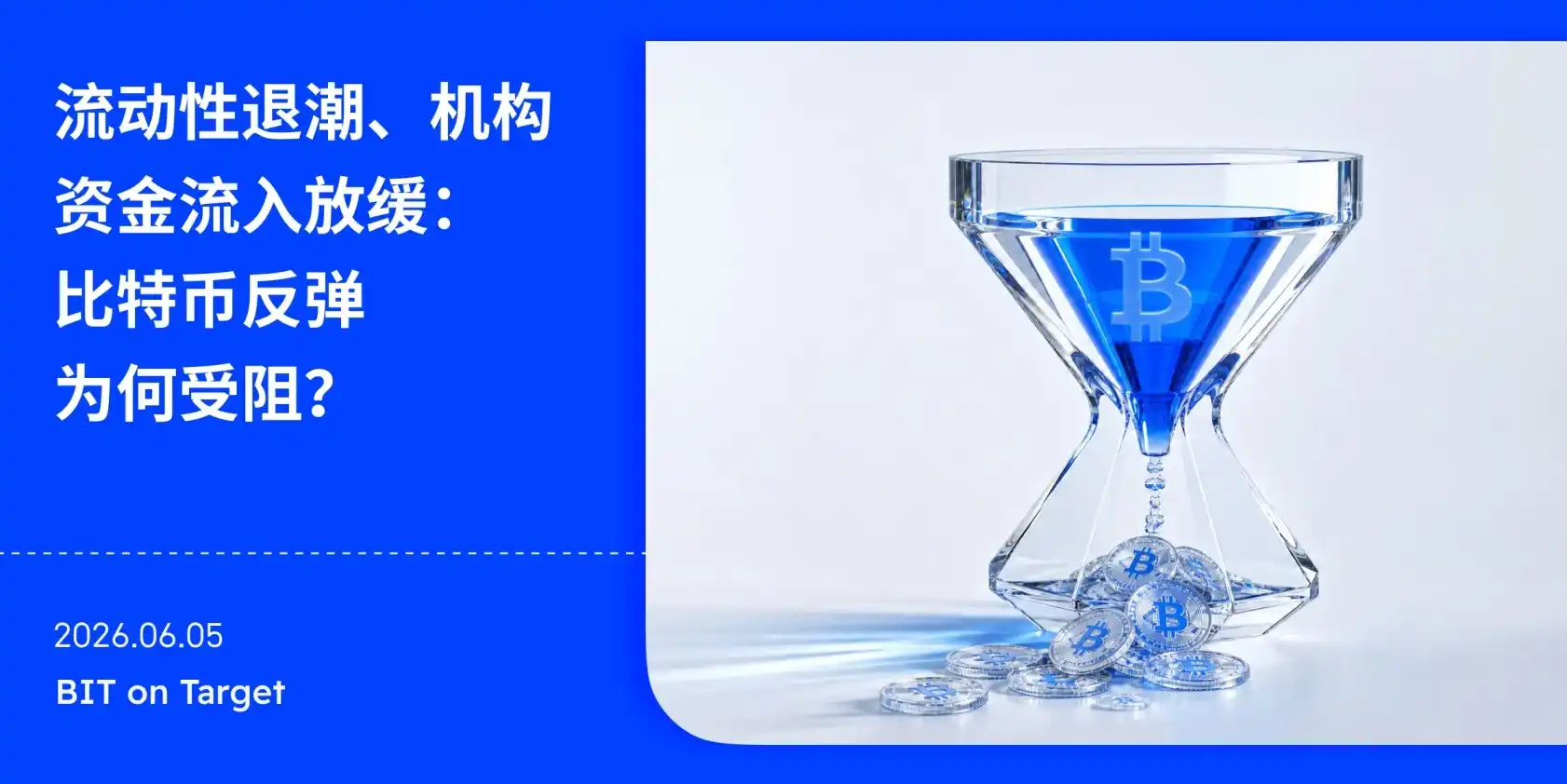
Market Refocus on Inflation and Rate Expectations Weighs on Bitcoin Currently, the market is in a phase of macro-repricing dominated by inflation and interest rate expectations. Bitcoin, which previously benefited from easy liquidity and low inflation, is seeing its core bullish drivers weaken. These drivers were market expectations for interest rate cuts and strong inflows from Bitcoin ETFs and institutions like MicroStrategy (referred to as "Strategy" in the text). The logic has shifted. Recent high inflation data (e.g., CPI hitting 3.8% in a May 2026 report) has caused the market to sharply reduce its rate cut expectations for 2025 and even price in potential hikes. This is a key constraint for Bitcoin, as it lacks cash flows and is highly sensitive to rate expectations. Concurrently, institutional capital flows have slowed significantly. Following the hot CPI data, Bitcoin ETFs saw accelerated outflows, with around $4.3 billion leaving over a period. MicroStrategy's ability to keep adding substantial Bitcoin to its balance sheet is also diminishing. Together, ETF and MicroStrategy holdings total roughly $110 billion, but their momentum as growth engines is cooling. In summary, Bitcoin's current pressure stems not from its own fundamentals but from a changing macro environment. As long as inflation stays elevated, Bitcoin is likely to remain in a consolidating phase. However, historically, inflation eventually peaks. Once it recedes and rate cut expectations rebuild, institutional capital could return, potentially fueling a new and more robust recovery phase for Bitcoin.

marsbit1 год тому

BIT Research: ETF Purchases Have Slowed, Strategy (MicroStrategy) Has Slowed, What Else Can Drive Bitcoin's Rise?

marsbit1 год тому

Earning 1000 Trillion in Half a Year, 'Pocketing' 20 Million per Capita: This Round of Wealth Creation in the Korean Stock Market is Unprecedented in Scale

The South Korean stock market is experiencing an unprecedented wealth surge in 2026, with household equity and fund asset values soaring by over 1,000 trillion KRW (~$730bn) year-to-date. This translates to an average per capita wealth increase of roughly 20 million KRW, fueled by a historic 109% rally in the KOSPI index. The boom is driven by three converging forces: an AI-driven semiconductor supercycle boosting giants like Samsung and SK Hynix; the government's "Value-Up" market reforms addressing long-standing corporate governance issues; and aggressive real estate regulations that have locked capital within financial markets, preventing profits from flowing back into property. This has triggered a wealth effect, boosting high-end consumption significantly. However, the gains are highly concentrated. The two semiconductor behemoths account for over half the index's value, but retail investors own relatively low stakes in them, systematically missing the biggest rallies. Wealth and consumption benefits are skewed towards luxury goods and imported cars, bypassing mainstream retail. Further risks stem from excessive leverage, with high trading volume in leveraged ETFs, and a market sentiment heavily reliant on the AI sector's fortunes and speculative rumors. While this cycle marks a potential shift from real estate to equities as a primary wealth generator for Koreans, its sustainability, amid structural imbalances and leverage, remains a critical test.

marsbit1 год тому

Earning 1000 Trillion in Half a Year, 'Pocketing' 20 Million per Capita: This Round of Wealth Creation in the Korean Stock Market is Unprecedented in Scale

marsbit1 год тому

Торгівля

Спот
Ф'ючерси
活动图片